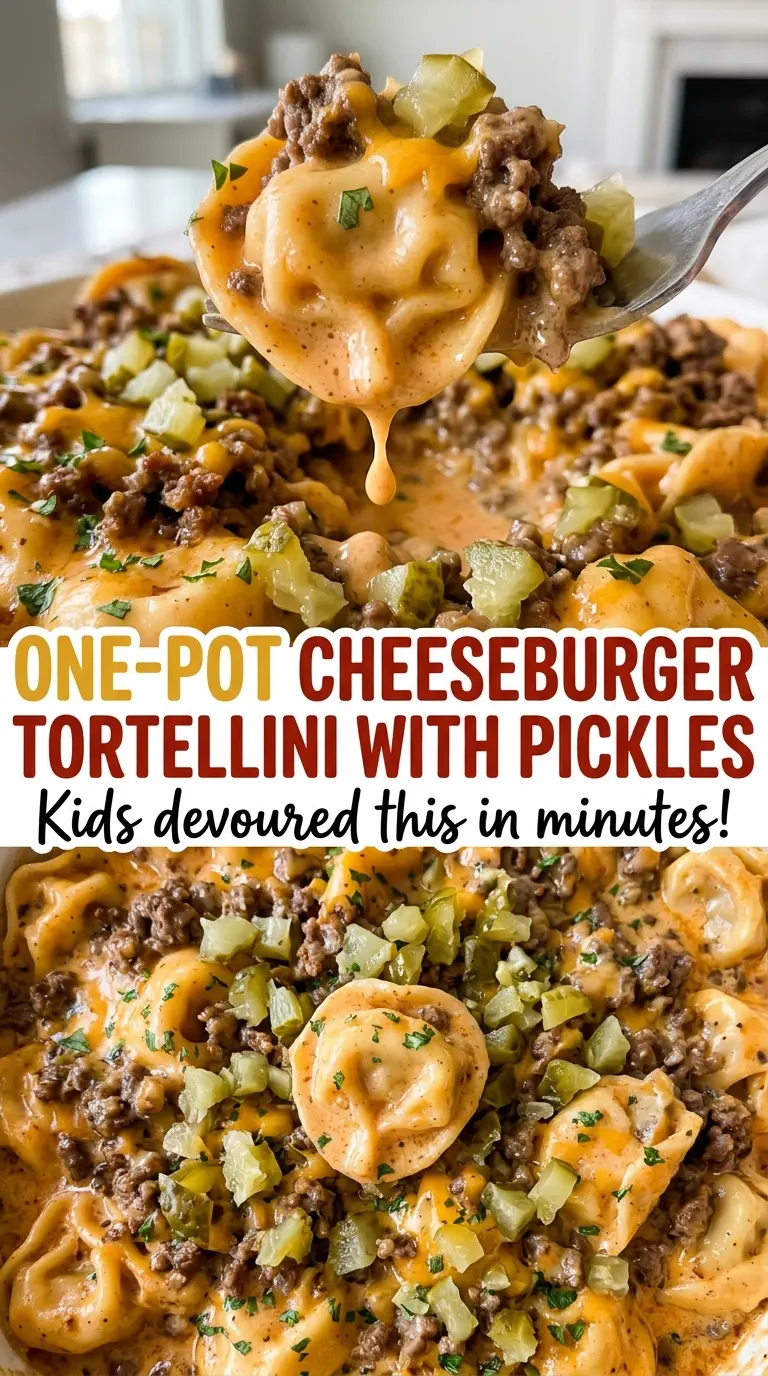
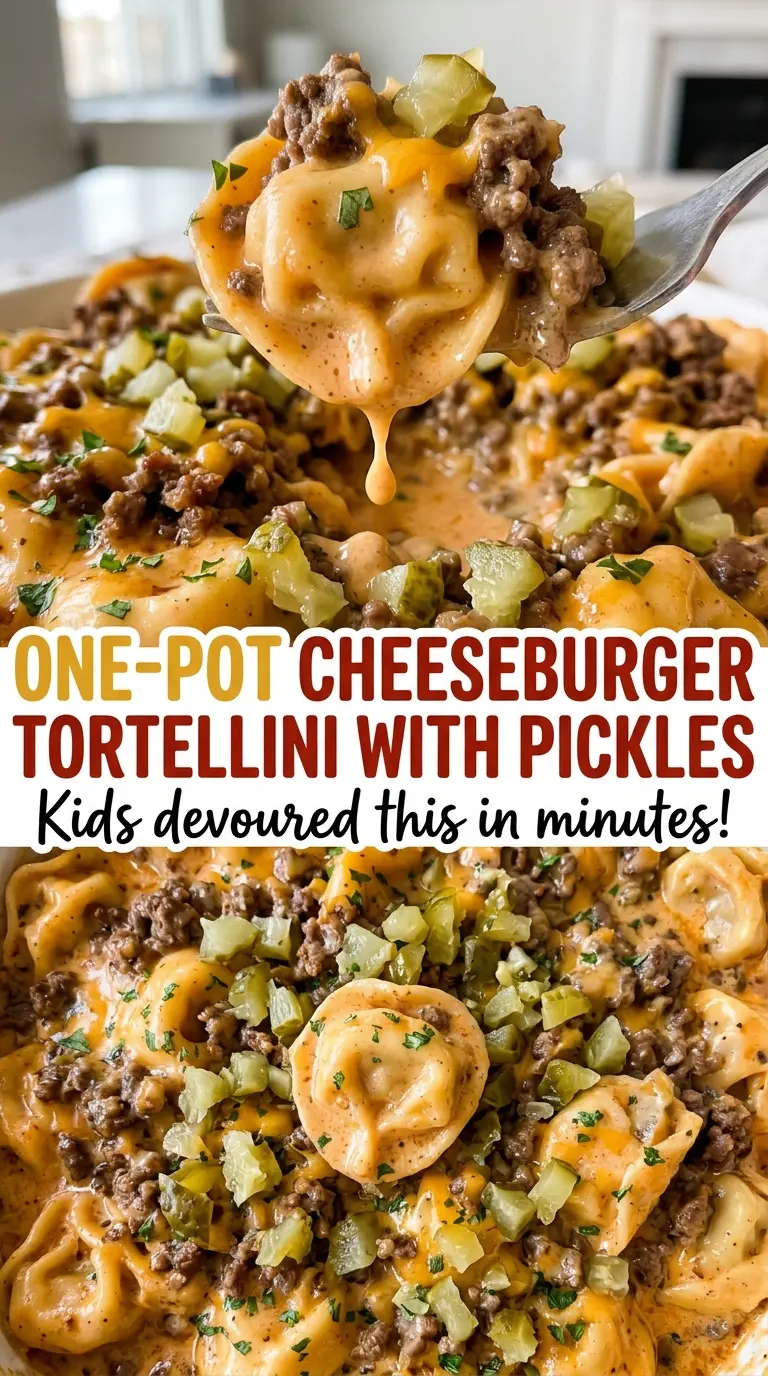
When the beef and onion start browning in a deep skillet, you can already tell this is going to be more than pasta with a little meat stirred through. The browned bits left behind become part of the sauce, and the ketchup, mustard, and Worcestershire bring the familiar tangy, savory cheeseburger flavor. I make this One-Pot Cheeseburger Tortellini with Pickles when I want a full skillet dinner without boiling pasta in a second pot.
Refrigerated cheese tortellini cooks right in the seasoned beef broth, so it picks up flavor while the liquid reduces. The finish matters just as much: heavy cream and sharp cheddar go in after the skillet comes off the heat, which lets the cheese melt into a smooth sauce. A handful of chopped dill pickles stirred through, then more scattered on top, gives each serving that bright, crisp contrast.
Kitchen Note
Take the skillet completely off the heat before adding the cream and cheddar. The residual heat melts the cheese without scorching it, and the sauce stays smooth instead of turning oily.
Save this One-Pot Cheeseburger Tortellini with Pickles for a weeknight skillet dinner with tender cheese pasta, tangy cheddar sauce, and dill pickles in every serving.
How Ketchup and Mustard Make Beef Broth Taste Like a Cheeseburger
Beef broth on its own gives tortellini a savory cooking liquid, but it won’t taste like a cheeseburger until the condiments go in. Ketchup brings a little sweetness and tomato tang; yellow mustard adds a sharper note; Worcestershire rounds the mixture out with deep, savory flavor. They’re doing more than sitting on top as toppings. They season the broth before the pasta has a chance to absorb it.
That balance is why the sauce starts with broth rather than cream. The pasta cooks in a thinner, flavorful liquid first, while the beef and onion contribute their browned flavor to the pan. Cream and cheddar come later, once the broth has reduced, so they enrich the sauce instead of diluting it. Keep the condiments in proportion: adding much more ketchup can make the finished skillet taste sweet, while extra mustard can take over the cheddar.
The Ingredients That Keep This From Tasting Like Beefy Pasta
- 85% lean ground beef — This blend has enough fat to brown well and carry the beef flavor into the sauce. If you see a pool of excess fat after browning, drain it; very lean beef can make the skillet taste less rich.
- Yellow onion and fresh garlic — Finely chopped onion softens into the beef rather than leaving large, crunchy pieces. White onion is a straightforward substitute, though its flavor can be a little sharper. Fresh minced garlic gives the brief cook in the pan a fresher aroma than garlic powder.
- Low-sodium beef broth — Ketchup, Worcestershire, cheddar, and pickles all bring their own salt, so starting with low-sodium broth gives you more control. Regular broth works, but the finished dish will taste saltier; reduce the added kosher salt to account for it.
- Ketchup, yellow mustard, and Worcestershire — Together, these are the cheeseburger-style seasoning for the broth. Yellow mustard gives the familiar mild tang, while Worcestershire adds savory depth. Dijon or spicy brown mustard would change that balance rather than reproduce it.
- Refrigerated cheese tortellini — The refrigerated pasta cooks quickly in the skillet and releases enough starch to help the reduced broth and dairy become a cohesive sauce. Choose cheese-filled tortellini for the intended flavor; dried or frozen pasta won’t follow the same timing.
- Heavy cream and sharp cheddar — Cream gives the sauce body, and sharp cheddar brings the assertive cheese flavor that keeps it from tasting bland. A block of cheddar shredded at home usually melts more evenly than cheese coated to keep packaged shreds separate.
- Dill pickles — Their acidity cuts through the creamy beef and cheese, and the pieces on top add a crisp finish. Chop them fairly small so the pickles stirred into the skillet are spread through the pasta rather than clumped in a few bites.
Build the Beefy Broth Before the Tortellini Goes In
Brown the beef and soften the onion
Set a 12-inch deep skillet with a lid over medium-high heat and add the ground beef, finely chopped onion, kosher salt, and black pepper. Cook for 8–10 minutes, breaking the beef into small pieces as it browns. The onion should look softened, and the beef should be browned throughout and reach 160°F. Drain excess fat if there’s enough in the pan to leave the beef greasy.
Wake up the garlic and season the broth
Stir in the minced garlic and cook for 30 seconds, just until fragrant; garlic can turn bitter if it sits in the hot pan too long. Add the beef broth, ketchup, yellow mustard, and Worcestershire. Scrape the bottom of the skillet as you stir so the browned bits loosen into the liquid. Bring the mixture to a boil over high heat, which takes about 3–4 minutes.
Simmer the tortellini until tender
Stir in the refrigerated tortellini, cover the skillet, and lower the heat to maintain a gentle simmer. Cook for 5–7 minutes, stirring once or twice so the pasta doesn’t stick together or settle on the bottom. You’re looking for tender tortellini and a pan with most of its liquid reduced. A rolling boil can cook the outside of the pasta too aggressively, so keep the simmer gentle.
Let the cheddar melt into the sauce
Remove the skillet from the heat, then stir in the heavy cream and shredded cheddar until the cheese melts. Stir in half of the chopped pickles, distributing them through the pasta without breaking up the tortellini. Let the skillet stand for 2 minutes, then scatter the remaining pickles over the top. The finished sauce should cling to the pasta, not sit as a thin pool in the bottom of the pan.
Two Easy Ways to Adapt the Skillet
Make it gluten-free with refrigerated gluten-free tortellini
Replace the regular tortellini with a 20-ounce package of refrigerated gluten-free cheese tortellini, and choose gluten-free beef broth and Worcestershire sauce as well. Gluten-free tortellini brands can cook differently, so check for tenderness during the simmer rather than assuming every package will be ready at the same moment. The dish keeps its cheesy, tangy character, though the pasta texture depends on the brand.
Put more of the pickles into the sauce
Keep the total amount of chopped dill pickles the same, but stir more than half into the skillet and reserve a smaller portion for the top. The tang gets distributed through more bites, while the topping still gives you a little fresh pickle crunch. This is a good adjustment if you want the pickle flavor present throughout rather than concentrated in the garnish.
Storage and Reheating
- Refrigerator: Store leftovers in a covered container for 3–4 days. The tortellini will absorb some sauce as it sits, so it will be thicker the next day.
- Freezer: I don’t recommend freezing the finished skillet. The tortellini can turn soft, and the cream-cheddar sauce may separate after thawing.
- Reheating: Warm leftovers gently in a covered skillet over low heat with a small splash of beef broth, stirring carefully until hot throughout. Avoid boiling the sauce, which can make it separate and leave the pasta too soft.
Questions That Come Up With Cheeseburger Tortellini
One-Pot Cheeseburger Tortellini with Pickles
Ingredients
Equipment
Method
- In a 12-inch deep skillet with a lid over medium-high heat, cook the ground beef, onion, salt, and pepper for 8–10 minutes, breaking up the beef, until the beef is browned and reaches 160°F and the onion is softened.
- Drain excess fat if needed.
- Stir in the garlic and cook for 30 seconds, until fragrant.
- Add the beef broth, ketchup, mustard, and Worcestershire sauce, scraping up any browned bits; bring to a boil over high heat, about 3–4 minutes.
- Stir in the tortellini, cover, and reduce the heat to maintain a gentle simmer.
- Cook for 5–7 minutes, stirring once or twice, until the tortellini is tender and most of the liquid has reduced.
- Remove the skillet from the heat and stir in the heavy cream and cheddar until the cheese melts.
- Stir in 1/4 cup of the chopped dill pickles and let stand for 2 minutes.
- Top with the remaining pickles before serving.