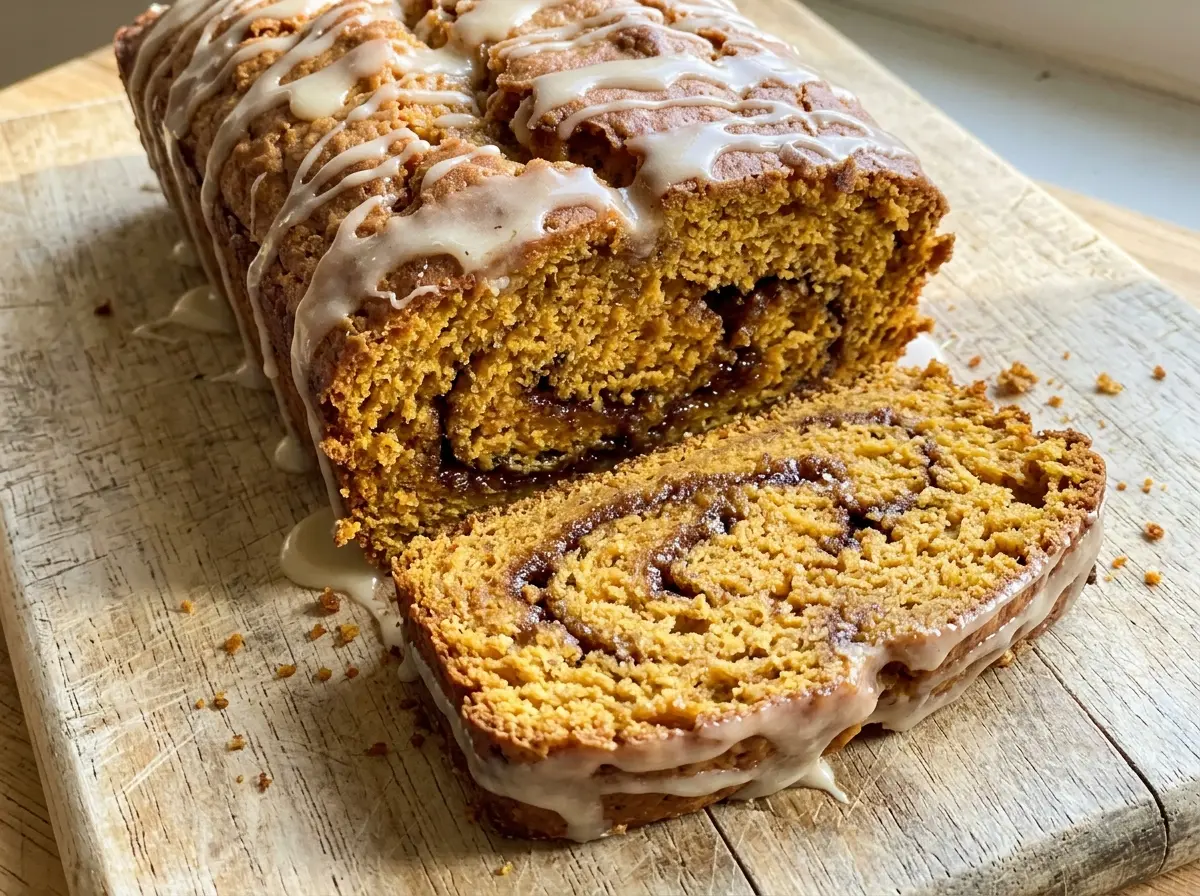
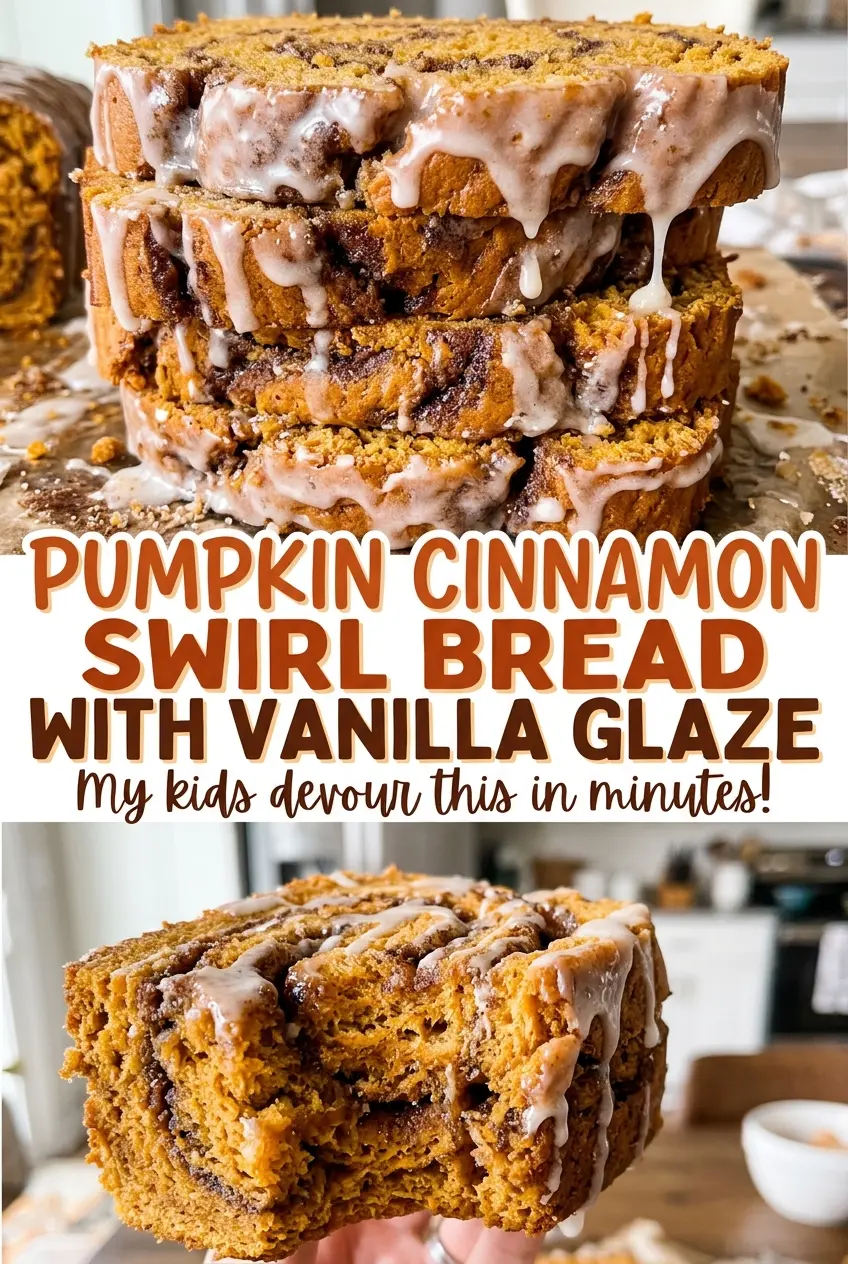
The first slice can look like plain pumpkin bread until the knife reaches the cinnamon ribbon tucked through the middle. I like that little surprise, especially when the top is golden and the loaf still smells warm with cinnamon and nutmeg. This pumpkin cinnamon swirl bread keeps the pumpkin crumb tender while a brown sugar filling gives each slice a distinct, sweet stripe.
The batter is thick enough to hold the filling between its layers, but it doesn’t need a lot of stirring. I mix the wet ingredients until smooth, then stir in the flour mixture only until the last dry patches disappear. That keeps the crumb soft instead of tight, and it leaves the cinnamon swirl as the star rather than blending it into the whole loaf.
A simple vanilla glaze goes on only after the bread has cooled, so it settles in a neat drizzle instead of melting away. Cut into generous slices and you get pumpkin in every bite, with a buttery cinnamon center and just enough vanilla sweetness on top.
Kitchen Note
The cinnamon mixture should look like damp, evenly coated brown sugar before it goes into the loaf. If you see dry cinnamon pockets or a pool of melted butter, keep stirring until the mixture is uniform; that gives you a more even ribbon through the slices.
Save this pumpkin cinnamon swirl bread for a cozy bake with a soft pumpkin crumb, a brown sugar cinnamon ribbon, and a simple vanilla glaze.
Why Pumpkin Bread Needs a Gentle Hand With the Flour
Pumpkin puree brings plenty of moisture to this batter, which is what keeps the loaf tender. It also means the mixture is heavier than a plain quick-bread batter. The flour and leaveners have to give that weight enough structure, so stirring longer than necessary can work against you: extra mixing develops gluten and makes the crumb tougher.
Whisking the dry ingredients separately distributes the baking soda, baking powder, and spices before they meet the wet mixture. Once combined, stir only until you can no longer see dry flour. A few small lumps are less of a problem than a smooth, overworked batter. The batter doesn’t need to be beaten until fluffy, and the pumpkin mixture should already look smooth before the flour goes in.
The cinnamon filling also benefits from keeping its own place in the loaf. Rather than stirring it into the pumpkin batter, layering half the batter below it and half above it gives the filling a defined path through the center. That contrast is what makes the swirl noticeable in a slice instead of turning the entire loaf into one uniform cinnamon color.
What Each Ingredient Is Doing in This Pumpkin Loaf
- Canned pumpkin puree — Plain puree gives the loaf its pumpkin character and moisture. Choose puree rather than pumpkin pie filling, which is already sweetened and spiced and would change the balance of the batter.
- All-purpose flour — It builds the structure in both the loaf and the cinnamon layer. Spoon it into the measuring cup and level it rather than packing it down; too much flour can make the finished bread dry and heavy.
- Vegetable oil — Oil keeps the crumb soft after the bread cools, and its neutral taste lets the pumpkin and spices come through. A neutral vegetable oil is a good place to use an inexpensive pantry staple.
- Granulated and light brown sugars — Granulated sugar sweetens the pumpkin batter, while brown sugar brings a deeper molasses note to the loaf and forms the base of the swirl. Pack the brown sugar into the measuring cup so the amount is consistent.
- Cinnamon and nutmeg — Cinnamon runs through both the batter and the filling, while nutmeg adds a warm background note. Ground spices lose their fragrance with age, so replace jars that smell faint when you open them.
- Eggs and leaveners — Eggs help hold the moist batter together, while baking soda and baking powder provide lift. For a more even bake, bring cold eggs out of the refrigerator before mixing so they don’t chill the pumpkin mixture.
- Butter in the swirl and milk in the glaze — Melted butter binds the brown sugar filling, and milk loosens the powdered sugar into a drizzle. The vanilla in the glaze adds a clear aromatic finish; use an extract you like, since its flavor is noticeable in such a simple topping.
Layering the Cinnamon Ribbon Without Losing It in the Batter
Prepare the Pan and Dry Ingredients
Heat the oven to 350°F and grease a 9×5-inch loaf pan. Line it with parchment, leaving an overhang along the long sides so you can lift the baked bread out later. Whisk the flour, baking soda, baking powder, cinnamon, nutmeg, and salt in a medium bowl until the spices look evenly distributed. Breaking up any clumps now is easier than trying to work them out of the finished batter.
Bring the Pumpkin Batter Together
In a large bowl, whisk the granulated sugar, brown sugar, eggs, pumpkin puree, oil, and vanilla until the mixture looks smooth and evenly colored. Add the dry mixture to the pumpkin mixture, then stir just until no dry flour remains. Scrape along the bottom of the bowl once, where flour can hide, but stop as soon as the batter is combined. It will be thick; don’t keep mixing to make it look glossy.
Build and Swirl the Layers
Stir the brown sugar, flour, cinnamon, and melted butter together in a small bowl until evenly combined. Spread half of the pumpkin batter in the prepared pan, then distribute the cinnamon mixture over it. Cover with the remaining batter, spreading it gently so the filling stays between the layers. Run a butter knife through the batter in a few gentle S-shaped motions; a few passes make a swirl, while lots of stirring would blur the layers.
Bake, Cool, and Finish With Glaze
Bake for 55 to 65 minutes, until the top is golden and a toothpick inserted into the center comes out with a few moist crumbs. If the toothpick has wet batter clinging to it, the center needs more baking time. Let the loaf cool in the pan for 15 minutes, then use the parchment overhang to lift it onto a wire rack and cool completely. Whisk the powdered sugar, milk, and vanilla until smooth, then drizzle the glaze over the cooled bread.
Two Easy Ways to Adapt the Loaf and Keep It Useful
Make the swirl and glaze dairy-free
Use an equal amount of unsalted vegan butter in the cinnamon swirl in place of the unsalted butter, and use an equal amount of unsweetened non-dairy milk in the glaze. The loaf keeps its cinnamon ribbon and sweet finish, though the exact flavor will depend on the butter and milk alternatives you choose.
Skip the glaze for a less-sweet slice
Leave off the vanilla glaze and serve the cooled bread plain. The pumpkin loaf and cinnamon filling still make a complete slice, with less sweetness on the surface and no extra topping to set before storing.
Storage and Reheating
- Refrigerator: Cover the cooled loaf and refrigerate it for up to 5 days. The crumb will feel firmer when chilled, so let slices sit briefly at room temperature before eating.
- Freezer: For the best texture, freeze the cooled loaf without glaze. Wrap it tightly and freeze for up to 3 months; thaw it while still wrapped, then glaze after it has thawed.
- Reheating: Warm an individual slice in the microwave for about 10 seconds, then add a few seconds if needed. Longer heating can make the crumb tough, so avoid microwaving the whole loaf.
Questions That Come Up When Baking Pumpkin Swirl Bread
Pumpkin Cinnamon Swirl Bread with Vanilla Glaze
Ingredients
Equipment
Method
- Heat the oven to 350°F.
- Grease a 9x5-inch loaf pan.
- Line the pan with parchment paper, leaving an overhang on the long sides.
- Whisk the flour, baking soda, baking powder, cinnamon, nutmeg, and salt in a medium bowl.
- Whisk the granulated sugar, brown sugar, eggs, pumpkin, oil, and vanilla in a large bowl until smooth.
- Add the dry ingredients to the pumpkin mixture and stir just until no dry flour remains.
- Stir the brown sugar, flour, cinnamon, and melted butter in a small bowl until evenly combined.
- Spread half of the batter in the prepared pan.
- Sprinkle the cinnamon mixture evenly over the batter.
- Spread the remaining batter on top.
- Run a butter knife through the batter in a few gentle S-shaped motions to make a swirl.
- Bake for 55 to 65 minutes, until the top is golden and a toothpick inserted into the center comes out with a few moist crumbs.
- Cool the bread in the pan for 15 minutes.
- Use the parchment overhang to lift the bread onto a wire rack.
- Cool completely.
- Whisk the powdered sugar, milk, and vanilla in a small bowl until smooth.
- Drizzle the glaze over the cooled bread.