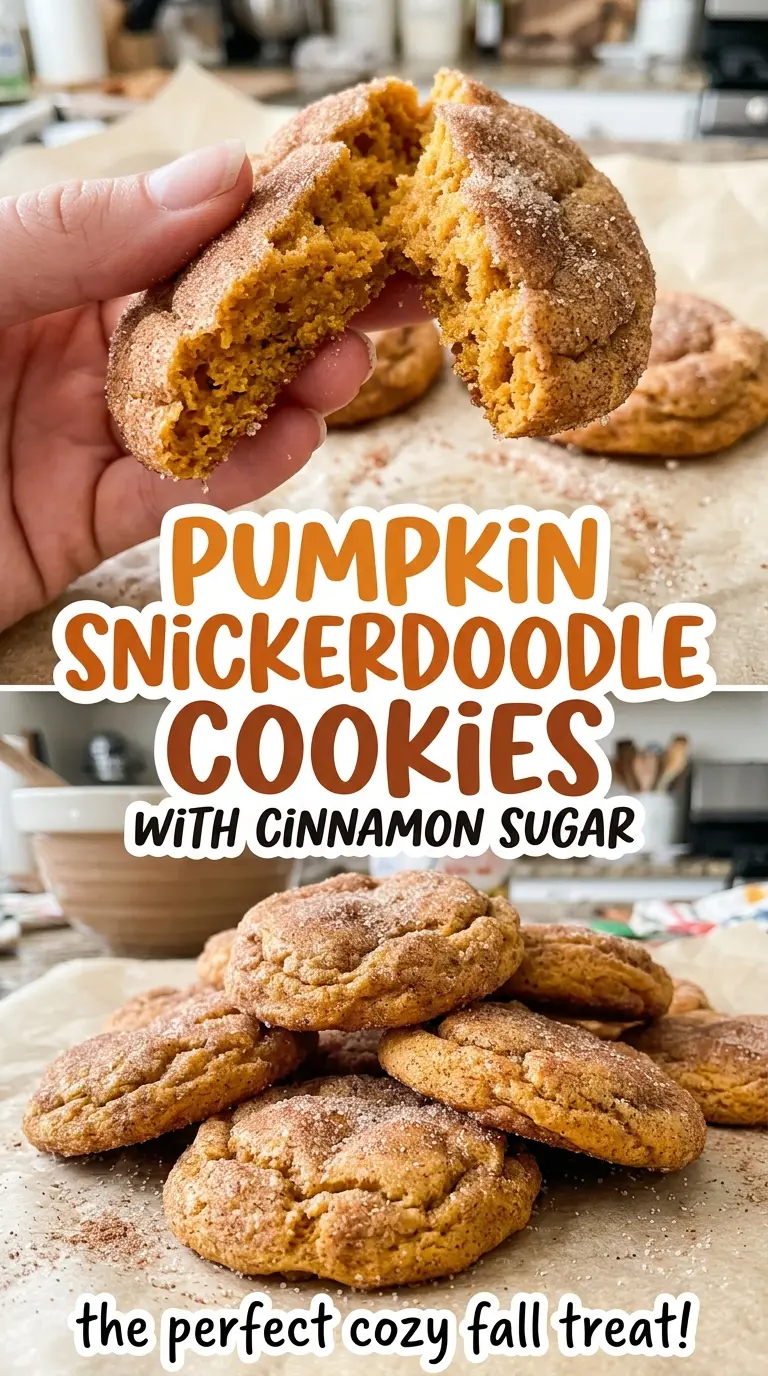
The dough gets soft as soon as the pumpkin goes in, and that’s where pumpkin cookies can turn cakey instead of chewy. These pumpkin snickerdoodle cookies with cinnamon sugar keep the familiar tangy cookie character, but have a soft center and a cinnamon-sugar coating that crackles lightly around the edges.
I use canned pumpkin puree and blot it before it goes into the bowl. That small bit of prep removes extra moisture without taking pumpkin out of the dough, so the cookies don’t spread into thin, damp rounds. A single egg yolk keeps the dough rich without adding the extra liquid from an egg white, and a full chill gives it time to firm up before scooping. The finished cookies smell warmly of cinnamon, with a tender middle and a sugared edge.

Kitchen Note
Measure the pumpkin before blotting it. Once it’s drier, it looks like less, but don’t add more to compensate—the dough needs the measured amount with the excess moisture removed.
Save these pumpkin snickerdoodles for a bake day when you want soft pumpkin centers and a cinnamon-sugar finish.
The Cream of Tartar Is What Keeps These in Snickerdoodle Territory
Cinnamon sugar alone makes a cinnamon-sugar cookie; the cream of tartar gives a snickerdoodle its familiar faint tang. It also works with the baking soda to help the dough rise, so leaving it out changes more than the flavor. The pumpkin brings sweetness and moisture, which can make that tang easy to miss if the dough tastes only of spice.
There are two layers of cinnamon here, and they do different jobs. The small amount whisked into the flour gives the cookie a gentle spice through the crumb, while the cinnamon sugar around each dough ball provides the stronger first bite. Nutmeg sits quietly in the background, rounding out the pumpkin without making the cookie taste like a spice blend. Keep the cream of tartar and baking soda together for the intended balance; swapping in a different leavener won’t reproduce that classic snickerdoodle taste and texture.
What the Pumpkin, Egg Yolk, and Cinnamon Sugar Each Bring
- Canned pumpkin puree — Choose plain puree, not pumpkin pie filling, which is already sweetened and spiced. A standard canned version is consistent and works well here; the blotting step handles its excess moisture. The puree is measured before blotting, so don’t measure the drier pulp afterward.
- Egg yolk — The yolk adds richness and helps bind the dough without the extra moisture of a whole egg. Use a fresh large egg and separate it carefully; even a little white changes the dough’s moisture balance.
- Butter and sugars — Softened unsalted butter creams smoothly with the granulated and brown sugars. The brown sugar adds a little softness and depth, while granulated sugar helps the edges bake up neatly. Since the sugar coating is part of the finish, regular granulated sugar is the practical choice.
- Cream of tartar and baking soda — These are a working pair, not two interchangeable leaveners. Cream of tartar contributes the slight tang and reacts with the baking soda; keep both for the snickerdoodle character.
- Cinnamon and nutmeg — Ground spices don’t need to be expensive, but they should smell fragrant when you open the jar. If the cinnamon has been sitting in the pantry for years and smells faint, the coating and dough will taste muted.
- All-purpose flour — It gives the dough enough structure to hold a rounded shape. Spoon it into the measuring cup and level it rather than packing it down; too much flour makes the cookies dry and the dough harder to mix.
The Dough Needs a Full Chill Before the Cinnamon-Sugar Roll
Whisk the dry ingredients and blot the pumpkin
Whisk the flour, cream of tartar, baking soda, kosher salt, cinnamon, and nutmeg in a medium bowl until the spices are evenly distributed. Spread the measured pumpkin puree on paper towels, then blot it with additional paper towels until it looks noticeably drier. Don’t skip the blotting or leave the puree sitting in liquid; extra water can leave the cookies cakey.
Cream the butter, sugars, and pumpkin
Beat the softened butter with both sugars for about 2 minutes, stopping when the mixture looks creamy rather than greasy or separated. Beat in the egg yolk, blotted pumpkin, and vanilla until combined. Add the flour mixture and mix just until no dry streaks remain. Overmixing at this point makes a tougher cookie, so stop as soon as the flour disappears.
Chill, coat, and portion
Cover the dough and refrigerate it for 1 hour so it firms up enough to scoop and roll. While it chills, heat the oven to 350°F and line two 18×13-inch baking sheets with parchment paper. Stir the coating sugar and cinnamon together, then scoop the cold dough into 24 portions of about 1 1/2 tablespoons each. Roll each portion in the cinnamon sugar until the surface is coated.
Bake until the edges set
Arrange 12 dough balls on each sheet, leaving about 2 inches between them. Bake both sheets for 10 to 12 minutes, rotating and switching their positions halfway through so they bake evenly. Pull them when the edges are set and the centers still look slightly soft; waiting for the centers to look completely firm can dry them out. Let the cookies cool on the baking sheets for 5 minutes, then transfer them to a wire rack to cool completely.
Two Useful Swaps for Pumpkin Snickerdoodles
Make the cookies dairy-free with baking sticks
Replace the unsalted butter with the same amount of unsalted, stick-style dairy-free baking butter. Avoid soft tub spreads, which contain more water and can make the dough spread too much. The cookies may have a slightly less buttery taste, but the pumpkin and cinnamon still come through.
Use a cup-for-cup gluten-free flour blend
Choose a gluten-free baking blend labeled as a one-to-one replacement for all-purpose flour, ideally one that already includes xanthan gum, and swap it cup for cup. Keep the rest of the ingredients and method the same. The cookies will be a little more delicate and may have a less chewy bite than the wheat-flour version.
Storage and Reheating
- Refrigerator: Store cooled cookies in an airtight container for up to 5 days; they’ll firm up and the cinnamon-sugar coating may soften.
- Freezer: Freeze completely cooled cookies in an airtight container for up to 2 months. Thaw at room temperature before eating.
- Reheating: Warm one cookie in the microwave for 5 to 8 seconds if you’d like it soft again. Longer heating can make the center rubbery, so use short bursts.
Answers to the Pumpkin Cookie Questions That Come Up Mid-Bake
Pumpkin Snickerdoodle Cookies with Cinnamon Sugar
Ingredients
Equipment
Method
- Whisk the flour, cream of tartar, baking soda, kosher salt, ground cinnamon, and ground nutmeg together in a medium bowl.
- Spread the measured pumpkin puree on a layer of paper towels.
- Blot the pumpkin puree with additional paper towels until noticeably drier.
- Set the pumpkin puree aside.
- In a large bowl, beat the softened butter, granulated sugar, and packed light brown sugar until creamy, about 2 minutes.
- Beat in the egg yolk, blotted pumpkin, and vanilla extract.
- Add the flour mixture and mix just until no dry streaks remain.
- Cover and refrigerate the dough for 1 hour.
- Heat the oven to 350°F.
- Line two 18x13-inch baking sheets with parchment paper.
- Stir the granulated sugar and ground cinnamon together in a small bowl.
- Scoop the chilled dough into 24 portions of about 1 1/2 tablespoons each.
- Roll each portion in the cinnamon sugar.
- Arrange 12 dough balls on each baking sheet, spacing them about 2 inches apart.
- Bake both sheets for 10 to 12 minutes, rotating and switching their positions halfway through, until the edges are set and the centers look slightly soft.
- Let the cookies cool on the baking sheets for 5 minutes.
- Transfer the cookies to a wire rack to cool completely.