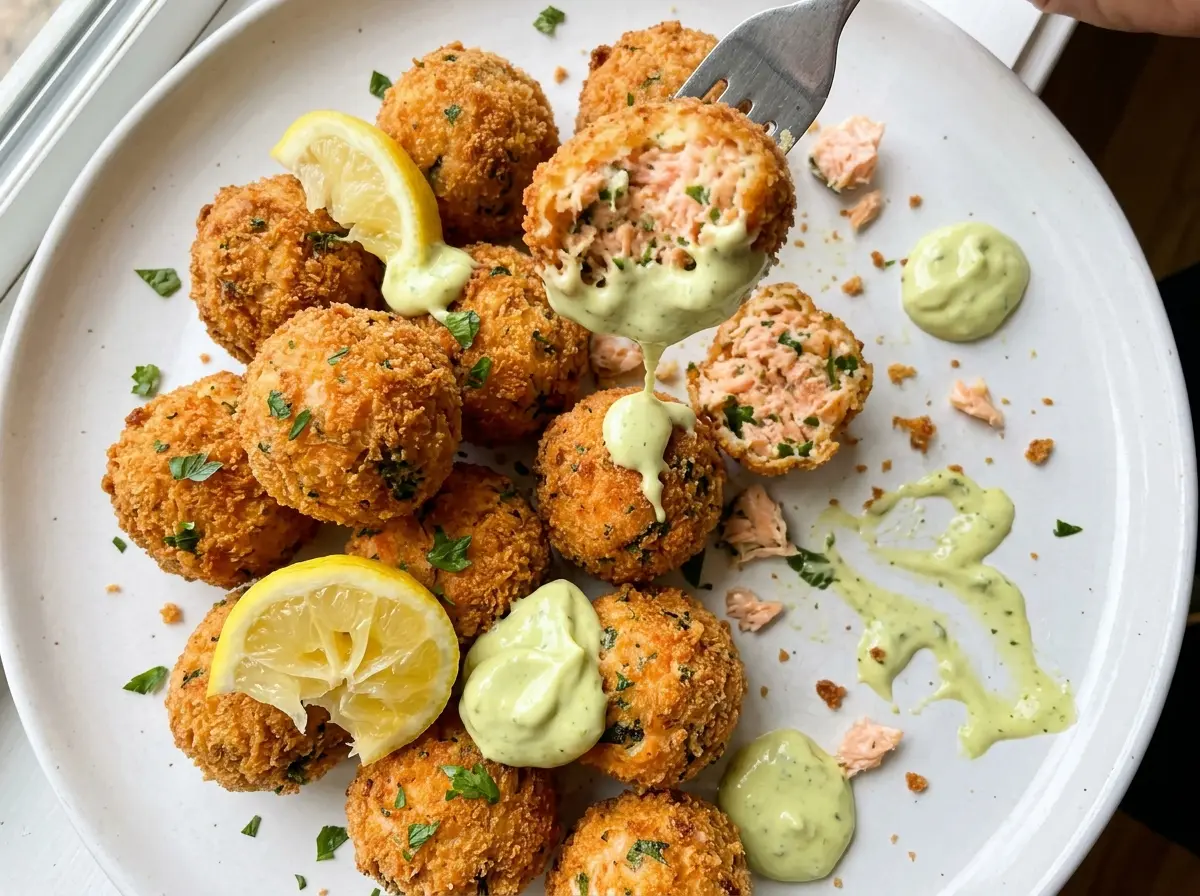
When the baking sheet comes out, the salmon balls are lightly browned and still tender enough that I let them sit before moving them. That short pause makes serving easier, and the cool, tangy avocado sauce is a lovely contrast to the warm fish. Salmon Balls with Creamy Avocado Sauce use canned pink salmon, so the fish is already cooked and the job is to bring the mixture together without turning it dense.
I keep the mixing gentle and stop as soon as everything is combined. Panko and egg help the balls hold their shape, while mayonnaise keeps the salmon mixture from feeling dry. The dill and scallions bring a fresh, savory note, and lemon juice gives it a little lift. Mash the avocado until mostly smooth, then whisk in the yogurt and lime for a sauce that’s creamy but still bright.
Kitchen Note
Give the salmon balls their full 3-minute rest on the baking sheet. They’re delicate straight from the oven, and that pause helps them settle before you lift them.
Save these salmon balls with creamy avocado sauce for an easy oven-baked dinner with tender centers and a bright, herby dip.
Why Canned Salmon Needs a Light Hand, Not More Binding
Canned salmon is already cooked and flakes easily, so these balls don’t need the kind of vigorous mixing you might use for a raw meatball mixture. Breaking every flake down would make the centers compact instead of tender. I fold the ingredients together just until the panko and seasonings are distributed, leaving some small pieces of salmon intact.
The mixture should hold when you shape it, but it shouldn’t feel packed tight. Panko takes up some of the moisture, and the egg helps everything stay together as it bakes. If you keep adding binder because the mixture looks softer than raw ground meat, you’ll lose the light texture that makes canned salmon work well here. Shape the balls with a gentle touch and keep them close to the same size; the stated baking window is meant for 1 1/2-inch balls.
That balance also explains why the avocado sauce is made separately. It adds a creamy contrast without weighing down the fish mixture, and the lime, cilantro, and garlic give it a fresher edge than a heavier dressing would.
What Gives the Salmon Balls Their Tender Texture and the Sauce Its Tang

- Canned pink salmon — Drain it well and remove the skin and bones before mixing. Stick with pink salmon for the texture and flavor this combination is built around; fresh raw salmon isn’t a direct swap because its moisture and texture are different.
- Panko breadcrumbs — Their coarse, airy crumbs help bind the mixture without making it heavy. Keep them in the mix rather than replacing them with extra egg, which would loosen the mixture instead of giving it the same crumb structure.
- Egg and mayonnaise — The egg helps the balls set as they bake, while mayonnaise adds richness to the canned fish. They do different jobs, so I wouldn’t leave out one and expect the other to take its place.
- Dijon, scallions, dill, and lemon — Dijon brings a quiet sharpness, while scallions and fresh dill keep the salmon mixture savory and fresh. Fresh lemon juice adds acidity without making the fish taste sour; mix it through rather than adding extra.
- Ripe avocado and plain Greek yogurt — Choose an avocado that gives slightly when pressed; a hard one is difficult to mash into a creamy sauce. Plain Greek yogurt brings tang and body, and the listed water loosens the mixture after the other sauce ingredients are whisked in.
- Lime, cilantro, and garlic — Lime juice keeps the avocado sauce lively, cilantro gives it a fresh herbal note, and a small amount of minced garlic adds savory depth. If lime isn’t available, lemon juice works in its place for a sharper, more familiar citrus taste.
From Gentle Mixing to a Smooth, Tangy Sauce
Bring the Salmon Mixture Together
Heat the oven to 400°F and line a rimmed baking sheet with parchment paper. In a medium bowl, gently mix the drained salmon with the panko, egg, mayonnaise, Dijon, scallions, dill, lemon juice, salt, and pepper. Stop as soon as the ingredients are combined; the mixture should look cohesive without turning into a paste. Shape it into 12 balls about 1 1/2 inches wide and set them on the prepared sheet.
Bake Until Lightly Browned
Bake the balls for 15 to 18 minutes, until they’re lightly browned. Check the center of a ball with an instant-read thermometer; it should reach 160°F. If the outside is coloring before the center reaches temperature, rely on the thermometer rather than pulling them early. Let them rest on the baking sheet for 3 minutes before lifting them off.
Mash and Whisk the Avocado Sauce
Halve and pit the avocado, then mash it with a fork in a small bowl until mostly smooth. Whisk in the Greek yogurt, lime juice, cilantro, minced garlic, water, and salt until the sauce looks creamy and evenly combined. A few tiny avocado pieces are fine; you don’t need to chase a perfectly uniform texture. Serve the sauce with the salmon balls while they’re warm.
Simple Changes for the Sauce, Plus How to Keep Leftovers
A Dairy-Free Avocado Sauce
Leave out the Greek yogurt and use the listed water to loosen the mashed avocado with the lime, cilantro, garlic, and salt. The sauce will be less tangy and less creamy, with a stronger avocado flavor, but it still works as a dip alongside the salmon balls.
A Lemon-Lime Shift in the Sauce
Use lemon juice in place of the lime juice in the avocado sauce for a sharper citrus note that echoes the salmon mixture. Keep the rest of the sauce ingredients the same; the flavor will be a little less floral and still pair well with the dill.
Storage and Reheating
- Refrigerator: Store cooked salmon balls and sauce in separate airtight containers for up to 3 to 4 days. The avocado sauce may darken, and the salmon balls will be firmer when cold.
- Freezer: Freeze the cooked salmon balls in an airtight container for up to 2 to 3 months; thaw them in the refrigerator. The avocado sauce doesn’t freeze well because its texture changes after thawing.
- Reheating: Reheat the salmon balls in short microwave bursts until the centers reach 165°F, checking with an instant-read thermometer. Keep the avocado sauce separate and spoon it on after reheating so it doesn’t become warm and dull.
Questions That Come Up When Making Salmon Balls
Salmon Balls with Creamy Avocado Sauce
Ingredients
Equipment
Method
- Heat the oven to 400°F.
- Line a rimmed baking sheet with parchment paper.
- In a medium bowl, gently mix the salmon, panko, egg, mayonnaise, Dijon mustard, scallions, dill, lemon juice, salt, and pepper until combined.
- Shape the mixture into 12 balls about 1 1/2 inches wide and place them on the baking sheet.
- Bake for 15 to 18 minutes, until lightly browned and the centers reach 160°F on an instant-read thermometer.
- Let the salmon balls rest on the baking sheet for 3 minutes.
- In a small bowl, mash the avocado with a fork until mostly smooth.
- Whisk in the yogurt, lime juice, cilantro, garlic, water, and salt.
- Serve the salmon balls warm with the creamy avocado sauce.