The potatoes need a head start; salmon and asparagus don’t need nearly as long in the oven. I learned to treat this as a two-part sheet pan dinner instead of piling everything on at once. The potatoes get a chance to brown before the delicate ingredients join them, and the salmon comes out glazed while the asparagus is still tender.
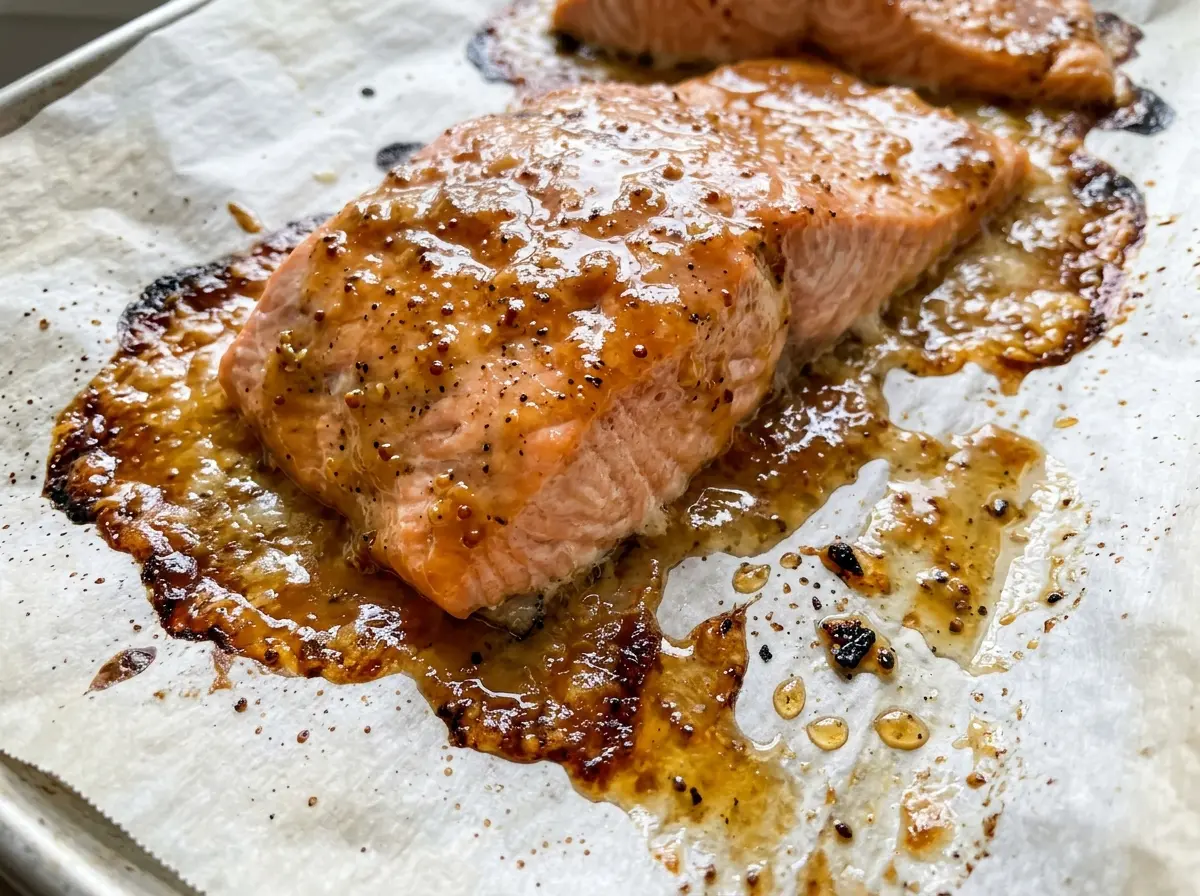
I whisk pure maple syrup with Dijon, lemon juice, and finely grated garlic for a glaze that’s sweet, sharp, and quick to make. Once the potatoes are nearly tender, I add the asparagus and skin-on salmon to the same pan, brush the glaze over the fish, and let the oven finish the job. You get crisp-edged potatoes, bright green asparagus, and salmon with a glossy maple Dijon top—all without juggling separate pans.
Kitchen Note
Grate the garlic finely so it blends into the maple Dijon glaze instead of sitting in larger pieces on the salmon. A fine grate gives every brushful a little garlic without leaving sharp bits on top.
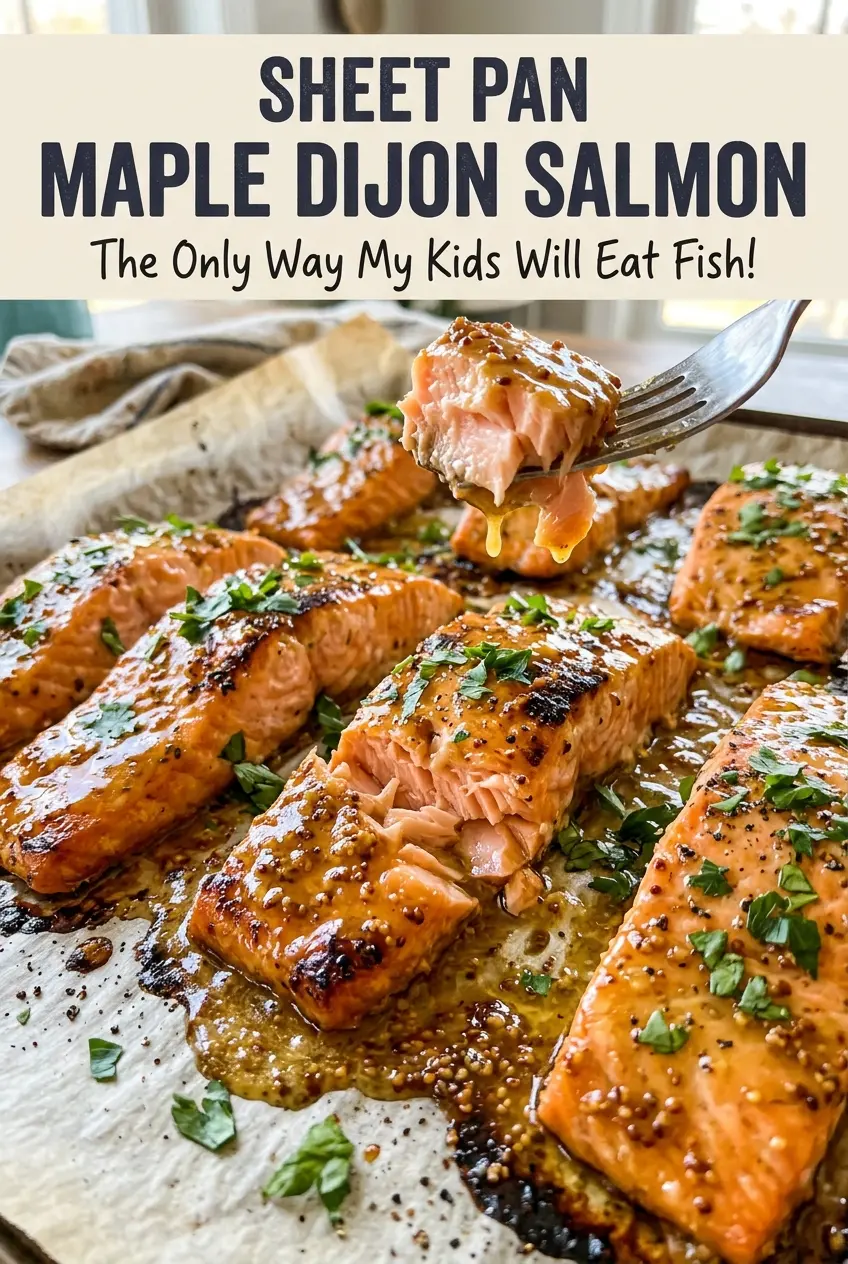
Save this Sheet Pan Maple Dijon Salmon for a dinner with sweet-savory glazed fish, browned potatoes, and tender asparagus on one pan.
Why the Potatoes Go Into the Oven Before the Salmon
Baby potatoes are denser than asparagus or salmon, so giving them the whole first stretch in the oven prevents a familiar sheet-pan problem: one ingredient is still firm while everything else is already cooked. The potatoes need time against the hot pan to brown on their cut sides. Salmon, by contrast, cooks quickly, and asparagus turns tender in a short roast.
That staggered timing is what lets the ingredients finish together without asking the fish to wait around in a hot oven. I roast the potatoes until they’re nearly tender, then push them to one side and add the asparagus and salmon. The fish goes skin side down, where it stays in place while the maple Dijon glaze coats the top.
The 18×13-inch rimmed pan gives the ingredients room to sit in a single layer. If they’re packed tightly together, moisture has less room to escape and the potatoes are less likely to brown well. Arrange the salmon and asparagus with a little space between pieces, keeping the potatoes cut side down as they finish.
What the Maple, Mustard, and Lemon Each Bring to the Glaze
- Pure maple syrup — It brings a rounded sweetness that balances the mustard’s bite and gives the salmon its glossy coating. Use pure maple syrup rather than pancake syrup; the latter has a different, more pronounced sweetener flavor. Honey can stand in one-for-one if maple syrup isn’t available, though the glaze will taste more floral and less woodsy.
- Dijon mustard — Dijon contributes both tang and a smooth texture that helps the glaze cling to the fish. A whole-grain mustard works in its place, but its seeds leave the finish more textured and the mustard flavor less uniform.
- Fresh lemon juice — A little acidity keeps the maple from tasting flat and sharpens the mustard. Fresh juice is a good fit here because the glaze has only a few ingredients; bottled lemon juice works in a pinch but tastes less bright.
- Garlic — Finely grated garlic disperses through the glaze more evenly than a coarse chop. Fresh garlic gives the maple and mustard a savory edge; powdered garlic won’t provide quite the same fresh bite or texture.
- Baby potatoes — Their small size makes it practical to halve them and roast them cut side down. Choose firm potatoes without soft spots. Similar small potatoes can be halved to keep the same general shape, while larger potatoes take more preparation to reach bite-size pieces.
- Asparagus — Trim off the woody ends so the pieces are pleasant to eat and roast evenly. Look for firm stalks with tight tips; very thick stalks will be more substantial than thin ones after the same time in the oven.
- Skin-on salmon — The skin gives each portion a sturdy underside on the pan while the glaze stays on top. Ask for four portions cut from similar thickness if possible, since pieces of uneven thickness won’t finish at exactly the same moment.
Roast the Potatoes First, Then Finish the Pan Together
Whisk the Maple Dijon Glaze
Whisk the maple syrup, Dijon mustard, fresh lemon juice, and finely grated garlic in a small bowl until the mixture looks smooth and evenly combined. The glaze should be loose enough to brush across the salmon rather than sit in a mound. If you spot a streak of mustard, keep whisking before you set the bowl aside. That quick mix gives the flavors time to combine while the potatoes begin roasting.
Give the Potatoes Their Browning Time
Heat the oven to 425°F and use an 18×13-inch rimmed sheet pan. Toss the halved potatoes with 2 tablespoons of olive oil, 1/2 teaspoon of kosher salt, and 1/4 teaspoon of black pepper, then arrange them cut side down. Roast for 20–25 minutes, until they’re nearly tender and browned underneath. If the cut sides are still pale, let the potatoes continue roasting before adding the salmon and asparagus.
Add the Salmon and Asparagus for the Finish
Toss the asparagus with the remaining 1 tablespoon of olive oil, 1/2 teaspoon of kosher salt, and 1/4 teaspoon of black pepper. Push the potatoes to one side of the pan, then arrange the asparagus and salmon in the open space with the salmon skin side down. Brush the maple Dijon glaze over the salmon. Roast for 10–14 minutes, until the asparagus is tender and the salmon reaches 145°F in the thickest part and flakes easily.
Two Useful Swaps for a Different Sheet Pan Dinner
A Lower-Carb Pan with Cauliflower
Replace the baby potatoes with bite-size cauliflower florets and roast them in the same first stage, tossing them with the potato oil and seasonings. The florets bring less starch and a more delicate, lightly nutty bite; check for browning and tenderness before adding the salmon and asparagus, since the size of the florets affects how quickly they cook.
Use Thin Green Beans Instead of Asparagus
Swap in thin fresh green beans and toss them with the same oil, salt, and pepper used for the asparagus. Add them beside the salmon for the final roast and look for tender beans with a little bite. Thicker beans may need more time, so judge them by texture rather than expecting the asparagus cue to match exactly.
Storage and Reheating
- Refrigerator: Store leftovers in a covered container and eat within 3–4 days. The asparagus softens and the salmon loses some of its just-roasted texture.
- Freezer: Freeze portions in an airtight container for up to 2–3 months. The salmon holds up better than the potatoes and asparagus, which soften after thawing; thaw overnight in the refrigerator.
- Reheating: Warm a portion in the microwave in short bursts until it reaches 165°F throughout. Long, high-power heating is the quickest way to dry out salmon, so stop as soon as it’s hot.
Questions That Come Up While Making Maple Dijon Salmon
Sheet Pan Maple Dijon Salmon
Ingredients
Equipment
Method
- Whisk the maple syrup, Dijon mustard, lemon juice, and garlic in a small bowl.
- Heat the oven to 425°F.
- On an 18x13-inch rimmed sheet pan, toss the potatoes with 2 tablespoons of the olive oil, 1/2 teaspoon of the salt, and 1/4 teaspoon of the pepper.
- Arrange the potatoes cut side down.
- Roast for 20–25 minutes, until the potatoes are nearly tender and browned on the cut sides.
- Toss the asparagus with the remaining 1 tablespoon olive oil, 1/2 teaspoon salt, and 1/4 teaspoon pepper.
- Push the potatoes to one side of the pan.
- Arrange the asparagus and salmon on the pan, placing the salmon skin side down.
- Brush the maple Dijon glaze over the salmon.
- Roast for 10–14 minutes, until the asparagus is tender and the salmon reaches 145°F in the thickest part and flakes easily.