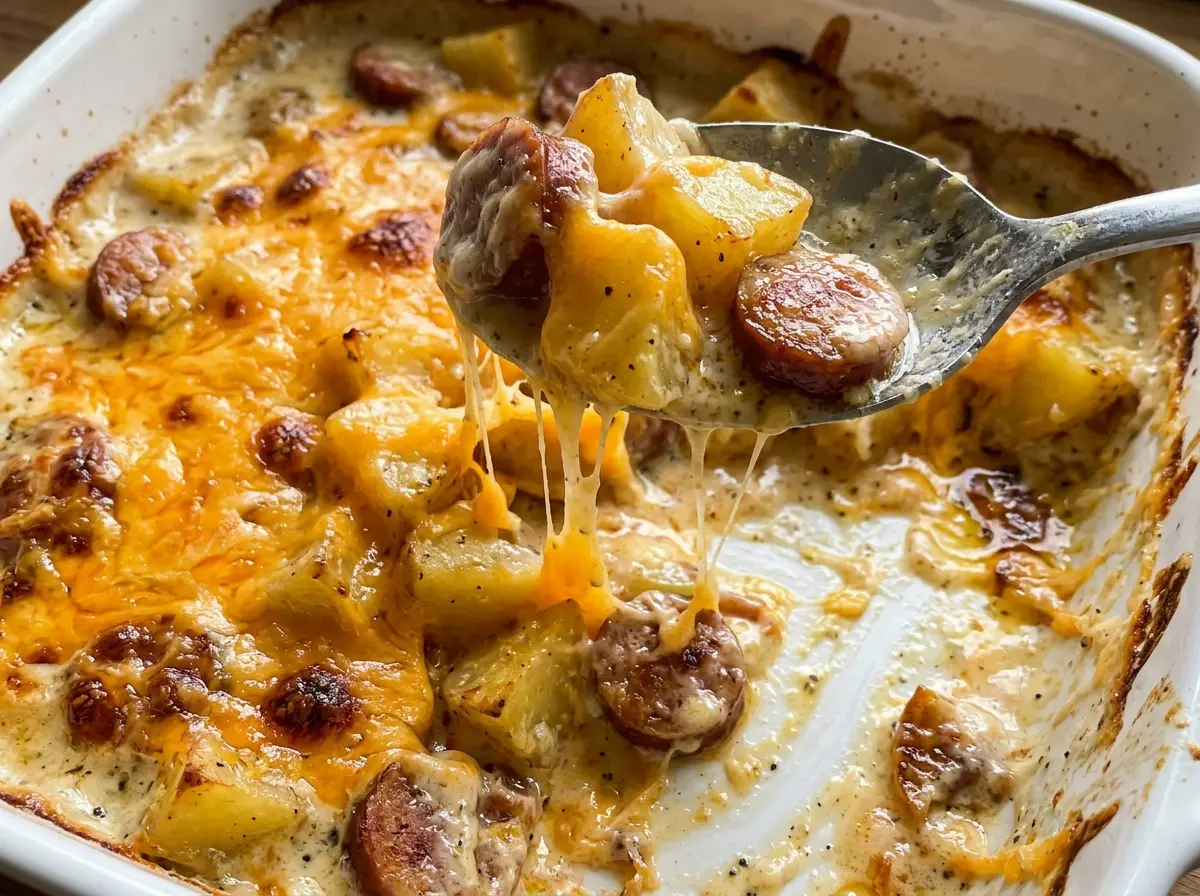
The sausage rounds start to brown at the edges before the middle of the skillet has had much time to heat up. I turn them now and then so they pick up color on both sides, then fold them into a creamy potato mixture for this smoked sausage and cheesy potato casserole. It’s a practical way to turn frozen diced hash browns and a few fridge staples into a bubbling 9×13-inch dinner that serves eight.
The mixture has to be thick enough to coat the potatoes, not run between them like a soup. Condensed cream of chicken soup and sour cream give it body, while sharp cheddar brings a savory bite through the casserole and across the top. Baking it first under foil gives the potatoes time to soften; uncovering it at the end lets the cheese on top melt and the edges bubble. The finished casserole is creamy in the middle, with browned sausage and a cheesy top.
Kitchen Note
Give the casserole the full 10-minute rest before scooping. The filling is loose when it first comes out of the oven, but it settles as it stands, so the portions hold together instead of sliding apart.
Save this smoked sausage and cheesy potato casserole for a hearty, creamy dinner with browned sausage and a bubbling cheddar top.
Why This Casserole Needs Both a Covered Bake and an Uncovered Finish
A casserole with frozen potatoes has two jobs to do in the oven: soften the potatoes all the way through, then finish the surface without leaving a dry, overcooked layer underneath. Keeping the baking dish covered at first holds in moisture and gives the diced potatoes time to become tender in the creamy mixture. Taking the foil off too early would expose the top while the center still needs heat.
The final uncovered stretch changes the surface, not the basic structure of the filling. The cheddar on top melts, the edges bubble, and excess moisture can escape instead of collecting under the foil. That balance is why I don’t leave it covered for the whole bake or uncover it from the start. You’re looking for tender potatoes and bubbling edges, with a center that has reached 165°F—not a dry, browned crust all the way across.
What the Potatoes, Soup, and Cheddar Each Bring to the Casserole

- Frozen diced hash brown potatoes — Diced potatoes keep their shape in the creamy sauce and make the casserole feel substantial. Let them thaw and pat them dry before mixing; excess surface moisture can loosen the sauce. Choose a bag with distinct pieces rather than a clump of frozen potatoes.
- Smoked sausage — Its smoky, savory flavor gives the mild potato base a stronger counterpoint. Slice it into even rounds so they brown at a similar pace, and choose a sausage whose smoke level you enjoy; that flavor carries through the whole dish.
- Condensed cream of chicken soup and sour cream — Together they make a thick coating that clings to the potatoes instead of disappearing into the bottom of the dish. Use condensed soup, not ready-to-serve soup, which is thinner and would make a looser mixture. The sour cream adds a gentle tang that keeps the casserole from tasting one-note.
- Sharp cheddar — Sharp cheddar stands up to the sausage and gives the filling a more pronounced cheese flavor than a mild cheese would. Freshly shredded cheese melts smoothly into the sauce; packaged shredded cheddar also works if convenience matters more.
- Yellow onion and unsalted butter — Finely chopped onion distributes its savory sweetness through the filling without leaving large, crunchy pieces. The butter enriches the sauce, while brushing some inside the baking dish helps keep the edges from sticking.
Brown the Sausage, Coat the Potatoes, Then Let the Oven Finish
Get Color on the Sausage Rounds
Heat a 12-inch skillet over medium heat and cook the sliced sausage for 6–8 minutes, turning it occasionally. Look for browned patches on the rounds rather than waiting for every surface to become dark. Transfer the sausage to a plate when it’s browned; don’t let it sit in the skillet until the edges turn hard. This quick skillet step gives the finished casserole a more savory, roasted sausage flavor.
Whisk a Thick, Smooth Cheese Base
While the oven heats to 375°F, brush 1 tablespoon of the melted butter over the inside of a 9×13-inch baking dish. In a large bowl, whisk the condensed soup, sour cream, remaining melted butter, garlic powder, and black pepper until smooth. A few quick passes around the bowl should leave no streaks of sour cream. Stir in the 1 1/2 cups of cheddar so it’s distributed through the sauce before the potatoes go in.
Fold Everything Together Without Crushing the Potatoes
Add the thawed, patted-dry potatoes, finely chopped onion, and browned sausage to the bowl. Fold until the sauce coats the potatoes evenly, scraping from the bottom so the sausage and onion don’t gather in one spot. Use a gentle motion rather than mashing; you want distinct potato pieces in the finished casserole. Spread the mixture into the prepared dish, then scatter the remaining cheddar evenly over the top.
Bake Until the Center Is Hot and the Edges Bubble
Cover the baking dish with foil and bake for 40 minutes. Remove the foil and bake for another 15–20 minutes, until the potatoes are tender, the edges are bubbling, and the center reaches 165°F. If the top looks melted but the potatoes still feel firm, judge doneness by the center and potato texture rather than the cheese alone. The casserole should be hot through, not just browned on top.
Simple Swaps That Change the Casserole Without Changing Its Shape
Use turkey smoked sausage for a lighter bite
Replace the smoked sausage with the same amount of turkey smoked sausage and brown it in the skillet the same way. The casserole will taste a little less rich, but the smoky seasoning still pairs well with the potatoes and cheddar.
Trade sharp cheddar for Monterey Jack
Use Monterey Jack in both the filling and the topping in place of the cheddar. It melts smoothly and makes the casserole milder and creamier, though you’ll lose some of the sharp cheese flavor.
Make a gluten-free version with the right packaged ingredients
Choose gluten-free smoked sausage, condensed cream of chicken soup, and hash browns, keeping the amounts and method the same. The soup is the most important swap because it thickens the filling; the finished casserole should remain creamy, though brands can vary slightly in texture.
Storage and Reheating
- Refrigerator: Store leftovers in an airtight container for 3–4 days. The potatoes soften a little more as they sit.
- Freezer: Freeze baked, cooled portions in airtight containers for up to 2 months for the best texture. Thaw overnight in the refrigerator; the potatoes may be softer after freezing.
- Reheating: Reheat individual portions in the microwave, loosely covered, until hot throughout. Leaving a portion uncovered for too long can dry the potato edges before the middle warms.
Questions I Get Asked About This Sausage and Potato Casserole
Smoked Sausage and Cheesy Potato Casserole
Ingredients
Equipment
Method
- Preheat the oven to 375°F.
- Brush 1 tablespoon of the melted butter over the inside of a 9x13-inch baking dish.
- Cook the smoked sausage in a 12-inch skillet over medium heat for 6–8 minutes, turning occasionally, until browned; transfer it to a plate.
- Whisk the condensed cream of chicken soup, sour cream, remaining 4 tablespoons melted butter, garlic powder, and black pepper in a large bowl until smooth.
- Stir the 1 1/2 cups shredded sharp cheddar cheese into the soup mixture.
- Fold the thawed hash brown potatoes, finely chopped yellow onion, and browned sausage into the soup mixture until evenly coated.
- Spread the mixture in the prepared baking dish and sprinkle the remaining 1/2 cup shredded sharp cheddar cheese evenly over the top.
- Cover the dish with foil and bake for 40 minutes.
- Uncover and bake for 15–20 minutes, until the potatoes are tender, the edges are bubbling, and the center reaches 165°F.
- Let the casserole rest for 10 minutes before serving.