Ingredients
Equipment
Method
Prep the ribs
- Pat the short ribs completely dry with paper towels, so the surface browns instead of steaming.
- Mix kosher salt, black pepper, garlic powder, onion powder, and smoked paprika, then rub all over the ribs.
Sear for flavor
- Heat olive oil in a large heavy skillet or Dutch oven over medium-high heat until shimmering.
- Sear the ribs in batches for 2–3 minutes per side until a deep mahogany crust forms, then transfer to the slow cooker.
Build the braise base
- In the same skillet, reduce heat to medium and add onion, carrots, and celery, cooking 3–4 minutes while scraping up the browned bits.
- Stir in tomato paste and cook 1 minute until it darkens slightly.
- Pour in the red wine and let it bubble for 1–2 minutes, deglazing the pan completely.
- Add beef broth and Worcestershire sauce, stir to combine, then pour the mixture over the ribs in the slow cooker.
Slow cook
- Tuck rosemary sprigs, thyme sprigs, and bay leaves around the ribs, then cover.
- Cook on LOW for 8–9 hours (preferred) or HIGH for 4–5 hours until the meat pulls away from the bone with no resistance.
Finish sauce and serve
- Carefully transfer the ribs to a plate and tent loosely with foil.
- Strain the braising liquid through a fine-mesh strainer into a small saucepan, discarding solids, then skim any visible fat from the surface.
- Bring the strained liquid to a simmer over medium heat.
- Whisk cornstarch with cold water, then stir into the sauce and simmer 3–4 minutes, stirring, until it coats the back of a spoon.
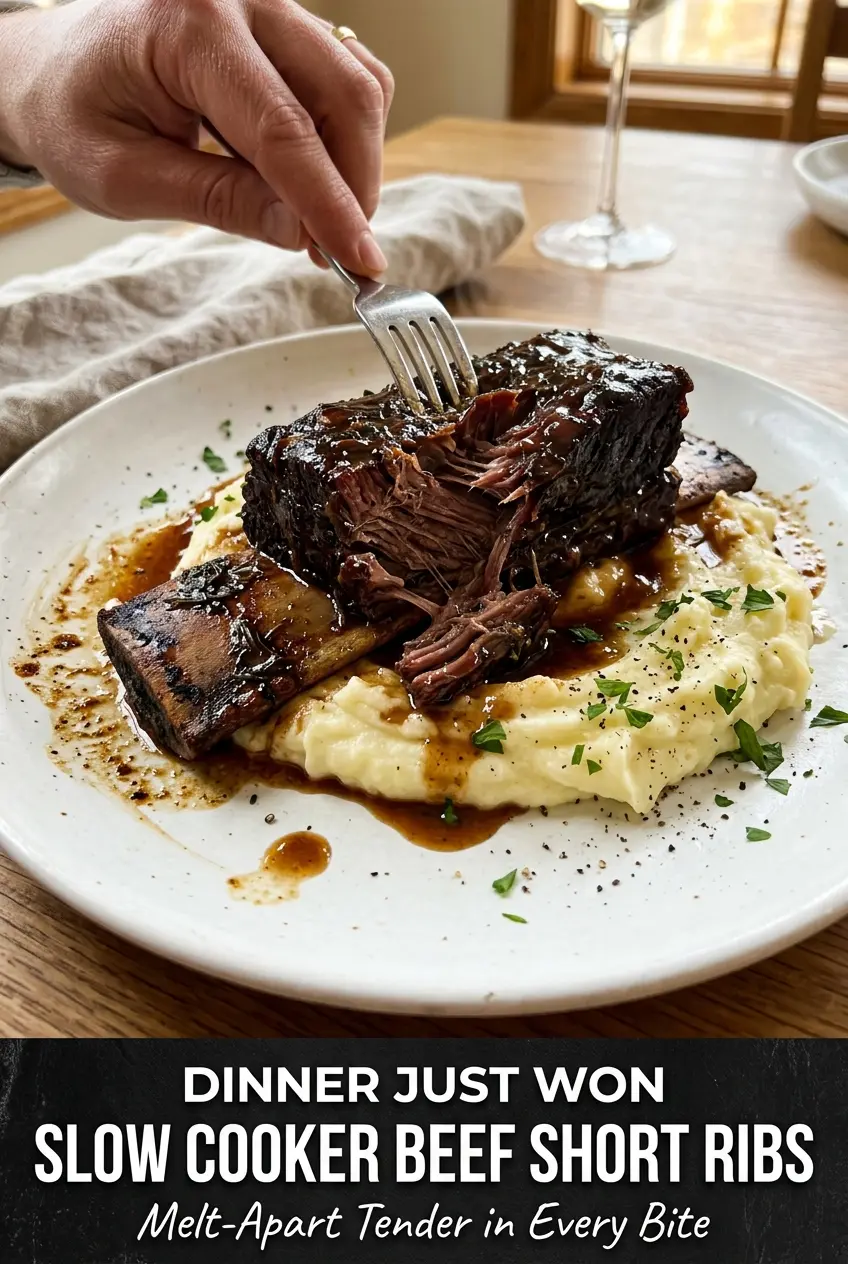
- Return ribs to the slow cooker or a serving dish, pour the glossy sauce over the top, garnish with parsley, and serve over creamy mashed potatoes or egg noodles.
Notes
For the best texture, fully dry the ribs before seasoning and sear—this helps build that dark crust that flavors the braise. Refrigerate leftovers in a sealed container for up to 4 days; reheat gently on the stovetop or microwave until hot. Freezing is yes—freeze ribs with sauce for up to 3 months and thaw in the fridge before reheating. For a lighter option, use low-sodium beef broth (and reduce added salt) to control sodium without changing the braising method.