
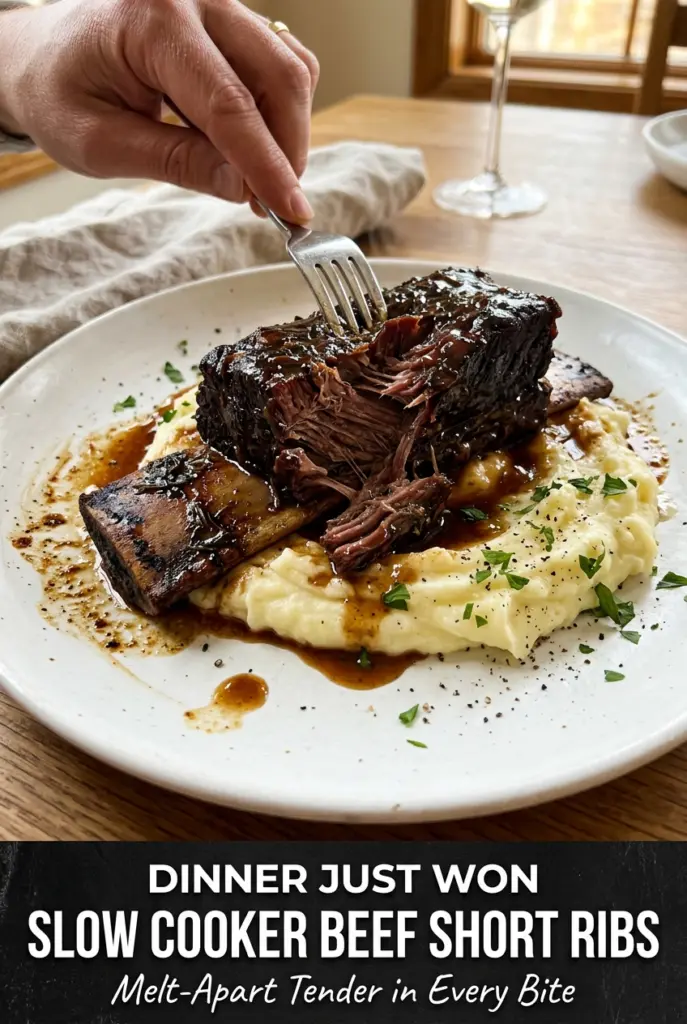
Slow Cooker Beef Short Ribs
Fall-off-the-bone beef short ribs turn into something special when they spend the day in a slow cooker with red wine, herbs, and a little tomato paste. The meat gets soft…
Tip: save now, cook later.Fall-off-the-bone beef short ribs turn into something special when they spend the day in a slow cooker with red wine, herbs, and a little tomato paste. The meat gets soft enough to pull apart with a fork, but the real payoff is the sauce: dark, glossy, and packed with the kind of slow-cooked depth you usually only get from a braise that needs constant attention. This version earns its keep because the sear, the deglazing, and the low, long cook all work together instead of relying on the crockpot alone.
The trick is building flavor before the slow cooker ever gets involved. Dry ribs sear better, and that deep brown crust matters because it seasons the whole dish. Tomato paste gets cooked until it darkens, the wine lifts every bit of fond from the pan, and the herbs have time to perfume the broth without turning bitter. By the time the ribs are done, the liquid has become something worth spooning over potatoes.
You’ll find the exact timing, the best way to thicken the sauce without turning it cloudy, and a few useful swaps below if you need to work with what’s already in your kitchen.
The ribs came out unbelievably tender after 8 hours on low, and the sauce thickened up into this rich gravy that coated the mashed potatoes perfectly. My husband kept going back for more and said the red wine flavor was spot on.
Save these slow cooker beef short ribs for the night you want a red wine braise with deep flavor and almost no hands-on work.
The Sear Is Not Optional If You Want Real Braised Flavor
A slow cooker can make beef short ribs tender, but it can’t create a proper crust on its own. That crust is where the deep, savory flavor starts, and it’s also what keeps the final sauce from tasting flat. If the ribs go into the pot pale and wet, the whole dish leans more boiled than braised.
Patting the ribs dry matters more than most people realize. Moisture on the surface turns into steam, and steam blocks browning. Sear in batches so the pan stays hot enough to form that dark mahogany color without crowding the meat, and don’t move the ribs too soon. If they stick at first, they’re not ready to turn yet.
What Each Ingredient Is Actually Doing in This Dish
- Bone-in beef short ribs — The bones add flavor and help the meat stay succulent during the long cook. Boneless short ribs will work, but they won’t bring the same depth or the same dramatic presentation.
- Dry red wine — Cabernet or Merlot gives the braise body and a little tannic structure. Use a wine you’d drink, because the flavor concentrates as it cooks.
- Tomato paste — This is the quiet backbone of the sauce. Cooking it for a minute or two before adding the liquid takes away the raw edge and gives the braise a richer, rounder taste.
- Fresh rosemary and thyme — Fresh herbs hold up better over a long cook than dried ones do. If you need to substitute dried, use about one-third as much and keep an eye on it so the flavor doesn’t get dusty.
- Cornstarch slurry — The slow cooker won’t reduce the liquid much, so a quick slurry at the end gives you a sauce that clings instead of pooling. Stir it into a simmering sauce, not into a cold one, or it can stay grainy.
Building the Braise So the Sauce Comes Out Silky, Not Flat
Season and Sear the Ribs
Rub the ribs all over with the seasoning mix, then sear them in hot oil until the surface turns deep brown and the edges pick up a little crispness. Two to three minutes per side is usually enough, but color matters more than the clock. If the pan looks crowded, the temperature drops and the ribs start to steam, which robs the sauce of flavor later.
Cook Down the Vegetables and Tomato Paste
Use the same pan so the browned bits stay in play. Cook the onion, carrots, and celery just until they start to soften, then stir in the tomato paste and let it darken slightly. That extra minute changes the paste from sharp and raw to rich and savory, and it helps the braising liquid taste finished instead of thin.
Deglaze and Transfer Everything to the Slow Cooker
Pour in the wine and scrape the bottom of the pan until every browned bit lifts into the liquid. Let it bubble briefly so the alcohol cooks off a little, then add the broth and Worcestershire sauce. Pour the whole mixture over the ribs, tuck in the herbs, and nestle everything together so the meat is mostly covered but not drowning.
Cook Until the Meat Gives Up Cleanly
Low and slow gives the best texture here. After 8 to 9 hours on low, the meat should pull away from the bone with almost no resistance and a fork should slide in without tugging. If it still feels tight, it needs more time; short ribs turn tender in stages, and cutting the cook short leaves them chewy instead of silky.
Strain, Reduce, and Gloss the Sauce
Lift the ribs out carefully, strain the liquid, and skim off any fat you can see. Bring the sauce to a simmer before adding the cornstarch slurry, because starch only thickens properly when it hits heat. Stir until the sauce looks glossy and lightly coats a spoon. If it still seems thin, give it another minute or two rather than adding more slurry all at once.
How to Adapt These Slow Cooker Beef Short Ribs
Make It Gluten-Free Without Losing Body
This recipe is naturally close to gluten-free already. Use a gluten-free Worcestershire sauce and check that your broth is certified gluten-free, then keep the cornstarch slurry as written. The finished sauce stays just as silky, and you won’t lose any of the braise’s depth.
Skip the Wine and Keep the Braise Deep
If you don’t cook with wine, replace it with extra beef broth plus 1 tablespoon of red wine vinegar or balsamic vinegar. You’ll lose a little complexity, but the acid still brightens the sauce and keeps it from tasting heavy.
Use Boneless Short Ribs or Chuck Roast
Boneless short ribs cook a little faster and are easier to serve, but they don’t bring the same bone-in richness. Chuck roast is the best budget backup if short ribs are expensive; cut it into large chunks and cook until it shreds easily.
Storage and Reheating
- Refrigerator: Store the ribs and sauce in an airtight container for up to 4 days. The flavor deepens overnight, and the sauce may thicken as it chills.
- Freezer: These freeze well for up to 3 months. Cool completely, pack the ribs with sauce in a freezer-safe container, and thaw overnight in the refrigerator before reheating.
- Reheating: Warm gently on the stovetop over low heat or in a covered baking dish at 325°F until hot. If the sauce looks too thick after chilling, loosen it with a splash of broth instead of blasting it with high heat, which can dry out the meat.
Questions I Get Asked About This Recipe
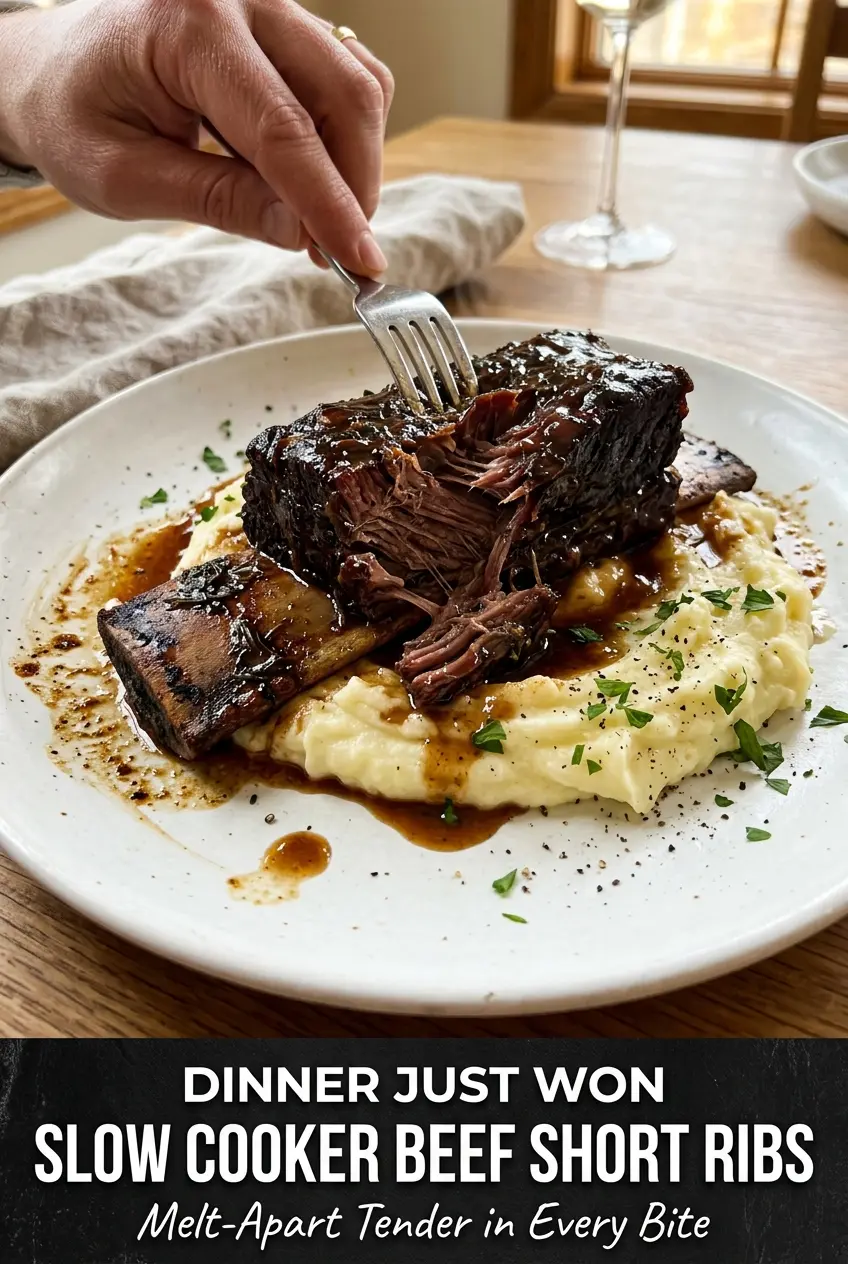
Slow Cooker Beef Short Ribs
Ingredients
Equipment
Method
- Pat the short ribs completely dry with paper towels, so the surface browns instead of steaming.
- Mix kosher salt, black pepper, garlic powder, onion powder, and smoked paprika, then rub all over the ribs.
- Heat olive oil in a large heavy skillet or Dutch oven over medium-high heat until shimmering.
- Sear the ribs in batches for 2–3 minutes per side until a deep mahogany crust forms, then transfer to the slow cooker.
- In the same skillet, reduce heat to medium and add onion, carrots, and celery, cooking 3–4 minutes while scraping up the browned bits.
- Stir in tomato paste and cook 1 minute until it darkens slightly.
- Pour in the red wine and let it bubble for 1–2 minutes, deglazing the pan completely.
- Add beef broth and Worcestershire sauce, stir to combine, then pour the mixture over the ribs in the slow cooker.
- Tuck rosemary sprigs, thyme sprigs, and bay leaves around the ribs, then cover.
- Cook on LOW for 8–9 hours (preferred) or HIGH for 4–5 hours until the meat pulls away from the bone with no resistance.
- Carefully transfer the ribs to a plate and tent loosely with foil.
- Strain the braising liquid through a fine-mesh strainer into a small saucepan, discarding solids, then skim any visible fat from the surface.
- Bring the strained liquid to a simmer over medium heat.
- Whisk cornstarch with cold water, then stir into the sauce and simmer 3–4 minutes, stirring, until it coats the back of a spoon.
- Return ribs to the slow cooker or a serving dish, pour the glossy sauce over the top, garnish with parsley, and serve over creamy mashed potatoes or egg noodles.