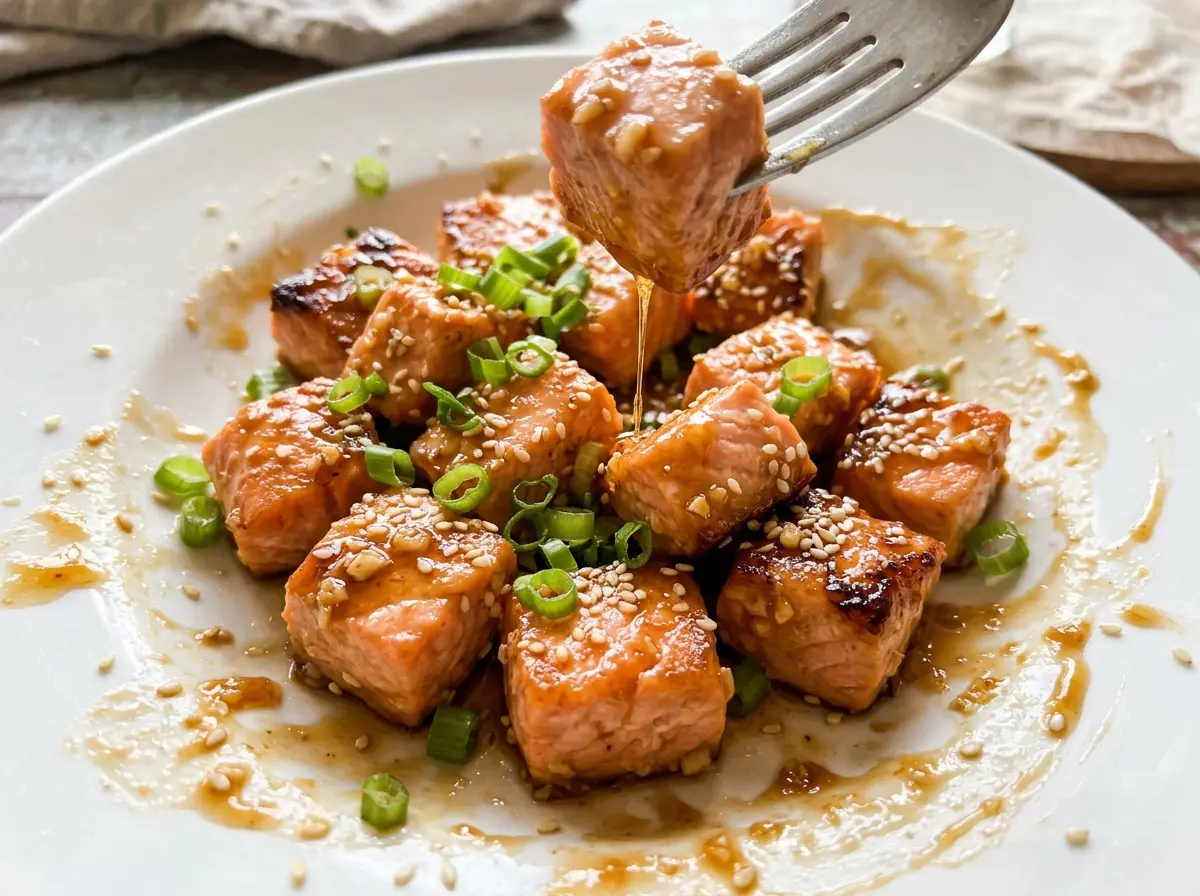
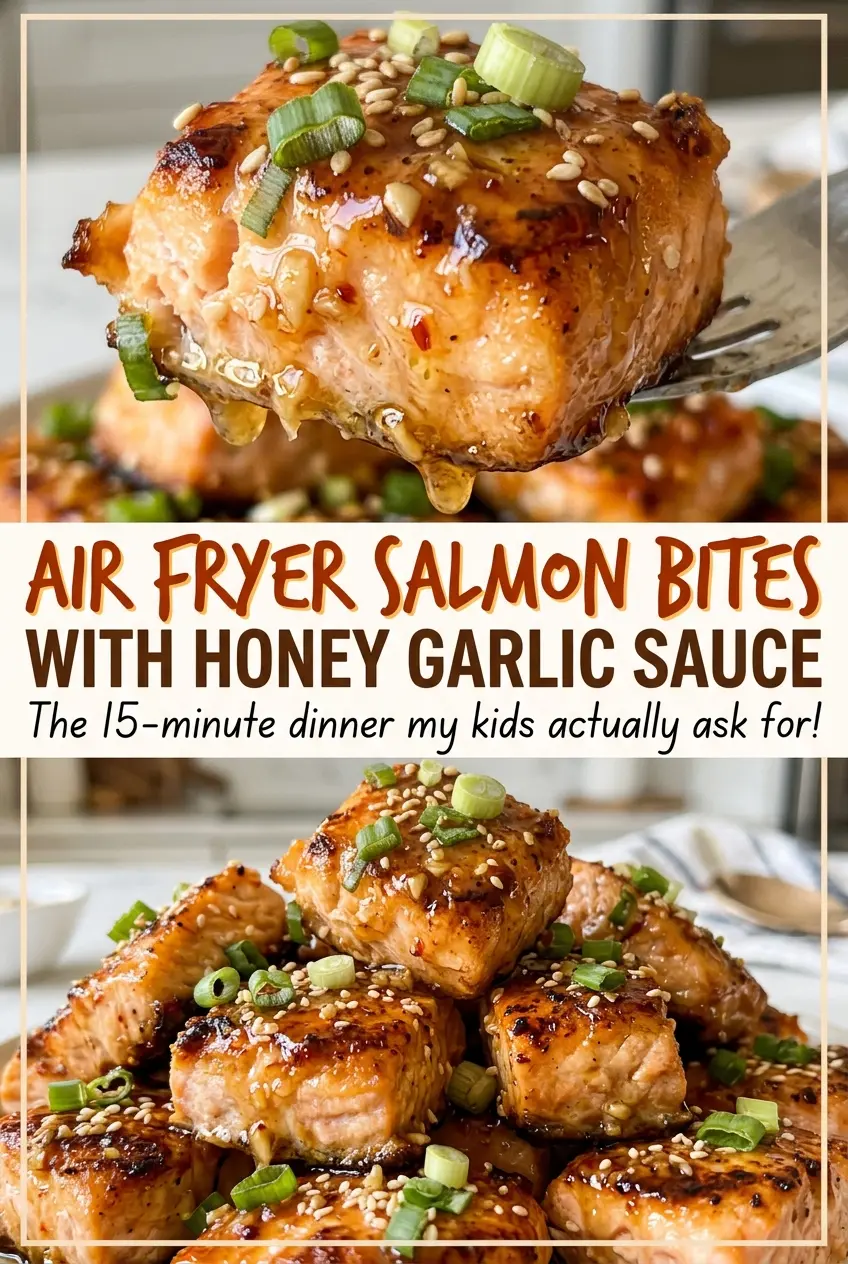
The salmon cubes cook quickly in a hot air fryer, but the honey garlic sauce needs a little attention on the stove at the same time. I like this setup because the fish stays lightly seasoned while it cooks, so the sweet, savory glaze goes on at the end instead of scorching in the basket. These air fryer salmon bites with honey garlic sauce make a satisfying dinner without a long prep list.
Cutting the salmon into even 1-inch cubes helps the pieces finish at about the same time. I toss them with olive oil, salt, and pepper, then give them room in the basket so hot air can move around each bite. Meanwhile, the sauce simmers until the cornstarch slurry turns it glossy and lightly thickened. The finished salmon is tender under a bright, sticky coating.
Kitchen Note
Keep the salmon cubes close to the same size, about 1 inch across. Smaller pieces can dry out while larger ones are still cooking, and even cuts make that quick air-fryer window much easier to manage.
Save these air fryer salmon bites with honey garlic sauce for a quick dinner with tender fish and a glossy, sweet-savory coating.
Why the Honey Garlic Sauce Goes on After the Salmon Cooks
Honey gives this sauce its rounded sweetness and glossy finish, but it also means the coating doesn’t belong in the air fryer from the start. At 400°F, exposed honey can darken or scorch before the salmon cubes are cooked through. Keeping the fish simply seasoned during air-frying avoids that problem and lets the sauce stay bright rather than bitter.
The sauce gets its body from a small cornstarch slurry, not from a long reduction. Stirring the cornstarch with water first disperses it, and adding that mixture to the simmering sauce helps it thicken evenly. You’re looking for a glaze that clings lightly to a spoon, not a stiff paste. Once it reaches that point, the salmon only needs a gentle toss to pick up an even coating without breaking into flakes.
What Honey, Soy, and Rice Vinegar Each Bring to the Glaze
- Skinless salmon fillet — A center-cut fillet is convenient to cube and gives you pieces with a similar thickness. Fresh or previously frozen salmon both work; thaw frozen fish completely before cutting so the cubes cook evenly. Removing the skin before cooking also makes it easier to toss the finished bites with sauce.
- Olive oil — A light coating helps the salt and pepper cling and keeps the salmon from feeling dry around the edges. There’s no need for an expensive finishing oil here; a basic olive oil is fine because the sauce supplies most of the dish’s aroma.
- Honey — Honey brings sweetness and helps the sauce turn shiny as it thickens. A runny honey stirs into the saucepan easily, but there’s no need to seek out a specialty variety. Changing the sweetener would change the sauce’s flavor and consistency, so stick with honey for the intended glaze.
- Low-sodium soy sauce — This supplies the savory, salty backbone without letting salt take over the honey and garlic. Low-sodium matters here because the salmon is seasoned separately. Regular soy sauce will make the overall dish taste saltier.
- Fresh garlic — Minced garlic gives the simmering sauce its sharp, savory aroma. Mince it finely so the flavor spreads through the glaze instead of leaving large raw-tasting pieces. Fresh cloves are the best fit; garlic powder won’t give the sauce the same texture or fresh bite.
- Rice vinegar — Its mild acidity balances the honey and keeps the sauce from tasting flat. Use plain rice vinegar rather than seasoned rice vinegar, which can add sweetness and salt that the sauce doesn’t need.
- Cornstarch — This is what makes the sauce cling to the salmon instead of running off. Stir it with the water in a separate bowl until smooth before adding it; sprinkling dry cornstarch directly into the hot sauce is more likely to leave lumps.
Air-Frying the Salmon and Thickening the Glaze
Season and Arrange the Salmon
Preheat a 5- to 6-quart air fryer to 400°F. Toss the salmon cubes with olive oil, kosher salt, and black pepper until they’re lightly coated. Arrange the pieces in a single layer in the basket, with a little space between them where possible. A crowded basket blocks airflow, so cook in batches if the salmon won’t fit in one layer.
Cook Until the Centers Reach 145°F
Cook the salmon at 400°F for 5 to 7 minutes, turning the bites halfway through. The edges should look opaque, and the centers should reach 145°F. Start checking toward the shorter end of the time range, since cube size and air-fryer models can affect how quickly the fish cooks. Avoid extending the cook just to get a deep brown exterior; salmon bites can dry out quickly.
Simmer and Thicken the Honey Garlic Sauce
While the salmon cooks, combine the honey, low-sodium soy sauce, minced garlic, and rice vinegar in a small saucepan over medium heat. Bring the mixture to a simmer, then stir the cornstarch and water together in a small bowl. Stir that slurry into the saucepan and simmer for 30 to 60 seconds, stirring, until the sauce looks glossy and lightly thickened. It thickens fast, so stay by the pan and keep the spoon moving.
Coat the Bites Gently
Transfer the cooked salmon to a bowl and add the sauce. Toss gently so the pieces stay intact and each bite gets a light coating. The glaze should cling rather than pool heavily at the bottom of the bowl. Serve as soon as the salmon is coated.
Two Useful Ways to Adapt the Salmon Bites
A Less-Sweet, More Savory Glaze
Use a little less honey while keeping the soy sauce, garlic, rice vinegar, and cornstarch slurry in balance. The finished coating will taste more savory and less sweet; it may also be a touch less thick, so watch the saucepan and stop when it lightly coats a spoon.
Make the Sauce Gluten-Free
Replace the low-sodium soy sauce with the same amount of gluten-free tamari. It keeps the glaze savory, though the flavor may be a little deeper; choose a low-sodium tamari to stay close to the balance of the original sauce.
Storage and Reheating
- Refrigerator: Store cooled leftovers in an airtight container for 3 to 4 days. The salmon will firm up, and the glaze may thicken as it chills.
- Freezer: Freeze in an airtight freezer-safe container for up to 2 months. The salmon will be softer after thawing, and the glaze may separate slightly.
- Reheating: Warm gently in the microwave at 50% power in short bursts, stirring or turning the bites between bursts, until the leftovers reach 165°F. High heat can make salmon dry and tough.
Questions That Come Up When Cooking Salmon Bites
Air Fryer Salmon Bites with Honey Garlic Sauce
Ingredients
Equipment
Method
- Preheat a 5- to 6-quart air fryer to 400°F.
- Toss the salmon cubes with the olive oil, kosher salt, and black pepper.
- Arrange the salmon in a single layer in the air fryer basket.
- Cook at 400°F for 5 to 7 minutes, turning the bites halfway through, until the centers reach 145°F.
- Combine the honey, soy sauce, garlic, and rice vinegar in a small saucepan over medium heat.
- Bring the sauce to a simmer.
- Stir the cornstarch and water together in a small bowl.
- Stir the cornstarch mixture into the saucepan and simmer for 30 to 60 seconds, stirring, until glossy and lightly thickened.
- Gently toss the cooked salmon bites with the sauce and serve.