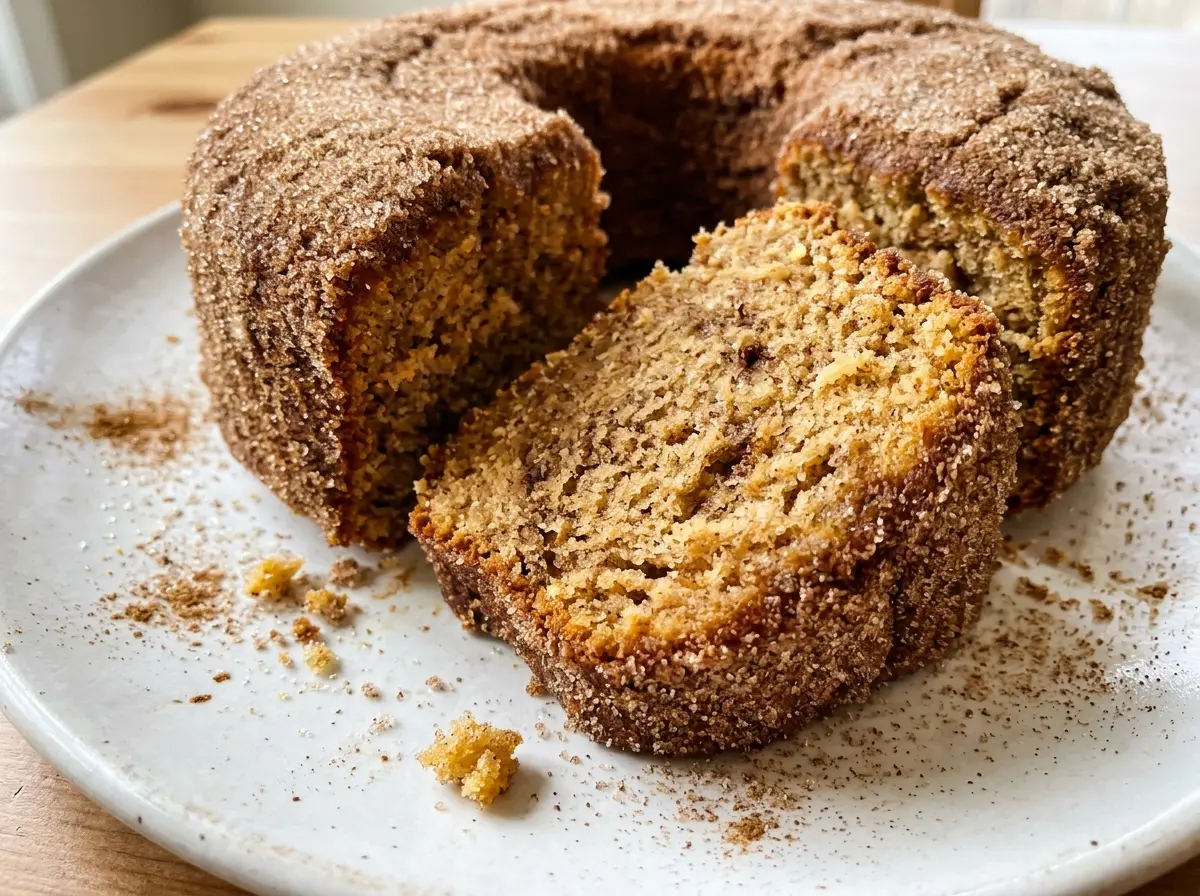
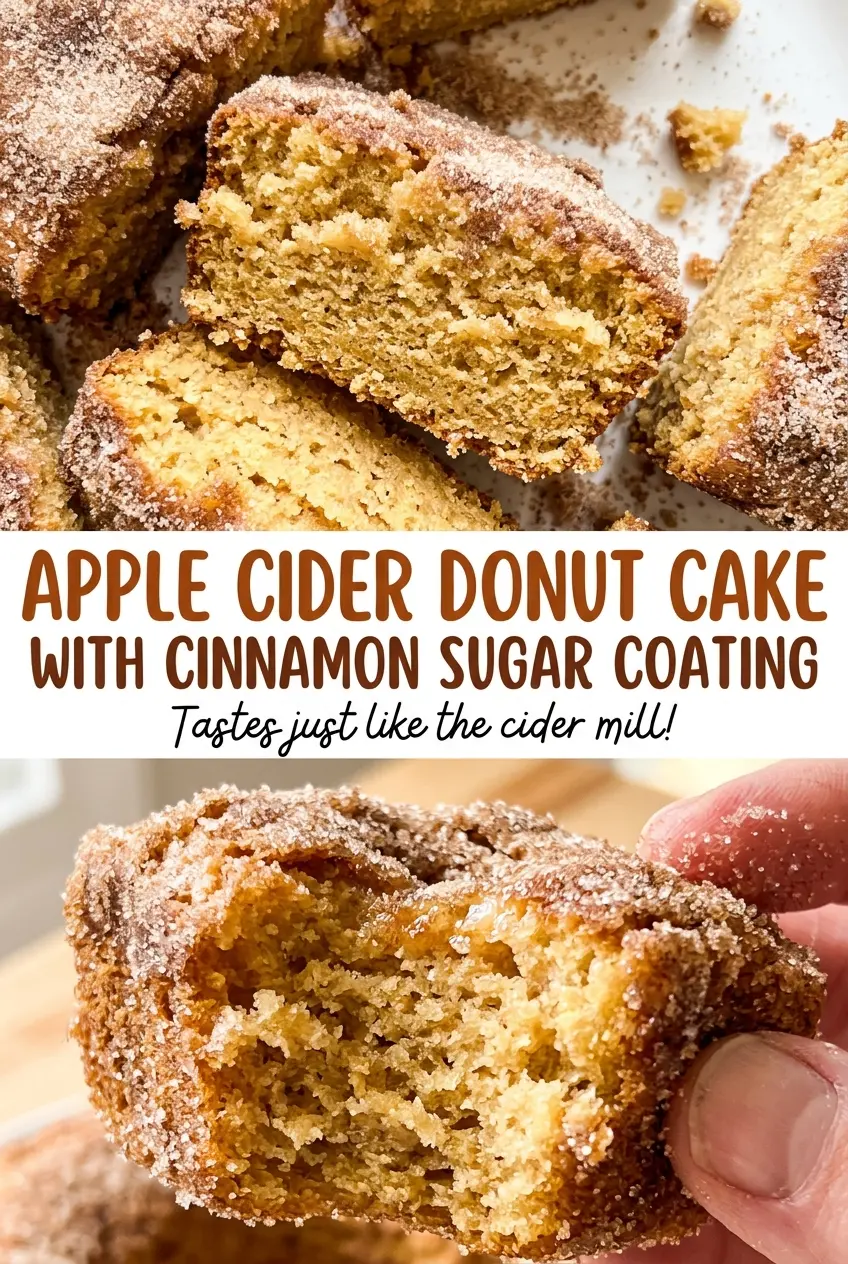
The first cut through a Bundt cake tells you a lot: the crumb should be tender, and that cinnamon-sugar shell should cling to every curve instead of falling away in a pile. This apple cider donut cake brings the cozy spice and sugared finish of a cider-shop donut to a sliceable cake, with a shape that makes it easy to serve at the table.
I like how the cake balances a soft, moist center with a delicate coating that gives each bite a little sparkle. It’s lovely while still warm, when the butter-brushed sugar feels just set, and it stays inviting after it cools. The nutmeg and allspice keep the apple flavor company without taking over, while the brown sugar gives the crumb a mellow, caramel-like note.
Kitchen Note
Give the Bundt pan a careful coat of baking spray, especially around the center tube and down in every flute. A missed patch can tear the cake as it comes out, even when the rest of the pan looks well coated.
Save this apple cider donut cake for its tender crumb and buttery cinnamon-sugar finish.
Why reducing the cider matters more than adding extra apple flavor
Apple cider brings plenty of aroma, but pouring it straight into cake batter also adds a lot of liquid. Simmering it down concentrates the apple character while reducing the amount of moisture going into the bowl. That balance matters in a Bundt cake: too much liquid can leave the middle heavy before the outside has finished baking.
For this cake, the cider should be reduced to one cup, then cooled completely before it joins the batter. Don’t stop early because the saucepan looks fragrant; the measured amount is what keeps the batter balanced. The finished crumb is meant to be soft, not wet or pudding-like, and the cider reduction helps the apple note hold its own against the brown sugar and warm spices. It’s a small bit of stovetop work, but it gives the cake a more focused cider flavor without asking the batter to carry excess liquid.
What gives this cake its donut-shop character
- Apple cider — Use cider rather than expecting the spices alone to carry the apple flavor. Reducing it is what concentrates its taste, so a fresh, clean-tasting cider is worth choosing; the cake doesn’t need a specialty brand.
- Neutral oil and sour cream — Oil keeps the crumb tender, while sour cream adds body and a gentle tang. Vegetable or canola oil both fit here. Plain Greek yogurt can replace the sour cream in the same amount, though the cake will have a slightly tangier finish.
- Light brown sugar — Its soft molasses note suits the cider and spices. Dark brown sugar works as a swap if that’s what’s in your pantry; expect a deeper, more pronounced molasses flavor.
- Eggs at room temperature — They blend more smoothly into the oil-and-sugar mixture when they aren’t cold. Set them out while the cider cools so they’re ready when you start mixing.
- Nutmeg and allspice — These give the cake its warm, familiar donut-shop spice without making it taste like a spice cake. Freshly ground nutmeg has a brighter aroma, but ground nutmeg from the pantry is perfectly suitable.
- Butter, cinnamon, and granulated sugar — The melted butter gives the coating something to cling to, and granulated sugar makes the finish pleasantly crisp. Use unsalted butter so the sweet coating stays balanced.
Build the batter gently, then coat while the cake is warm
Reduce the cider and prepare the Bundt pan
Simmer the cider over medium heat until it measures one cup, about 15–20 minutes, then pour it into a measuring cup and let it cool completely. Heat the oven to 350°F and coat a 10- to 12-cup Bundt pan with baking spray. Whisk the flour, baking powder, baking soda, salt, nutmeg, and allspice in a medium bowl. Having the dry mixture ready before you start the batter makes the alternating additions easier to manage.
Alternate the dry mixture and cider
Whisk the oil and brown sugar together in a large bowl, then whisk in the eggs one at a time. Add the sour cream and vanilla, and mix until the wet ingredients come together. Add the flour mixture in three additions, alternating with the cooled cider in two additions; start and finish with flour. Stop mixing as soon as no dry streaks remain, since extra stirring can make the cake tougher.
Bake until the center leaves a few moist crumbs
Scrape the batter into the prepared pan and bake for 45–55 minutes, until the cake is golden. Check the center with a tester: a few moist crumbs are the cue to pull it from the oven, while wet batter means it needs more time. Let the cake cool in the pan for 15 minutes, then invert it onto a wire rack. Give it another 10–15 minutes, until it’s warm but no longer steaming.
Brush on the cinnamon-sugar shell
Stir the granulated sugar and cinnamon together in a shallow dish while the cake finishes cooling. Brush the warm cake all over with melted butter, then sprinkle on the cinnamon sugar and press gently so it adheres to the curves. If the cake is still steaming, give it a little longer before brushing; the coating goes on best once the surface has stopped giving off steam. Let the sugar coating set for 10 minutes before serving.
Three small changes that take the cake in a new direction
Make it gluten-free
Replace the all-purpose flour with a cup-for-cup gluten-free baking blend made for cakes. The crumb may be a little more delicate than the wheat-flour version, so let the cake complete its pan rest before turning it out.
Use dark brown sugar
Swap dark brown sugar for the light brown sugar to give the cake a deeper molasses note. The apple and spices still come through, but the cake tastes a little richer and less delicate.
Leave out the allspice
Omit the allspice for a simpler, softer spice note that lets the nutmeg and cinnamon-sugar finish stand out. This is an easy choice if you like the donut-cake texture but prefer a less layered spice taste.
Storage and Reheating
- Refrigerator: Keep the cake covered for up to 5 days. The crumb firms up when cold, and the sugar coating softens a little.
- Freezer: Freeze slices in airtight wrapping for up to 2 months. The cake freezes well, though the cinnamon-sugar finish may lose some crispness as it thaws.
- Reheating: Let a chilled slice stand until it’s closer to room temperature for the softest crumb. If you want it warm, microwave briefly in short bursts; heating it too long can melt the buttery coating and dry the cake.
Questions that come up when baking this Bundt cake
Apple Cider Donut Cake with Cinnamon Sugar Coating
Ingredients
Equipment
Method
- Simmer the apple cider in a small saucepan over medium heat until reduced to 1 cup, about 15–20 minutes.
- Pour the reduced cider into a measuring cup and cool completely.
- Heat the oven to 350°F.
- Thoroughly coat a 10- to 12-cup Bundt pan with the baking spray, including the center tube and flutes.
- Whisk the flour, baking powder, baking soda, salt, nutmeg, and allspice in a medium bowl.
- Whisk the oil and brown sugar in a large bowl until combined.
- Whisk in the eggs one at a time, followed by the sour cream and vanilla.
- Add the flour mixture in 3 additions, alternating with the reduced cider in 2 additions and beginning and ending with the flour; mix just until no dry streaks remain.
- Scrape the batter into the prepared pan.
- Bake for 45–55 minutes, until golden and a tester inserted into the center comes out with a few moist crumbs.
- Cool the cake in the pan for 15 minutes.
- Invert the cake onto a wire rack and let it cool until warm but not steaming, about 10–15 minutes.
- Stir the granulated sugar and cinnamon together in a shallow dish.
- Brush the warm cake all over with the melted butter.
- Sprinkle the cinnamon sugar over the cake, pressing gently so it adheres.
- Let the coating set for 10 minutes before serving.