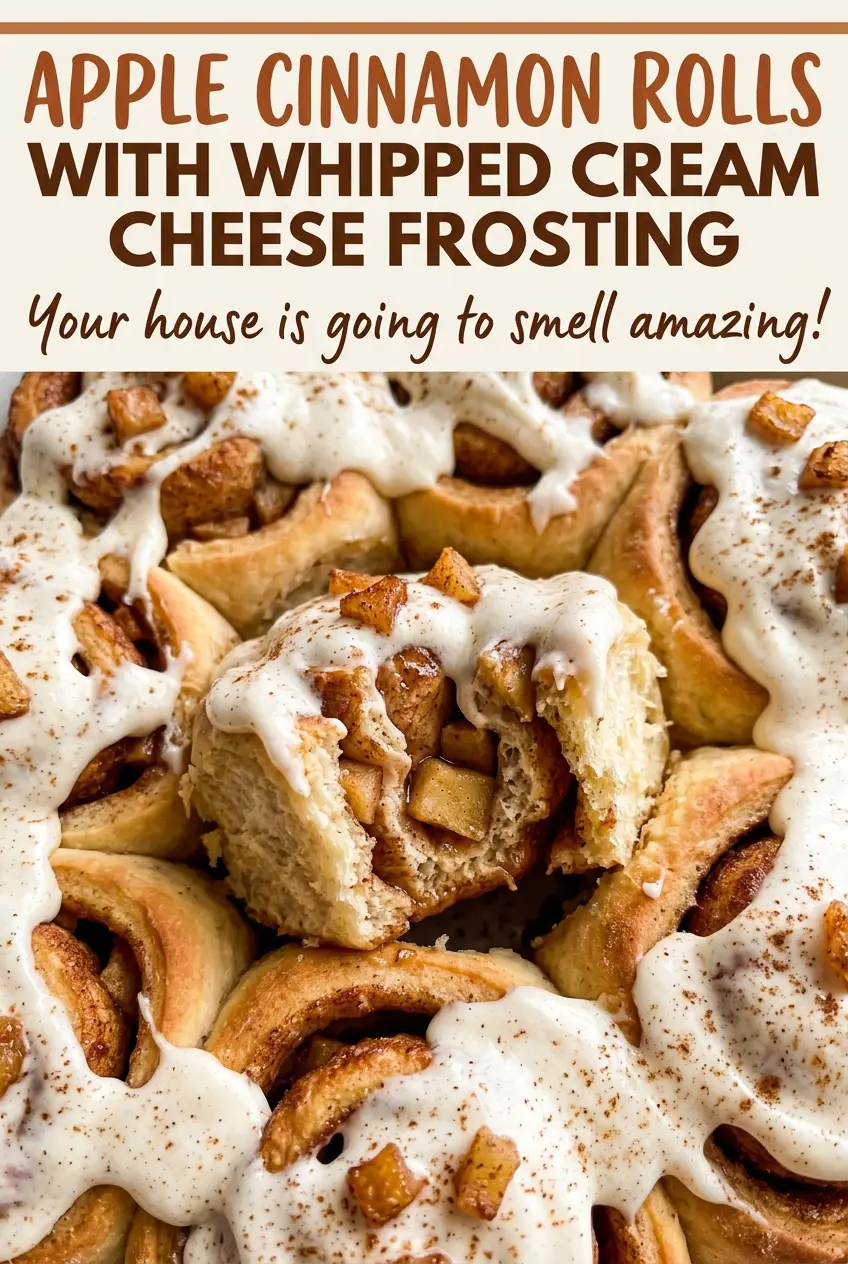
The apples soften in the skillet first, then their cinnamon-brown syrup thickens around them. That cooling wait can feel like the slow part, but it’s what keeps the filling from spreading across the dough when you roll it up. These apple cinnamon rolls bake into soft spirals with tender bits of apple tucked through every slice.
I make the dough with warm milk, active dry yeast, egg, and melted butter, then knead it until it feels smooth and elastic. Once it has doubled, the dough rolls easily into a wide rectangle, so there’s room for an even layer of filling and a neat long roll. The whipped cream cheese frosting goes on after the rolls have cooled in the pan for 10 minutes, while they’re still warm enough for it to settle over the tops. Each bite has a soft center, cinnamon-sweet apples, and a creamy finish.
Kitchen Note
Spread the frosting over the rolls after their 10-minute rest, while they’re still warm. It softens just enough to settle into the tops without disappearing into the rolls.
Save these apple cinnamon rolls with whipped cream cheese frosting for a cozy bake: soft spirals, tender cinnamon apples, and a fluffy finish.
Why the Apple Filling Needs to Cool Before It Goes on the Dough
Warm filling feels easier to spread, but it brings heat and loose syrup right onto a dough that’s meant to stay soft and workable. As the apple mixture cools, the syrup thickened with flour settles around the diced fruit instead of running ahead of your spoon. That makes it easier to leave a clean border and roll the dough into a snug log without pushing the filling out at the seam.
The filling also gets cooked in two stages for a reason. The covered skillet softens the apples without drying them out; cooking uncovered afterward gives excess moisture a chance to cook off while the brown sugar and cinnamon form a thicker coating. If you spread it before that syrup has thickened, it can soak into the dough and make the spirals harder to shape cleanly. Let the filling cool completely in its bowl before spreading it, and you’ll have a more even layer from end to end.
What the Apples, Yeast, and Cream Cheese Each Bring to These Rolls
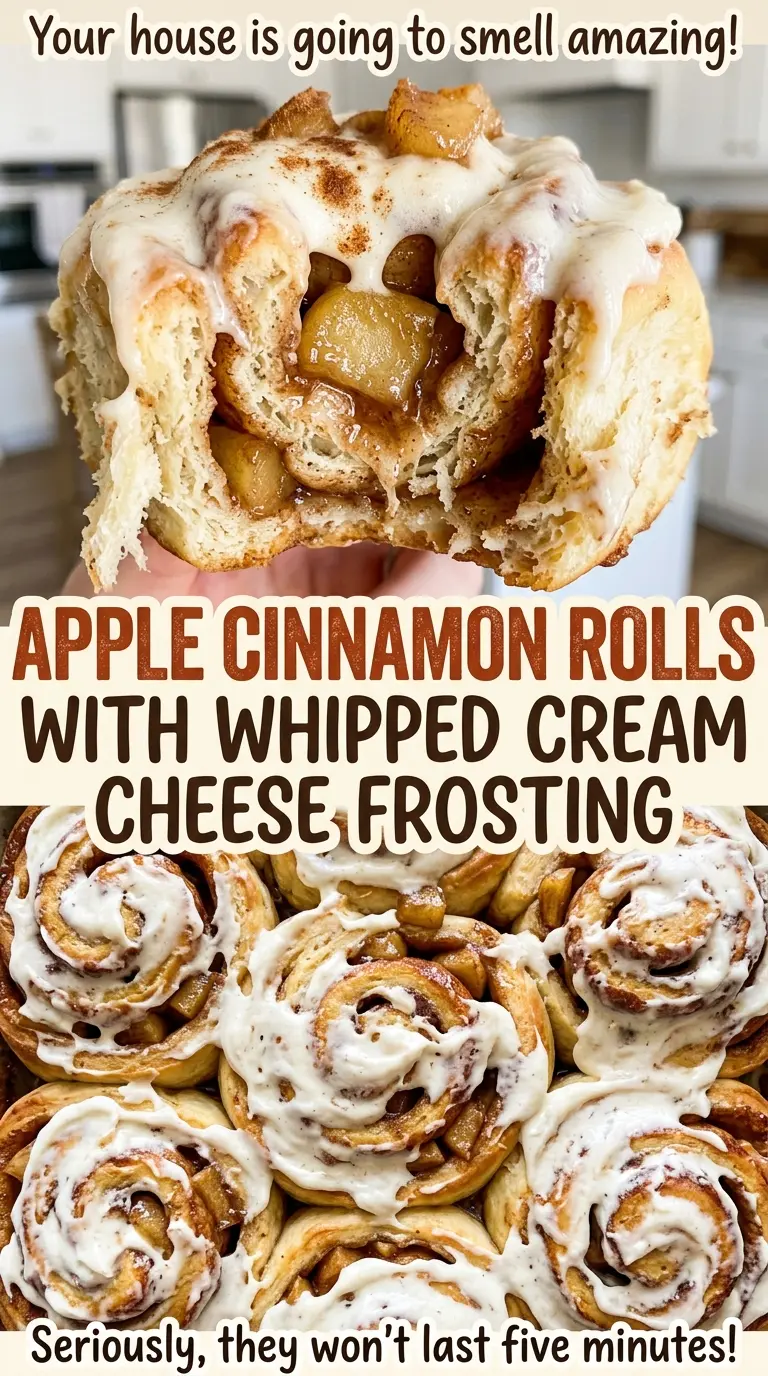
- Apples — Choose firm apples that hold their shape as they cook. A tart variety such as Granny Smith gives the filling a brighter contrast to the brown sugar; a sweeter firm apple makes the finished rolls taste rounder and less tangy. Peel, core, and finely dice them so the filling spreads evenly and cooks in the short skillet time.
- Active dry yeast — The warm milk and sugar give the yeast a chance to foam before the dough comes together. Keep the milk in the 105–110°F range; milk that’s too hot can keep the yeast from doing its job. Check the yeast’s freshness if the mixture stays flat after standing.
- Whole milk, egg, and butter — These make the dough rich and tender. Bring the egg and yolk to room temperature, and let the melted butter cool before mixing so it doesn’t warm the dough unnecessarily. Two-percent milk can stand in for whole milk, though the dough will be a little less rich.
- All-purpose flour — It gives the dough structure and also thickens the apple syrup. Keep the flour divided as written: most goes into the dough, while the remaining spoonful cooks with the filling. Adding a lot more flour during kneading can make the rolls dense.
- Brown sugar and cinnamon — Light brown sugar gives the apples a gentle molasses note without overpowering the fruit. Dark brown sugar works in its place for a deeper flavor. Keep the cinnamon with the sugar in the skillet so it coats the apples and thickens into the filling rather than sitting in dry patches.
- Block cream cheese and heavy cream — Softened block cream cheese beats smooth and gives the frosting body; tub-style cream cheese tends to be looser. Heavy cream is what lets the mixture whip fluffy, so don’t swap in a thinner liquid if you want the same texture.
From Foamy Yeast to a Pan of Puffy Apple Spirals
Wake Up the Yeast and Knead the Dough
Stir the warm milk, active dry yeast, and granulated sugar together in a large bowl, then leave it for 5–10 minutes until the surface looks foamy. Mix in the egg, egg yolk, and cooled melted butter, followed by the flour and salt. Once the dough looks shaggy, knead it on a lightly sprayed work surface for 8–10 minutes. It’s ready when it feels smooth and elastic rather than rough and ragged.
Let the Dough Rise Until It Doubles
Lightly spray a large bowl, set the dough inside, and cover it. Leave it in a warm place for 1–1½ hours, watching for the dough to reach about twice its starting size. A clock gives you a useful range, but the size change is the cue to look for because a cooler room can slow the rise. Don’t move on while the dough is still close to its original size.
Cook the Apples Until the Syrup Thickens
Put the finely diced apples and water in a 10-inch skillet, cover it, and cook over medium-low heat for 4–5 minutes, until the apples begin to soften. Stir in the brown sugar, cinnamon, remaining flour, and remaining salt. Cook uncovered for 2–3 minutes, stirring often, until the apples are tender and the syrup has thickened. Transfer the filling to a bowl and let it cool completely before it touches the dough.
Roll, Fill, and Slice the Dough
Lightly spray a 9×13-inch baking dish and your work surface, then roll the dough into a 12×18-inch rectangle. Spread the cooled filling over the dough, leaving a ½-inch border around the edges. Roll from a long edge to make an 18-inch log, then cut it into 12 equal rolls and arrange them in the prepared dish. If the filling starts pushing toward the seam, ease the dough into its roll instead of pressing down hard.
Give the Rolls Their Second Rise and Bake
Cover the rolls and let them rise for 30–45 minutes, until they look puffy; heat the oven to 350°F while they rise. Bake for 25–30 minutes, until the tops are golden brown and the center rolls look set. Let them cool in the pan for 10 minutes. For the frosting, beat the softened cream cheese until smooth, then beat in the powdered sugar and vanilla before gradually adding the heavy cream; whip for 2–3 minutes until fluffy, then spread it over the warm rolls.
Two Apple Choices That Change the Sweet-Tart Balance
Choose tart apples for a brighter filling
Use a firm tart variety, such as Granny Smith, in place of a sweeter apple. The fruit keeps its shape in the skillet and balances the brown sugar with a noticeable tang, so the filling tastes less candy-sweet.
Use dark brown sugar for deeper caramel notes
Replace the light brown sugar with dark brown sugar in the same quantity. Its stronger molasses flavor makes the apple filling taste richer, while the cinnamon and soft dough stay the same.
Storage and Reheating
- Refrigerator: Store frosted rolls covered in the refrigerator for 3–4 days. The dough firms as it chills, then softens again when warmed.
- Freezer: Freeze baked rolls without frosting, wrapped individually, for up to 2 months. Thaw them in the refrigerator and frost after reheating.
- Reheating: Warm an unfrosted roll in a 300°F oven, covered, just until warm, then add frosting. Leaving it uncovered in the oven can dry the edges before the center warms.
Questions That Come Up While Making Apple Cinnamon Rolls
Apple Cinnamon Rolls with Whipped Cream Cheese Frosting
Ingredients
Equipment
Method
- Stir together the warm milk, yeast, and granulated sugar in a large bowl.
- Let the mixture stand for 5-10 minutes, until foamy.
- Stir in the egg, egg yolk, and melted butter.
- Add 3 1/2 cups flour and 1 teaspoon salt, and mix until shaggy.
- Knead the dough on a lightly sprayed work surface for 8-10 minutes, until smooth and elastic.
- Lightly spray a large bowl, place the dough in it, and cover.
- Let the dough rise in a warm place for 1-1 1/2 hours, until doubled in size.
- Put the apples and water in a 10-inch skillet, cover, and cook over medium-low heat for 4-5 minutes, until the apples begin to soften.
- Stir in the brown sugar, cinnamon, remaining 1 tablespoon flour, and remaining 1/8 teaspoon salt.
- Cook uncovered, stirring often, for 2-3 minutes, until the apples are tender and the syrup has thickened.
- Transfer the filling to a bowl and cool completely.
- Lightly spray a 9x13-inch baking dish and a work surface.
- Roll the dough into a 12x18-inch rectangle.
- Spread the cooled filling over the dough, leaving a 1/2-inch border.
- Roll the dough up from a long edge into an 18-inch log, cut into 12 equal rolls, and arrange them in the baking dish.
- Cover the rolls and let rise for 30-45 minutes, until puffy.
- Meanwhile, heat the oven to 350°F.
- Bake for 25-30 minutes, until golden brown and the center rolls look set.
- Let the rolls cool in the pan for 10 minutes.
- Beat the cream cheese in a medium bowl until smooth.
- Add the powdered sugar and vanilla.
- Gradually beat in the heavy cream and whip for 2-3 minutes, until fluffy.
- Spread the frosting over the warm rolls.