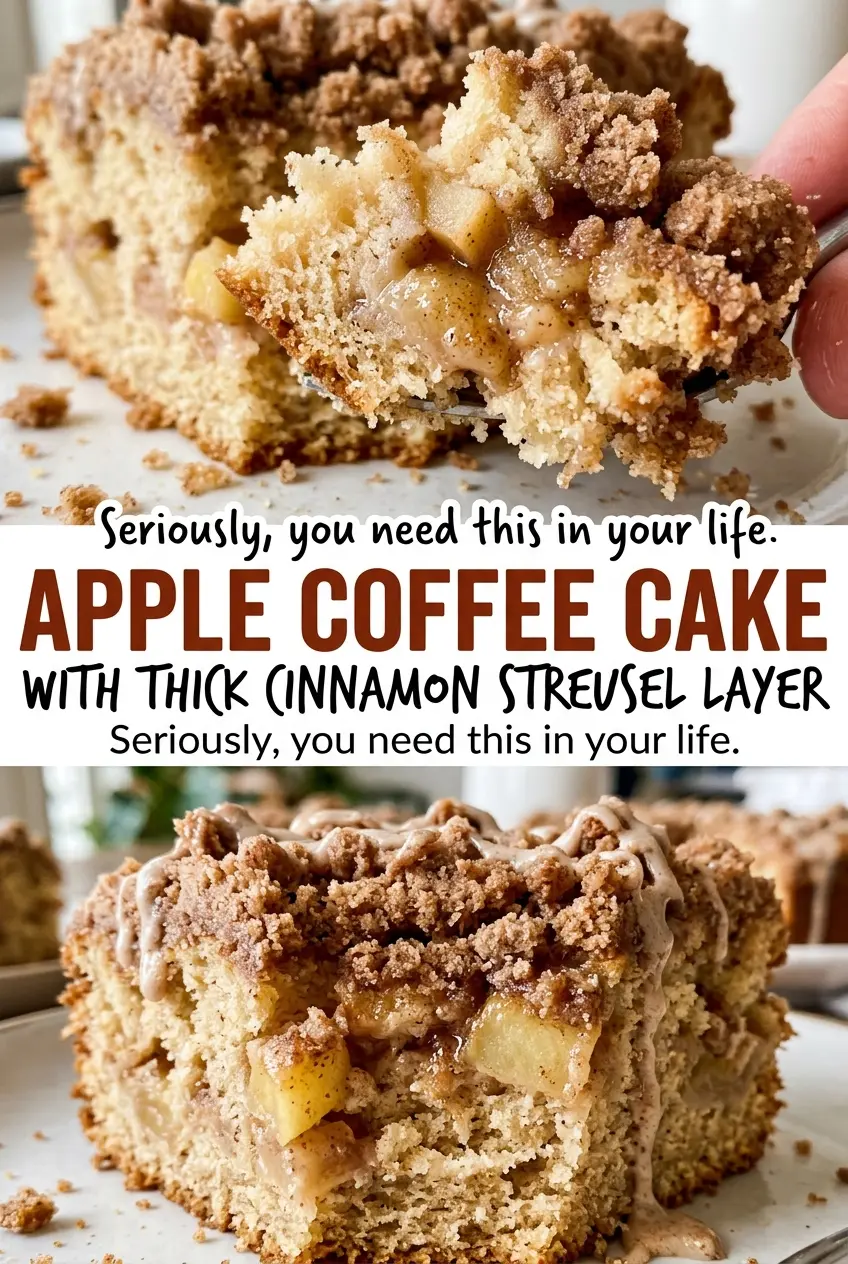
When the pan comes out of the oven, the cinnamon streusel should be deeply golden while the cake underneath stays tender and fragrant with apple. Give it a little time before cutting; a thick topping needs a moment to settle onto the soft crumb. That contrast is what I want in every square of this apple coffee cake with thick cinnamon streusel layer.
I make the streusel first, then tuck it into the refrigerator while I mix the cake. The apples are peeled and diced small enough to spread through the batter rather than bunch into big, wet pockets. Sour cream keeps the cake tender, and the generous streusel layer gives each bite a proper cinnamon-sugar top. It’s a sturdy 9×13-inch bake that cuts into 12 pieces, with a soft center and a crisp-edged topping.
Kitchen Note
I spray all the way into the corners of the 9×13-inch dish, not just across the bottom. With a thick cake, the edges are where pieces are most likely to catch, and a complete coating helps them lift cleanly.
Save this apple coffee cake with its thick cinnamon streusel layer for a bake with tender apple-studded cake and a generous golden topping.
Why the Sour Cream Goes in Between the Flour
This batter gets its tender texture from the way the dry ingredients and sour cream are added, not from mixing everything together at once. Flour develops gluten as it’s stirred; too much mixing after it’s hydrated can leave a cake tight instead of soft. Adding the flour mixture in three additions, with sour cream between them, lets the ingredients blend in stages.
Starting and finishing with the dry ingredients also matters. The batter stays cohesive as the sour cream is incorporated, and mixing on low just until combined keeps you from working the flour longer than necessary. It may look thick, but that’s useful here: it gives the diced apples a substantial batter to sit in and supports the streusel across the top. Stop when the last streaks of flour disappear rather than beating for a perfectly smooth finish.
What the Apples, Sour Cream, and Butter Each Bring
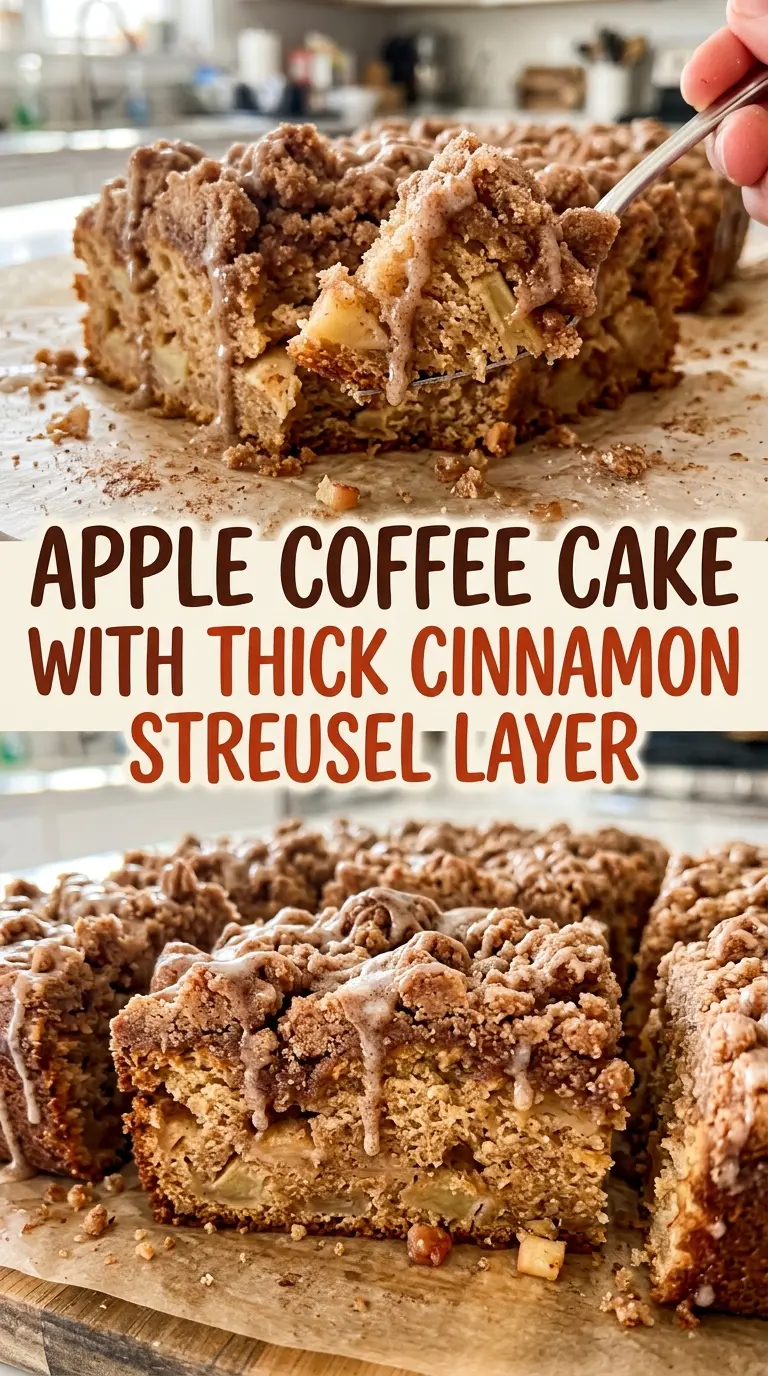
- Apples — Choose firm apples that hold their shape in the oven; a tart variety such as Granny Smith gives a sharper contrast, while a sweeter baking apple makes the cake taste rounder. Peel, core, and cut them into even half-inch dice so they distribute through the crumb. Fresh, firm fruit matters more than buying a particular label.
- Sour cream — Its acidity works with the baking soda, and its richness gives the cake a moist, tender crumb. Full-fat plain Greek yogurt is the closest practical swap; it keeps the tang but can make the crumb a little less rich.
- Unsalted butter — It does two different jobs here: cold pieces make clumpy streusel, while softened butter creams with the granulated sugar for the cake. A standard grocery-store butter works well; the temperature and texture matter more than choosing a premium brand.
- Light brown sugar — Packed brown sugar brings a gentle molasses note and helps the streusel stay rich rather than tasting like plain cinnamon flour. Light brown sugar keeps that flavor balanced; dark brown sugar is usable if you want a deeper molasses taste.
- All-purpose flour — One dependable all-purpose flour works for both the cake and topping. For a gluten-free version, use a measure-for-measure blend that includes xanthan gum in place of the flour in both components; the crumb may be slightly more delicate.
Building the Cake Without Overworking the Batter
Make Clumpy Cinnamon Streusel
Whisk the flour, packed light brown sugar, cinnamon, and fine salt in a medium bowl. Cut in the cold butter with a pastry cutter or fork until the mixture holds in clumps, with some pieces about the size of peas. You want a mix of crumbs and larger clusters, not a uniform sandy powder. Refrigerate the streusel while you prepare the cake.
Cream the Butter and Build the Batter
Heat the oven to 350°F and coat a 9×13-inch baking dish with cooking spray. Whisk the cake flour with the baking powder, baking soda, and salt in a medium bowl. In a large bowl, beat the softened butter and granulated sugar with a hand mixer on medium speed for 2 to 3 minutes, until pale and fluffy, then beat in the room-temperature eggs one at a time and add the vanilla. Mix in the dry ingredients on low in three additions, alternating with the room-temperature sour cream in two additions; start and finish with the dry ingredients, and stop as soon as everything is combined.
Fold in the Apples
Add the diced apples to the batter and fold them in gently so they’re spread throughout without deflating the mixture. Scrape the sides and bottom of the bowl as you fold; flour or apple pieces can cling there. Transfer the batter to the prepared dish and spread it into an even layer. A level surface gives the streusel a consistent base.
Top, Bake, and Let the Crumb Set
Scatter the chilled streusel evenly over the batter, then press it gently into a level layer. Bake for 45 to 55 minutes, until the top is golden brown. Check near the center, steering the toothpick clear of apple pieces; a few moist crumbs on the pick are the cue to stop baking. Cool the cake in its dish for at least 30 minutes before cutting.
Useful Swaps for the Apples and Cake Batter
Choose a tarter apple for more contrast
Use firm Granny Smith apples in place of a sweeter apple, keeping the same peeled, cored, half-inch dice. Their tartness stands out against the brown-sugar streusel, while softer or sweeter apples make the overall cake taste milder.
Use a measure-for-measure gluten-free flour blend
Replace the all-purpose flour in both the cake and streusel with a gluten-free blend labeled for one-to-one baking, ideally one that includes xanthan gum. The cake still has a tender crumb, though it may be a little more delicate when sliced; let it cool fully before cutting for the cleanest pieces.
Swap in full-fat plain Greek yogurt
Use the same amount of full-fat plain Greek yogurt in place of the sour cream. Its tang and thickness make it a reliable stand-in, with a slightly less rich result; avoid flavored or sweetened yogurt, which changes the cake’s sweetness.
Storage and Reheating
- Refrigerator: Store covered for up to 4 days. The streusel softens somewhat as it sits, but the cake stays moist.
- Freezer: Freeze cooled individual pieces, wrapped tightly and placed in an airtight container, for up to 2 months. Thaw in the refrigerator before serving.
- Reheating: Warm a slice in the microwave in short bursts until just warm. Long heating dries the cake and softens the topping further.
Questions That Come Up While Baking This Apple Cake
Apple Coffee Cake with Thick Cinnamon Streusel Layer
Ingredients
Equipment
Method
- In a medium bowl, whisk together the flour, brown sugar, cinnamon, and salt.
- Cut in the cold butter with a pastry cutter or fork until clumpy, with some pea-size pieces.
- Refrigerate the streusel while you prepare the cake.
- Preheat the oven to 350°F.
- Coat a 9x13-inch baking dish with cooking spray.
- In a medium bowl, whisk together the flour, baking powder, baking soda, and salt.
- In a large bowl, beat the softened butter and granulated sugar with a hand mixer on medium speed until pale and fluffy, 2 to 3 minutes.
- Beat in the eggs one at a time.
- Beat in the vanilla.
- Add the dry ingredients in three additions, alternating with the sour cream in two additions and beginning and ending with the dry ingredients; mix on low just until combined.
- Fold the diced apples into the batter.
- Spread the batter evenly in the prepared baking dish.
- Scatter the chilled streusel evenly over the batter.
- Gently press the streusel into an even layer.
- Bake for 45 to 55 minutes, until the streusel is golden brown and a toothpick inserted into the cake near the center, away from apple pieces, comes out with a few moist crumbs.
- Cool in the baking dish for at least 30 minutes.
- Cut and serve.