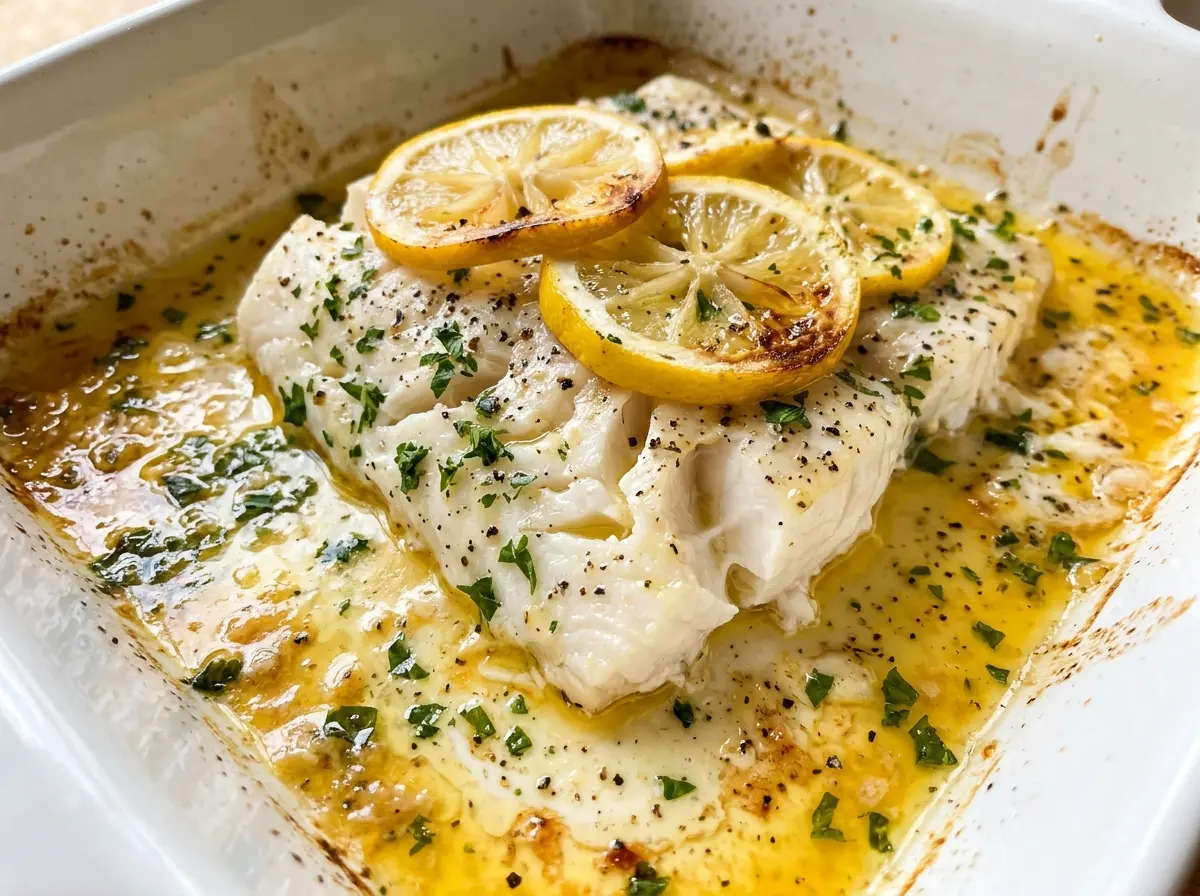
When the lemon butter runs across the bottom of the baking dish, it looks like more sauce than the fish needs. Then the cod bakes, turns opaque, and flakes apart with just a little butter clinging to each piece. That’s the moment I want from baked cod with lemon butter: tender fish, a bright buttery finish, and no separate pan sauce to fuss with at the table.
I pat the cod dry before seasoning because surface moisture can dilute the butter as it bakes. The sauce itself stays simple: butter melted gently with lemon juice and minced garlic, then poured over the fish. Low heat keeps the butter from browning before it reaches the baking dish, and the lemon gives it a clean lift without hiding the mild flavor of cod.
This is a straightforward fish dinner, but the small cues matter. Give the portions room in the dish, watch for the flesh to turn opaque and flake easily, and let it rest briefly before serving. The finished cod should be moist, lightly garlicky, and glossy with lemon butter.
Kitchen Note
The two-minute rest is short on purpose. It gives the fish a moment to settle without leaving it sitting until the lemon butter cools.
Save this baked cod with lemon butter for a simple fish dinner with flaky cod, gentle garlic, and a bright buttery finish.
Why Dry Cod Gives the Lemon Butter a Better Finish
Cod is naturally mild and flaky, so there’s no need to coat it in a heavy breading or build a complicated sauce around it. The butter, lemon, and garlic go straight over the fish, which lets the cod stay at the center of the dish. That simplicity also means excess water on the surface has nowhere to hide. If the fish goes into the baking dish wet, it can leave a thinner, more diluted layer of liquid beneath the portions.
Patting the portions dry gives the seasoning a chance to sit on the fish instead of dissolving into moisture on its surface. It also helps the lemon butter stay concentrated where you poured it. Arrange the portions in a single layer in the baking dish so the sauce can reach each piece and the fish cooks evenly. Cod portions aren’t always identical in thickness, so use the visual cues as well as the clock when judging doneness.
This isn’t about trying to make the fish crisp; baked cod stays tender. The point is to keep the butter-and-lemon finish from becoming watery and to make the flavor on each portion taste clear. A dry surface before seasoning is a small bit of prep that pays off in the final bite.
What the Butter, Lemon, and Garlic Each Bring to This Cod

- Cod fillets — Cod’s mild taste gives the lemon butter room to come through, and its flakes are easy to check with a fork as it bakes. Look for portions that are similar in thickness when you can; if one piece is much thinner, it may finish before the thickest piece.
- Unsalted butter — Unsalted butter lets the seasoning stay deliberate, since the fish is seasoned separately. It also carries the garlic and lemon over the cod as it bakes. Melt it over low heat; browning the butter would shift the flavor away from the clean, light finish this dish is meant to have.
- Lemon juice — Lemon cuts through the richness of the butter and keeps the sauce from tasting heavy. Since the juice is mixed directly into melted butter, use lemon juice you like the taste of on its own; a harsh or stale-tasting juice will stand out here.
- Garlic — Minced garlic brings a savory note to the butter without overwhelming the fish. Mince it finely so the pieces distribute through the sauce rather than landing in one concentrated spot.
- Fresh parsley — Chopped parsley adds a fresh, green finish after baking. Add it at the end so its color and fresh taste don’t get muted in the oven.
The Short Bake That Keeps Cod Tender
Dry and Season the Portions
Heat the oven to 400°F and lightly coat a 9×13-inch baking dish with cooking spray. Pat the cod dry, arrange the four portions in the dish, and season them with kosher salt and black pepper. Keep the pieces in one layer rather than stacking them, so the butter can cover the top of each portion. If a portion is thinner than the others, pay attention to its texture as the fish bakes.
Melt the Lemon-Garlic Butter Gently
Melt the unsalted butter in a 1-quart saucepan over low heat. Stir in the lemon juice and minced garlic once the butter has melted. The butter should melt without sizzling or taking on a browned color; high heat can make the garlic taste sharp and the butter taste toasted. Stir until the lemon and garlic are distributed, then pour the mixture evenly over the cod.
Bake Until the Fish Flakes
Bake the cod for 12 to 15 minutes. Look for opaque flesh that separates easily when nudged with a fork, and check the thickest portion for 145°F. Avoid judging the whole dish by the thinnest piece alone; the thickest part is the one that needs the closest check. Sprinkle the chopped parsley over the fish and let it rest for 2 minutes before serving.
Small Adjustments That Stay True to the Lemon-Butter Finish
Choose fresh or bottled lemon juice
Either works in the lemon butter. Fresh-squeezed juice tends to taste brighter, while bottled juice is convenient and gives a steadier, slightly less vivid citrus note. Keep the amount the same so the butter stays balanced rather than turning into a sharp, thin sauce.
Keep the parsley finish gluten-free
The listed ingredients are naturally gluten-free, so no flour or breadcrumb coating is needed to make this a gluten-free fish dinner. Keeping the cod unbreaded also lets the lemon butter stay the main finish and keeps the texture tender rather than crisp.
Storage and Reheating
- Refrigerator: Store leftovers in a covered container and eat within 3 to 4 days. The cod will be less delicate after chilling, and the butter will firm up.
- Freezer: Cooked cod can be frozen, though its flakes may be softer after thawing. Wrap portions airtight and use within 2 to 3 months for best quality.
- Reheating: Warm gently in the microwave in short intervals or in a covered baking dish in a low oven, stopping once heated through. High heat and a long reheat are the easiest ways to dry out the fish.
Questions That Come Up When Baking Cod
Baked Cod with Lemon Butter
Ingredients
Equipment
Method
- Preheat the oven to 400°F.
- Lightly coat a 9x13-inch baking dish with cooking spray.
- Pat the cod dry and arrange the portions in the baking dish.
- Season the cod with the salt and pepper.
- Melt the butter in a 1-quart saucepan over low heat.
- Stir in the lemon juice and garlic.
- Pour the lemon butter evenly over the cod.
- Bake for 12 to 15 minutes, until the fish is opaque, flakes easily with a fork, and reaches 145°F at its thickest point.
- Sprinkle with the parsley.
- Let rest for 2 minutes before serving.