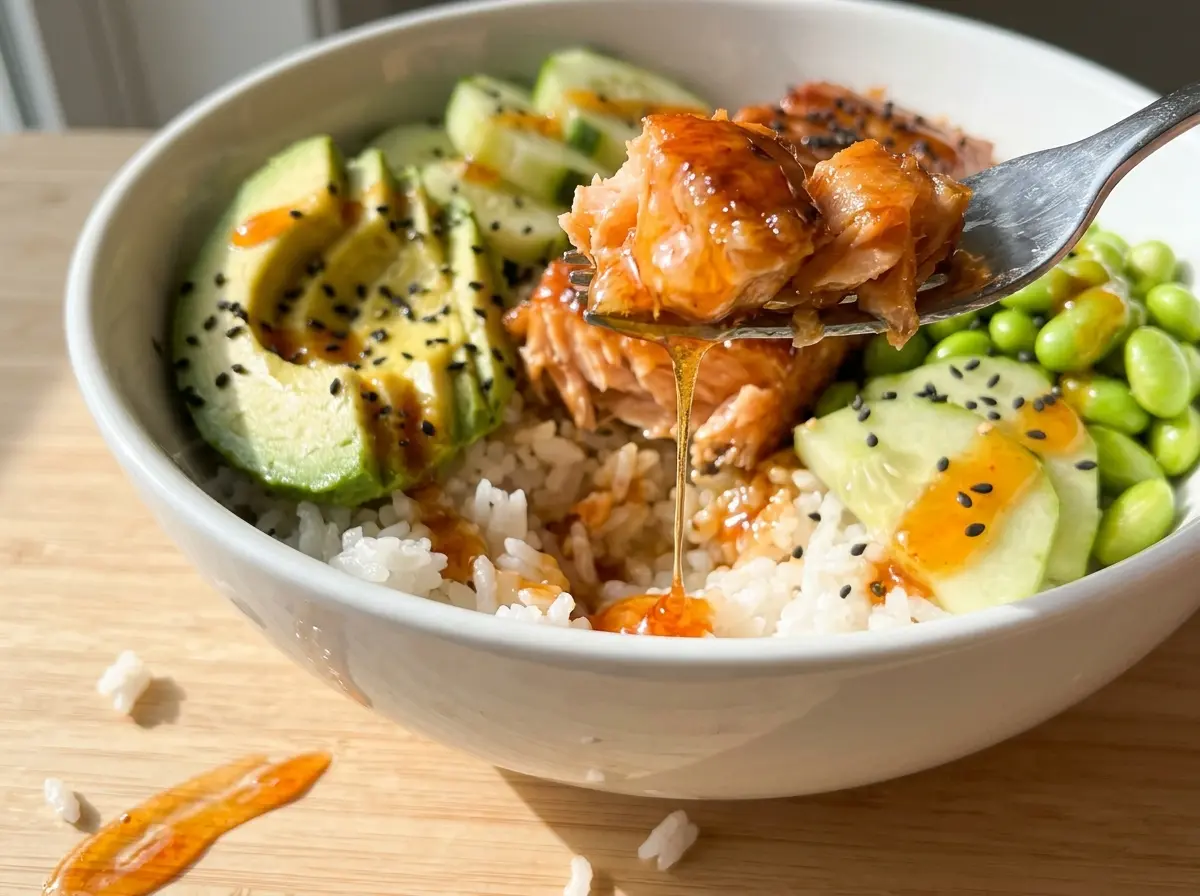
The first thing I notice when these bowls come together is the contrast: warm rice and glazed salmon beside cool, crisp cucumber. The trick is getting a browned edge on the salmon before it meets the orange sauce. A crowded skillet or damp fish can leave you with pale, soft pieces instead, so I cook the salmon in two batches and dry it well before adding the cornstarch.
For these Crispy Orange Salmon Bowls, the glaze brings fresh orange juice and zest together with soy sauce, honey, rice vinegar, garlic, and ginger. It turns glossy in just a few minutes, then clings to the salmon when you toss everything together. I like to have the rice and toppings ready before the glaze goes into the skillet; once the salmon is coated, the bowls are ready to serve with fresh cucumber and scallions.
Kitchen Note
Whisk the orange glaze before you start cooking the salmon. That way, when the last batch comes out, you can pour the sauce straight into the hot skillet instead of letting the fish wait while you measure and mix.
Save these Crispy Orange Salmon Bowls for a weeknight dinner with browned salmon, a bright orange glaze, and cool cucumber on top.
Why the Cornstarch Matters Before the Orange Glaze
Salmon doesn’t need a heavy coating to brown, but it does need a dry surface. Patting the cubes dry first gives the cornstarch something to cling to, and that thin layer helps the outside turn golden in the skillet. It also gives the orange glaze a lightly textured surface to grab onto, rather than leaving the sauce pooled at the bottom of the bowl.
That coating is delicate, not crunchy like a thick breading. Once the salmon is browned, the glaze goes into the same skillet and picks up the flavorful bits left behind. Toss the fish in the glossy sauce only briefly. It will lose some of its crisp edge as it sits, but the browned exterior still gives each bite a nice contrast with the tender middle and fluffy rice.
The two-batch approach matters for the same reason. Salmon pieces need room to contact the hot pan; if they’re packed tightly together, they release moisture into a crowded skillet instead of browning well. Cook half at a time, then repeat with the remaining oil so both batches get their turn against the pan.
What Gives the Orange Glaze Its Bright, Savory Balance

- Fresh orange — The juice supplies the glaze’s citrus base, while the zest brings a fragrant orange note that juice alone won’t provide. A fresh orange is worth using here; bottled juice can stand in for the juice, but you’ll lose the zest’s aroma.
- Low-sodium soy sauce — It adds savory depth without overpowering the fruit. For a gluten-free bowl, use the same amount of gluten-free tamari; it brings a similar salty, savory quality.
- Honey and rice vinegar — Honey rounds out the tart citrus and helps the sauce turn glossy as it simmers. Rice vinegar keeps the glaze from tasting too sweet. Maple syrup can replace honey, though it gives the sauce a more pronounced maple note.
- Garlic and fresh ginger — Minced garlic and finely grated ginger give the sauce its warm, savory edge. Fresh ginger has a cleaner, brighter bite than dried ginger, so use fresh if you can.
- Skinless salmon — Skinless fillets cut into even cubes make it easy to brown several sides and coat each piece in glaze. Choose fillets that look moist and smell mild; unevenly cut pieces won’t cook at the same pace.
- Cornstarch — This creates the light coating that helps the salmon brown and gives the glaze something to cling to. Flour doesn’t behave quite the same way here, so keep the cornstarch for the best result.
- Long-grain white rice — Its separate, fluffy grains make a good base for the saucy salmon. Rinsing removes loose surface starch, which helps keep the cooked rice from becoming gummy.
- Cucumber, scallions, and sesame seeds — These go on at the end, so the cucumber stays cool and crisp and the scallions keep their fresh bite. Sesame seeds add a nutty finish; toast them briefly in a dry skillet if you want a deeper flavor.
From Fluffy Rice to Glazed Salmon, Without Losing the Crisp Edges
Rinse and Steam the Rice
Rinse the long-grain rice in a fine-mesh strainer under cool water until the water runs mostly clear. Combine it with the water in a 2-quart saucepan and bring it to a boil over medium-high heat. Cover, turn the heat to low, and cook for 15 minutes; then take the pan off the heat and let it stand, covered, for 10 minutes. Keep the lid on during the rest so the rice finishes steaming evenly.
Mix the Orange Sauce Before the Skillet Heats
Whisk the orange zest and juice with the soy sauce, honey, rice vinegar, garlic, and ginger in a small bowl. Stir until the honey is dispersed and the zest and aromatics are spread through the liquid. Set the bowl near the stove so it’s ready when the salmon is done. The glaze cooks quickly, so mixing it ahead keeps the skillet moving without a scramble.
Brown the Salmon in Two Batches
Pat the salmon cubes dry, season them with kosher salt and black pepper, and toss until they have a light, even cornstarch coating. Heat half the oil in a 12-inch skillet over medium-high heat, then add half the salmon in a single layer. Cook for 4 to 6 minutes, turning the pieces occasionally, until browned and the thickest piece reaches 145°F. Transfer the first batch to a plate, add the remaining oil, and cook the rest the same way.
Simmer the Glaze and Finish the Bowls
Pour the orange mixture into the skillet and simmer it over medium heat for 3 to 5 minutes, stirring, until it looks glossy and slightly thickened. If it still looks thin, give it a little more time while stirring rather than turning up the heat. Return the salmon to the skillet and toss briefly to coat. Divide the rice among four bowls, then top with the salmon, diced cucumber, sliced scallions, and sesame seeds.
Easy Swaps for These Orange Salmon Bowls
Make the Glaze Gluten-Free
Replace the low-sodium soy sauce with the same amount of gluten-free tamari. The glaze stays savory and balanced, with a slightly deeper, more rounded taste.
Use Brown Rice for a Chewier Base
Swap the long-grain white rice for brown rice and cook it according to its package directions, since it needs a different amount of water and more time. The bowls will have a nuttier, chewier base, so start the rice earlier than the salmon.
Give the Sauce a Maple Note
Use maple syrup in place of the honey in the orange glaze. It still sweetens and glosses the sauce, but its woodsy flavor is more noticeable alongside the orange and ginger.
Storage and Reheating
- Refrigerator: Store leftovers in an airtight container for 3 to 4 days. The cucumber softens, so it’s best to keep it separate if you’re packing bowls ahead.
- Freezer: Freeze the cooked salmon and rice separately in airtight containers for up to 2 months. Don’t freeze the cucumber; it loses its crisp texture when thawed.
- Reheating: Reheat a portion of rice and salmon covered in the microwave, stirring the rice partway through, until steaming hot and the leftovers reach 165°F. Reheat only what you plan to eat, since repeated warming can dry out the salmon.
Questions That Come Up When Making Orange Salmon Bowls
Crispy Orange Salmon Bowls
Ingredients
Equipment
Method
- Rinse the rice in a fine-mesh strainer under cool water until the water runs mostly clear.
- Combine the rice and water in a 2-quart saucepan and bring to a boil over medium-high heat.
- Cover, reduce the heat to low, and cook for 15 minutes.
- Remove from the heat and let stand, covered, for 10 minutes.
- Whisk the orange zest and juice, soy sauce, honey, rice vinegar, garlic, and ginger in a small bowl.
- Pat the salmon dry, season with the salt and pepper, and toss with the cornstarch until lightly coated.
- Heat 1 tablespoon oil in a 12-inch skillet over medium-high heat, add half the salmon in a single layer, and cook for 4 to 6 minutes, turning the pieces occasionally, until browned and the thickest piece reaches 145°F.
- Transfer the salmon to a plate and repeat with the remaining oil and salmon.
- Pour the orange mixture into the skillet and simmer over medium heat for 3 to 5 minutes, stirring, until glossy and slightly thickened.
- Return the salmon to the skillet and toss briefly to coat.
- Divide the rice among four bowls and top with the salmon, cucumber, scallions, and sesame seeds.