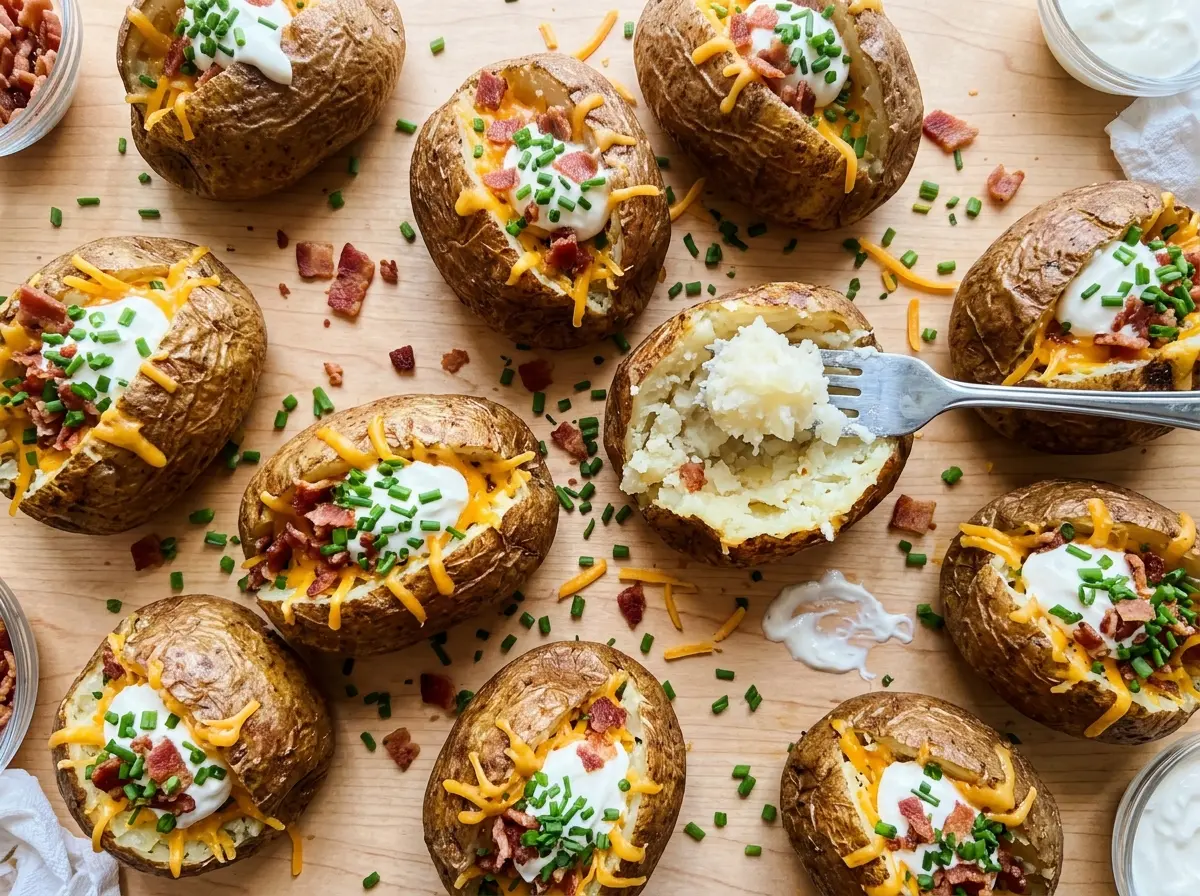
The knife tells me more than the timer does: when it slides into the center without meeting a firm spot, a russet is ready to open. That little check matters for a baked potato bar because even potatoes that look alike can finish at different times. Once they’re split and fluffed, the warm, airy centers are ready for butter, sour cream, sharp cheddar, crisp bacon, and scallions.
I use medium russets, about 8 ounces each, and give them a good scrub before drying them well. A thin coat of neutral oil and kosher salt goes over the skins before the potatoes bake on a rimmed sheet. The skins get lightly seasoned while the centers turn tender and fluffy.
Keeping the toppings in separate bowls is what makes this easy to serve: everyone can build a potato with just the things they want. Put the bowls out beside the hot potatoes, and the table is filled with crisp bacon, cool sour cream, soft butter, sharp cheddar, and fresh scallions.
Kitchen Note
Give the baked potatoes their full 5-minute rest before you cut them. I’ve found the centers are easier to fluff after that short pause, instead of collapsing into a dense mash as soon as the fork goes in.
Save this Baked Potato Bar for a hands-off dinner centerpiece with fluffy russets and a topping bowl for everyone at the table.
Why a Potato Bar Works Better When the Toppings Stay Separate
A baked potato can hold plenty, but piling every topping on before serving takes away the best part of a bar: people can decide how much they want and in what combination. Keeping the bacon, butter, sour cream, cheddar, and scallions in their own bowls also protects their different textures. The bacon stays crisp instead of softening under sour cream, and the scallions keep their fresh bite.
There’s a temperature contrast here that’s worth keeping. The potatoes come to the table hot, while the sour cream stays cool and the softened butter melts into the fluffy center. Each person can start with butter and cheddar, add a spoonful of sour cream, or keep the toppings simple. Set out small serving spoons so the bowls stay easy to reach without turning the table into one big pile of toppings.
For eight servings, the setup is generous without asking you to cook a separate main dish. The potatoes do most of their work in the oven, and the bacon cooks in a skillet while they bake. When everything is ready, the spread feels abundant because the choices are visible—not because you’ve added extra dishes.
What Russets, Sharp Cheddar, and the Other Toppings Bring to the Bar

- Russet potatoes — Their starchy interiors turn fluffy as they bake, so they’re a better fit here than a potato that stays waxy and firm. Choose potatoes close in size for more even timing; a few ounces’ difference can mean one is ready before another.
- Neutral oil — It helps the salt cling to the skin and keeps the outside from tasting dry. There’s no need for an expensive oil here; a neutral-tasting one is all the potato needs.
- Bacon — Crisp pieces add salty crunch against the soft potato and cool toppings. The crisp texture matters more than a particular brand, and there isn’t another topping in this lineup that gives quite the same savory bite.
- Softened butter — Soft butter spreads through the potato more easily than a cold, hard piece. The recipe doesn’t specify salted or unsalted, so choose the one you prefer; salted butter will make the topping taste saltier.
- Sour cream — Its cool tang cuts through the richness of the butter and cheddar. Keep it thick rather than choosing a pourable version, so it stays on the potato instead of running off the sides.
- Sharp cheddar — Sharpness gives the potato a fuller cheese flavor without needing a large mound. Mild cheddar is a workable substitute if that’s what you have, though the finished topping will taste less pronounced.
- Scallions — Thin slices add a fresh, lightly sharp finish. Slice them just before setting out the bowls if you want their cut edges to look especially fresh.
Getting Tender Centers and Crisp Bacon on the Same Timeline
Scrub, Dry, and Pierce the Potatoes
Scrub 8 medium russet potatoes, about 8 ounces each, then pat them dry. Pierce each one several times with a fork; the small holes let steam escape as the potatoes bake. Rub them with 2 tablespoons neutral oil and 1 teaspoon kosher salt, covering the skins lightly rather than leaving oily patches. A dry surface helps the oil and salt coat the potatoes evenly.
Bake Until a Knife Slides Into the Center
Heat the oven to 400°F and arrange the potatoes on a rimmed baking sheet. Bake for 60 to 75 minutes, using the timer as a guide rather than the final test. Slide a knife into the center of each potato; it should pass easily, without catching on a firm core. If one is still resistant, leave that potato in the oven until it softens.
Rest, Cut, and Fluff
Once the potatoes are tender, let them rest for 5 minutes. Cut each one lengthwise, then use a fork to fluff the interior without tearing through the skin. Open them just before serving so the centers stay hot. The split gives each person a generous place to add butter and the other toppings.
Cook the Bacon Until Crisp
While the potatoes bake, cook 8 slices of bacon in a 12-inch skillet over medium heat. Turn the slices occasionally as they cook for 8 to 12 minutes, watching for crisp edges and a firm texture rather than relying only on the clock. Transfer the bacon to paper towels to drain, then crumble it once it’s cool enough to handle. If the slices still bend easily, give them a little more time in the skillet.
Set Out the Bowls Beside the Hot Potatoes
Arrange the bacon, 8 tablespoons softened butter, 1 1/2 cups sour cream, 2 cups shredded sharp cheddar, and 4 thinly sliced scallions in separate serving bowls. Set the bowls out with the hot potatoes so the toppings are ready when people sit down. Keeping the items separate makes it easy to build each serving without a topping getting buried under another. Serve the potatoes while their centers are still hot enough to soften the butter.
Two Ways to Change Up This Baked Potato Bar
Make the topping spread vegetarian
Leave out the bacon and set out extra sharp cheddar and scallions in its place. If you’re cooking for someone who eats strictly vegetarian, choose cheddar made with vegetarian rennet. You’ll lose the smoky crunch, but the potatoes still have plenty of creamy and sharp toppings.
Serve them fully loaded instead of as a bar
For a more hands-off serving style, open and fluff each potato, then add butter, sour cream, cheddar, bacon, and scallions before bringing them to the table. This turns the spread into ready-to-eat portions, though people won’t be able to choose each topping for themselves.
Storage and Reheating
- Refrigerator: Refrigerate leftover potatoes and toppings separately within 2 hours. Keep them for 3 to 4 days; the potato centers will be denser after chilling.
- Freezer: Freezing isn’t my first choice for baked potatoes because the centers can turn mealy as they thaw. The toppings are better kept refrigerated rather than frozen.
- Reheating: Warm plain potatoes in a 350°F oven until the centers reach 165°F, then add the toppings. Reheating them already covered in sour cream can leave the topping watery.
Questions That Come Up When You’re Setting Out a Potato Bar
Baked Potato Bar
Ingredients
Equipment
Method
- Heat the oven to 400°F.
- Scrub the potatoes and pat them dry.
- Pierce each potato several times with a fork.
- Rub the potatoes with the oil and salt.
- Arrange the potatoes on a rimmed baking sheet and bake for 60 to 75 minutes, until a knife slides easily into the centers.
- Let the potatoes rest for 5 minutes.
- Cut each potato lengthwise and fluff the insides with a fork.
- While the potatoes bake, cook the bacon in a 12-inch skillet over medium heat, turning occasionally, until crisp, 8 to 12 minutes.
- Drain the bacon on paper towels and crumble it.
- Arrange the bacon, butter, sour cream, cheddar, and scallions in separate serving bowls, and serve with the hot potatoes.