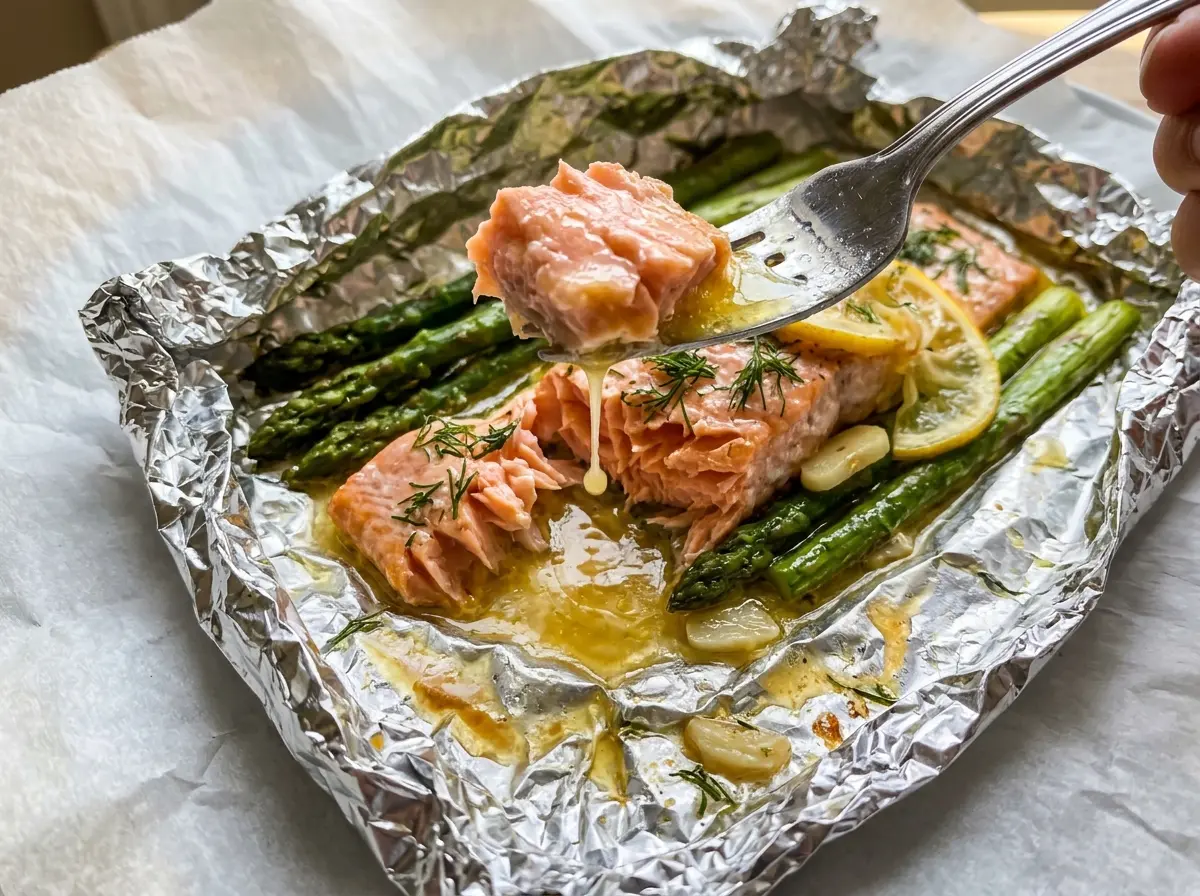
The first time I opened one of these packets, a rush of steam came straight up at my face. Now I open them carefully and let that steam escape before I reach for the salmon. Inside, the butter has melted into the garlic and lemon, and the asparagus cooks right alongside the fish without needing another pan.
For Baked Salmon in Foil Packs with Asparagus, I use fillets about an inch thick so the fish and vegetables can finish together in the oven. Each portion gets its own foil packet, which makes serving simple and keeps the lemon, garlic, and butter close to the salmon. Leave a little room inside each packet when you seal it; that small pocket gives the hot air and steam space to move around the food. The finished salmon is tender, the asparagus is soft enough to pierce with a fork, and the lemon slices leave the buttery juices bright and fragrant.
Kitchen Note
Open the packets carefully: the steam inside stays hot even after the baking sheet is out of the oven. I lift the foil away from my face and hands before serving.
Save these salmon and asparagus foil packs for a dinner with tender fish, buttery garlic, and lemon in every packet.
Why Foil Packs Need a Little Breathing Room
A sealed packet traps heat and moisture around the salmon and asparagus. That’s what lets the vegetables cook alongside the fish, but sealing the foil tightly against the food leaves no room for that hot air to circulate. Fold the foil over the ingredients, crimp the edges closed, and leave a little space inside rather than pressing the top down onto the fillet.
There’s a balance here: the edges should be sealed well enough to hold the steam, while the top stays tented instead of resting on the salmon. If the packets are packed too tightly, the fish and asparagus have less room to cook evenly. Four separate packets also keep the portions distinct on the baking sheet, so each fillet sits directly on its own asparagus portion. That simple structure is what makes this method work without adding liquid to the packet.
What the Salmon, Butter, and Lemon Each Bring to the Packet
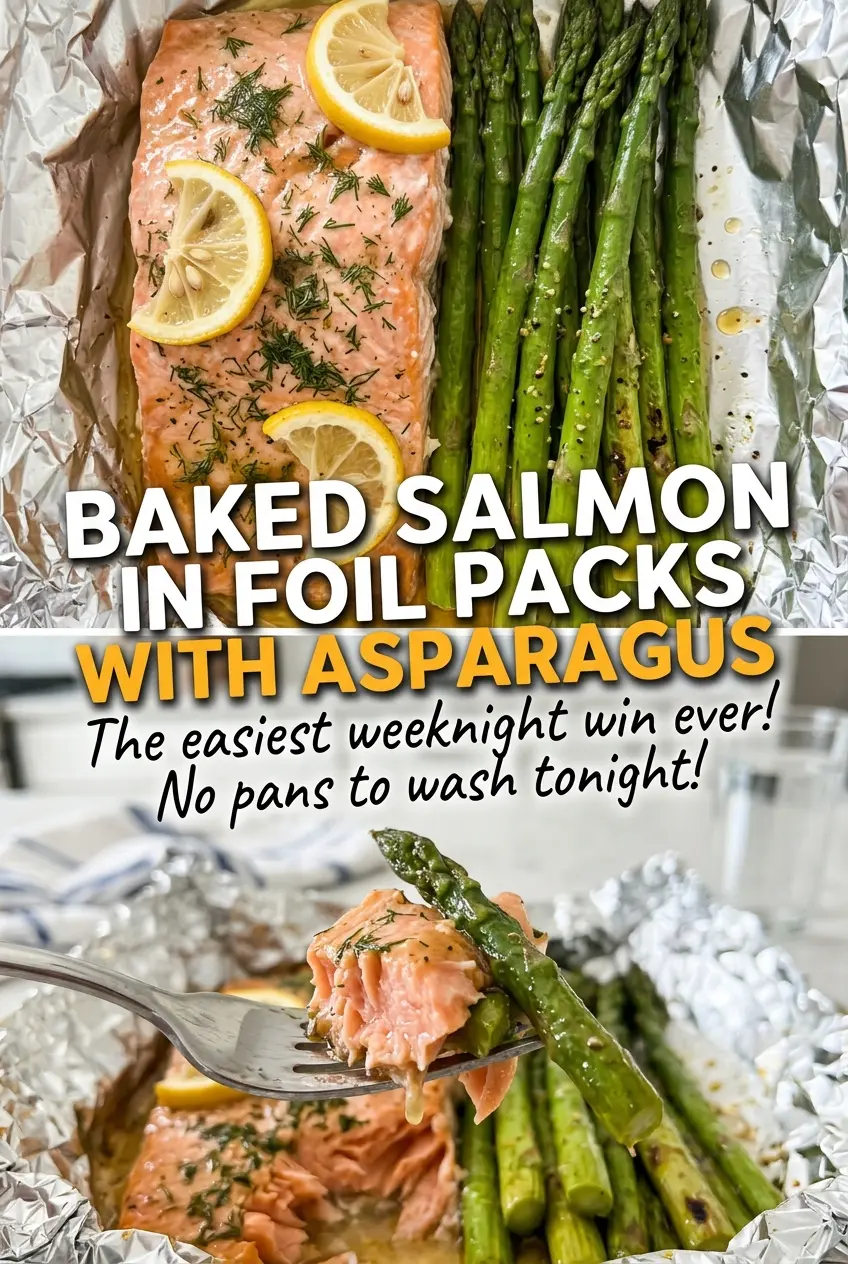
- Salmon — Skinless fillets about an inch thick are a good fit for the stated baking window. Similar thickness matters more than matching shapes exactly, since a much thicker piece takes longer to cook through than a thin one. Choose fillets that look moist and smell clean.
- Asparagus — Trim off the woody ends before dividing the spears among the packets. The tender stalks cook beneath the salmon and take on some of the buttery lemon juices. Spears that are close in thickness within each portion are easier to cook evenly.
- Unsalted butter — A piece on each fillet melts over the fish and carries the minced garlic through the packet. Unsalted butter lets the measured kosher salt season the whole dish without adding extra salt from the butter.
- Garlic and lemon — Minced garlic spreads through the butter, while thin lemon slices fit neatly over the salmon and release their citrus aroma as they bake. Thin slices are easier to arrange than thick wedges and make a more even layer on top.
- Kosher salt and black pepper — These season the fish and vegetables directly. Distribute them across the packets rather than leaving all the seasoning on one fillet.
How to Seal and Bake the Salmon Without Losing the Steam
Set Up the Oven and Foil
Heat the oven to 400°F and cut four sheets of heavy-duty aluminum foil, each 12×18 inches. Set the sheets out with enough room to portion the asparagus and salmon onto each one. Heavy-duty foil is sturdy enough to fold around the ingredients and transfer to the baking sheet. Keep a rimmed baking sheet nearby to catch any juices that escape.
Layer the Asparagus and Salmon
Divide the trimmed asparagus among the four foil sheets, then set one skinless salmon fillet on top of each portion. Keep the asparagus in a fairly even layer so the salmon sits securely above it. Place one piece of butter on each fillet. The butter should stay on top of the fish, where it can melt down over the garlic and lemon.
Season and Close Each Packet
Divide the minced garlic, kosher salt, black pepper, and thin lemon slices evenly among the packets. Fold the foil over the salmon and asparagus, then tightly seal the edges. Leave a little space inside instead of flattening the foil against the ingredients. Arrange the packets on the rimmed baking sheet with the seams facing up.
Bake Until the Fish and Asparagus Are Ready
Bake the packets for 15–20 minutes, checking the thickest part of a fillet with a food thermometer; it should reach 145°F. The asparagus should be tender when pierced, not firm and squeaky. If the fillets vary in thickness, check each one rather than assuming they’ll finish at the same moment. Open the packets carefully so the escaping steam doesn’t catch your hands or face.
Small Flavor Tweaks That Keep the Same Four-Pack Dinner
Put the Lemon Where You Want the Brightest Bite
For a more lemon-forward portion, place more of the listed lemon slices over the fillet in that packet and fewer over another, keeping the same lemon amount across all four. The difference is in how the citrus is distributed: one packet gets a brighter, more direct lemon aroma, while the rest stay milder.
Make One Packet More Garlic-Forward
Keep the total minced garlic the same, but divide it unevenly if you want one fillet to have a stronger garlic presence. The packet with more garlic will taste more savory, while the others will let the lemon and salmon come through more clearly. This changes the balance from serving to serving without introducing another ingredient.
Storage and Reheating
- Refrigerator: Store cooked salmon and asparagus in a covered container for 3–4 days. The asparagus softens further as it sits.
- Freezer: The cooked portions can be frozen in airtight containers for up to 2–3 months, though the thawed asparagus will be softer.
- Reheating: Reheat a portion in the microwave in short bursts until it reaches 165°F. Long, uninterrupted heating can dry out the salmon, so stop as soon as it’s hot throughout.
Questions That Come Up With Salmon Foil Packs
Baked Salmon in Foil Packs with Asparagus
Ingredients
Equipment
Method
- Heat the oven to 400°F and cut four 12x18-inch sheets of heavy-duty aluminum foil.
- Divide the asparagus among the foil sheets and place one salmon fillet on top of each portion.
- Top each fillet with a piece of butter, then divide the garlic, salt, pepper, and lemon slices evenly among the packets.
- Fold the foil over the salmon and asparagus and tightly seal the edges, leaving a little space inside each packet; set the packets on a rimmed baking sheet.
- Bake for 15–20 minutes, until the thickest part of each fillet reaches 145°F and the asparagus is tender.
- Carefully open the packets to avoid the hot steam.