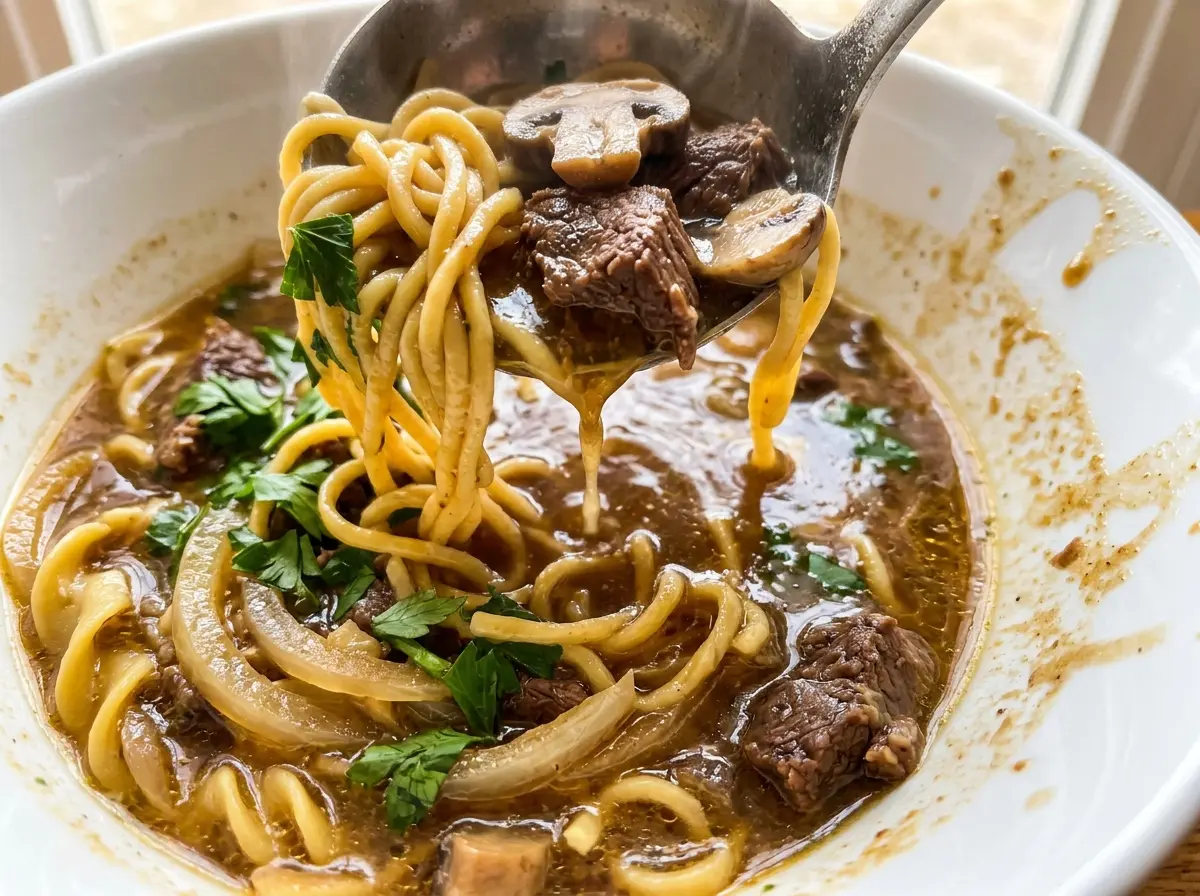
The mushrooms start by looking like they’re steaming in the pot, and for a few minutes, they are. Keep them cooking until their liquid has evaporated and the edges begin to brown; that’s when their earthy flavor has somewhere to go besides the broth. I rely on that small change to give this Beef and Mushroom Noodle Soup with Egg Noodles a deeper, fuller taste.
Beef chuck needs a different kind of attention. Browning it in batches gives the pieces room to color, then a slow, covered simmer gives the beef time to turn fork-tender without rushing the broth. I keep the noodles out until the end so they cook just until tender instead of sitting in the pot for the whole simmer.
With carrots, celery, mushrooms, and wide egg noodles in the same savory broth, each spoonful has a little of everything: tender beef, soft noodles, and vegetables that still hold their shape.
Kitchen Note
Let the mushrooms finish releasing their liquid before you add the broth. If the pot still looks watery, give them another minute or two; browned mushrooms bring a more concentrated, savory taste to the soup.
Save this beef and mushroom noodle soup for a cozy pot of tender chuck, browned mushrooms, and wide noodles in savory broth.
Why Beef Chuck Needs a Gentle Simmer, Not a Hard Boil
Chuck is a good fit for this soup because it can become tender during a long, gentle cook. The pieces start out firm, but time in the broth softens the beef and lets its savory juices mingle with the vegetables. A rolling boil works against that texture: it can make the outside of the meat tighten before the centers have had time to soften.
After the broth comes to a boil, lower the heat and keep the pot covered at a quiet simmer. You want occasional small bubbles, not a vigorous churn. The clock gives you a useful window, but the fork tells you when the beef is ready. If a piece still resists when you press it, let the pot continue simmering until it yields easily. That tender-beef checkpoint matters more than trying to hurry the cooking along.
Cutting the chuck into evenly sized pieces helps them cook at a similar pace, and browning in batches gives each piece contact with the hot pot. The browned bits left behind become part of the broth once the liquid goes in. Together, those choices give the soup a satisfying, beefy base without needing a separate sauce or thickener.
How the Beef, Mushrooms, and Egg Noodles Shape the Bowl

- Beef chuck — Chuck has enough connective tissue to benefit from the long simmer, which is what gives the finished pieces their tender texture. Keep the pieces close to the same size so they cook evenly. A leaner cut won’t bring the same result over this cooking time, so chuck is worth choosing here.
- Cremini mushrooms — These add earthy depth and a substantial bite. Choose firm mushrooms without wet or slimy spots; there’s no need to seek out a specialty variety. Slice them evenly so they release moisture and brown at about the same pace. White mushrooms can stand in, though the flavor will be a little milder.
- Wide egg noodles — Their broad shape makes each spoonful feel hearty, and their tender texture suits the broth. Dried noodles are a practical choice for this pot because they cook right in the soup near the end. A different pasta shape may take a different amount of time and won’t have quite the same soft, wide bite.
- Low-sodium beef broth — It supplies most of the liquid and lets you control the seasoning as the soup simmers. Using a low-sodium version matters because the broth reduces in flavor as it cooks; a regular salted broth can leave less room to adjust. Worcestershire sauce, dried thyme, garlic, and bay leaf add savory and herbal notes without covering up the beef and mushrooms.
- Fresh parsley — Stirring it in at the end gives the finished soup a fresh herbal note. Use crisp, green leaves and chop them shortly before adding them. If you don’t have parsley, you can leave it out; the soup will still be full-bodied, just without that fresh finish.
Brown the Beef First, Then Let the Broth Do Its Work
Give the Chuck Room to Brown
Heat the vegetable oil in a 6-quart Dutch oven over medium-high heat. Season the beef with the first portion of kosher salt and the black pepper, then brown it in batches, turning the pieces so several sides pick up color. If the pieces crowd the pot, they’ll steam rather than brown, so leave space around them and transfer each batch to a plate as it’s ready. Keep the browned pieces and any juices for the simmer.
Soften the Vegetables and Brown the Mushrooms
Add the diced onion, sliced carrots, and sliced celery to the pot and cook over medium heat for 5 minutes, stirring occasionally. The onion should begin to soften while the other vegetables lose their raw, firm look. Add the sliced mushrooms and cook for 6–8 minutes, stirring now and then, until their released liquid evaporates and they show some browning. Stir in the minced garlic for 30 seconds; it should smell fragrant, not toasted.
Simmer Until the Beef Gives Easily
Pour in the beef broth and Worcestershire sauce, then add the dried thyme, bay leaf, remaining salt, and browned beef with its accumulated juices. Bring the pot to a boil, then reduce the heat to low, cover, and simmer gently for 1 1/2–2 hours. Keep the simmer quiet beneath the lid rather than letting the broth boil hard. Test a piece of beef with a fork near the end; it should pull apart easily instead of feeling rubbery or firm.
Cook the Noodles at the Finish
Remove and discard the bay leaf before stirring in the wide egg noodles. Simmer uncovered for 6–8 minutes, until the noodles are tender when bitten; start checking at the shorter end of that window because noodle brands can vary. Keep the pot uncovered so you can see how the noodles are progressing. Stir in the chopped parsley just before serving.
Two Practical Ways to Adapt the Noodles
Make It a Lower-Carb Beef and Mushroom Soup
Leave out the egg noodles and serve the beef, mushrooms, and vegetables in the broth. The result is a lighter, less filling bowl with the same savory base; it won’t have the soft, substantial noodle texture of the original.
Keep the Noodles Separate for Serving
Cook the egg noodles separately according to their package directions, then put them in bowls and ladle the hot soup over them. This takes an extra pot, but the noodles won’t continue soaking up broth while the soup waits to be served. It’s a useful format when people will be eating at different times.
Storage and Reheating
- Refrigerator: Refrigerate leftovers for 3–4 days. The egg noodles will continue to absorb broth and soften as they sit.
- Freezer: For the best texture, freeze the beef, vegetables, and broth before adding noodles in an airtight container for up to 3 months. Thaw in the refrigerator, reheat the soup, then cook the noodles in it before serving.
- Reheating: Warm refrigerated soup gently in a saucepan, stirring occasionally, until it reaches 165°F. Avoid a hard boil, which can make the beef and noodles less pleasant to eat.
Questions That Come Up When Making This Beef Noodle Soup
Beef and Mushroom Noodle Soup with Egg Noodles
Ingredients
Equipment
Method
- Heat the vegetable oil in a 6-quart Dutch oven over medium-high heat.
- Season the beef with 1 teaspoon of the salt and the pepper.
- Brown the beef in batches, turning the pieces to brown several sides; transfer the beef to a plate.
- Add the onion, carrots, and celery to the pot and cook over medium heat for 5 minutes, stirring occasionally.
- Add the mushrooms and cook for 6–8 minutes, stirring occasionally, until browned and their released liquid has evaporated.
- Stir in the garlic and cook for 30 seconds.
- Add the broth, Worcestershire sauce, thyme, bay leaf, remaining 1/2 teaspoon salt, and browned beef with any accumulated juices.
- Bring to a boil, then reduce the heat to low, cover, and simmer gently for 1 1/2–2 hours, until the beef is fork-tender.
- Remove and discard the bay leaf.
- Stir in the egg noodles and simmer uncovered for 6–8 minutes, until the noodles are tender.
- Stir in the parsley and serve.