When ground beef hits a hot Dutch oven, the sound changes as it browns: first a wet hiss, then a steady sizzle as the moisture cooks away. I break it into small pieces and let those browned bits build on the bottom of the pot. That’s the start of this classic beef chili with kidney beans and fire roasted tomatoes, a sturdy stovetop dinner that makes six generous servings.
The chili gets its depth from a few minutes of cooking the spices and tomato paste with the onion, then a slower simmer with the tomatoes and broth. The finished pot is thick enough to cling to a spoon, with tender beef and beans that still hold their shape. It’s the kind of chili that tastes full and savory without needing a long list of extras.
Kitchen Note
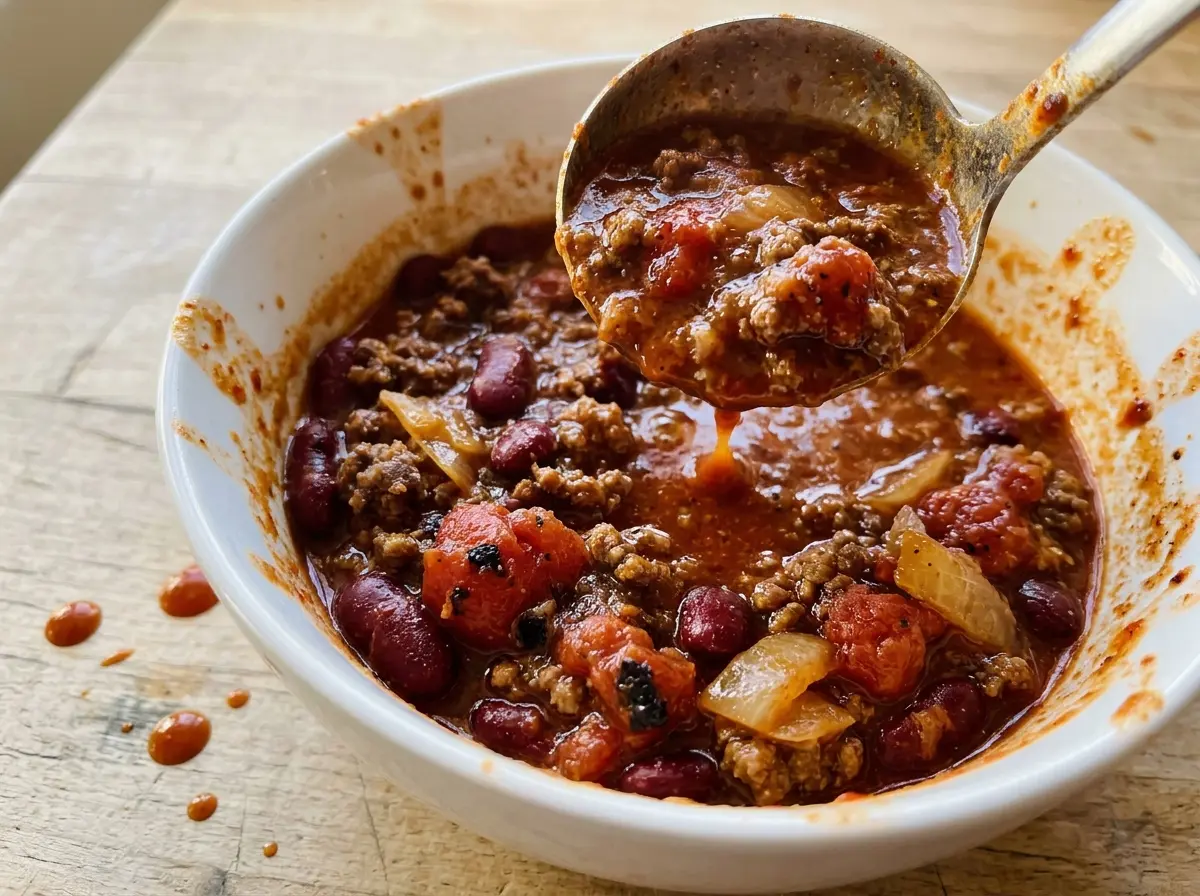
I look for beans that are heated through but still hold their shape when I stir. They shouldn’t split apart or disappear into the chili; that little bit of definition gives each spoonful a better texture.
Save this classic beef chili for a cozy dinner — tender beef, kidney beans, and a thick fire-roasted tomato base.
Why the Browned Beef and Tomato Juice Belong in the Same Pot
The dark bits left behind after browning the beef aren’t burnt scraps; they’re concentrated flavor. Once the onion softens, the garlic, spices, and tomato paste get a quick turn in that same pot, picking up the savory residue and releasing their aroma. When the broth goes in, scrape the bottom well so those browned bits loosen into the liquid instead of staying stuck to the pot.
Keep the fire-roasted tomatoes undrained, too. Their juice becomes part of the simmering base, while the tomatoes bring a lightly charred note that plain diced tomatoes don’t quite match. The uncovered simmer lets some of that liquid evaporate and gives the beef, broth, and tomatoes time to settle into one cohesive chili. If you pour off the tomato juice or wash out the pot after browning, you lose two parts of what gives this version its savory, rounded taste.
What Each Ingredient Adds to This Beef-and-Bean Chili

- Ground beef — The 85% lean beef leaves enough fat for a rich base without making the pot greasy. A less expensive pack works well; if you use leaner ground beef, the chili will taste a little less rich. Ground turkey is a workable replacement in the same amount, though the result will be lighter and less beefy.
- Yellow onion and garlic — Dicing the onion evenly helps it soften at the same pace, and freshly minced garlic gives the spice base a clear, savory aroma. White onion can replace yellow onion in the same amount, with a slightly sharper taste. Fresh garlic is worth using here because it cooks briefly with the spices rather than simmering for hours.
- Chili powder, cumin, paprika, and oregano — Together, these pantry spices provide the chili’s earthy, warm backbone. Standard grocery-store spices are fine, but older jars tend to smell muted when you open them and won’t bring as much character. Chili powder blends vary in heat, so choose a mild or medium blend that suits your preference rather than substituting pure cayenne.
- Tomato paste — This adds concentrated tomato flavor that helps the broth and canned tomatoes taste more rounded. A tube or a small can both work; what matters is cooking the paste with the spices for a minute so it doesn’t taste raw. There isn’t a close one-for-one replacement that gives the same concentrated result.
- Fire-roasted diced tomatoes — Their charred flavor is the reason this chili tastes different from one made with ordinary canned tomatoes. Regular diced tomatoes work in the same amount if that’s what you have, but the finished chili will have a milder, less smoky tomato flavor. Choose an ordinary store brand if needed; the fire-roasted style matters more than the label.
- Kidney beans — Their firm texture stands up to the simmer and makes the chili hearty. Canned beans are convenient, and draining and rinsing them removes the canning liquid before they go into the pot. Pinto beans can replace them in the same amount, but they’ll be softer and creamier.
- Low-sodium beef broth — It brings the browned beef and tomatoes together while leaving room for the recipe’s seasoning to do its job. A standard grocery-store carton is fine. Regular beef broth can be used instead, but it may make the finished chili saltier.
Building the Chili in Four Stovetop Stages
Brown the Beef Without Losing the Fond
Heat the vegetable oil in a 6-quart Dutch oven over medium-high heat, then add the ground beef. Cook for 6–8 minutes, breaking it into small pieces as it browns, until it reaches 160°F. If the beef is still releasing liquid, keep it over the heat until it browns rather than draining it early; then drain the excess fat, leaving about 1 tablespoon in the pot.
Soften the Onion and Wake Up the Spices
Add the diced onion and cook for 4–5 minutes, stirring occasionally, until it softens. Stir in the minced garlic, chili powder, cumin, paprika, oregano, salt, black pepper, and tomato paste. Keep the mixture moving for 1 minute so the garlic and spices become fragrant without scorching on the bottom. The tomato paste should look darker and blend through the beef and onion.
Simmer the Tomato Base Uncovered
Pour in the undrained fire-roasted tomatoes and beef broth, scraping up the browned bits from the bottom of the pot. Bring the mixture to a boil, then lower the heat until it holds a gentle simmer. Cook uncovered for 30 minutes, stirring occasionally; a steady, quiet bubble is what you want, not a hard boil that spits sauce up the sides.
Finish with Beans and a Short Rest
Stir in the drained and rinsed kidney beans, then simmer uncovered for 15–20 minutes, stirring occasionally. The chili is ready when it has thickened and the beans are heated through; if you run a spoon across the bottom, the trail should briefly show before the chili flows back. Take the pot off the heat and let it rest for 5 minutes before serving.
Two Useful Ways to Adapt This Chili
A lower-carb, bean-free pot
Leave out the kidney beans for a more beef-and-tomato-forward chili with fewer carbohydrates. The finished pot will be looser and less hearty, since the beans contribute both bulk and texture; keep the tomato base uncovered so it can reduce.
A thicker, more cohesive texture
For a creamier body without adding anything, mash a small scoop of the drained kidney beans with a fork before stirring them into the pot. The mashed beans blend into the tomato base, while the rest stay whole and give the chili some bite.
Storage and Reheating
- Refrigerator: Transfer leftovers to shallow, airtight containers within 2 hours and refrigerate for 3–4 days. The beans soften a little as they sit.
- Freezer: Freeze in airtight, freezer-safe containers for up to 3 months, leaving a little room at the top for expansion. Thaw in the refrigerator before reheating.
- Reheating: Warm gently on the stovetop, stirring often, until the chili reaches 165°F. High heat can scorch the thick tomato base before the center is hot.
Questions That Come Up When Making This Chili
Classic Beef Chili with Kidney Beans and Fire Roasted Tomatoes
Ingredients
Equipment
Method
- Heat the vegetable oil in a 6-quart Dutch oven over medium-high heat.
- Add the ground beef and cook for 6–8 minutes, breaking it into small pieces, until browned and it reaches 160°F. Drain excess fat, leaving about 1 tablespoon in the pot.
- Add the onion and cook for 4–5 minutes, stirring occasionally, until softened.
- Stir in the garlic, chili powder, cumin, paprika, oregano, salt, black pepper, and tomato paste; cook for 1 minute, stirring constantly.
- Stir in the tomatoes and beef broth, scraping up any browned bits from the bottom of the pot. Bring to a boil, then reduce the heat to maintain a gentle simmer and cook uncovered for 30 minutes, stirring occasionally.
- Stir in the kidney beans and simmer uncovered for 15–20 minutes, stirring occasionally, until the chili is thick and the beans are heated through.
- Remove the pot from the heat and let the chili rest for 5 minutes before serving.