The beef hits the hot oil with a sharp hiss, and the first thing I learned is that crowding the pot works against you. Brown the cubes in batches so they develop dark edges instead of steaming in their own moisture. That little bit of patience gives this Beef Stew with Dumplings and Fresh Herbs a deeper, savory base before the broth even goes in.
Chuck needs time to soften, while carrots, celery, and potatoes need less of it. I let the beef simmer on its own first, then add the vegetables for the final stretch. The dumplings go on only after everything underneath is tender, and they cook under a tightly covered lid until puffed. You get a hearty bowl with tender beef, soft vegetables, and fresh parsley over pillowy dumplings.
Kitchen Note
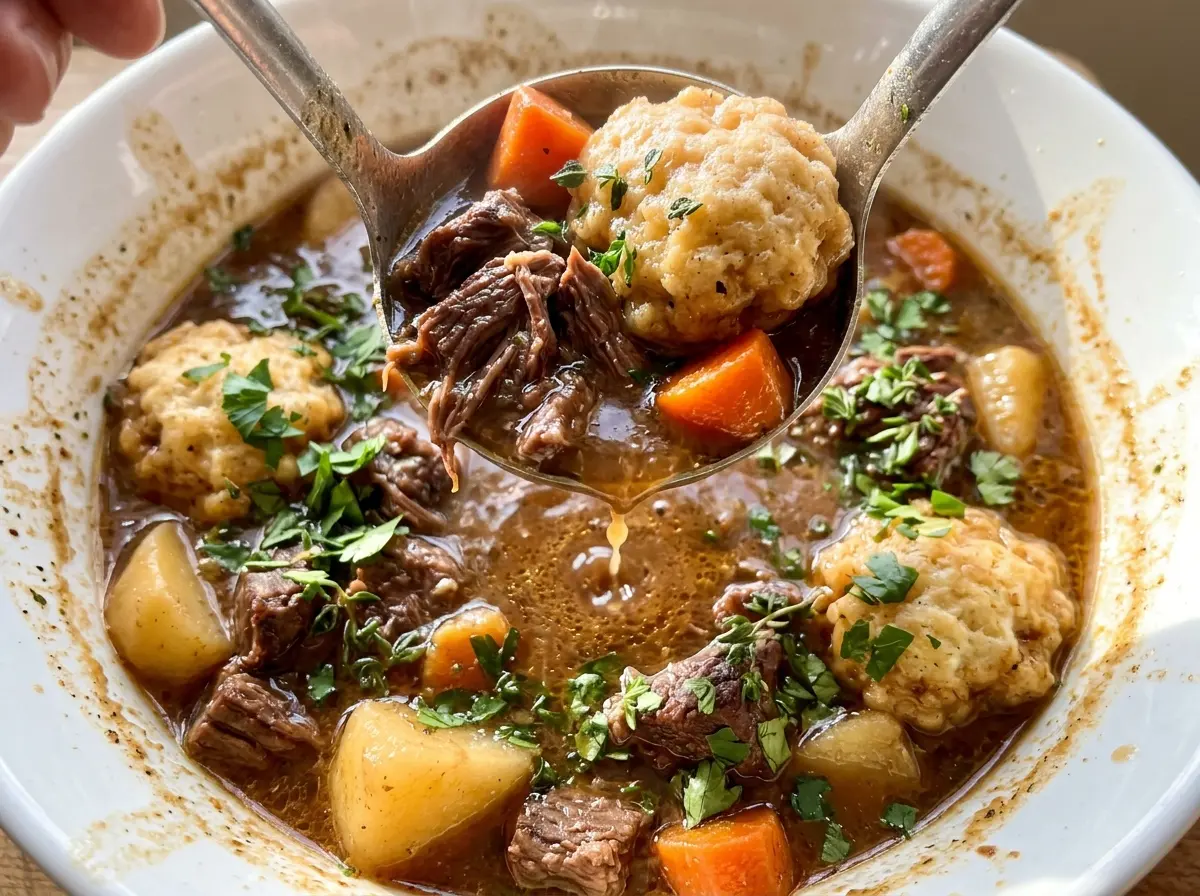
Keep the lid on while the dumplings steam. I know it’s tempting to peek, but the trapped heat is what cooks the centers through in 18 to 20 minutes and leaves the tops puffed.
Save this beef stew with fresh-herb dumplings for a cozy dinner with tender chuck and a soft, fluffy topping.
Why the Beef Simmer Comes Before the Vegetables
Chuck has connective tissue that turns tender with a long, gentle cook, but carrots, celery, and potatoes don’t need that entire stretch in the pot. Adding everything at once can leave you with vegetables that have lost their shape before the beef is ready. Giving the beef its first hour alone lets it start softening in the broth, then the vegetables join for the final 45 to 60 minutes.
The first browning stage matters for a different reason: it builds the browned bits that become part of the broth’s flavor. Work in batches, and give each piece room to make contact with the Dutch oven. Once the liquid goes in, scrape those bits up rather than leaving them stuck to the bottom. Keep the stew at a gentle simmer instead of a hard boil; a rolling boil is rough on the beef and makes it harder to keep the vegetables intact.
There’s a useful checkpoint before the dumplings go in: the beef should be fork-tender, and the vegetables should be tender too. If the beef still resists a fork at the end of the vegetable simmer, let the covered stew continue gently until it gives way. The topping is the last step, not a shortcut for finishing tough meat.
What the Chuck, Potatoes, and Dumpling Dough Each Bring
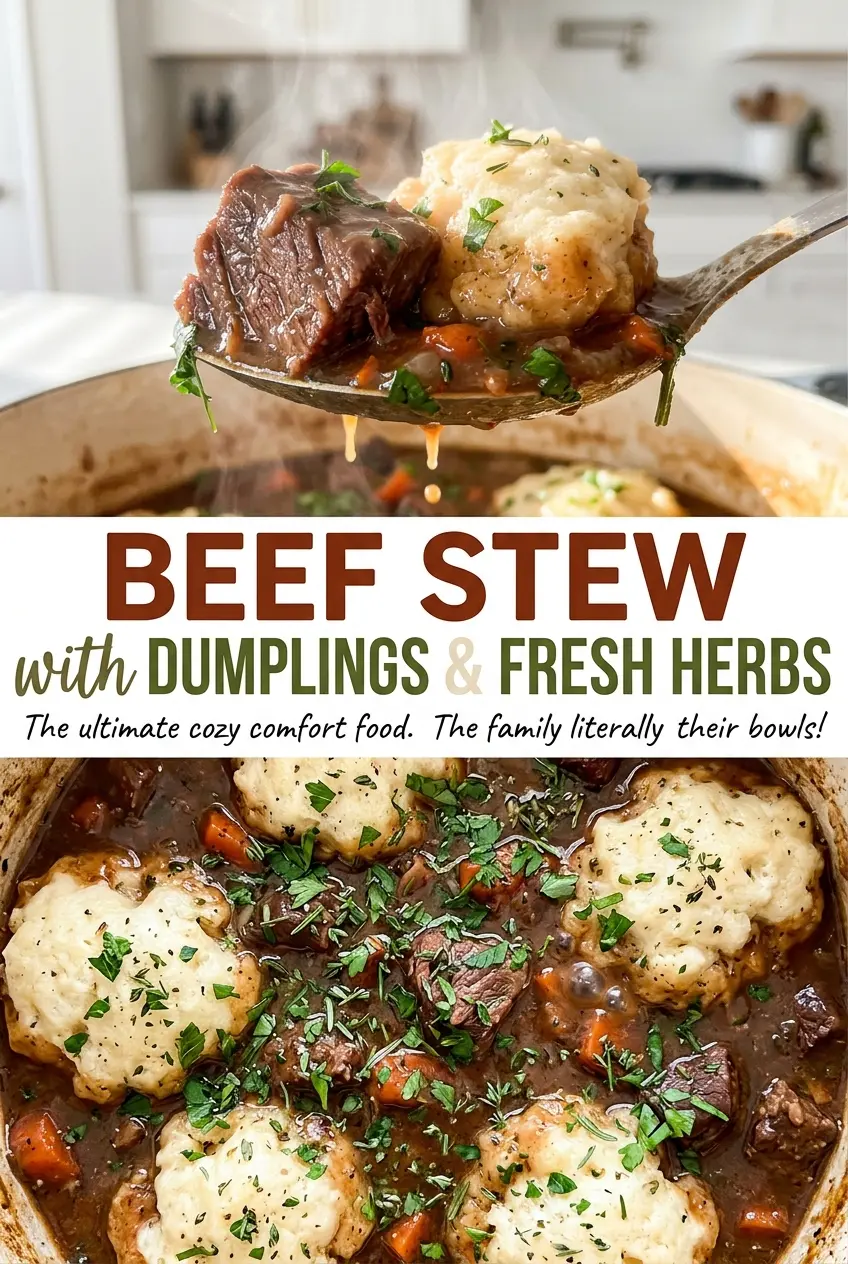
- Beef chuck — Its marbling and connective tissue suit the long, covered simmer and give the stew a tender, substantial bite. Keep the cubes close to the same size so they cook at a similar pace; a lean cut is more likely to turn dry during this long braise.
- Yukon Gold potatoes — They hold their shape while becoming creamy inside, which helps the stew stay chunky rather than starchy. If you need a stand-in, choose another waxy potato; a floury potato is more likely to break down during the simmer.
- Tomato paste and low-sodium beef broth — Cooking the paste briefly with the onion and garlic takes away its raw edge, while low-sodium broth leaves room for the seasoned beef and Worcestershire to build the final savoriness. Broth quality matters here because it makes up most of the cooking liquid; a familiar, good-tasting carton is worth using.
- Fresh thyme and parsley — The thyme sprigs steep with the beef, then come out with the bay leaf, so you get a gentle herbal note without loose leaves throughout the stew. Parsley goes in at the finish for a fresher taste and a little color; flat or curly fresh parsley both work when chopped.
- Cold salted butter and whole milk — Cold butter cut into the flour leaves small pockets that help the dumplings turn tender. Whole milk makes a soft, moist dough; lower-fat milk works, though the dumplings will be a little less rich.
- Flour and baking powder — Baking powder gives the dumplings their lift, so whisk it evenly through the flour before adding the butter and milk. Use all-purpose flour for the soft, sturdy texture this stew needs; swapping in a different flour changes how much liquid the dough absorbs.
From a Dark Beef Sear to Fluffy Dumplings
Brown the Beef in Uncrowded Batches
Heat the olive oil in a 6-quart Dutch oven over medium-high heat. Pat the beef dry, season it with kosher salt and black pepper, and brown it in batches for 3 to 4 minutes per batch before transferring it to a plate. The cubes should pick up browned patches on the outside; if they’re crowded together, they’ll release moisture and steam instead. Leave the flavorful browned bits in the pot.
Soften the Onion and Start the Broth
Cook the chopped onion over medium heat for 5 minutes, stirring occasionally, until it softens. Stir in the garlic and tomato paste and cook for 1 minute; keep stirring so the garlic doesn’t scorch. Add the beef broth and Worcestershire sauce, scraping the pot to loosen the browned bits. Return the beef and its juices, add the thyme and bay leaf, bring the liquid to a gentle simmer, then cover and cook over low heat for 1 hour.
Simmer the Vegetables Until Tender
Stir in the carrots, celery, and potatoes, then cover the pot and keep the stew at a gentle simmer for 45 to 60 minutes. Check that the beef yields easily to a fork and that the vegetables are tender without falling apart. If the liquid is boiling vigorously, lower the heat; steady, quiet bubbling is what you want. The stew should be ready for its topping before you mix the dumpling dough.
Mix Lightly and Steam the Dumplings
Whisk the flour and baking powder in a medium bowl, then rub in the cold butter with your fingertips until coarse crumbs form. Stir in the milk only until a soft, sticky dough comes together; overworking it makes the dumplings heavier. Bring the stew back to a gentle simmer and drop the dough in 8 rounded spoonfuls over the surface. Cover and cook over low heat for 18 to 20 minutes; when the dumplings are puffed and cooked through, remove the bay leaf and thyme stems and sprinkle the chopped parsley over the stew.
Two Ways to Adapt the Dumplings and Finish
Make the stew dairy-free by skipping the dumplings
The stew itself contains no dairy, so leave off the butter-and-milk topping for a dairy-free bowl. You’ll lose the soft dumplings, but the beef, vegetables, and broth still make a complete, hearty stew.
Keep the parsley bright at the table
For a fresher, more noticeable herb finish, bring the chopped parsley to the table and let everyone add it to their own bowl rather than sprinkling it over the whole pot. The flavor stays greener, and each serving gets a distinct hit of fresh parsley.
Storage and Reheating
- Refrigerator: Store leftovers in a covered container for 3 to 4 days. The dumplings will absorb some broth and soften as they sit.
- Freezer: Freeze in airtight containers for up to 2 to 3 months. The potatoes and dumplings soften after thawing, so for the best texture, freeze the stew before adding the dumplings.
- Reheating: Warm gently in a covered saucepan over low heat until the stew reaches 165°F, adding a splash of broth if it has thickened. Avoid a hard boil, which can break up the potatoes and toughen the dumplings.
Questions That Come Up While the Stew Simmeres
Beef Stew with Dumplings and Fresh Herbs
Ingredients
Equipment
Method
- Heat the olive oil in a 6-quart Dutch oven over medium-high heat.
- Pat the beef dry and season it with the salt and pepper.
- Brown the beef in batches for 3 to 4 minutes per batch, then transfer it to a plate.
- Add the onion to the pot and cook over medium heat for 5 minutes, stirring occasionally.
- Add the garlic and tomato paste and cook for 1 minute, stirring.
- Stir in the broth and Worcestershire sauce, scraping up any browned bits.
- Return the beef and its juices to the pot, add the thyme and bay leaf, and bring to a gentle simmer.
- Cover and cook over low heat for 1 hour.
- Stir in the carrots, celery, and potatoes.
- Cover and simmer gently for 45 to 60 minutes, until the beef is fork-tender and the vegetables are tender.
- Whisk the flour and baking powder together in a medium bowl.
- Cut in the butter with your fingertips until the mixture has coarse crumbs.
- Stir in the milk just until a soft, sticky dough forms.
- Bring the stew to a gentle simmer, then drop the dough in 8 rounded spoonfuls over the surface.
- Cover and cook over low heat for 18 to 20 minutes without lifting the lid, until the dumplings are puffed and cooked through.
- Remove the bay leaf and thyme stems, sprinkle the stew with the parsley, and serve.