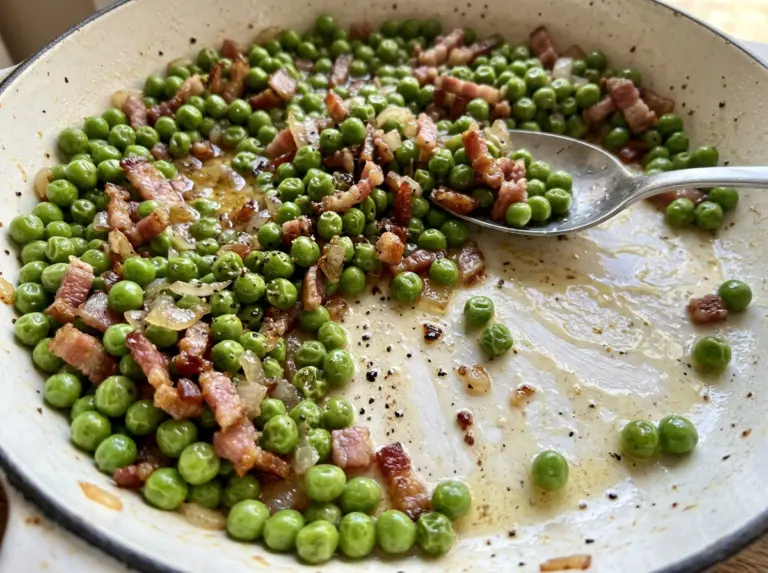
When the mushrooms first hit the skillet, they release enough liquid to make the pan look almost soupy. Keep cooking, and that moisture disappears; the mushrooms turn browned and concentrated instead. That change is what gives this butternut squash and wild mushroom Wellington its savory center, rather than a damp filling tucked inside puff pastry.
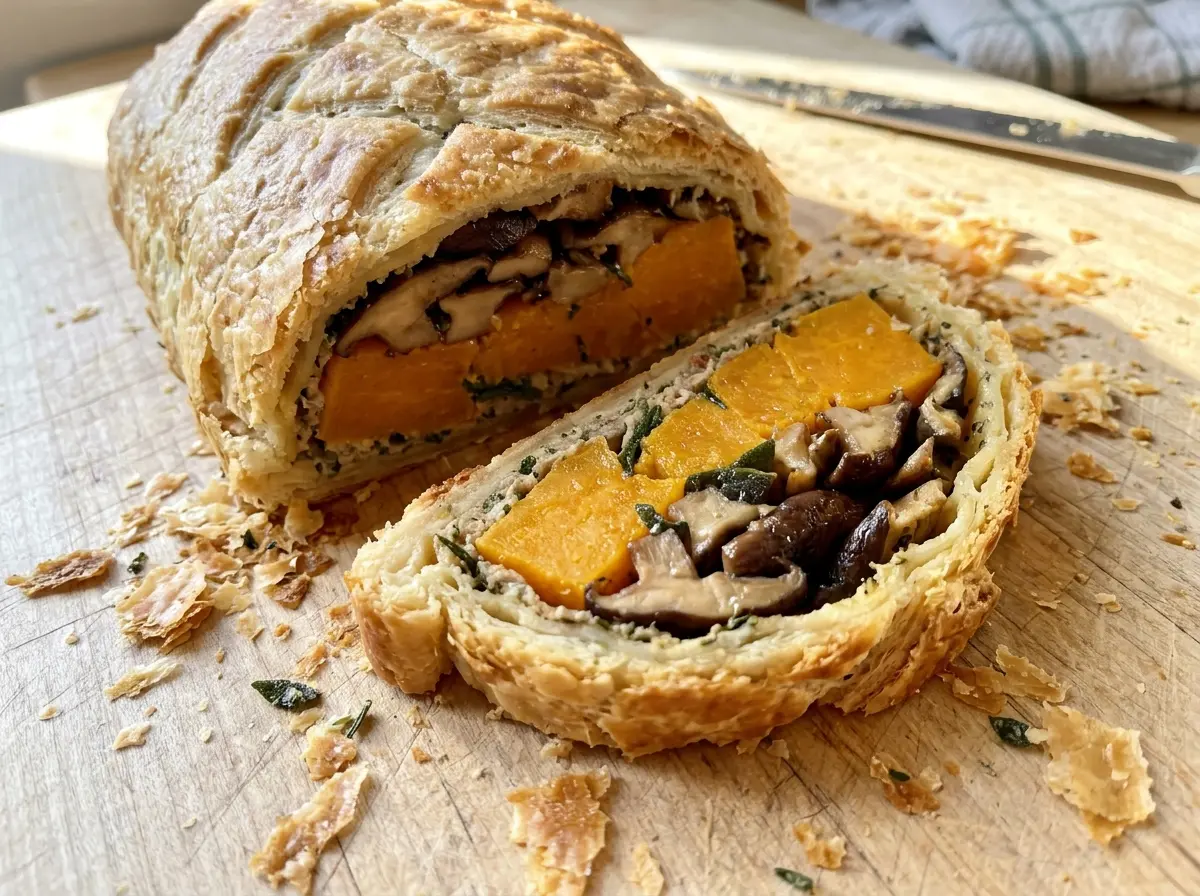
I like the contrast of tender, lightly browned squash with mushrooms, thyme, and creamy goat cheese. The filling gets a little panko to catch any lingering moisture, then it’s folded gently so the squash stays in pieces. Two pastry logs make the Wellington easy to portion for a gathering: each one gives you six slices, with crisp golden layers around the vegetables. Let the filling cool before it meets the pastry, and you’ll get a flaky shell with a satisfying, savory middle.
Kitchen Note
Fold the cooled squash and goat cheese into the mushroom mixture gently. You want the squash cubes to stay intact and the goat cheese to remain in little creamy pockets, not disappear into a paste.
Save this butternut squash and wild mushroom Wellington for a party table — two flaky logs make twelve savory slices with tender squash and browned mushrooms.
Why this Wellington works better as two logs than one large pastry
The two pastry sheets give you two manageable Wellingtons, not one oversized roll. Each log is shaped to the same length, then sliced into six pieces, so the servings are easy to portion and the filling stays spread along the center instead of being piled into one thick mass. That balance matters: too much filling in one spot makes the pastry harder to close neatly and leaves you with uneven slices.
Think of each sheet as a wrapper with a job to do. The filling needs to sit in a centered line, with enough pastry on either side to overlap and seal. Tucking the ends under closes the short sides, while the shallow cuts on top give steam a place to escape as the pastry bakes. You end up with crisp, defined layers around the filling rather than a bulky parcel that’s awkward to cut. For a party appetizer, the two-log format also lets you bring out one Wellington at a time and keep the second intact until you need it.
What each part of the squash-and-mushroom filling contributes
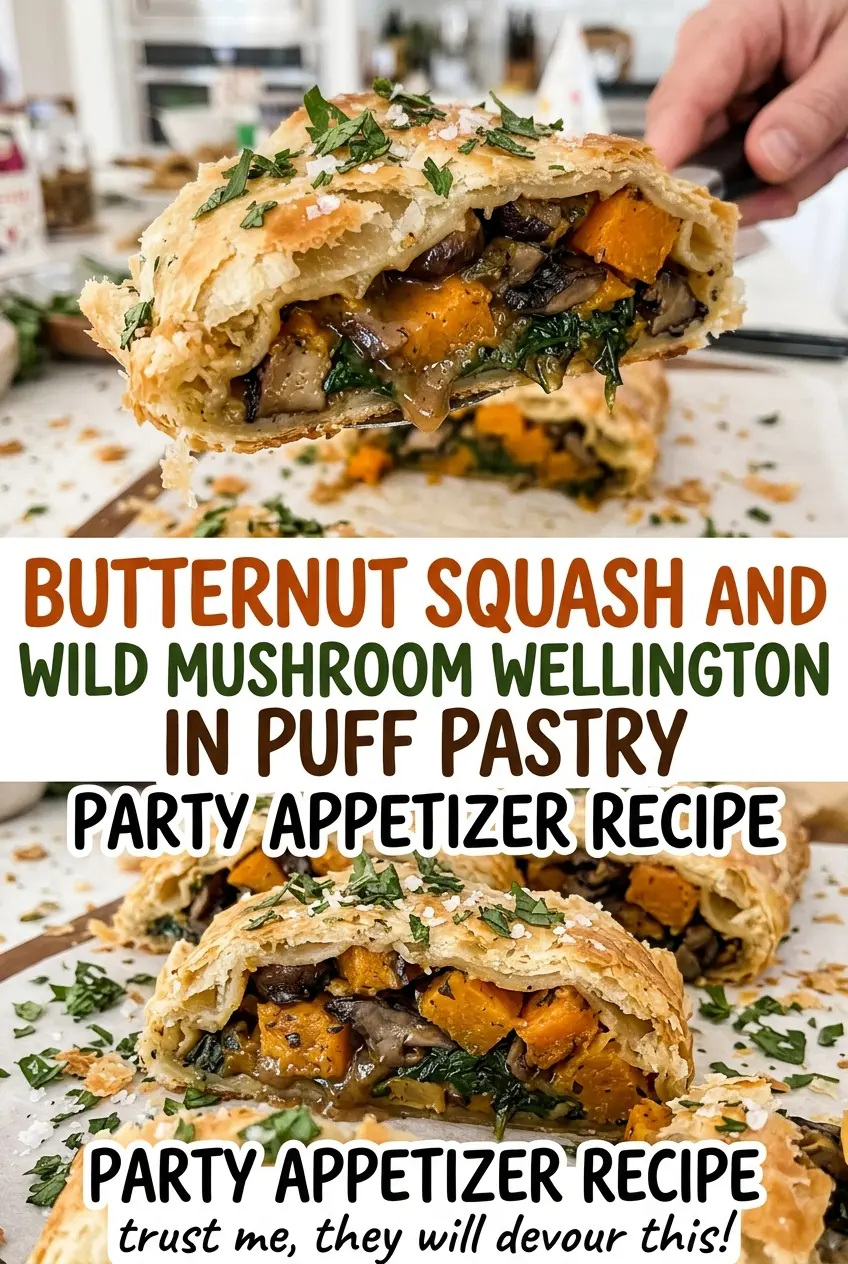
- Butternut squash — Its dense flesh softens without vanishing when cut into even cubes. Choose squash that feels firm and heavy; take a little extra care to keep the pieces evenly sized so they roast at the same pace.
- Wild mushroom blend — The mix brings a deeper, earthier flavor than one mild mushroom variety. If a wild blend isn’t available, finely chopped cremini mushrooms work well, though the filling will taste a little less woodsy. Chop them finely so they pack into the pastry without large gaps.
- Panko — These coarse crumbs help absorb moisture left in the mushroom mixture, which protects the pastry from a wet filling. Plain dry breadcrumbs can stand in; they’re finer, so the filling will be a bit denser.
- Goat cheese — Its tang cuts through the earthy mushrooms, and its soft texture gives the filling creamy pockets. Choose a fresh, mild cheese if you prefer a gentler tang; a drier, aged style will be sharper and less creamy.
- Puff pastry and egg wash — Frozen puff pastry is convenient and gives the Wellington its crisp, layered shell. Let it thaw until it unfolds without cracking, but handle it while it’s still cool. The egg beaten with water helps the seam seal and gives the tops their browned finish.
- Fresh thyme and garlic — They season the mushroom mixture without overpowering the squash. Fresh thyme leaves blend in neatly; mince the garlic so it distributes through the filling instead of leaving large, sharp pieces.
From roasted squash to crisp, sealed pastry
Roast the squash until tender and lightly browned
Heat the oven to 425°F and line a rimmed baking sheet with parchment. Toss the squash cubes with olive oil, spread them in a single layer, and roast for 20–25 minutes. They’re ready when tender with a little color on the edges; crowded cubes will steam instead of brown. Let them cool to room temperature before mixing them into the filling.
Cook the mushrooms until the skillet looks dry
Melt the butter in a 12-inch skillet over medium-high heat, then add the mushrooms, shallot, kosher salt, and black pepper. Cook for 10–12 minutes, stirring often, until the released liquid has evaporated and the mushrooms are browned. Stir in the garlic and thyme for 30 seconds, then add the panko. Transfer the mixture to a shallow bowl and cool it completely before adding the squash and goat cheese.
Shape two centered filling logs
Lower the oven to 400°F and line a rimmed baking sheet with fresh parchment. Beat the egg and water together, then unfold both pastry sheets on your work surface. Divide the filling between them and shape a 12-inch-long log down the center of each sheet. Brush one long edge with egg wash, fold the opposite edge over the filling, overlap and press to seal, then tuck the ends underneath.
Vent, glaze, and bake until deeply golden
Set the logs seam-side down on the prepared baking sheet and cut five shallow vents across the top of each one. Brush the tops with the remaining egg wash, taking care not to let it pool in the cuts. Bake for 30–35 minutes, until the pastry is deeply golden and crisp. Rest the Wellingtons for 10 minutes, then slice each log into six pieces.
Three smart ways to change the filling without losing its balance
A fully dairy-free Wellington
Use olive oil in place of the butter, leave out the goat cheese, and choose dairy-free puff pastry. The filling will be less rich and a little less creamy, but the mushrooms, squash, and panko still make a savory, sliceable center. The egg wash contains no dairy.
A saltier, sharper cheese finish
Swap the goat cheese for crumbled feta for a firmer, saltier bite. Reduce the added kosher salt to 1/4 teaspoon so the cheese doesn’t push the filling too far toward salty. The texture will be less creamy, with distinct briny crumbles.
A more woodsy herb note
Replace the fresh thyme with 1/2 teaspoon finely chopped fresh rosemary. Rosemary has a stronger, piney edge, so use it sparingly and stir it in with the garlic. The result leans more herbaceous and pairs especially well with the mushrooms.
Storage and Reheating
- Refrigerator: Refrigerate leftovers within 2 hours and keep them covered for 3–4 days. The pastry softens as it sits.
- Freezer: Freeze fully cooled slices in an airtight container for up to 2 months. Thaw them in the refrigerator before reheating; the pastry may be less crisp than freshly baked.
- Reheating: Warm slices on a baking sheet in a 350°F oven until the center reaches 165°F. Avoid the microwave, which softens the pastry instead of restoring its crisp edges.
Questions I get asked about this squash and mushroom Wellington
Butternut Squash And Wild Mushroom Wellington In Puff Pastry – Party Appetizer Recipe
Ingredients
Equipment
Method
- Heat the oven to 425°F and line a rimmed baking sheet with parchment paper.
- Toss the squash with the olive oil.
- Spread the squash in a single layer on the baking sheet and roast for 20–25 minutes, until tender and lightly browned.
- Cool the squash to room temperature.
- Melt the butter in a 12-inch skillet over medium-high heat.
- Add the mushrooms, shallot, salt, and pepper, and cook for 10–12 minutes, stirring often, until the liquid has evaporated and the mushrooms are browned.
- Stir in the garlic and thyme and cook for 30 seconds.
- Stir in the panko, transfer the mixture to a shallow bowl, and cool completely.
- Gently fold the cooled squash and goat cheese into the mushroom mixture.
- Reduce the oven temperature to 400°F and line a rimmed baking sheet with fresh parchment paper.
- Beat the egg and water together in a small bowl.
- Unfold each pastry sheet on a work surface.
- Divide the filling between the pastry sheets, shaping a 12-inch-long log down the center of each.
- Brush one long edge of each sheet with egg wash.
- Fold the opposite edge over the filling, overlap and press to seal, then tuck the ends under.
- Transfer the logs seam-side down to the baking sheet.
- Cut 5 shallow vents across the top of each log.
- Brush the tops with the remaining egg wash.
- Bake for 30–35 minutes, until the pastry is deeply golden and crisp.
- Rest the Wellingtons for 10 minutes before slicing each into 6 pieces.