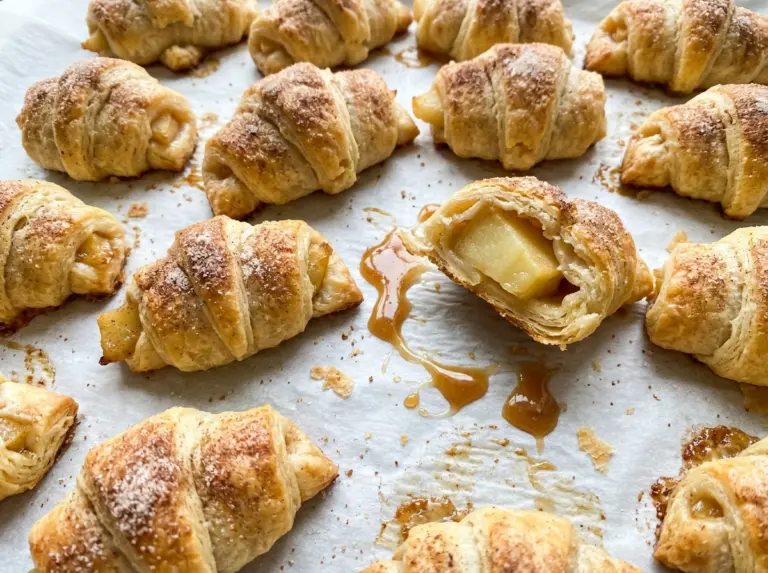
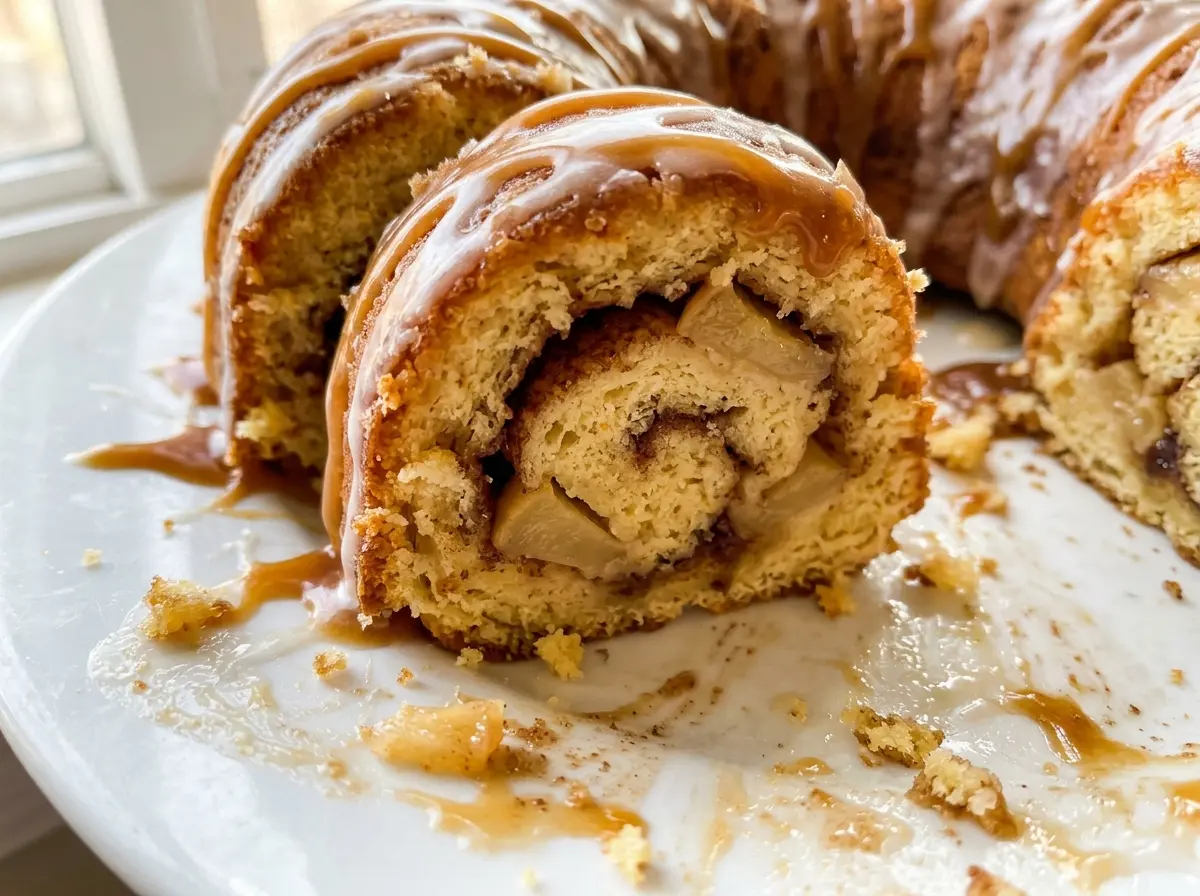
The cinnamon-butter mixture looks like it might take over the whole pan, but once it bakes, it settles into pockets and ribbons through the cake. I like how the little apple pieces soften right inside that tender crumb, so each slice has fruit without turning into a heavy, wet dessert. This caramel apple cinnamon roll cake gives you the cozy cinnamon-roll flavor without rolling or proofing dough.
The batter comes together with baking powder, then the cinnamon mixture gets spooned over the top and gently swirled in. That keeps the process straightforward, but the finished cake still has a soft interior and a golden top. A short rest in the baking dish lets it settle before the warm caramel goes on, leaving a glossy finish over the cinnamon and apples.
Kitchen Note
Test the cake portion with a toothpick, not a thick cinnamon ribbon. A few moist crumbs are the cue to pull it; waiting for a completely clean pick can leave the cake drier than you want.
Save this caramel apple cinnamon roll cake for its soft apple-studded crumb, cinnamon swirl, and warm caramel finish.
Why This Cinnamon Roll Cake Starts With Cake Batter, Not Dough
A cinnamon roll gets its chew from yeast dough; this cake takes a different route. Baking powder lifts a simple cake batter, so you can stir it together and spread it in the dish without kneading, rising, or shaping anything. The result is meant to be tender and sliceable, with cinnamon-brown sugar running through it—not a bread-like spiral you can pull apart.
That difference also matters when you judge the texture. The apples add moisture and little soft bites, while the cake itself should stay light enough to cut cleanly after its brief rest. The cinnamon swirl gives each piece that familiar brown-sugar warmth, but it doesn’t turn the whole crumb into a dense roll. Expect distinct cake and cinnamon layers rather than a tight, uniform spiral. It’s a good fit when you want the flavor of a cinnamon roll in a pan cake that serves a crowd.
How the Apples, Oil, and Cinnamon Swirl Shape Each Slice
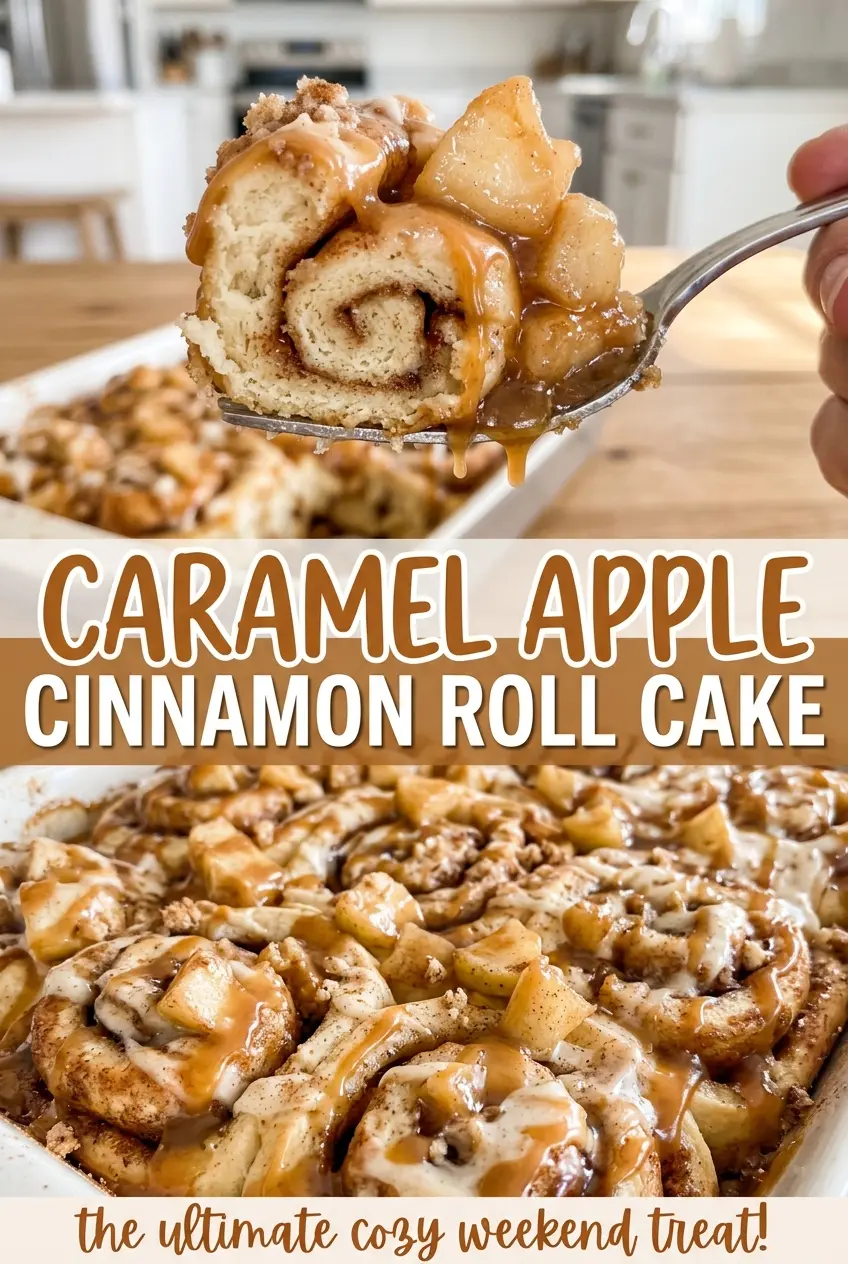
- Apples — Firm apples hold their shape better than soft, mealy ones. Tart varieties such as Granny Smith bring a sharper contrast to the sweet swirl, while a sweeter baking apple makes a milder slice. Peel them and cut them into even small pieces so they distribute through the crumb. You don’t need an expensive variety; freshness and a firm texture matter more than appearance.
- Vegetable oil — Oil keeps the cake tender and moist after it cools. Canola oil works in the same amount if that’s what you keep on hand; strongly flavored oils can distract from the apple and cinnamon. A neutral store-brand oil is perfectly suitable here.
- All-purpose flour and baking powder — Together they give this cake its soft structure and lift. Spoon the flour into your measuring cup and level it rather than packing it down; too much flour can make the crumb heavy. Check that the baking powder is fresh, since old leavener can leave the center squat.
- Brown sugar, butter, and cinnamon — These are what give the swirl its buttery, spiced character. Packed brown sugar brings a deeper, slightly molasses-like sweetness than granulated sugar would, and ground cinnamon that’s fragrant when you open the jar will show up clearly after baking. Standard unsalted butter is a good choice; there’s no need for a specialty brand.
- Caramel sauce — A store-bought sauce makes the finish quick and consistent. Choose one that pours smoothly when warmed; a thick sauce may need a little more time in short microwave bursts before it drizzles neatly. The brand affects how sweet or buttery the topping tastes, so pick one you enjoy on its own.
Build the Batter, Swirl, and Caramel Finish Without Overworking the Cake
Bring the Wet and Dry Mixtures Together
Heat the oven to 350°F and grease a 9×13-inch baking dish with the teaspoon of oil set aside for the pan. Whisk the flour, granulated sugar, baking powder, and salt in a large bowl; in a separate medium bowl, whisk the eggs, milk, remaining oil, and vanilla. Pour the wet mixture into the dry and stir just until no dry flour remains. Fold in the apples, then spread the batter evenly so it bakes at a consistent depth.
Lay the Cinnamon Swirl Across the Batter
Stir the melted butter, packed brown sugar, and cinnamon together in a small bowl until the mixture looks evenly combined. Spoon it over the batter rather than pouring it all in one spot. Drag a knife gently through the topping to make swirls; a light motion creates visible ribbons without leaving large clumps of cinnamon mixture. Keep the batter in the dish as you work so the apples stay distributed.
Bake Until the Top Is Golden
Bake for 35 to 42 minutes, watching for a golden top and a cake portion that gives a toothpick a few moist crumbs. Insert the pick into an area of cake rather than into an apple piece, which can make the result harder to read. If the center still looks wet and the pick comes out with batter, it needs more time in the oven. Let the baked cake cool in the dish for 20 minutes before adding the topping.
Warm the Caramel and Drizzle
Put the caramel sauce in a microwave-safe bowl and warm it in 10-second bursts, stirring between each one. Stop when it moves easily from a spoon; overheating can make it run too thin and harder to control. Drizzle it over the rested cake in a loose pattern. The cake is ready to slice once the topping has settled over the surface.
Three Simple Changes for a Different Apple-Cinnamon Cake
Use tart apples for a sharper contrast
Choose Granny Smith apples in place of a sweeter baking apple. Their bright tartness cuts through the brown sugar and caramel, while the cake’s texture stays much the same as long as the pieces are cut evenly.
Choose salted caramel for a less-sweet finish
Swap the regular store-bought caramel sauce for salted caramel sauce. The little salty edge balances the sweet topping without changing how you warm or drizzle it.
Make the cake dairy-free
Use unsweetened oat milk in place of the milk and dairy-free baking sticks in place of the butter in the swirl. The cake will still be tender, though the swirl may taste a little less rich; check that the caramel sauce you choose is also dairy-free.
Storage and Reheating
- Refrigerator: Cover and refrigerate leftovers for up to 4 days. The crumb will firm up when cold, then soften as it comes back toward room temperature.
- Freezer: Freeze fully cooled slices in an airtight container, with parchment between layers, for up to 2 months. The caramel may look a little less glossy after thawing, but the cake keeps its flavor.
- Reheating: Warm an individual slice in the microwave in short bursts until just warm. Long heating can dry the cake and make the caramel too hot, so stop as soon as the center is warmed through.
Questions That Come Up When Baking This Apple Cinnamon Cake
Caramel Apple Cinnamon Roll Cake
Ingredients
Equipment
Method
- Heat the oven to 350°F.
- Grease a 9x13-inch baking dish with 1 teaspoon of the vegetable oil.
- In a large bowl, whisk together the flour, granulated sugar, baking powder, and salt.
- In a medium bowl, whisk together the eggs, milk, remaining 1/2 cup vegetable oil, and vanilla extract.
- Pour the wet mixture into the dry mixture and stir just until no dry flour remains.
- Fold in the apples.
- Spread the batter evenly in the prepared baking dish.
- In a small bowl, stir together the melted butter, brown sugar, and cinnamon.
- Spoon the cinnamon mixture over the batter.
- Gently drag a knife through the cinnamon mixture to create swirls.
- Bake for 35 to 42 minutes, until the top is golden and a toothpick inserted into a cake portion comes out with a few moist crumbs.
- Let the cake cool in the dish for 20 minutes.
- Warm the caramel sauce in a microwave-safe bowl in 10-second bursts, stirring until pourable.
- Drizzle the caramel sauce over the cake.