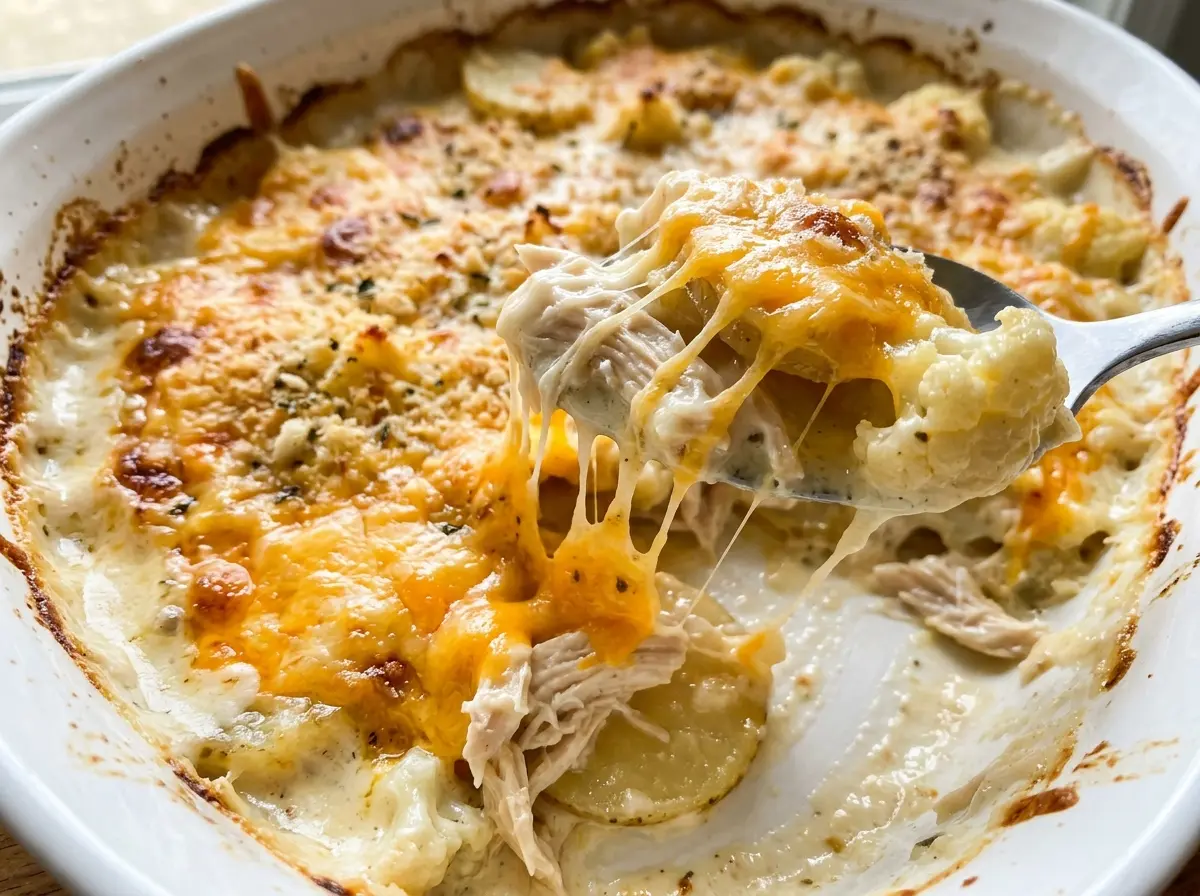
When the foil comes off, the potatoes have softened under the sauce, but the cheddar on top still needs time to turn golden. Giving the gratin those two separate bakes keeps the topping from spending the whole time in the oven. That’s the detail I like about this Cheesy Chicken and Cauliflower Potato Gratin: it comes out creamy underneath, with a browned cheese finish and tender layers that still hold their shape.
The cauliflower gets a quick cook in boiling water before it goes into the dish, while the potatoes are sliced thin and layered in raw. I keep the chicken cooked and ready to scatter between the layers, then pour the cheese sauce over everything. It’s a hearty one-dish dinner, and the sauce brings the chicken, potatoes, and cauliflower together without turning the vegetables into a mash.
Sharp cheddar gives the sauce a savory edge, and a little more cheddar on top makes a crisp, golden finish. After a short rest, each scoop has tender potatoes, cauliflower, chicken, and plenty of creamy sauce.
Kitchen Note
Drain the cauliflower well before it goes into the dish. Water clinging to the florets can thin the sauce and leave liquid at the bottom of the gratin.
Save this Cheesy Chicken and Cauliflower Potato Gratin for a cozy dinner with tender layers and a golden cheddar top.
Why the Cheddar Goes on After the Covered Bake
The cheese inside the sauce and the cheese on top have different jobs. The cheddar whisked into the sauce melts through the milk-and-cream base, coating the chicken and vegetables. The separate topping gets direct oven heat only after the potatoes have had a long, covered bake, so it can turn golden instead of sitting under foil and staying soft.
That timing also gives you a useful cue for the potatoes. The first bake is about getting them close to tender while they cook in the covered dish; the uncovered finish completes the cooking and browns the surface. If the topping went on at the start, it would spend the full bake under the foil and then risk getting too dark while the potatoes finished. Keeping the two portions of cheddar separate lets the sauce stay creamy and gives the top its own chance to color.
Layering rather than stirring everything together helps each serving include the different components. Spread the vegetables and chicken through both layers, then pour the sauce evenly over them. It can settle into the spaces as the gratin bakes, instead of leaving some ingredients buried in one dense mixture.
What Each Ingredient Brings to These Gratin Layers

- Yukon Gold potatoes — Their texture works well in a layered bake: tender when cooked through, but less prone to falling apart than a very floury potato. Peel them and slice them evenly so they finish at about the same time.
- Cauliflower — Bite-size florets fit neatly between the potato slices and take on the cheese sauce. A medium fresh head is easy to cut into similarly sized pieces; trim larger florets down so they aren’t much bigger than the rest.
- Cooked chicken — This is a good place to use plain leftover cooked chicken. Shredded pieces spread through the layers, while diced pieces give you more distinct bites; either option works here.
- Sharp cheddar — Its stronger taste stands up to the potatoes, cream, and cauliflower. A standard grocery-store sharp cheddar is fine; the sharpness matters more than buying an expensive specialty cheese. Keep some aside for the top rather than stirring all of it into the sauce.
- Whole milk and heavy cream — Together, they make a sauce that feels rich but still pours over the layers. Replacing the cream with the same volume of whole milk makes the finished gratin less rich, though the sauce won’t have quite the same creamy body.
- Butter, flour, and garlic — Butter and flour form the base that thickens the dairy into a sauce, while garlic gives it a savory note. Mince the garlic before starting the sauce; it cooks quickly, so it’s easier to have it ready beside the pan.
Building the Gratin in Four Stages
Prep the Cauliflower and Potatoes
Heat the oven to 375°F and grease a 9×13-inch baking dish with butter. Bring the water to a boil in a 5-quart pot, add the cauliflower, and cook it for 3 minutes; then drain it well. Peel the potatoes and slice them 1/8 inch thick, keeping the slices as even as you can. Thin, consistent slices are important here because the potatoes go into the dish raw.
Cook the Garlic-Flavored Cheese Sauce
Melt the remaining butter in a medium saucepan over medium heat, add the minced garlic, and cook for 30 seconds. Whisk in the flour and cook for 1 minute, then gradually whisk in the milk and cream with the salt and pepper. Simmer for 4-6 minutes, whisking often, until the sauce thickens enough to coat a spoon. Take the pan off the heat before stirring in the cheddar; adding it off the burner helps it melt smoothly into the sauce.
Layer the Chicken and Vegetables
Arrange half the potatoes in the prepared dish, then scatter over half the cauliflower and chicken. Repeat with the remaining potatoes, cauliflower, and chicken, spreading the ingredients across the dish rather than piling them in one spot. Pour the cheese sauce evenly over the top so it can flow between the layers. Keep the reserved cheddar separate for the final bake.
Bake Covered, Then Brown the Top
Cover the dish tightly with foil and bake for 50-60 minutes, until a knife slides into the potatoes with slight resistance. Remove the foil, sprinkle the remaining cheddar over the top, and bake uncovered for 15-20 minutes. Look for tender potatoes and a golden surface, and check that the center reaches 165°F. Let the gratin rest for 15 minutes before serving so the sauce settles into the layers.
Easy Ways to Adapt the Gratin
Make It a Meatless Cauliflower-Potato Gratin
Leave out the cooked chicken and keep the potatoes, cauliflower, and cheese sauce as they are. The result is a vegetarian gratin with a more pronounced potato-and-cauliflower texture and less protein than the chicken version.
Use Milk for a Lighter Sauce
Replace the heavy cream with the same volume of whole milk. The sauce will taste less rich while still thickening with the butter-and-flour base; keep the other sauce ingredients and steps the same.
Choose the Chicken Texture You Prefer
Shred the cooked chicken for smaller bites spread throughout the gratin, or dice it for more distinct pieces in each serving. Both work with the same layering method and sauce.
Storage and Reheating
- Refrigerator: Refrigerate leftovers within 2 hours and keep them covered for 3-4 days. The sauce thickens as it chills.
- Freezer: Freeze cooled portions in airtight containers for up to 2 months. The potatoes may soften and the sauce may separate a little after thawing.
- Reheating: Reheat covered in the oven until hot throughout, or warm individual portions in the microwave. Covering helps keep the top and potato edges from drying out.
Questions That Come Up When Making This Gratin
Cheesy Chicken and Cauliflower Potato Gratin
Ingredients
Equipment
Method
- Heat the oven to 375°F and grease a 9x13-inch baking dish with 1 tablespoon of the butter.
- Bring the water to a boil in a 5-quart pot, add the cauliflower, and cook for 3 minutes.
- Drain the cauliflower well.
- Peel the potatoes and slice them 1/8 inch thick.
- Melt the remaining 3 tablespoons butter in a medium saucepan over medium heat, then add the garlic and cook for 30 seconds.
- Whisk in the flour and cook for 1 minute, then gradually whisk in the milk and cream along with the salt and pepper; simmer for 4-6 minutes, whisking often, until the sauce thickens enough to coat a spoon.
- Remove the saucepan from the heat and stir in 1 1/2 cups of the cheddar until melted.
- Layer half the potatoes in the baking dish, scatter over half the cauliflower and chicken, and repeat with the remaining vegetables and chicken; pour the cheese sauce evenly over the top.
- Cover the dish tightly with foil and bake for 50-60 minutes, until a knife slides into the potatoes with slight resistance.
- Remove the foil, sprinkle with the remaining 1/2 cup cheddar, and bake uncovered for 15-20 minutes, until the potatoes are tender, the top is golden, and the center reaches 165°F.
- Let the gratin rest for 15 minutes before serving.