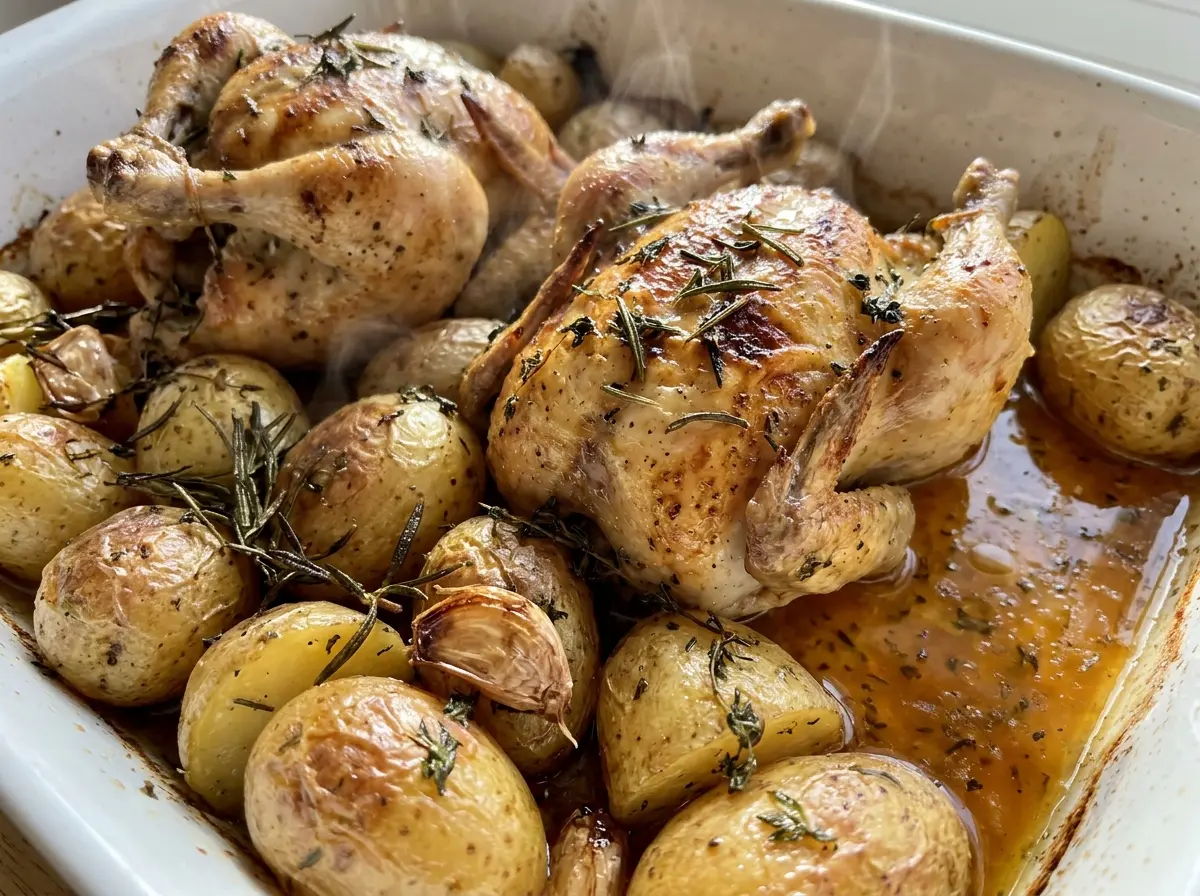
At the halfway mark, the potatoes need a turn and the pan needs a rotation; that’s when the whole sheet starts smelling of rosemary and roasted garlic. I like this setup because the hens and their side cook together, with no separate skillet or pot to wash. These herb-roasted Cornish hens come out golden, and the baby potatoes roast right alongside them.
The small details make the difference: dry the hens well before rubbing them with the oil and herbs, and set the potatoes cut-side down so they have direct contact with the baking sheet. Cornish hens are small enough to serve individually, but they still need a thermometer check in both the breast and thigh. If the meat finishes before the potatoes, you can lift the hens out and let the potatoes keep roasting. The result is tender poultry, crisp-edged potatoes, and lemon tucked inside each bird.
Kitchen Note
Tuck the wing tips underneath each hen before it goes onto the pan. It keeps those narrow tips close to the bird instead of sticking out where they can darken ahead of the thicker meat.
Save these herb-roasted Cornish hens with baby potatoes for a one-pan dinner with golden skin, fragrant herbs, and lemon in every bird.
Why the Rimmed Sheet Matters for the Potatoes
A large rimmed baking sheet gives the potato halves room to sit cut-side down among the hens. That contact with the hot pan helps the cut surfaces brown instead of leaving them pale and soft. A deep roasting dish holds the food higher in its sides, while a crowded pan can trap moisture around the potatoes; neither setup gives those cut faces the same chance to roast.
Keep the halves in a single layer, with their flat sides against the pan wherever there’s room. The hens will occupy much of the sheet, so arrange the potatoes around them rather than stacking them. If your baking sheet is too small to fit the hens and potatoes without piling the potatoes up, use a larger rimmed sheet. It’s worth choosing the pan before you start: there’s no need to sacrifice the potatoes’ browned edges for a crowded arrangement.
The sheet also makes it easier to rotate the whole meal as it cooks. The oven’s heat can be stronger in one area than another, and a halfway turn helps even out that difference. You’re aiming for potatoes with browned faces and soft centers, not just potatoes that have warmed through.
What Each Ingredient Brings to the Roast
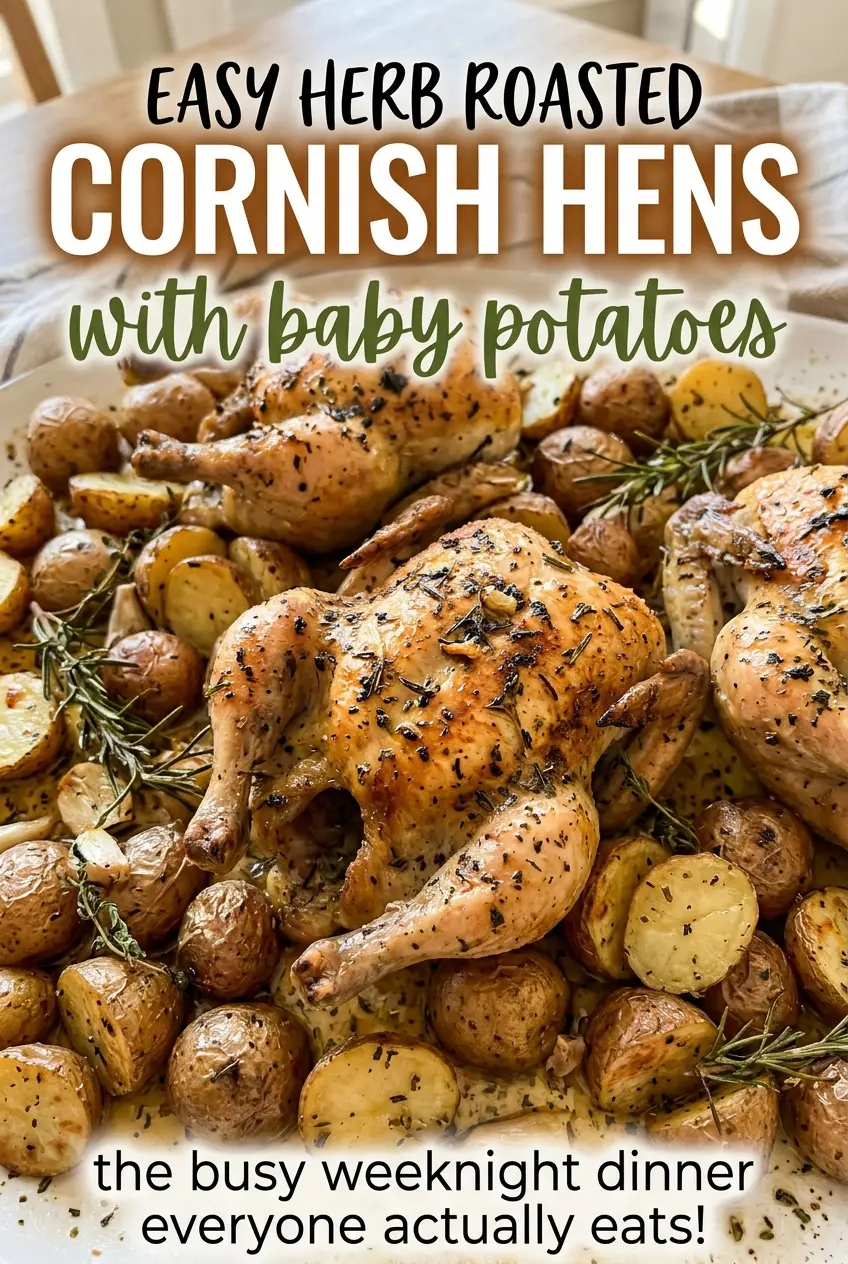
- Cornish hens — Their smaller size makes each bird a natural portion and lets the meat roast alongside the potatoes. Buy them thawed or thaw them fully before roasting; a larger chicken isn’t a direct swap because its size changes the cooking time.
- Baby potatoes — Their small size makes halving practical, and the flat cut surface roasts well. Small waxy potatoes such as baby Yukon Golds work in the same amount; halve or quarter them so the pieces are close in size.
- Olive oil — It carries the herbs and garlic over the potatoes and the hens. A neutral cooking oil can replace it in the same amount, though you’ll lose olive oil’s gentle fruity note; an inexpensive everyday olive oil is fine here.
- Rosemary and thyme — Fresh herbs give the oil mixture a fragrant, savory character. Choose leaves that look fresh rather than wilted, but there’s no need for specialty varieties. If using dried herbs, use 1 teaspoon dried rosemary and 2/3 teaspoon dried thyme in place of the fresh amounts.
- Garlic — Freshly minced cloves distribute through the oil mixture and cling to the hens and potatoes. Jarred minced garlic works when convenience matters, though its flavor is less bright; keep the pieces small so they coat evenly.
- Lemon — A half inside each cavity adds a citrus aroma as the hens roast. Fresh lemon is the best fit because the halves sit inside the birds; lime halves work in the same way but give the roast a sharper citrus note.
From Drying the Hens to Roasting the Whole Pan
Heat the Oven and Prep the Potatoes
Heat the oven to 425°F with a rack positioned in the center. Rinse the baby potatoes, pat them dry, then halve them; dry surfaces help the oil mixture cling instead of slipping off. Set the potatoes aside while you prepare the hens. Starting with a dry pan and dry potatoes gives the cut sides a better chance to brown.
Dry and Season the Hens
Pat each thawed hen dry with paper towels, including around the legs and wings, and tuck the wing tips underneath. Stir together the olive oil, kosher salt, black pepper, chopped rosemary, thyme leaves, and minced garlic. Toss the potatoes with about one-third of that mixture, coating them without letting them sit in a pool of oil.
Arrange the Hens and Potatoes
Set the potatoes cut-side down on a large rimmed baking sheet. Rub the remaining herb mixture over the hens, then place one lemon half in each cavity. Arrange the hens breast-side up among the potatoes, leaving the potato halves in a single layer as much as the pan allows. The mixture should coat the birds and potatoes rather than collect in one spot.
Roast Until Both Parts Are Tender
Roast for 50 to 65 minutes, turning the potatoes and rotating the pan after 30 minutes. The hens should look golden; check the thickest part of both the breast and thigh with a thermometer and cook until each registers 165°F. The potatoes should be fork-tender. If the hens reach temperature first, transfer them to a platter and continue roasting the potatoes until tender, then let the hens rest for 10 minutes before serving.
Three Simple Ways to Adapt the Herb Roast
Make the roast more thyme-forward
Use 2 teaspoons chopped fresh rosemary and 1 tablespoon fresh thyme leaves instead of the original herb proportions. The overall amount of herbs stays similar, but thyme becomes the more noticeable note while rosemary recedes.
Use garlic-infused oil for a garlic-free version
Replace the olive oil with the same amount of garlic-infused olive oil and leave out the minced garlic. You’ll keep a mild garlic aroma without the minced pieces, while rosemary, thyme, lemon, salt, and pepper still season the hens and potatoes.
Cut larger waxy potatoes to match
If baby potatoes aren’t available, use the same weight of small waxy potatoes and cut them into halves or quarters so the pieces are roughly the size of a halved baby potato. The texture will be creamy inside, and similarly sized pieces are more likely to become tender together.
Storage and Reheating
- Refrigerator: Refrigerate leftovers within 2 hours in a covered container and use them within 3 to 4 days. The potatoes soften as they sit, and the skin loses its crispness.
- Freezer: The cooked meat freezes well for up to 2 to 3 months when packed airtight; remove it from the bones first for easier storage. Potatoes can turn mealy after freezing, so they’re best eaten fresh or refrigerated.
- Reheating: Warm the meat and potatoes in a covered baking dish in a 350°F oven until hot throughout. Avoid reheating uncovered for too long, which dries the lean meat before the potatoes warm through.
Questions That Come Up While Roasting Cornish Hens
Easy Herb Roasted Cornish Hens with Baby Potatoes
Ingredients
Equipment
Method
- Heat the oven to 425°F.
- Position a rack in the center.
- Rinse the potatoes.
- Pat the potatoes dry.
- Halve the potatoes.
- Pat the hens dry with paper towels.
- Tuck the wing tips underneath.
- Stir together the olive oil, salt, pepper, rosemary, thyme, and garlic.
- Toss the potatoes with about one-third of the mixture.
- Arrange the potatoes cut-side down on a large rimmed baking sheet.
- Rub the remaining mixture over the hens.
- Place a lemon half in each cavity.
- Arrange the hens breast-side up among the potatoes.
- Roast for 50 to 65 minutes, turning the potatoes and rotating the pan after 30 minutes, until the hens are golden and a thermometer inserted into the thickest part of each breast and thigh registers 165°F and the potatoes are fork-tender.
- If the hens reach 165°F before the potatoes are tender, transfer the hens to a platter and continue roasting the potatoes until tender.
- Rest the hens for 10 minutes before serving.