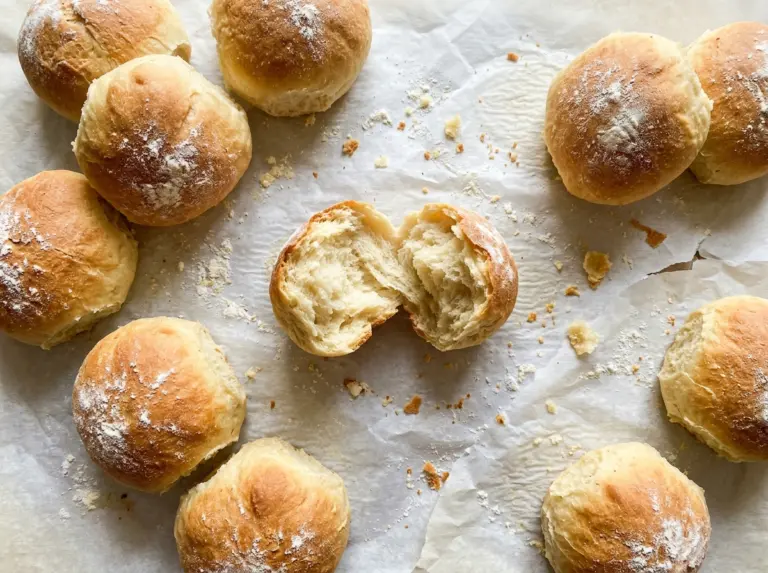
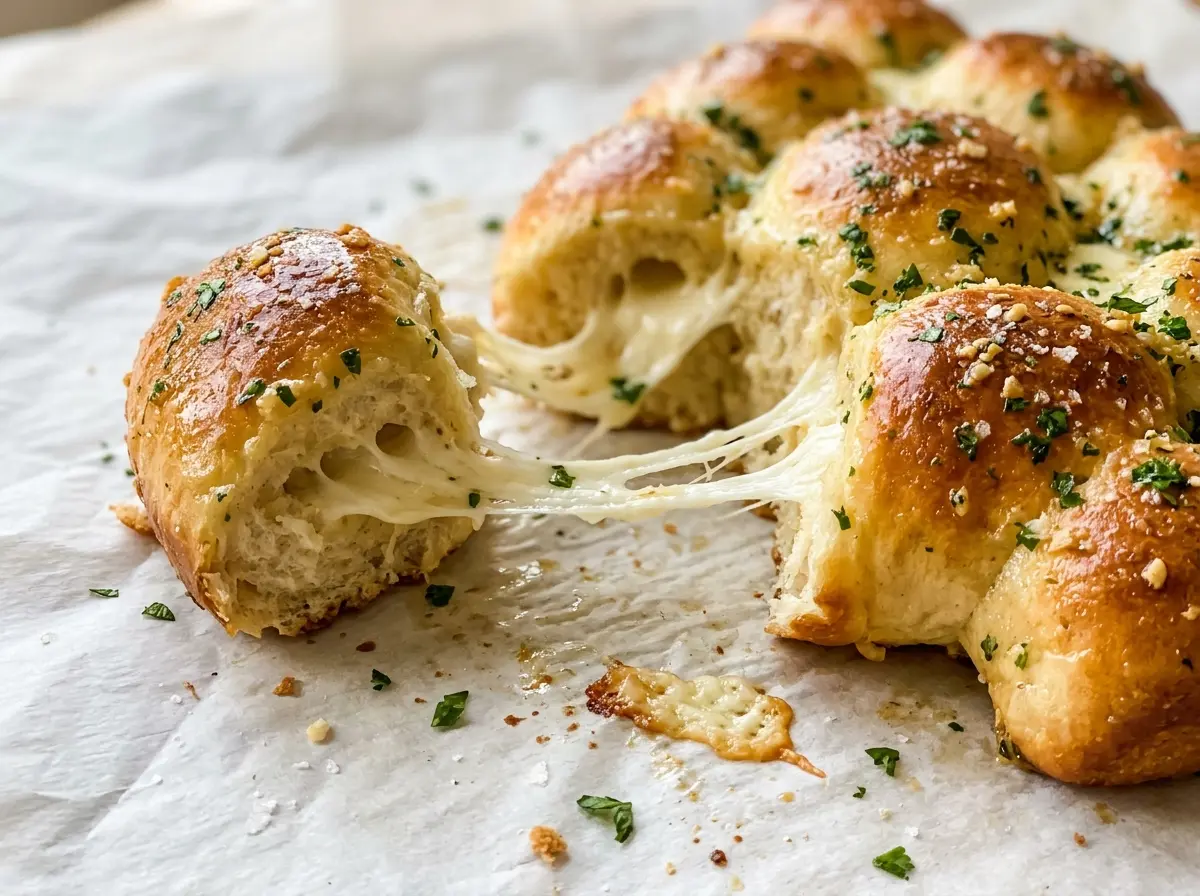
The dough should feel soft and springy by the time it’s ready to shape, and the yeast mixture gives you an early clue that things are moving in the right direction. I like this Cheesy Christmas Tree Bread because each little roll hides a piece of mozzarella, so there’s a warm, stretchy center in every pull-apart bite.
The shape looks festive without needing any special pan: the dough balls sit in rows, then one more becomes the trunk. Low-moisture mozzarella is a good fit here because it melts inside the dough without bringing the extra moisture of fresh mozzarella. Once the tree comes out golden, a brush of garlic butter and a shower of Parmesan and parsley finish the top while it’s still warm.
Kitchen Note
Pinch every seam closed before arranging the dough balls, then place them seam-side down. That small check helps keep the mozzarella tucked inside as the bread bakes.
Save Cheesy Christmas Tree Bread for a festive pull-apart centerpiece with melty mozzarella tucked into every roll.
Why the First Rise Matters More Than the Timer
Yeast dough doesn’t rise on a perfectly fixed schedule. A warm kitchen can move it along faster, while a cooler spot slows it down, so the useful signal is the dough’s size rather than the clock alone. Here, the first rise gives the dough enough lift to make soft, pillowy rolls instead of compact bites around the cheese.
The warm water is part of that start. Keep it within the stated 105–110°F range, then give the yeast and sugar a few minutes to become foamy before adding the flour. After kneading, the dough should feel smooth and elastic; during the rise, it should grow to about twice its original size. Watching those changes makes the shaping and the final texture easier to judge than rushing straight from one timed step to the next.
What Each Ingredient Brings to This Cheesy Pull-Apart Bread

- Active dry yeast — This is what lifts the dough and gives the rolls their soft interior. Check that the mixture turns foamy after standing; instant yeast uses a different mixing approach, so I stick with active dry for this method.
- All-purpose flour — It gives the dough enough structure to wrap around the cheese while staying tender. I use all-purpose flour here rather than swapping in a different flour, which can change how much liquid the dough needs and how it handles.
- Low-moisture mozzarella — The block cuts into tidy pieces that are easy to enclose, and its lower moisture helps avoid a wet center. Fresh mozzarella is not a like-for-like swap; it carries more moisture and can make the dough around the filling damp.
- Olive oil — The dough gets a little oil for tenderness, and another small amount coats the rising bowl so the dough releases cleanly. Use the listed oil for both jobs; there isn’t a need to add extra flour to keep the dough from sticking.
- Butter, garlic powder, Parmesan, and parsley — These make the savory finish. Finely grated Parmesan clings to the warm buttered surface, while fresh parsley adds a clean herbal note; if fresh parsley isn’t available, leaving it off is better than adding an unlisted dried herb.
From Smooth Dough to a Golden Pull-Apart Tree
Wake Up the Active Dry Yeast
Stir the warm water, active dry yeast, and sugar together in a large bowl. Let the mixture stand for 5–10 minutes, until a layer of foam appears on top. That foam is the visual cue to move on. If the surface stays flat, don’t bury the mixture under flour and hope for the best.
Knead Until the Dough Turns Elastic
Stir in the flour and salt, then the olive oil, until the mixture looks shaggy. Knead it on a clean counter for 8–10 minutes, working until the dough is smooth and elastic rather than rough or torn. Grease the bowl with the remaining olive oil, return the dough, and cover it. Let it rise in a warm place for 60–90 minutes, until doubled in size.
Enclose the Cheese and Arrange the Rows
Line a large baking sheet with parchment paper and heat the oven to 400°F. Divide the dough into 16 equal pieces, then wrap one piece around each piece of mozzarella and pinch the seams closed. Set the balls seam-side down in rows of 1, 2, 3, 4, and 5, with the last ball centered below as the trunk. Cover loosely and let the tree rise for 20–30 minutes, until the balls look puffy.
Bake Until the Dough Between the Rolls Is Set
Bake for 20–25 minutes, looking for golden-brown tops and dough between the balls that looks set. If the bread is still pale and the joins look doughy, give it more time within the range rather than pulling it early. Let the tree rest on the baking sheet for 5 minutes. Melt the butter, stir in the garlic powder, brush it over the warm bread, and finish with Parmesan and parsley.
Easy Ways to Change the Finish or Shape
Leave Out the Garlic
Skip the garlic powder in the melted butter and keep the Parmesan and parsley. The finish will taste milder and more buttery, while the cheese-filled rolls stay the same.
Make a Pull-Apart Wreath
Use the same 16 cheese-filled dough balls, but arrange them in a ring instead of rows and a trunk. Keep them in a single layer and use the same golden-brown and set-dough cues to judge the bake; the wreath gives you the same cheesy rolls in a different centerpiece shape.
Skip the Parsley
Leave the chopped parsley off the top if you prefer a simpler finish. The butter, garlic powder, and Parmesan still give the warm bread a savory coating without the fresh herbal note.
Storage and Reheating
- Refrigerator: Refrigerate within 2 hours and keep in an airtight container for up to 3 days. The bread softens as it sits.
- Freezer: Freeze cooled portions in a tightly wrapped, freezer-safe container for up to 2 months. Thaw in the refrigerator before reheating.
- Reheating: Warm the bread on a baking sheet in the oven until heated through. Avoid microwaving the whole tree; it can soften the bread unevenly and make the cheese rubbery.
Questions That Come Up While Making This Bread
Cheesy Christmas Tree Bread
Ingredients
Equipment
Method
- Stir the warm water, active dry yeast, and sugar together in a large bowl.
- Let the mixture stand for 5–10 minutes, until foamy.
- Stir in the all-purpose flour and fine salt, then add the tablespoon of olive oil and mix until a shaggy dough forms.
- Knead the dough on a clean counter for 8–10 minutes, until smooth and elastic.
- Grease the bowl with the teaspoon of olive oil and return the dough to it.
- Cover the dough and let it rise in a warm place for 60–90 minutes, until doubled in size.
- Line a large baking sheet with parchment paper.
- Heat the oven to 400°F.
- Divide the dough into 16 equal pieces.
- Wrap each piece of dough around a piece of mozzarella.
- Pinch the seams closed.
- Arrange the balls seam-side down on the baking sheet in a tree shape, in rows of 1, 2, 3, 4, and 5 balls, with the final ball centered below as the trunk.
- Cover the shaped bread loosely and let it rise for 20–30 minutes, until puffy.
- Bake for 20–25 minutes, until the bread is golden brown and the dough between the balls looks set.
- Let the bread rest on the baking sheet for 5 minutes.
- Melt the unsalted butter.
- Stir the garlic powder into the melted butter.
- Brush the garlic butter over the warm bread.
- Sprinkle with the finely grated Parmesan cheese and chopped fresh parsley.