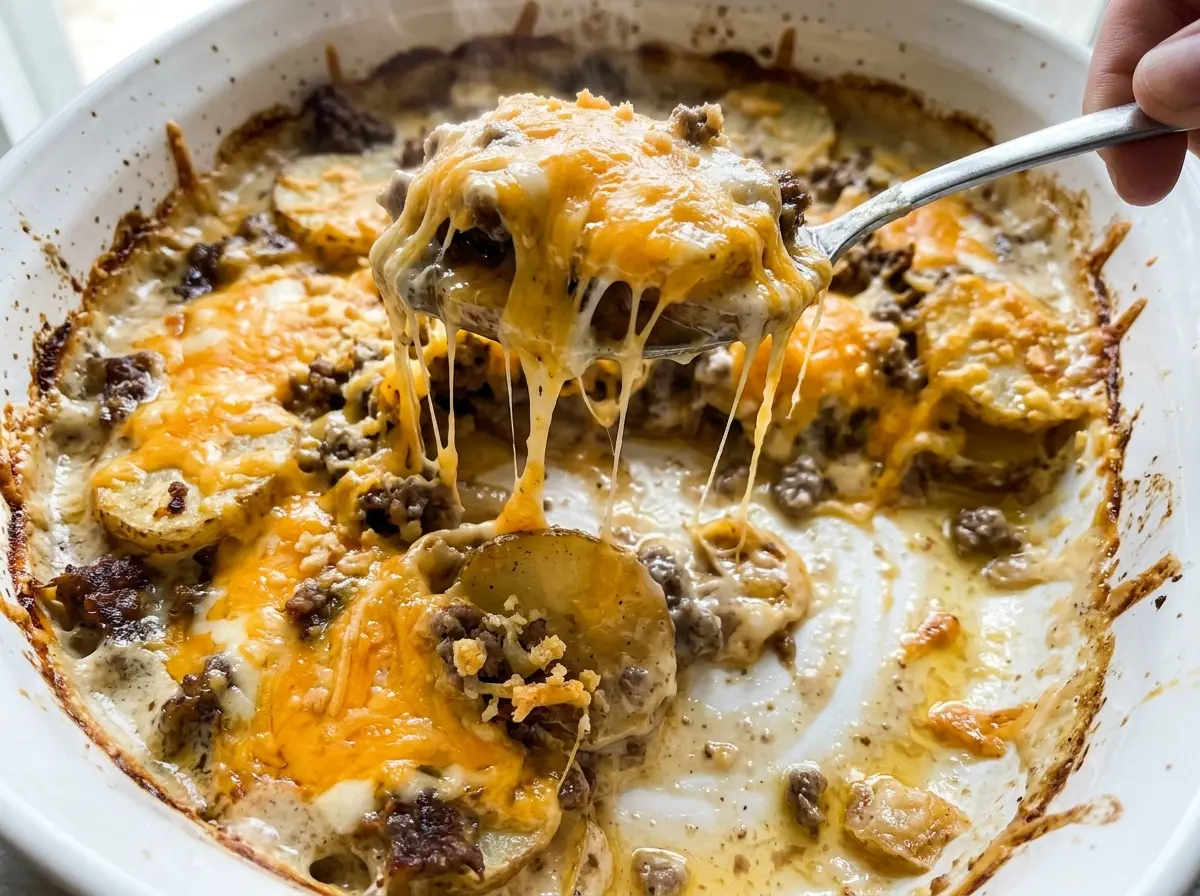
When the foil comes off, the edges are bubbling and the top cheese has melted into a golden blanket. Underneath, thin russet slices soften in a creamy sauce around little browned crumbles of beef. That’s the moment I want from this Cheesy Ground Beef and Potato Casserole: hearty layers that hold together when you lift out a serving, without dry potatoes at the edges.
The sauce starts on the stovetop, not in the baking dish. A quick flour-and-butter roux thickens the milk before it goes over the potatoes, so the casserole has a creamy base from the start. I slice the potatoes evenly, layer them with the beef, and keep the dish covered for most of the bake. The final handful of cheddar goes on after the potatoes are tender, where it melts into the top instead of disappearing into the sauce.
Give the casserole a little time to settle before serving, and each scoop brings up potatoes, beef, and cheese sauce together.
Kitchen Note
Let the casserole rest for 15 minutes before serving. The sauce settles around the potato layers during that pause, so the first piece is easier to lift without the creamy filling running across the plate.
Save this Cheesy Ground Beef and Potato Casserole for a cozy dinner with tender potato layers and a bubbling cheddar top.
The Two Cheddar Layers Solve Two Different Problems
It might seem easier to stir all the cheese into the sauce, but splitting it between the sauce and the top gives each portion a job. The cheddar stirred into the warm sauce adds flavor throughout the casserole. The rest melts over the potatoes at the end, making a cheesy top layer you can see and taste.
That order also helps keep the sauce creamy. The milk is thickened first with a roux, then the pan comes off the heat before the first cheddar goes in. Cheese stirred into a sauce that’s still boiling can turn grainy or oily; taking the pan off the burner gives it a gentler landing. Meanwhile, the potatoes bake covered beneath the sauce, where trapped steam helps soften them. Add the final cheese only after they’re tender, and it melts over the top instead of spending the whole bake in the oven.
The Russets, Beef, and Cheese That Give This Casserole Its Structure

- Russet potatoes — Their starchy texture softens nicely under the sauce and helps the layers feel substantial. Peel them and slice them evenly; a mandoline makes uniform slices quickly, but use its hand guard. Other potato varieties can hold their shape more firmly and may not give quite the same tender, creamy result.
- Ground beef — Beef that’s 85% lean brings enough richness to the onion and potatoes without leaving the filling dry. If you buy a fattier blend, pour off pooled fat after browning so it doesn’t collect in the casserole. A less fatty blend works too, though the beef layer will be a little leaner.
- Sharp cheddar — A block of sharp cheddar gives the sauce a clear cheese flavor and melts smoothly when freshly shredded. Pre-shredded cheddar is convenient, but its coating can make the sauce a little less silky. Mild cheddar works if that’s what you have; expect a gentler cheese taste.
- Whole milk and all-purpose flour — Together with the butter, these make the thickened base that coats the potato slices. Whole milk gives the sauce more body than skim milk. If you use 2% milk, expect a slightly lighter sauce; keep whisking until it coats a spoon before adding the cheddar.
Building a Sauce That Can Carry the Potato Layers
Start the roux while the oven heats
Heat the oven to 375°F and grease a 9×13-inch baking dish with 1 teaspoon of the vegetable oil. In a 3-quart saucepan, melt the butter over medium heat, whisk in the flour, and cook for 1 minute. Keep the whisk moving so the flour blends evenly with the butter. A smooth roux now makes it easier to whisk in the milk without lumps.
Thicken the milk before adding cheddar
Gradually whisk the milk and 1 teaspoon of kosher salt into the roux. Bring the sauce to a gentle simmer, whisking often, and cook for 3 to 5 minutes until it coats a spoon. If it still runs off like milk, keep cooking and whisking until it thickens. Take the pan off the heat before stirring in 1 cup of cheddar, and continue until the cheese melts into the sauce.
Brown the beef and build the layers
Heat the remaining vegetable oil in a 12-inch skillet over medium-high heat, then add the ground beef, diced onion, remaining 1/2 teaspoon kosher salt, and black pepper. Break the beef into small crumbles as it cooks for 7 to 10 minutes, until browned and it reaches 160°F. Drain excess fat if needed. Arrange half of the peeled, 1/8-inch-thick potato slices in the prepared dish, spread the beef mixture over them, then layer the remaining potatoes on top.
Cover the potatoes, then finish with cheddar
Pour the cheese sauce evenly over the potatoes and cover the dish tightly with foil. Bake for 70 to 80 minutes, until a knife inserted in the center easily pierces the potatoes. Remove the foil, sprinkle the remaining 1 cup of cheddar over the casserole, and bake uncovered for 10 to 15 minutes. Look for bubbling around the edges and melted cheese across the top.
Swaps That Change the Casserole Without Losing Its Shape
Make the sauce gluten-free
Replace the all-purpose flour with 2 tablespoons of cornstarch. Whisk the cornstarch into the cold milk until smooth, then add that mixture gradually to the melted butter and salt, whisking as it heats. Simmer until thick enough to coat a spoon before adding the cheddar. The sauce will be a little less roux-like, but it still coats the potatoes.
Trade cheddar for pepper jack
Use pepper jack in place of the cheddar in both the sauce and the topping. It melts into the same two layers and brings a gentle chile heat, though you’ll lose some of the sharp, familiar cheddar flavor. Shred it fresh for the smoothest sauce.
Storage and Reheating
- Refrigerator: Store covered leftovers for 3 to 4 days. The potatoes soften a little more as they sit.
- Freezer: Freeze portions in airtight containers for up to 2 months for best quality. Thaw them in the refrigerator; the potato texture may be softer after freezing.
- Reheating: Reheat portions covered in a 350°F oven until the center reaches 165°F. Avoid reheating a large cold casserole uncovered, since the top can dry before the middle is hot.
Questions That Come Up Before This Casserole Goes in the Oven
Cheesy Ground Beef and Potato Casserole
Ingredients
Equipment
Method
- Heat the oven to 375°F.
- Grease a 9x13-inch baking dish with 1 teaspoon of the vegetable oil.
- Melt the butter in a 3-quart saucepan over medium heat.
- Whisk in the flour and cook for 1 minute.
- Gradually whisk in the milk and 1 teaspoon of the kosher salt.
- Bring the sauce to a gentle simmer and cook for 3 to 5 minutes, whisking often, until it thickens enough to coat a spoon.
- Remove the saucepan from the heat and stir in 1 cup of the cheddar until melted.
- Heat the remaining vegetable oil in a 12-inch skillet over medium-high heat.
- Add the ground beef, onion, remaining 1/2 teaspoon kosher salt, and black pepper.
- Cook for 7 to 10 minutes, breaking the beef into small crumbles, until browned and it reaches 160°F.
- Drain excess fat if needed.
- Arrange half of the potatoes in the prepared baking dish.
- Spread the beef mixture over the potatoes.
- Arrange the remaining potatoes on top.
- Pour the cheese sauce evenly over the potatoes.
- Cover the dish tightly with foil.
- Bake for 70 to 80 minutes, until a knife inserted in the center easily pierces the potatoes.
- Remove the foil and sprinkle the remaining 1 cup cheddar over the casserole.
- Bake uncovered for 10 to 15 minutes, until bubbling and the cheese is melted.
- Let the casserole rest for 15 minutes before serving.