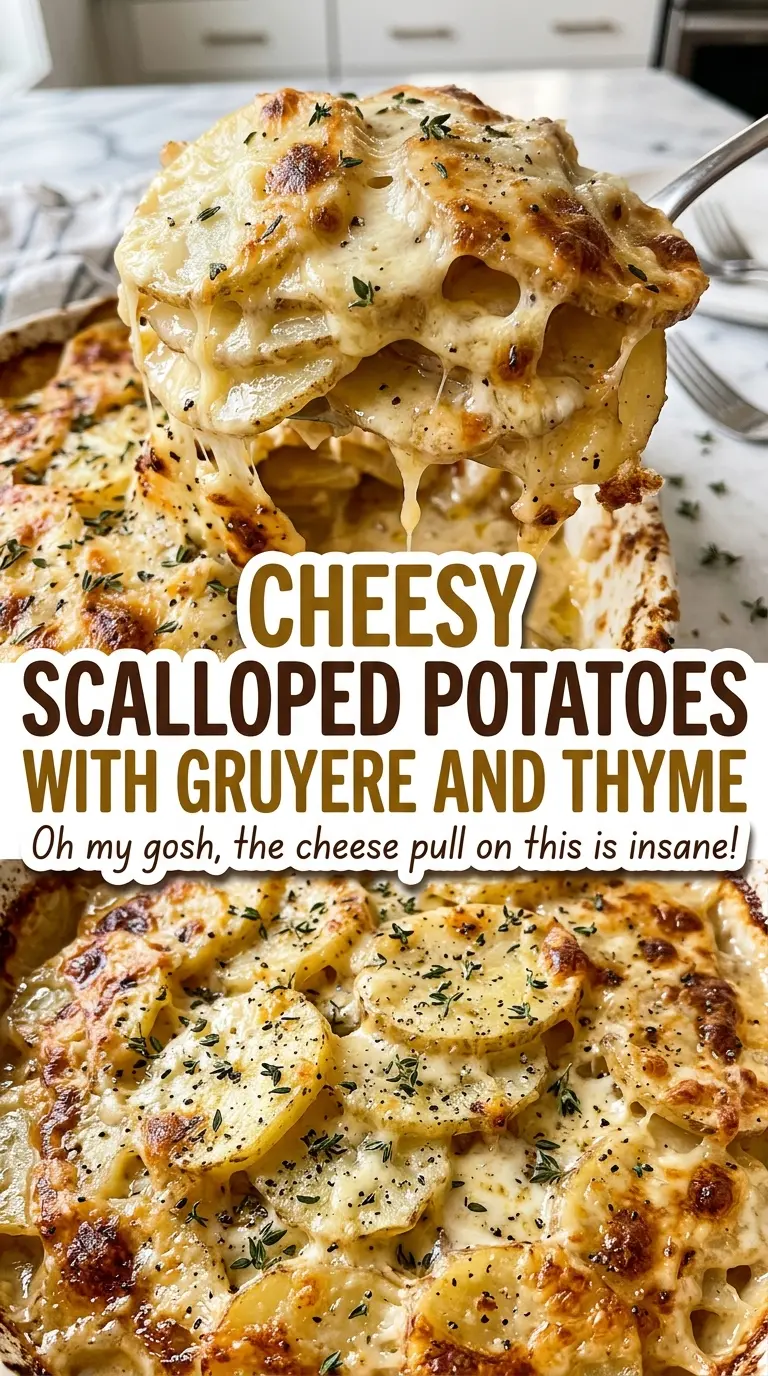
When the foil comes off, the potatoes are tender but the top still needs time to turn golden. That uncovered stretch is where the Gruyere bubbles and browns, so don’t rush it just because the kitchen already smells like thyme and butter. These cheesy scalloped potatoes are rich without relying on a thick blanket of cheese over every bite.
I slice Yukon Golds thin and layer them with a sauce that’s already thickened on the stove. That gives the potatoes an even coating as they bake, instead of asking the oven to turn milk and cream into a sauce from scratch. Gruyere tucked between the layers brings its nutty flavor into the middle of the dish, while fresh thyme keeps each creamy forkful from feeling too heavy. After a short rest, the layers hold together neatly when you serve them.

Kitchen Note
Give the dish its full rest before serving. I’ve found that cutting in too early leaves the sauce loose around the slices; after 15 minutes, the layers settle into a much neater scoop.
Save these Gruyere scalloped potatoes for a cozy dinner or holiday table—the thyme-scented sauce and golden cheese top are worth keeping close.
Why the Gruyere Belongs Between the Potato Layers
A scalloped potato casserole can have a gorgeous browned top and still taste uneven underneath. When all the cheese sits on the surface, the top gets the strongest Gruyere flavor, while the middle relies on the sauce alone. Here, cheese goes into the seams as well as over the top, so you get a little savory, nutty richness throughout the dish instead of one cheesy bite followed by several plain ones.
The layers also help keep the casserole balanced. Sauce coats the potatoes, cheese melts between them, and the final layer gets enough Gruyere to turn golden without hiding the whole dish under a thick crust. Keep the layers even rather than piling the slices into one deep mound; consistent layers cook more reliably, and each serving gets a mix of tender potato, creamy sauce, and browned cheese. That balance is what makes this version feel substantial without becoming an all-cheese bake.
What Yukon Golds, Gruyere, and Thyme Bring to the Dish
- Yukon Gold potatoes — Their creamy texture and ability to hold their shape make them a good fit for distinct layers. Peel them and slice them evenly; a mandoline makes consistent 1/8-inch slices, but a sharp knife works if you take your time. Red potatoes can stand in if needed, though the finished layers will be a little firmer.
- Gruyere — This cheese melts smoothly and brings a nutty, savory flavor that carries through the cream sauce. Buy a block and shred it yourself for the most even melt; a milder Swiss-style cheese can substitute, but the result won’t have quite the same depth.
- Whole milk and heavy cream — Together, they make a sauce that’s rich yet still pours easily over each layer. Whole milk keeps the sauce from feeling as heavy as cream alone, while the cream gives it body. Use fresh dairy and keep the sauce at a gentle simmer rather than letting it boil hard.
- All-purpose flour and butter — Whisking these together first creates the roux that thickens the sauce before it reaches the potatoes. Let the flour cook for its full minute so the finished sauce doesn’t taste raw. For a gluten-free version, a cup-for-cup gluten-free flour blend can replace the all-purpose flour.
- Fresh thyme — Fresh leaves give the cream sauce a clean herbal note that balances its richness. Strip the leaves from the stems before measuring. If fresh thyme isn’t available, dried thyme works; use one teaspoon in place of the tablespoon of fresh leaves.
Build the Cream Sauce Before It Meets the Potatoes
Get the Baking Dish Ready
Heat the oven to 375°F and coat a 9×13-inch baking dish with nonstick cooking spray. Have the potatoes peeled and sliced 1/8 inch thick before you start layering. Uniform slices matter more than shaving them paper-thin; thick or uneven pieces are more likely to finish at different times.
Cook the Garlic Roux Gently
Melt the butter in a medium saucepan over medium heat, add the minced garlic, and cook for 30 seconds. Whisk in the flour and cook for 1 minute, stirring so it blends with the butter instead of clumping. Gradually whisk in the whole milk and heavy cream, then bring the sauce to a gentle simmer. Stir for 3 to 5 minutes, until it thickens enough to coat a spoon; a hard boil can make the dairy less smooth.
Season and Layer Without Skimping on the Seams
Take the saucepan off the heat and stir in the kosher salt, black pepper, and fresh thyme leaves. Arrange the potatoes in three even layers in the prepared dish, spreading sauce over each one. Sprinkle 2 ounces of shredded Gruyere between the first and second layers, then another 2 ounces between the second and third. Pour any remaining sauce over the top and scatter the remaining 4 ounces of cheese across it.
Bake Until a Knife Slides In Easily
Cover the dish tightly with foil and bake for 50 minutes. Remove the foil and bake for another 25 to 35 minutes, until the top is golden and a knife slides easily into the potatoes. If the top is browned but the center still resists the knife, cover the dish again and continue baking until the potatoes are tender. Let the casserole rest before serving so the sauce settles around the layers.
Easy Swaps for a Different Table
Make It Gluten-Free
Replace the all-purpose flour with the same amount of a cup-for-cup gluten-free flour blend meant for baking. Cook it with the butter just as you would regular flour, then simmer the sauce until it coats a spoon; the exact texture can vary a little by blend.
Choose a Milder Cheese
Use Emmental in place of the Gruyere, keeping the same amount and the same layer arrangement. It melts well and gives the potatoes a gentler, less assertive cheese flavor, though you’ll lose some of Gruyere’s deep nuttiness.
Make the Sauce Less Rich
Replace the heavy cream with an equal amount of whole milk. The flour still thickens the sauce, but the casserole will taste lighter and less velvety than the original. Keep the gentle simmer and spoon-coating cue so the thinner dairy mixture thickens before assembly.
Storage and Reheating
- Refrigerator: Store covered in an airtight container for 3 to 4 days. The sauce will thicken as it chills, and the potatoes will soften a little.
- Freezer: Freeze baked portions in airtight containers for up to 2 months. Thaw them overnight in the refrigerator; the sauce may be a little less smooth after freezing.
- Reheating: Cover and warm in a 350°F oven until the center reaches 165°F. Reheat individual portions covered, too; uncovered heat can dry the edges before the middle warms through.
Questions That Come Up While the Potatoes Bake
Cheesy Scalloped Potatoes with Gruyere and Thyme
Ingredients
Equipment
Method
- Preheat the oven to 375°F.
- Coat a 9x13-inch baking dish with nonstick cooking spray.
- Melt the butter in a medium saucepan over medium heat.
- Add the garlic and cook for 30 seconds.
- Whisk in the flour and cook for 1 minute.
- Gradually whisk in the milk and heavy cream, bring to a gentle simmer, and cook, stirring, for 3 to 5 minutes, until the sauce thickens enough to coat a spoon.
- Remove the pan from the heat and stir in the salt, pepper, and thyme.
- Arrange the sliced potatoes in three even layers in the prepared dish, spreading sauce over each layer and sprinkling 2 ounces of Gruyere between the first and second layers and between the second and third layers.
- Pour any remaining sauce over the top and scatter the remaining 4 ounces of cheese over it.
- Cover the dish tightly with foil and bake for 50 minutes.
- Remove the foil and bake for 25 to 35 minutes, until the top is golden and a knife slides easily into the potatoes.
- Let the potatoes rest for 15 minutes before serving.