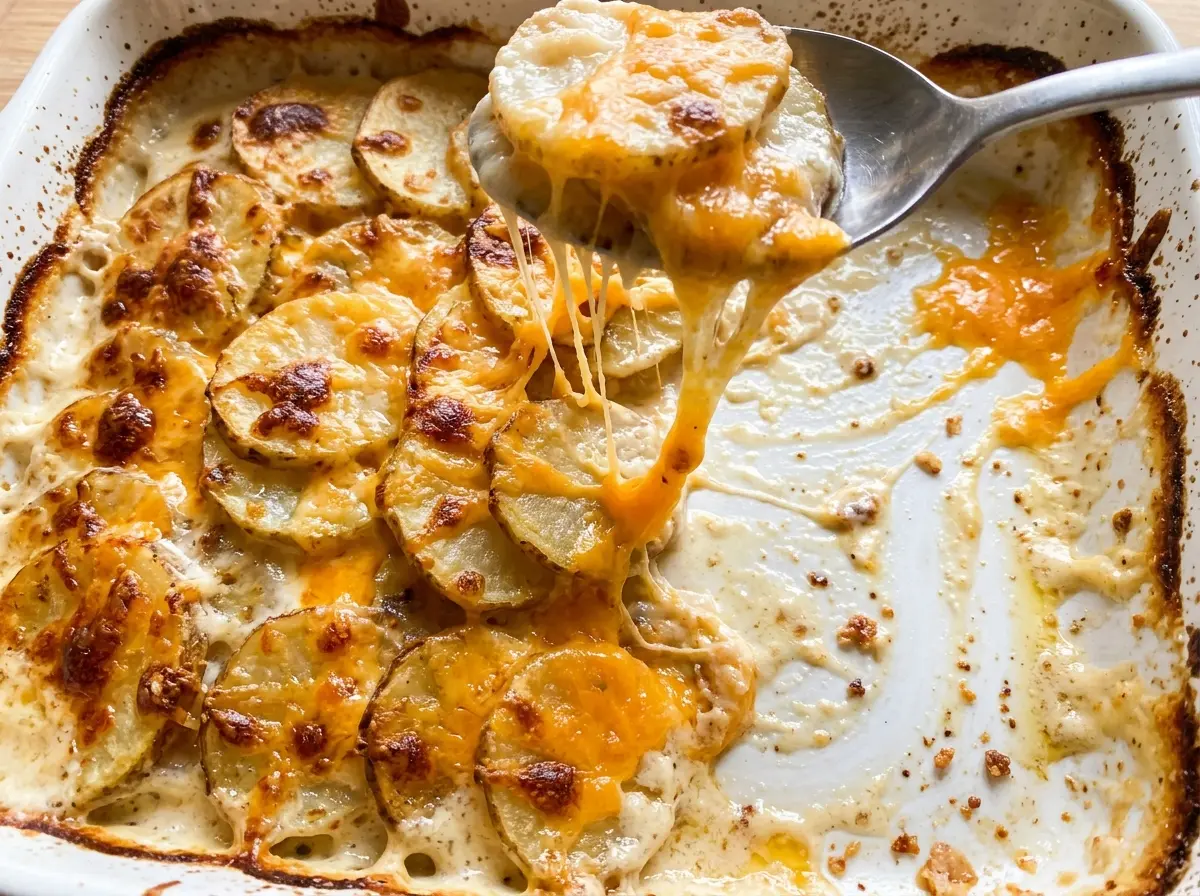
When the foil comes off, the top is pale and the sauce still looks loose. Give the dish its uncovered stretch in the oven, and the edges turn golden while the potatoes soften all the way through. That two-part bake is what makes these cheesy scalloped potatoes tender underneath with a browned top.
I build the sauce in a saucepan, starting with onion softened in butter and flour before whisking in the milk. Then I layer it between thin rounds of russet potatoes so each slice gets coated instead of leaving all the cheese on top. After a short rest, the casserole scoops neatly, with soft potato layers and cheddar sauce in every serving.
Kitchen Note
Give the casserole its full 15-minute rest before serving. The sauce settles as it cools slightly, so the layers hold together instead of sliding apart on the serving spoon.
Save these cheesy scalloped potatoes for a cozy dinner or a holiday table: tender russets tucked between layers of sharp cheddar sauce.
Why These Scalloped Potatoes Go Into the Oven Raw
There’s no need to boil the russets before they go into the baking dish. Thin, even slices cook in the sauce as the covered casserole heats, and the foil holds in the steam that helps soften them. Starting with raw potatoes also means they have time to absorb some of the onion and cheddar flavor as they bake.
Thickness matters more than giving the potatoes a head start in a pot of water. If some rounds are noticeably thicker than others, the thin ones can turn very soft before the thick ones are tender. Aim for consistent slices, then let the covered and uncovered portions of baking do their separate jobs: first soften the layers, then brown the top. A knife should slide easily into the potatoes before you take the dish out.
What the Russets, Whole Milk, and Cheddar Contribute

- Russet potatoes — Their starchy texture turns tender in the oven and gives the casserole a soft, comforting bite. Peel them and slice evenly; waxier potatoes hold their shape more firmly and won’t give quite the same soft layers.
- Whole milk — It makes the sauce creamy without relying on cream. Whisk it in gradually so it blends smoothly with the butter-and-flour base rather than leaving floury lumps.
- Sharp cheddar — Its pronounced cheese flavor comes through against the potatoes and milk. Freshly shredded cheese melts smoothly; pre-shredded cheddar works, but its coating can leave the sauce a little less silky.
- Yellow onion and all-purpose flour — The softened onion gives the sauce a savory base, while flour thickens the milk into a sauce that clings to the layers. Chop the onion finely so it softens during its brief cook in the butter.
Building the Sauce and Layers Before the Oven Does the Rest
Soften the Onion in Butter
Heat the oven to 350°F, then melt the butter in a 3-quart saucepan over medium heat. Stir in the finely chopped onion and cook for 4 to 5 minutes, until it has softened. Stir in the flour and cook for 1 minute; keep it moving so the flour cooks without browning. The onion should be tender, not crisp, before the milk goes in.
Whisk the Milk Into a Smooth Cheese Sauce
Gradually whisk in the whole milk, salt, and black pepper, working out any lumps as you go. Bring the sauce to a gentle simmer while whisking, then cook for 2 to 3 minutes until it has thickened slightly. Take the saucepan off the heat before adding the shredded cheddar. Stir until the cheese melts; a gentle simmer thickens the sauce, while a hard boil can make it less smooth.
Layer the Potatoes and Sauce
Peel the russets and slice them into evenly sized 1/8-inch rounds. Coat a 9×13-inch baking dish with nonstick cooking spray, then arrange half of the potatoes in overlapping layers. Spread half of the cheese sauce over those slices before adding the remaining potatoes and sauce. Keep the sauce spread across the layers instead of pouring it all into one spot.
Bake Until Tender, Then Brown the Top
Cover the dish tightly with foil and bake for 60 minutes. Remove the foil and continue baking for 20 to 30 minutes, until the top is golden and a knife slides easily into the potatoes. If the top looks golden but the knife still meets resistance, the potatoes need more time in the oven. Let the casserole rest before bringing it to the table.
Two Useful Ways to Adapt the Cheese Sauce
Make the sauce gluten-free
Replace the all-purpose flour with the same amount of a cup-for-cup gluten-free flour blend. Cook it in the butter with the onion, then whisk in the milk gradually as usual. The sauce may thicken at a slightly different pace, so use its texture as your cue rather than expecting the exact same look at each moment.
Trade cheddar for Gruyère
Use the same amount of shredded Gruyère in place of the sharp cheddar for a nuttier, less tangy sauce. Add it off the heat just as you would the cheddar, and stir until melted. The potatoes stay familiar, but the cheese flavor becomes more mellow.
Storage and Reheating
- Refrigerator: Refrigerate leftovers within 2 hours and keep them covered for 3 to 4 days. The sauce will firm up as it chills.
- Freezer: I don’t recommend freezing this casserole. The potatoes can turn mealy and the milk-based sauce may separate after thawing.
- Reheating: Reheat individual portions in the microwave in short bursts, loosely covered, until the center reaches 165°F. Long, high-heat reheating can dry the edges before the middle warms through.
Questions That Come Up While Making Scalloped Potatoes
Cheesy Scalloped Potatoes
Ingredients
Equipment
Method
- Preheat the oven to 350°F.
- Melt the butter in a 3-quart saucepan over medium heat.
- Add the onion and cook, stirring, for 4 to 5 minutes until softened.
- Stir in the flour and cook for 1 minute.
- Gradually whisk in the milk, salt, and pepper.
- Bring the sauce to a gentle simmer, whisking, and cook for 2 to 3 minutes until slightly thickened.
- Remove the sauce from the heat and stir in the cheddar until melted.
- Slice the peeled potatoes evenly into 1/8-inch-thick rounds.
- Coat a 9x13-inch baking dish with nonstick cooking spray.
- Arrange half the potatoes in overlapping layers and spread half the cheese sauce over them; repeat with the remaining potatoes and sauce.
- Cover the dish tightly with foil and bake for 60 minutes.
- Remove the foil and bake for 20 to 30 minutes, until a knife slides easily into the potatoes and the top is golden.
- Let the potatoes rest for 15 minutes before serving.