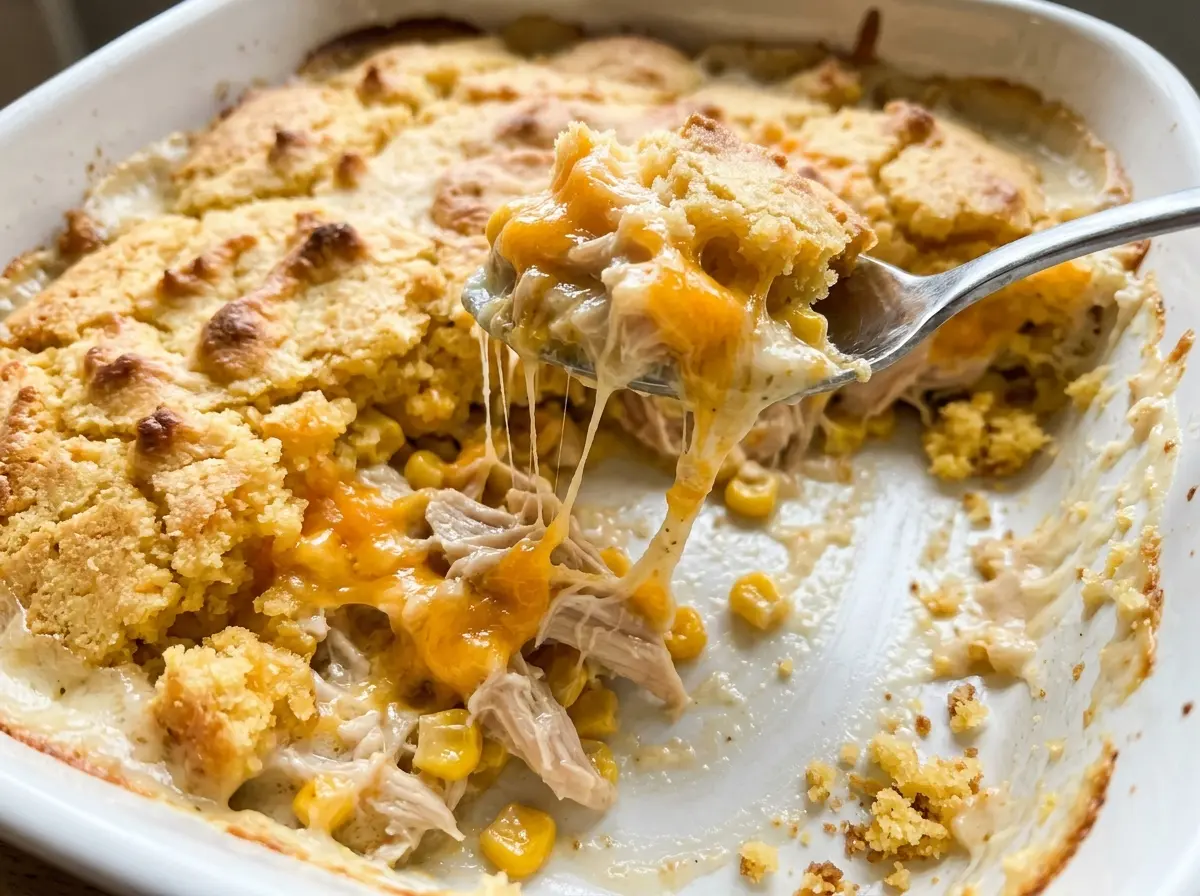
The filling should look thick and creamy before it goes into the baking dish, not like a bowl of soup. I learned to give the broth-and-milk mixture a few minutes to simmer after whisking in the flour; that pause is what helps the chicken filling sit neatly beneath its golden cornbread lid. In this chicken and cheddar cornbread casserole, each spoonful brings up both layers instead of leaving a puddle behind.
The topping is mixed separately and spread over the filling, so you get a soft, tender cornbread layer with cheddar in every bite. I use cooked, shredded chicken to keep the assembly straightforward, and frozen peas and carrots go right into the creamy sauce. After baking, a short rest gives the layers time to settle before you cut into the casserole. The top turns golden, the filling stays savory and smooth, and the sharp cheddar gives the cornbread a pleasantly salty edge.
Kitchen Note
Have the chicken cooked and shredded before you start assembling. The casserole’s baking time is for heating the filling and baking the cornbread, not for cooking raw chicken from scratch.
Save this chicken and cheddar cornbread casserole for a cozy dinner with creamy chicken filling under a golden, cheesy topping.
Why the Filling Needs to Thicken Before the Cornbread Goes On
A casserole topping can look beautifully golden while the filling underneath is still too loose to serve neatly. Here, flour is cooked briefly with the softened onion, then broth and milk are whisked in gradually. As that sauce simmers, the flour thickens it; the finished mixture should cling lightly to a spoon rather than run like broth. That texture matters because the chicken and vegetables add substance, but they won’t soak up a thin sauce during the short bake.
Give the sauce its full simmering time before adding the filling ingredients. If it goes into the dish watery, the cornbread layer can still bake, but the first scoop may spread across the plate. Once the sauce has thickened, stir in the chicken and frozen vegetables and spread the filling in an even layer. The batter then rests on top instead of disappearing into pockets of liquid, making it easier to serve distinct, creamy filling and tender cornbread together.
What Makes the Filling Creamy and the Topping Cornbread

- All-purpose flour — It thickens the chicken sauce and gives the cornbread enough structure to hold together. For a gluten-free version, use a cup-for-cup gluten-free flour blend in both parts of the dish; the result may be a little more delicate.
- Whole milk — It adds richness to both the sauce and batter. Two-percent milk works if that’s what you have, though the filling and topping will taste a little less rich.
- Cooked shredded chicken — Shredded pieces tuck into the sauce and make each serving easy to scoop. Leftover roast chicken or rotisserie chicken works well; remove any skin and bones before shredding.
- Frozen peas and carrots — They add color and small, tender bites without needing separate prep. Stir them in while frozen; thawing first isn’t necessary.
- Yellow cornmeal — This is what gives the topping its recognizable cornbread texture and flavor. It isn’t interchangeable with more flour in equal measure; leaving it out would make a different, softer bread topping.
- Sharp cheddar — Its stronger taste comes through against the mild chicken sauce. A block you shred yourself melts smoothly, while pre-shredded cheese is convenient and still works, though it may not melt quite as evenly.
- Dried thyme — It gives the creamy filling a gentle savory, herbal note. Dried thyme is handy here because it goes straight into the simmering sauce without chopping.
Build the Sauce First, Then Keep the Cornbread Batter Tender
Soften the Onion and Cook the Flour
Heat the oven to 400°F and grease a 9×13-inch baking dish. Melt the butter in a 12-inch skillet over medium heat, then add the finely chopped onion and cook for about 5 minutes, stirring occasionally, until softened. Stir in the flour and cook it for 1 minute; this helps it blend into the butter before the liquids go in. Keep the heat at medium so the onion softens without browning heavily.
Whisk the Filling Until It Thickens
Gradually whisk in the chicken broth and whole milk, then add the thyme, half the salt, and the black pepper. Simmer for 3 to 5 minutes, stirring, until the sauce thickens. Pouring in the liquids gradually helps you work out lumps as they form rather than chasing them in a full skillet. Stir in the frozen peas and carrots and cooked shredded chicken, then spread the filling across the prepared dish.
Mix the Cheddar Cornbread Without Overworking It
Whisk the cornmeal, flour, sugar, baking powder, and remaining salt together in a medium bowl. In a separate bowl, whisk the milk, egg, and vegetable oil, then pour that mixture into the dry ingredients. Stir just until no dry streaks remain; a few small lumps are fine, and continued stirring can make the topping less tender. Fold in the shredded cheddar at the end so it’s distributed without working the batter more than necessary.
Spread, Bake, and Let the Layers Set
Spoon the cornbread batter over the chicken filling and gently spread it into an even layer, taking it toward the edges of the dish. Bake for 30 to 35 minutes, until the cornbread is golden and a thermometer inserted into the center of the filling reads 165°F. If the top is golden before the center reaches that temperature, keep baking and check the filling again. Let the casserole rest for 10 minutes before serving so the sauce settles and the portions are easier to lift.
Easy Swaps for Chicken and Cheddar Cornbread Casserole
Use cooked turkey in place of chicken
Swap in the same amount of cooked, shredded turkey. It gives the filling a slightly different, roast-dinner flavor while keeping the same creamy sauce and easy assembly.
Try Monterey Jack for a milder topping
Use shredded Monterey Jack instead of sharp cheddar in the cornbread. It melts into the topping and keeps it cheesy, but the finished flavor will be milder and less tangy.
Make it gluten-free
Replace the all-purpose flour in both the filling and the topping with a cup-for-cup gluten-free flour blend, and choose cornmeal labeled gluten-free. The cornbread may be a bit more tender and crumbly, so rest the casserole before serving.
Storage and Reheating
- Refrigerator: Refrigerate leftovers in a covered container for 3 to 4 days. The cornbread topping softens as it sits against the creamy filling.
- Freezer: Freeze cooled portions in airtight, freezer-safe containers for up to 2 to 3 months. Thaw them overnight in the refrigerator for more even reheating.
- Reheating: Reheat covered portions in a 350°F oven until hot throughout; uncover near the end if you’d like to dry the top slightly. Microwaving is quicker, but it makes the cornbread softer.
Questions That Come Up When Making This Casserole
Chicken and Cheddar Cornbread Casserole
Ingredients
Equipment
Method
- Heat the oven to 400°F.
- Grease a 9x13-inch baking dish.
- Melt the butter in a 12-inch skillet over medium heat.
- Add the onion and cook for about 5 minutes, stirring occasionally, until softened.
- Stir in the flour and cook for 1 minute.
- Gradually whisk in the broth and milk.
- Add the thyme, 1/2 teaspoon of the salt, and pepper.
- Simmer for 3 to 5 minutes, stirring, until thickened.
- Stir in the peas and carrots and chicken.
- Spread the filling in the prepared baking dish.
- Whisk together the cornmeal, flour, sugar, baking powder, and remaining 1/2 teaspoon salt in a medium bowl.
- In a separate bowl, whisk together the milk, egg, and vegetable oil.
- Pour the milk mixture into the dry ingredients and stir just until no dry streaks remain.
- Fold in the cheddar.
- Spoon the cornbread batter over the filling and spread it into an even layer.
- Bake for 30 to 35 minutes, until the cornbread is golden and a thermometer inserted into the center of the filling reads 165°F.
- Let the casserole rest for 10 minutes before serving.