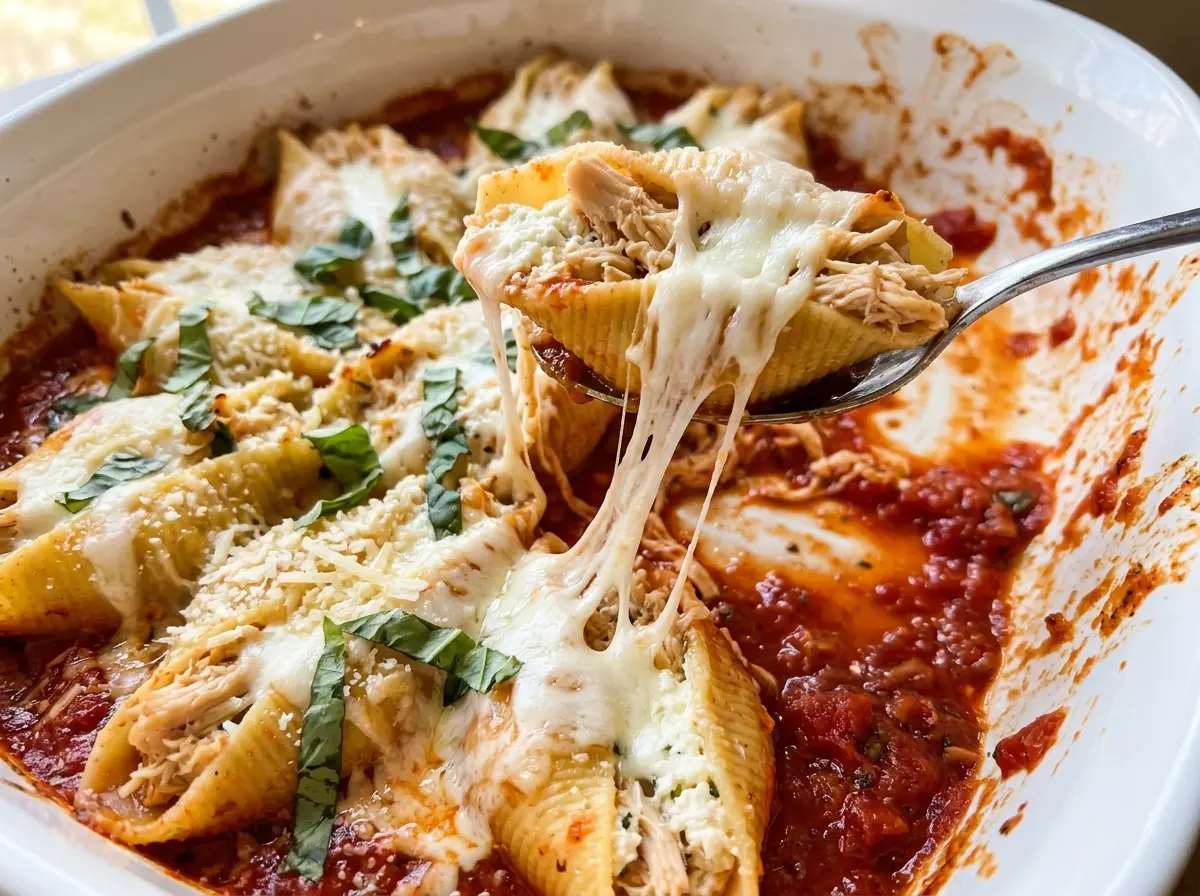
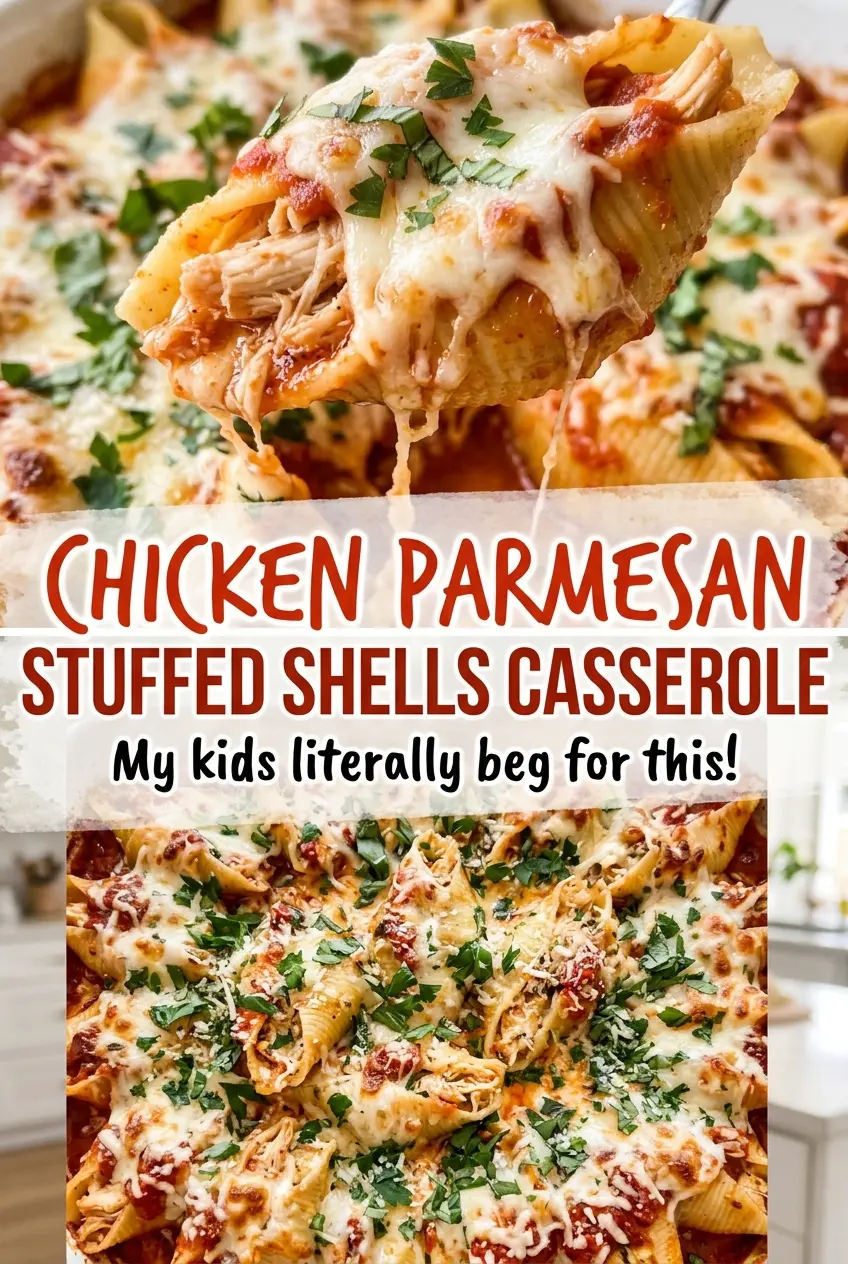
The sauce should be bubbling at the edges before this casserole comes out of the oven, not just the cheese melted on top. That’s the cue I watch for with chicken Parmesan stuffed shells: it tells me the marinara has heated through the filled shells, too. Each jumbo shell gets a creamy ricotta filling with chicken, garlic, herbs, and two cheeses, then bakes under a blanket of sauce and more cheese.
Cooking the shells just shy of al dente gives them enough structure to hold their shape while they finish in the oven. Fully tender shells can split when you fill them, and they have less time in the casserole to absorb the sauce. I also keep the chicken pieces small, so they mix evenly through the filling instead of making each shell feel packed with one big bite.
This is a practical way to get the familiar flavors of chicken Parmesan into a casserole you can portion shell by shell. The ricotta stays soft, the mozzarella melts across the top, and the marinara brings everything together in the baking dish.
Kitchen Note
Rinse the drained shells briefly with cool water so they’re easier to handle while you fill them. Keep the rinse brief, then let them drain well; shells left sitting in water are harder to pick up neatly.
Save these Chicken Parmesan Stuffed Shells Casserole for a cozy dinner with marinara bubbling under a golden layer of melted cheese.
Why the Sauce Goes Under the Shells, Not Just Over Them
The sauce on the bottom of the dish does more than keep the first row from sticking. It gives the shells a moist surface to sit on while they bake, so the pasta doesn’t dry against the hot baking dish. The sauce poured over the top then covers the exposed pasta and carries heat around the filling. Both layers matter: sauce only on top leaves the bottoms more vulnerable to drying, while sauce only underneath leaves the upper curves of the shells exposed.
That little base layer also makes serving easier. The shells can be lifted from the dish without scraping a baked-on layer of cheese from the bottom, and each portion gets some marinara underneath as well as over the top. Spread the sauce across the full bottom of the 9×13-inch dish before arranging the shells; bare patches are where pasta is most likely to catch. It’s a small assembly detail, but it changes how the casserole holds together when you serve it.
What Gives the Filling Its Creamy, Savory Balance
- Whole-milk ricotta — This gives the filling its creamy body. Whole-milk ricotta tastes richer than part-skim and makes a softer, more satisfying center; choose a container that looks fresh and isn’t swimming in excess whey.
- Egg — The egg helps the cheese mixture hold together as it bakes, so the filling stays in the shells when you serve them. Stir it into the ricotta mixture before folding in the chicken for an even texture.
- Low-moisture mozzarella — It melts into the filling without adding as much moisture as fresh mozzarella would. Shred it yourself if you want the most even melt, though packaged shredded mozzarella is a convenient choice here.
- Parmesan — Finely grated Parmesan distributes its salty, nutty flavor throughout the filling and over the top. A fine grate blends more easily than large shreds.
- Chicken breast — Cutting it into small pieces lets the chicken spread through the ricotta rather than dominate individual bites. Boneless, skinless chicken breast keeps the filling straightforward and mild.
- Marinara and jumbo shells — A jarred marinara keeps the sauce portion simple; choose one you enjoy eating on its own. Jumbo shells are essential to the stuffed format because they provide enough space to hold the chicken-and-ricotta mixture.
- Parsley, Italian seasoning, and garlic — Fresh parsley brings a clean herbal note, while Italian seasoning and minced garlic give the cheese filling its savory backbone. Mince the garlic finely so no shell gets a sharp, oversized piece.
From Small Chicken Pieces to a Bubbling Casserole
Cook the chicken until the pieces are done through
Heat the olive oil in a 12-inch skillet over medium-high heat, then add the chicken with the kosher salt and black pepper. Stir occasionally as the pieces cook, giving them time to make contact with the hot pan between turns. They’re ready when the thickest pieces reach 165°F; transfer them to a plate. Cutting the chicken into 1/2-inch pieces helps it cook evenly and makes it easier to fold into the filling.
Keep the shells firm enough to stuff
Cook the jumbo shells according to the package directions, but stop just shy of al dente. They should bend without feeling fully soft, since they’ll continue cooking in the sauce in the oven. Drain and rinse them briefly with cool water, then let excess water run off. If the shells are cooked until completely tender, they’re more likely to split as you fill and arrange them.
Stir together the cheese filling
In a large bowl, stir the ricotta and egg with 3/4 cup of the mozzarella and 1/3 cup of the Parmesan. Mix in the parsley, Italian seasoning, and minced garlic until the herbs and garlic are spread throughout. Fold the cooked chicken in last, using a gentle motion so the pieces stay distributed instead of clumping together. The filling should be thick enough to sit in a shell rather than run out when you lift it.
Fill the shells and layer the sauce
Coat a 9×13-inch baking dish with nonstick cooking spray, then spread 1 cup of marinara over the bottom. Fill 24 intact shells evenly and arrange them in the dish; don’t pack them so tightly that you can’t get a spoon or serving utensil between them. Pour the remaining marinara over the shells, then add the remaining mozzarella and Parmesan. If a shell is split, leave it out of the filled arrangement rather than trying to force the filling into it.
Bake covered, then uncover for the cheese
Cover the dish with foil and bake at 375°F for 20 minutes. Remove the foil and bake for another 10–15 minutes, until the sauce is bubbling and the cheese has melted. The sauce bubbling around the edges is a better cue than melted cheese alone. Let the casserole rest for 10 minutes before serving so the filling has time to settle inside the shells.
Two Useful Ways to Adapt the Stuffed Shells
Make the casserole gluten-free
Use gluten-free jumbo shells if you can find them, and cook them according to their package directions until just shy of al dente. They can be more delicate than wheat pasta, so handle them gently when filling. The cheese-and-chicken filling and marinara stay the same, while the shells may have a slightly different texture.
Leave out the chicken for a meatless version
Skip the cooked chicken and use the ricotta mixture to fill the shells. The result is a simpler cheese-stuffed casserole with the same marinara and Parmesan finish. Since the filling is less bulky without chicken, divide it evenly among the intact shells rather than trying to pack each one full.
Storage and Reheating
- Refrigerator: Store covered leftovers for 3–4 days. The shells soften as they sit in the sauce.
- Freezer: Freeze cooled portions in an airtight container for up to 2 months. The pasta will be softer after thawing, but the casserole freezes well.
- Reheating: Reheat covered in the oven until hot throughout, or warm an individual portion in the microwave. Don’t heat uncovered for a long stretch; the shell edges can dry before the center is hot.
Questions That Come Up When Making Stuffed Shells
Chicken Parmesan Stuffed Shells Casserole
Ingredients
Equipment
Method
- Preheat the oven to 375°F.
- Heat the olive oil in a 12-inch skillet over medium-high heat, then add the chicken, salt, and pepper.
- Cook for 5–7 minutes, stirring occasionally, until the chicken reaches 165°F.
- Transfer the chicken to a plate.
- Cook the pasta shells according to the package directions until just shy of al dente.
- Drain the shells and rinse briefly with cool water.
- Stir together the ricotta, egg, 3/4 cup mozzarella, 1/3 cup Parmesan, parsley, Italian seasoning, and garlic in a large bowl.
- Fold in the cooked chicken.
- Coat a 9x13-inch baking dish with nonstick cooking spray.
- Spread 1 cup marinara sauce over the bottom of the dish.
- Fill 24 intact shells evenly with the filling and arrange them in the dish.
- Pour the remaining sauce over the shells.
- Top with the remaining 3/4 cup mozzarella and 1/3 cup Parmesan.
- Cover the dish with foil and bake for 20 minutes.
- Uncover and bake for 10–15 minutes, until the sauce is bubbling and the cheese is melted.
- Let the casserole rest for 10 minutes before serving.