The corn tells you when it’s ready: little browned spots appear, and the kernels smell sweet and toasted rather than steamy. I learned to give it its own time in the oven instead of dropping it straight into the soup. That small difference gives Chicken Poblano Soup with Roasted Corn a deeper, more distinct corn flavor, even after the kernels join the broth.
Meanwhile, the onion and poblanos soften in the Dutch oven, and cumin and chili powder bloom briefly with the garlic. Chicken simmers right in that seasoned broth, so there’s no separate pan to wash or flavor to leave behind. Once the chicken is shredded, the roasted corn and cream go in near the end. A squeeze of lime stirred in off the heat brings the rich, gently spiced broth into focus.
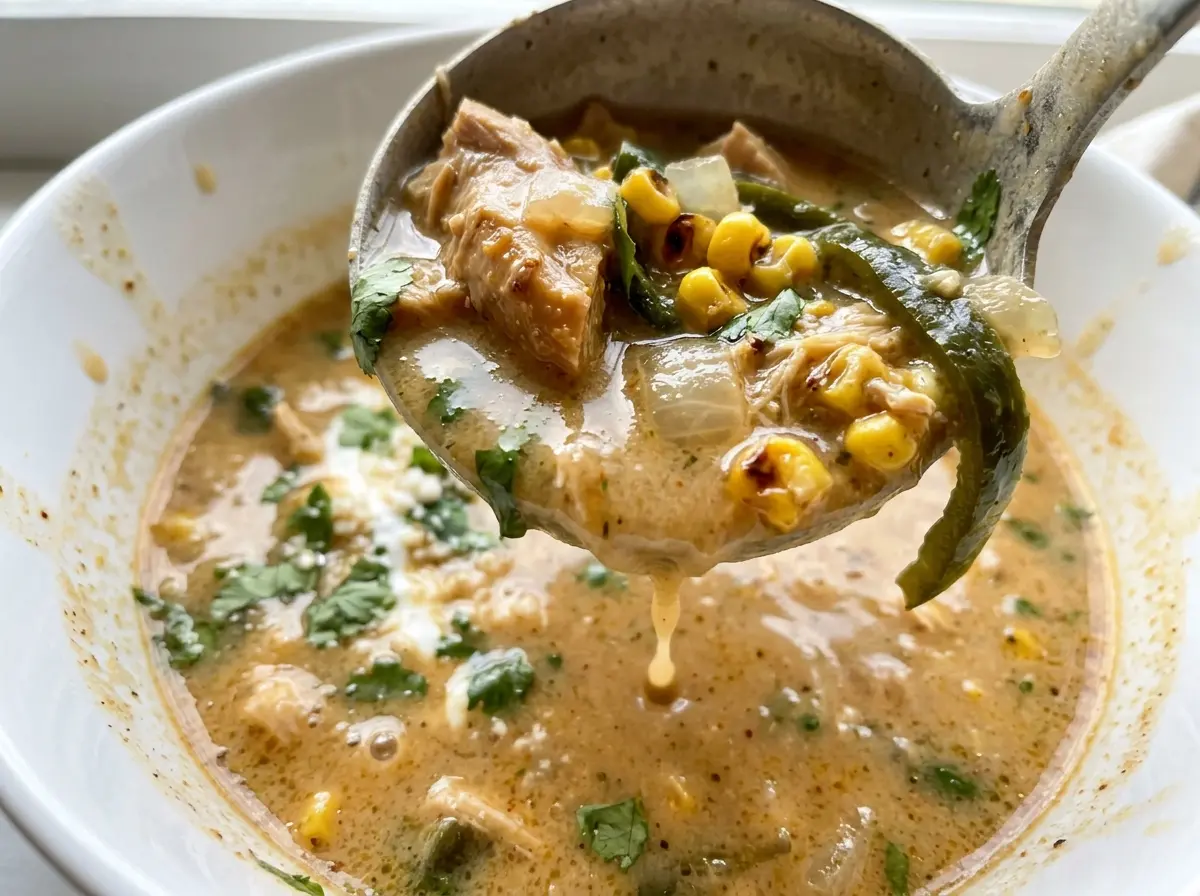
The finished soup is creamy but still brothy, with tender chicken and sweet roasted kernels in every bowl. Keep the heat gentle once the cream is added, and the texture stays smooth.
Kitchen Note
Once the cream goes in, keep the soup at a gentle simmer rather than letting it boil. That little bit of restraint keeps the broth smooth instead of giving it a chance to turn grainy.
Save this Chicken Poblano Soup with Roasted Corn for a cozy bowl of tender chicken, toasted corn, and a creamy lime-finished broth.
Why the Corn Gets Its Own Roast Before It Hits the Soup
Corn simmered in broth turns tender, but it won’t develop the browned, toasted notes that make this soup stand out. Roasting the kernels separately gives their surfaces direct contact with the hot oven, so they take on spots of color before they ever meet the liquid. That roasted flavor remains noticeable after the corn is stirred into the creamy broth.
Drying the thawed corn first matters because surface moisture has to evaporate before browning can start. If the kernels go onto the baking sheet wet, they’ll spend more of their oven time steaming. Stirring once during the roast helps expose more of the corn to the hot pan. Look for scattered golden-brown spots, not a uniformly dark layer; the kernels still need to stay plump enough to add a little bite to the soup.
This separate roast also makes the timing work in your favor. While the corn cooks, the onion and poblanos soften on the stovetop, and the soup base gets underway. Neither part has to wait around for the other, and the roasted corn stays distinct rather than melting into the broth.
What the Poblanos, Corn, and Cream Each Bring to the Pot

- Frozen corn — Thawed kernels are convenient, and they roast well once patted dry. Browning adds a toasted sweetness that plain simmering won’t give you, so don’t skip the oven step if you want that contrast in the finished soup.
- Poblano peppers — Poblanos bring a rounded pepper flavor without making the broth taste like a straight chili sauce. Choose peppers that feel firm and have smooth, unwrinkled skin. Seed and dice them before they go into the pot so they soften along with the onion.
- Boneless, skinless chicken breasts — These simmer directly in the broth and shred easily with two forks once cooked. Keeping the pieces whole while they simmer gives you a tender, substantial shred for the finished bowls.
- Low-sodium chicken broth — Low-sodium broth leaves room for the measured kosher salt without making the soup overly salty as it simmers. Broth quality is noticeable here because it forms most of the liquid, but a familiar grocery-store option works well.
- Heavy cream — Cream rounds out the broth and gives it a smooth, rich finish. Add it late, after the chicken is shredded, so it only needs a short time to heat through.
- Fresh lime juice — Lime adds a clean, tart finish that cuts through the cream. Stir it in after taking the pot off the heat; its brightness is easiest to taste when it isn’t simmered in the soup.
- Cumin and chili powder — These season the broth from the beginning, and a brief cook with the garlic wakes up their aroma. Use spices that smell fragrant when you open the jar; old, faded spices won’t bring as much character.
Build the Soup in Stages So the Corn Stays Toasty
Roast the Corn Until It Has Browned Spots
Heat the oven to 450°F with a rack in the center. Toss the thawed, patted-dry corn with 1 tablespoon of neutral oil on a rimmed baking sheet, then roast for 18–22 minutes, stirring once halfway through. The kernels should look browned in spots and smell sweet and toasted. If they still look wet and pale, give them the remaining roasting time rather than rushing them into the soup.
Soften the Onion and Poblanos
While the corn roasts, heat the remaining tablespoon of oil in a 6-quart Dutch oven over medium heat. Add the diced onion and seeded, diced poblanos, stirring occasionally for 7–9 minutes. They’re ready when the onion has softened and the peppers no longer look raw and firm. Keep the heat at medium; the goal is soft vegetables, not browned or crisp edges.
Bloom the Seasonings, Then Simmer the Chicken
Stir in the minced garlic, cumin, and chili powder, and cook for 30 seconds, just until fragrant. Add the chicken broth, kosher salt, black pepper, and chicken, then bring everything to a gentle simmer over medium-high heat. Reduce the heat and simmer for 15–20 minutes, checking the thickest part of a breast for 165°F. A hard boil can make the chicken tougher, so keep the liquid at a calm simmer.
Shred the Chicken and Finish the Broth
Transfer the cooked chicken to a plate and shred it with two forks. Stir the roasted corn, shredded chicken, and heavy cream into the soup, then simmer gently for 2–3 minutes until hot. The corn and chicken should be warmed through, and the broth should look creamy without bubbling hard. Take the pot off the heat before stirring in the lime juice.
Two Simple Ways to Change the Bowl
A lighter, cream-free version
Leave out the heavy cream for a broth-forward soup with the same chicken, poblanos, and roasted corn. It won’t have the same silky richness, but the seasoned broth and lime still give it plenty of character. This simple omission also makes the soup dairy-free.
Keep some roasted corn for a textured finish
Set aside a portion of the roasted corn before stirring the rest into the pot, then scatter the reserved kernels over the bowls at serving time. You’ll get the same roasted flavor, with a more noticeable bite of corn on top. This works best when the kernels have browned in spots and still hold their shape.
Storage and Reheating
- Refrigerator: Refrigerate leftovers within 2 hours and eat them within 3–4 days. The corn softens as it sits, but the soup keeps its creamy broth.
- Freezer: Freeze in airtight containers for up to 2–3 months. Cream-based soups can separate slightly after thawing, so expect a less perfectly smooth texture.
- Reheating: Warm leftovers gently in a saucepan, stirring occasionally, until the soup reaches 165°F. Avoid boiling it; high heat can make the cream look grainy.
Questions That Come Up While This Soup Cooks
Chicken Poblano Soup with Roasted Corn
Ingredients
Equipment
Method
- Heat the oven to 450°F and set a rack in the center.
- Toss the corn with 1 tablespoon of the oil on a rimmed baking sheet and roast for 18–22 minutes, stirring once halfway through, until browned in spots.
- While the corn roasts, heat the remaining 1 tablespoon oil in a 6-quart Dutch oven over medium heat; add the onion and poblanos and cook for 7–9 minutes, stirring occasionally, until softened.
- Stir in the garlic, cumin, and chili powder and cook for 30 seconds, until fragrant.
- Add the broth, salt, pepper, and chicken; bring to a gentle simmer over medium-high heat, then reduce the heat and simmer for 15–20 minutes, until the thickest part of the chicken reaches 165°F.
- Transfer the chicken to a plate and shred it with two forks.
- Stir the roasted corn, shredded chicken, and cream into the soup and simmer gently for 2–3 minutes, until hot; do not let it boil.
- Remove the pot from the heat and stir in the lime juice.