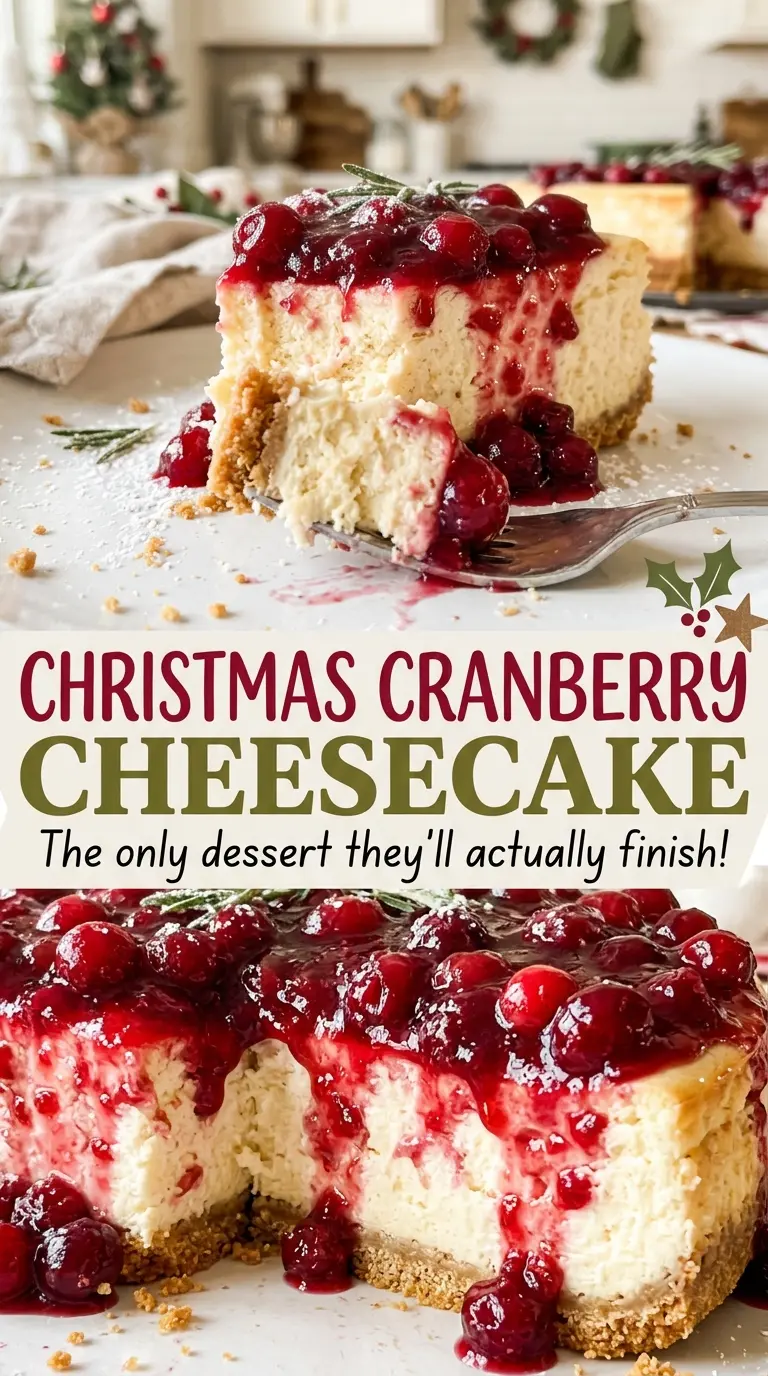
The center can still tremble when a cheesecake is ready, and that can feel like a reason to keep baking it. For this Christmas Cranberry Cheesecake with Graham Cracker Crust, that small wobble is the cue to stop: the edges are set, while the middle finishes settling as the cake cools. Bake it until the center reaches 160°F, and you’ll get a creamy slice instead of a dry one.
I use a water bath for gentle, even heat, then let the cheesecake cool gradually before it goes into the refrigerator. The cranberry topping cooks separately, so it can cool completely while the cheesecake chills. Honey softens the berries’ tartness, and orange zest and juice give the topping a bright, fragrant finish against the rich filling.

Kitchen Note
Wrap the springform pan all the way up its sides, not just across the base. Two overlapping layers of heavy-duty foil give the water bath a better barrier, so take a moment to press the foil snugly around the pan before it goes into the roasting pan.
Save this Christmas cranberry cheesecake for a holiday table: creamy filling, a buttery graham crust, and a bright honey-orange topping.
Why the Center Should Still Tremble When the Edges Look Set
Cheesecake doesn’t bake like a cake that needs to look completely firm before it leaves the oven. The edges set first, while the center remains soft enough to wobble slightly when the pan is nudged. That movement is expected. The filling continues to settle during the slow cool-down, and baking until the whole surface looks rigid can leave you with a dry, dense middle.
Use both visual and temperature cues rather than relying on the clock alone. The edges should look set, the center should tremble gently rather than ripple like liquid, and an instant-read thermometer in the center should read 160°F. The 75- to 90-minute window gives you a useful check-in range, but the thermometer and that gentle wobble tell you when to stop. The water bath supports an even bake, while the gradual rest in the turned-off oven helps the temperature change feel less abrupt.
Once the cheesecake reaches that point, leave it in the water bath with the oven off and the door cracked open for an hour. That pause isn’t extra baking time; it’s a controlled transition before the cake cools on a rack and then chills. The payoff is a filling that holds together cleanly without losing its creamy texture.
What the Cream Cheese, Sour Cream, and Flour Each Bring
- Cream cheese — This is the structure and the rich, tangy base of the filling, so use regular block cream cheese rather than a whipped or spreadable version. Let it soften before mixing; cold cream cheese is much more likely to leave small lumps. There isn’t a direct swap that keeps the same dense, smooth cheesecake texture.
- Sour cream — It loosens the cream cheese mixture and adds a gentle tang, keeping each bite from feeling too heavy. Room-temperature sour cream blends more evenly. A different dairy product changes the filling’s thickness and tang, so I stick with sour cream here.
- Eggs — Eggs set the filling as it bakes. Bringing them to room temperature helps them incorporate without forcing you to beat the mixture for a long time. Add them one at a time, on low, and stop once each one disappears into the batter.
- All-purpose flour — A small amount helps stabilize the custard so slices hold their shape. For a gluten-free version, a 1:1 gluten-free baking flour is the most practical swap; a starch-only replacement won’t behave quite the same way.
- Graham cracker crumbs and brown sugar — The crumbs make a crisp, familiar base, while packed light brown sugar adds a little molasses warmth. Store-bought crumbs work well; what matters most is mixing them thoroughly with melted butter so the crust is evenly moistened before pressing it into the pan.
- Fresh cranberries, honey, and orange — Whole cranberries soften and burst into a tart topping, while honey rounds out their sharpness. Fresh orange zest carries more aroma than juice alone, and the juice gives the berries a little citrus brightness. Since the topping depends on the cranberries bursting and the juices thickening, don’t replace the berries with dried cranberries.
- Vanilla and lemon juice — Vanilla gives the filling a rounded, warm note, and lemon juice keeps the flavor from tasting flat. Use finely grated zest for the topping so you get fragrant orange flecks without large strips of peel.
Building the Crust, Filling, and Slow-Baked Center
Press and Prebake the Graham Cracker Base
Heat the oven to 350°F and grease the bottom and sides of a 9-inch springform pan with the reserved teaspoon of butter. Stir the graham crumbs with the brown sugar, salt, and melted butter until no dry patches remain, then press the mixture firmly over the bottom of the pan. Bake the crust for 10 minutes. Let it cool while you mix the filling so the batter goes onto a settled base, not a hot one.
Mix the Filling Without Beating in Extra Air
Lower the oven to 325°F. Beat the softened cream cheese on medium-low until smooth, then mix in the granulated sugar and flour just until combined. Add the room-temperature eggs one at a time on low speed, stopping as soon as each is incorporated; then mix in the sour cream, vanilla, and lemon juice. Pour the filling over the cooled crust, scraping the bowl so you don’t leave a thick streak of cream cheese behind.
Set Up the Water Bath and Bake to the Right Cue
Wrap the pan in two overlapping layers of heavy-duty foil, covering its bottom and sides. Set it in a 12-by-16-inch roasting pan on an oven rack, then carefully pour 8 cups of boiling water into the roasting pan. Bake at 325°F for 75 to 90 minutes, checking for set edges, a gently trembling center, and 160°F in the middle on an instant-read thermometer. Pour the hot water carefully so it stays in the roasting pan, not on the cheesecake.
Cool Gradually, Then Chill Until Firm
Turn off the oven, crack the door, and leave the cheesecake in its water bath for 1 hour. Remove the springform pan from the bath, discard the foil, and cool the cheesecake on a rack for another hour. Cover it and refrigerate for at least 6 hours before adding the topping. That full chill gives the filling time to firm up enough to support the fruit.
Cook the Cranberries Until Their Juices Thicken
Combine the cranberries, honey, water, orange zest, and orange juice in a 2-quart saucepan. Cook over medium heat for 10 to 12 minutes, stirring occasionally, until many of the berries have burst and the juices look thickened rather than watery. Transfer the topping to a heatproof bowl and let it cool completely. Run a thin knife around the chilled cheesecake, release the springform sides, and spread the cooled topping over the top.
Two Useful Ways to Adapt the Cheesecake
Make the Crust Gluten-Free
Replace the graham crumbs with gluten-free graham-style crumbs measure for measure, and use a 1:1 gluten-free baking flour in the filling. Press the crust firmly into the pan; depending on the crumb brand, it may be a little more delicate when sliced.
Leave Off the Cranberry Topping
For a simpler vanilla-lemon cheesecake, omit the cranberry topping and serve the chilled cake plain. The filling and graham crust stay the same, but you lose the tart fruit contrast and the bright orange note.
Storage and Serving
- Refrigerator: Keep the covered cheesecake chilled for up to 4 days. The crust gradually softens as it sits, though the filling remains sliceable.
- Freezer: Freeze the cheesecake without its cranberry topping. Wrap individual slices or the whole chilled cake tightly, and use within 2 months for the best texture; thaw in the refrigerator.
- Serving: Serve cold, with the cranberry topping spread over the top. If freezing, keep the topping separate and add it after the cheesecake has thawed.
Questions That Come Up While Making This Cheesecake
Christmas Cranberry Cheesecake with Graham Cracker Crust
Ingredients
Equipment
Method
- Preheat the oven to 350°F.
- Grease the bottom and sides of a 9-inch springform pan with 1 teaspoon of the butter.
- Stir the graham cracker crumbs, brown sugar, salt, and 6 tablespoons melted butter until evenly moistened, then press firmly over the bottom of the pan.
- Bake for 10 minutes and set aside to cool while you make the filling.
- Reduce the oven temperature to 325°F.
- Wrap the bottom and sides of the springform pan in two overlapping layers of heavy-duty foil.
- Beat the cream cheese in a large bowl with an electric mixer on medium-low until smooth.
- Mix in the sugar and flour just until combined.
- Mix in the eggs one at a time on low speed, just until incorporated.
- Mix in the sour cream, vanilla, and lemon juice, then pour the filling over the cooled crust.
- Set the springform pan in a 12x16-inch roasting pan and place it on an oven rack.
- Carefully pour the 8 cups boiling water into the roasting pan.
- Bake for 75-90 minutes, until the edges are set, the center still trembles slightly, and an instant-read thermometer inserted into the center reads 160°F.
- Turn off the oven and crack the door open.
- Leave the cheesecake in the water bath for 1 hour.
- Remove the springform pan from the water bath and discard the foil.
- Cool the cheesecake on a rack for 1 hour.
- Cover and refrigerate for at least 6 hours.
- Combine the cranberries, honey, water, orange zest, and orange juice in a 2-quart saucepan.
- Cook over medium heat, stirring occasionally, for 10-12 minutes, until many of the cranberries have burst and the juices have thickened.
- Transfer the topping to a heatproof bowl and cool completely.
- Run a thin knife around the cheesecake and release the springform sides.
- Spread the cooled topping over the cheesecake.