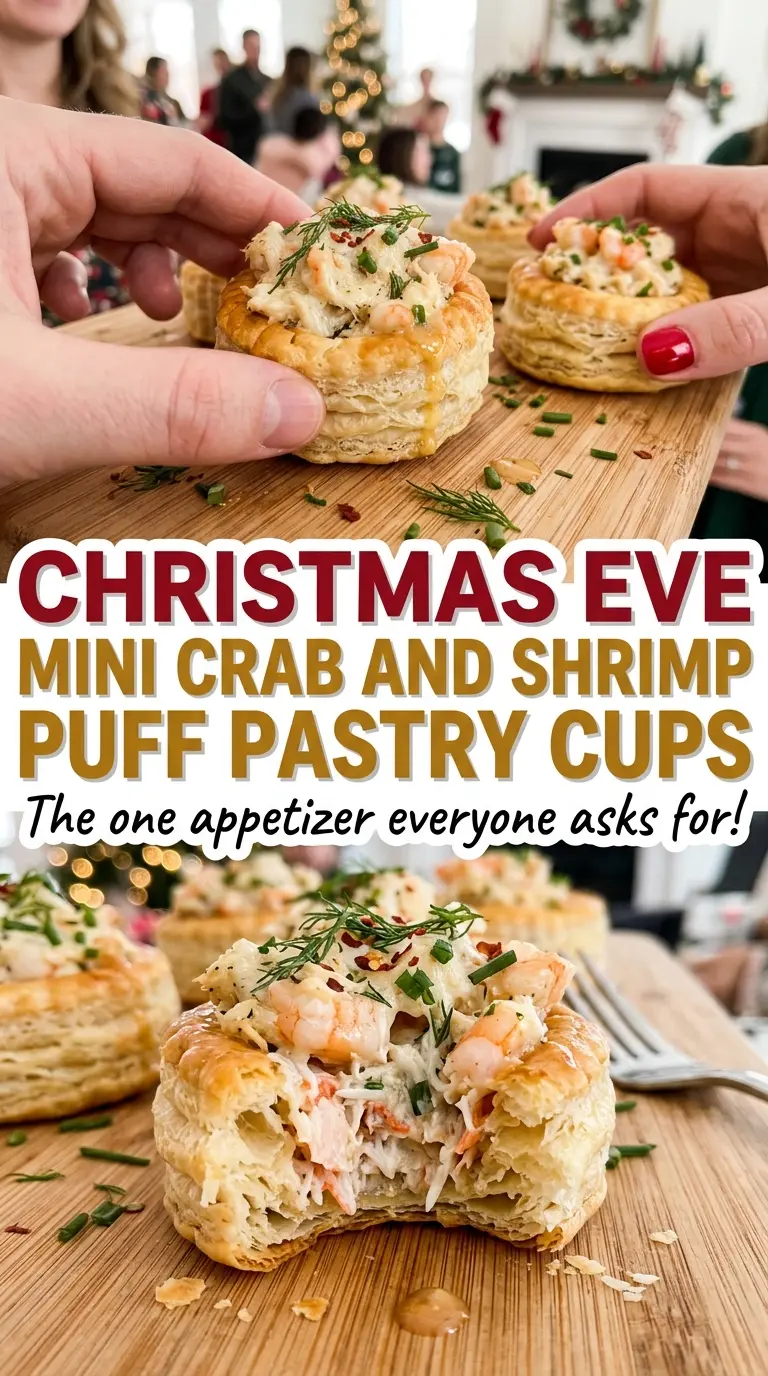
The pastry edges rise and turn gold before the centers do, which is exactly what you want for these little seafood cups. I press the puffed centers down while the shells are still hot, then fill them with a creamy mixture of finely chopped shrimp and lump crab. Each bite has a crisp, flaky edge around a warm, savory filling.
Giving the pastry its own bake before adding the filling matters here. Crab and shrimp bring moisture, and putting the filling into raw pastry can leave the bottoms soft before the sides have a chance to brown. Baking the shells first gives them a head start; the filled cups need only a short trip back into the oven to heat through. The result is a tidy two-bite appetizer with buttery pastry and pieces of crab you can still see.

Kitchen Note
Fold the crab in after the shrimp mixture is smooth, using a light hand. Stop once the lumps are spread through the filling; a lot of stirring breaks them down and leaves you with less of that sweet, distinct crab texture.
Save these Christmas Eve crab and shrimp puff pastry cups for a party appetizer with golden shells and a warm, creamy seafood filling.
Why These Cups Need a Head Start in the Oven
Puff pastry gets its lift from layers of dough and fat. In a mini muffin well, those layers are pressed against the sides, while the seafood filling is too moist to go straight onto unbaked pastry and still give you a crisp little cup. Baking the empty shells first lets the pastry puff and brown before it has to hold the filling.
Pricking the bottoms gives steam a way out, and pressing down the centers after baking makes room for the filling. The shells don’t need to be perfectly hollow or identical; the spoon creates a shallow pocket while leaving the flaky sides intact. Once filled, the cups go back into the oven only until the seafood mixture is hot. That short second bake warms the center without asking the pastry to puff around a wet filling.
What Keeps the Seafood Filling Creamy Without Hiding the Crab
- Puff pastry — Thawed pastry needs to bend without cracking so it can fit into the muffin wells. Roll it on a clean work surface to the stated size before cutting, which keeps the rectangles even enough to press into the pan. There isn’t a direct swap that gives you the same flaky, risen cup.
- Shrimp — Raw medium shrimp cooks quickly and takes on the salt, pepper, and garlic flavor before it’s chopped into the filling. Peeled and deveined shrimp saves prep, but still check that it is raw; already-cooked shrimp can turn tough if cooked again in the skillet.
- Cream cheese and mayonnaise — Softened cream cheese blends smoothly with the lemon juice and Old Bay, while mayonnaise loosens the mixture so it coats the seafood rather than sitting in a dense lump. Letting the cream cheese soften makes a bigger difference than choosing a premium brand. The two work as a pair here, so there isn’t a simple one-for-one replacement from the ingredients in this dish.
- Lump crabmeat — Pick through it carefully for shell, and drain it if it looks wet. Lump pieces give the filling its tender, sweet crab bites; stirring them in gently keeps more of that texture intact. If the crab is watery, the filling can loosen and soften the pastry.
- Scallion, garlic, lemon, and Old Bay — Scallion adds a fresh onion note, while briefly cooking the minced garlic takes away its raw edge. Lemon juice brightens the cream cheese, and Old Bay supplies the familiar savory seasoning that ties the seafood together. Use a fresh scallion and garlic clove for the clearest flavor; the measured lemon juice and seasoning are there to balance, not overpower, the crab.
From Flaky Shells to Hot Seafood Filling
Roll, Cut, and Shape the Pastry
Heat the oven to 400°F and lightly brush the wells of a 24-cup mini muffin pan with vegetable oil. Roll the thawed puff pastry on a clean work surface to 12 by 10 inches, then cut it into 24 rectangles, each about 2 by 2 1/2 inches. Press one rectangle into each well and prick the bottom with a fork. If a piece tears while shaping, press the edges together rather than stretching the pastry thin.
Bake the Empty Cups
Bake the shells for 12–15 minutes, until they’re puffed and golden. Don’t wait for every center to stay flat; the pastry will rise as it bakes. As soon as the pan comes out, press down the centers with the back of a teaspoon to create space for filling. Working while the pastry is hot makes that shallow pocket easier to form.
Cook and Chop the Shrimp
Warm the olive oil in a 10-inch skillet over medium heat, then add the shrimp, kosher salt, and black pepper. Cook for 2–3 minutes, turning once, until the shrimp are opaque and reach 145°F. Transfer them to a cutting board and finely chop them. Stir the minced garlic in the same skillet for 30 seconds, then transfer it to a bowl; the garlic cooks in the shrimp-flavored oil without needing a separate pan.
Mix, Fill, and Warm Through
Stir the softened cream cheese, mayonnaise, lemon juice, and Old Bay in a medium bowl until smooth. Mix in the scallion, chopped shrimp, and cooked garlic, then gently fold in the crab. Spoon about 1 tablespoon of filling into each pastry cup and bake at 400°F for 5–7 minutes, until the filling is hot. Let the cups rest in the pan for 5 minutes before serving so the filling settles and the shells are easier to lift out.
Small Tweaks for a Different Seafood Bite
A gentler version without scallion
Leave out the scallion and keep the rest of the filling unchanged. The cups will have a softer onion flavor, with the garlic and Old Bay still giving the seafood a savory backbone.
A fresher scallion finish
For a sharper onion note, keep the scallion out of the cream cheese mixture and scatter it over the cups after baking. Use the same scallion; the uncooked pieces taste brighter and add a little fresh crunch against the warm filling.
A milder garlic flavor
Omit the garlic if you want the crab and shrimp to come through more plainly. The filling will lose some savory depth, but the cream cheese, lemon, and Old Bay still make a cohesive mixture.
Storage and Reheating
- Refrigerator: Store leftovers in an airtight container and eat within 3 days. The pastry softens as it sits beside the moist filling.
- Freezer: Freezing the filled cups isn’t recommended; the seafood and cream cheese filling can lose its smooth texture, and the pastry won’t stay flaky after thawing.
- Reheating: Warm the cups in a 400°F oven until the centers are hot. The oven brings back some crispness; the microwave heats the filling quickly but leaves the pastry soft.
Questions That Come Up Before Baking These Seafood Cups
Christmas Eve Mini Crab and Shrimp Puff Pastry Cups
Ingredients
Equipment
Method
- Heat the oven to 400°F.
- Lightly brush the wells of a 24-cup mini muffin pan with the vegetable oil.
- On a clean work surface, roll the puff pastry to 12x10 inches.
- Cut it into 24 rectangles, each about 2x2 1/2 inches.
- Press one pastry rectangle into each muffin well and prick the bottoms with a fork.
- Bake for 12–15 minutes, until puffed and golden.
- Immediately press down the centers with the back of a teaspoon.
- Heat the olive oil in a 10-inch skillet over medium heat.
- Add the shrimp, salt, and pepper and cook for 2–3 minutes, turning once, until opaque and 145°F.
- Transfer the shrimp to a cutting board and finely chop it.
- Add the garlic to the skillet and cook for 30 seconds, stirring.
- Transfer the garlic to a bowl.
- In a medium bowl, stir the cream cheese, mayonnaise, lemon juice, and Old Bay until smooth.
- Mix in the scallion, chopped shrimp, and garlic.
- Gently fold in the crabmeat.
- Spoon about 1 tablespoon of filling into each pastry cup.
- Bake at 400°F for 5–7 minutes, until the filling is hot.
- Let the cups rest in the pan for 5 minutes before serving.