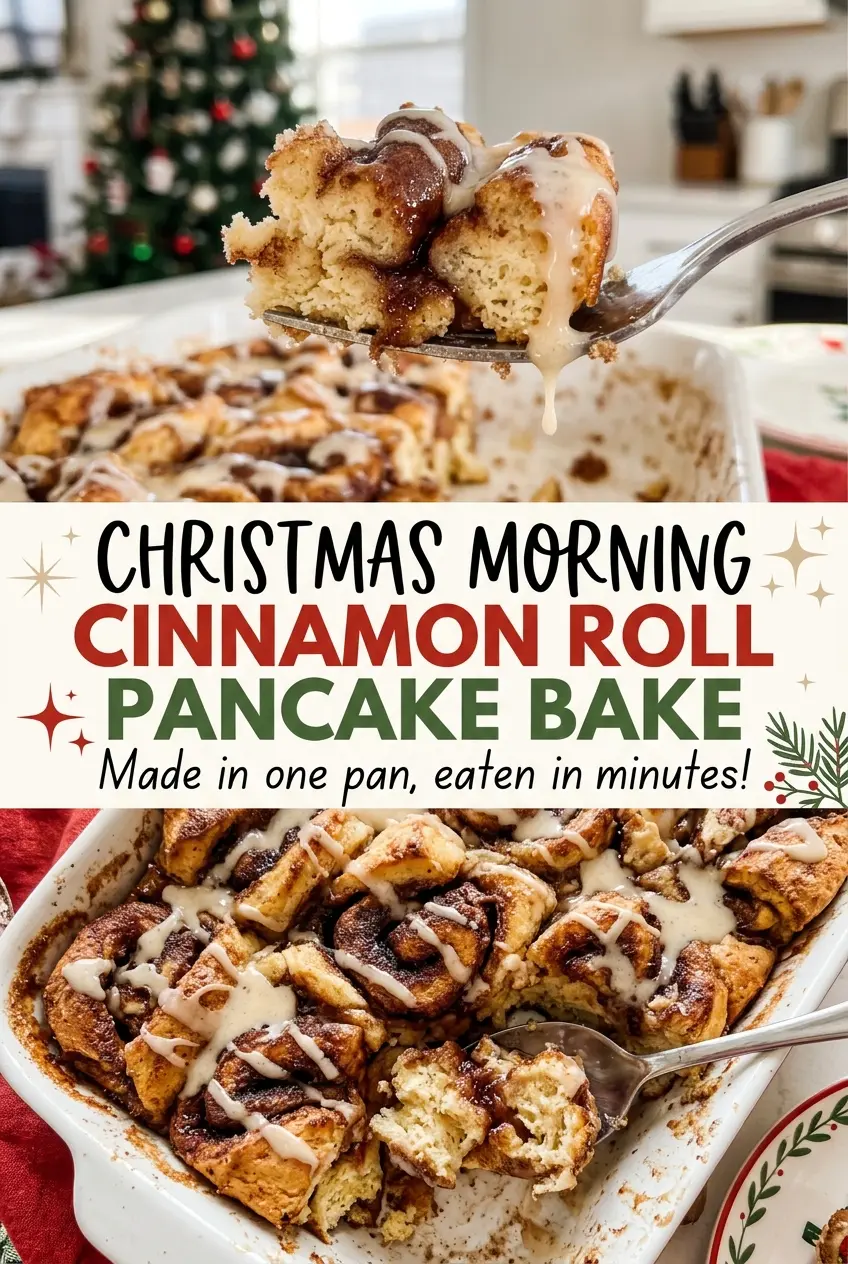
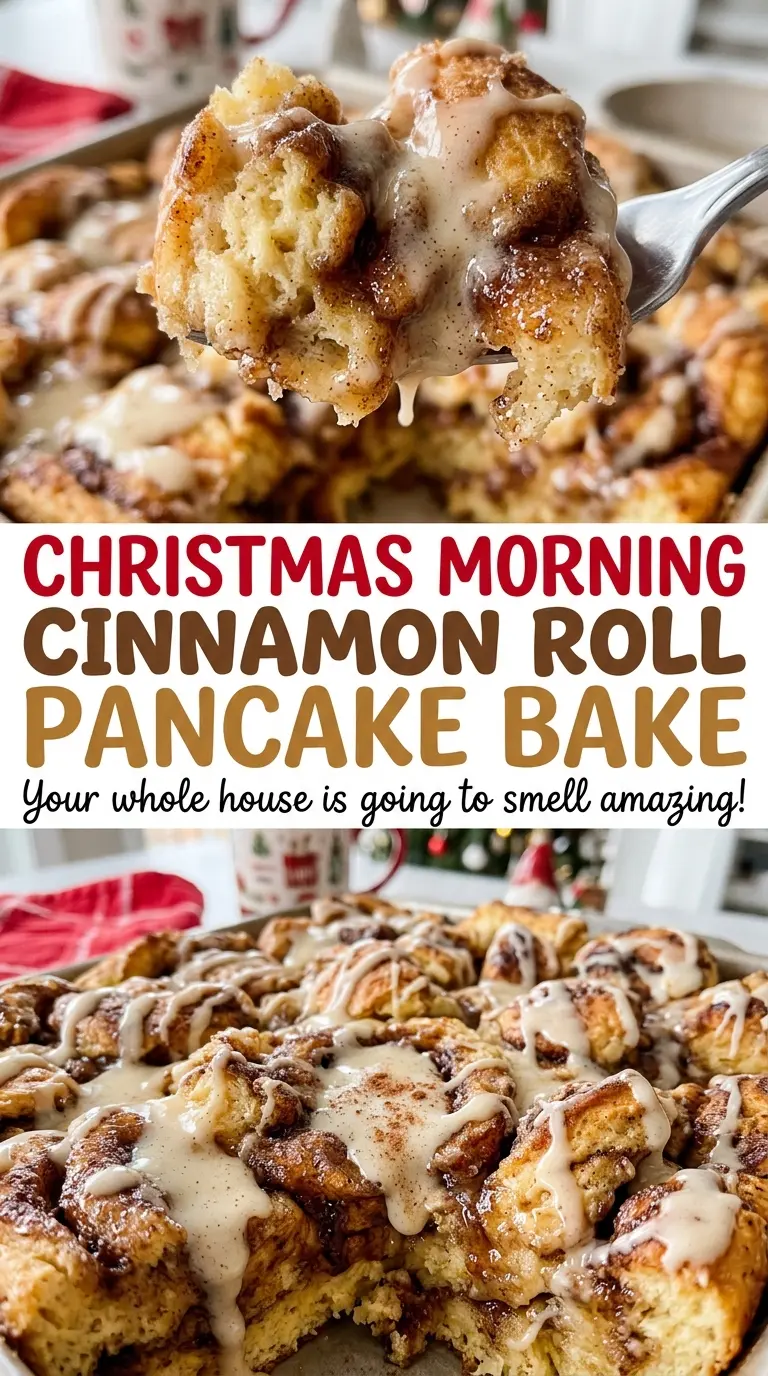
The edges puff first, turning golden while the middle still looks soft, and that’s when I know this cinnamon roll pancake bake is on track. It brings the best parts of pancakes and cinnamon rolls together in one 9×13-inch dish, without standing at the stove flipping batches while breakfast gets cold.
I keep the batter a little lumpy and pipe the cinnamon mixture over the top instead of stirring it through. That way, the pancake stays tender and the brown sugar-cinnamon swirl remains visible in every slice. A quick vanilla glaze goes over the warm bake, where it settles into the ridges and edges. Each square comes out soft, fragrant, and streaked with cinnamon.
Kitchen Note
Start with a small snip in the corner of the bag. The cinnamon paste is thick, so a narrow opening gives you much better control; you can always make the opening larger if it feels too slow.
Save this Christmas Morning Cinnamon Roll Pancake Bake for a breakfast with soft pancake squares and cinnamon-roll flavor in every slice.
Why This Batter Should Go Into the Oven While It Still Has Lift
Once the buttermilk meets the baking soda and baking powder, the batter starts doing its work. Those leaveners are what help a thick layer of batter rise in the oven, but their lift is best used while the mixture is fresh. That’s why I prepare the cinnamon paste and heat the oven before I combine the wet and dry ingredients.
Resist the urge to beat the batter smooth. A few small lumps are a good sign here, not a problem to fix. Stirring until every lump disappears develops more gluten in the flour, which can leave the finished pancake tougher and less tender. Pour it into the greased dish once the flour is just incorporated, then move straight to the swirl and oven. You’ll get a puffed, soft bake without treating the batter like a cake that needs a long mixing session.
What Buttermilk and Cinnamon Bring to This Pancake Bake
- All-purpose flour — Regular all-purpose flour gives the pancake enough structure to rise and slice cleanly. The standard store brand works well; measure it without packing it down so the batter doesn’t turn heavy. A cup-for-cup gluten-free baking blend is the most practical alternative, with a slightly more delicate crumb.
- Buttermilk — Its gentle tang balances the sweet swirl, and its acidity works with the baking soda. Cultured buttermilk from the grocery store is a dependable choice. Plain kefir is a useful substitute in the same volume if you need one; avoid flavored kefir, which would bring its own sweetness.
- Brown sugar and cinnamon — Packed light brown sugar gives the swirl a soft, slightly molasses-like sweetness, while fresh ground cinnamon has the clearest aroma. If your cinnamon has been open for a long time, smell it before using; a faint, dusty scent won’t give the same warm cinnamon-roll character.
- Unsalted butter — Butter adds richness to the batter and helps the cinnamon mixture become a cohesive paste. Unsalted butter lets the salt in the batter stay balanced. The butter for the swirl needs to be softened enough to mix smoothly, while the melted butter for the batter should be cooled before it goes in with the eggs.
- Powdered sugar and milk — Powdered sugar makes a smooth glaze without the graininess granulated sugar would leave behind. Any ordinary powdered sugar works; if yours is lumpy, sift it before whisking. Milk loosens it into a drizzle, and vanilla rounds out the sweetness.
Building the Swirl Without Losing It in the Batter
Get the Dish and Batter Ready
Heat the oven to 375°F and grease a 9×13-inch baking dish with the softened butter. Whisk the flour, granulated sugar, baking powder, baking soda, and salt together in a large bowl so the leaveners are distributed. In a separate medium bowl, whisk the buttermilk, eggs, and cooled melted butter. Pour the wet mixture into the dry ingredients and stir just until combined, leaving a few small lumps rather than chasing a perfectly smooth batter.
Mix a Pipeable Cinnamon Paste
Stir the brown sugar, flour, and cinnamon together in a small bowl first. Add the softened butter and mix until the mixture turns into a thick paste; it should hold together instead of flowing like a sauce. Scrape it into a small zip-top bag, press the mixture toward one corner, and snip that corner. If the opening is too narrow to pipe, trim it a little larger rather than squeezing hard enough to split the bag.
Make the Swirls and Bake Until Set
Pour the batter into the prepared dish and pipe broad swirls of cinnamon paste over the surface. Drag a knife through the swirls lightly once or twice; too much mixing will blur the ribbons into the batter. Bake for 20–25 minutes, until the bake is puffed and the edges are golden. Check a plain area with a toothpick, which should come out clean, and check that the center reaches at least 160°F.
Rest, Then Glaze While Warm
Let the baked pancake rest for 10 minutes before you finish it. While it rests, whisk the powdered sugar, milk, and vanilla in a small bowl until the glaze is smooth. Drizzle it over the warm surface so it settles into the cinnamon lines without disappearing completely into the bake. Slice and serve while the center is still tender.
Three Changes That Give the Bake a Different Feel
Make It Gluten-Free
Use a cup-for-cup gluten-free flour blend made for baking in place of the all-purpose flour in both the pancake batter and cinnamon paste. Keep the other ingredients and method the same. The bake may be a little more delicate when sliced, so let it rest fully before cutting.
Leave Off the Glaze
Skip the powdered sugar glaze if you prefer a less-sweet breakfast. The cinnamon swirl still gives each piece a brown-sugar finish, and the bake is easy to serve without waiting for a drizzle to set.
Pipe One Long Cinnamon Spiral
For a more defined pattern, pipe one loose spiral across the batter and skip dragging a knife through it. The cinnamon stays in a clearer ribbon, so slices have a more pronounced stripe instead of small swirls throughout.
Storage and Reheating
- Refrigerator: Refrigerate leftovers within 2 hours and keep them covered for 3–4 days. The glaze will soften against the pancake as it sits.
- Freezer: Freeze cooled portions in a single layer until firm, then wrap them tightly or place them in an airtight container for up to 2 months. The glaze may look less distinct after thawing, but the pancake reheats well.
- Reheating: Warm portions covered with foil in a 325°F oven until heated through to 165°F. Avoid reheating uncovered for too long; the edges dry out before the center warms.
Questions That Come Up Before the First Slice
Christmas Morning Cinnamon Roll Pancake Bake
Ingredients
Equipment
Method
- Heat the oven to 375°F.
- Grease a 9x13-inch baking dish with the softened butter.
- Whisk the flour, granulated sugar, baking powder, baking soda, and salt in a large bowl.
- Whisk the buttermilk, eggs, and melted butter in a medium bowl.
- Pour the buttermilk mixture into the flour mixture and stir just until combined, leaving a few small lumps.
- Stir the brown sugar, flour, and cinnamon in a small bowl.
- Mix in the softened butter until a thick paste forms.
- Scrape the cinnamon mixture into a small zip-top bag and snip off one corner.
- Pour the batter into the prepared dish.
- Pipe the cinnamon mixture in broad swirls over the top.
- Lightly drag a knife through the swirls once or twice.
- Bake for 20–25 minutes, until puffed and golden at the edges, a toothpick inserted into a plain area comes out clean, and the center reaches at least 160°F.
- Let the bake rest for 10 minutes.
- Whisk the powdered sugar, milk, and vanilla in a small bowl until smooth.
- Drizzle the glaze over the warm pancake bake before serving.