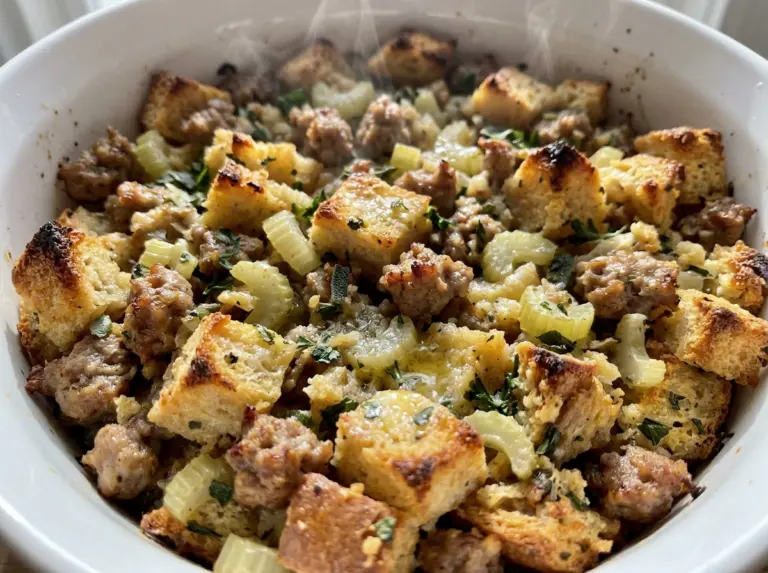
The sausage browns in the skillet, and a few minutes later the onion and celery soften in those same savory drippings. That’s when this Classic Southern Sausage Stuffing starts to smell like the kind of side dish you want to linger over. I use both cornbread and dried white bread so every scoop has a little corn flavor without crumbling into a pan of crumbs.
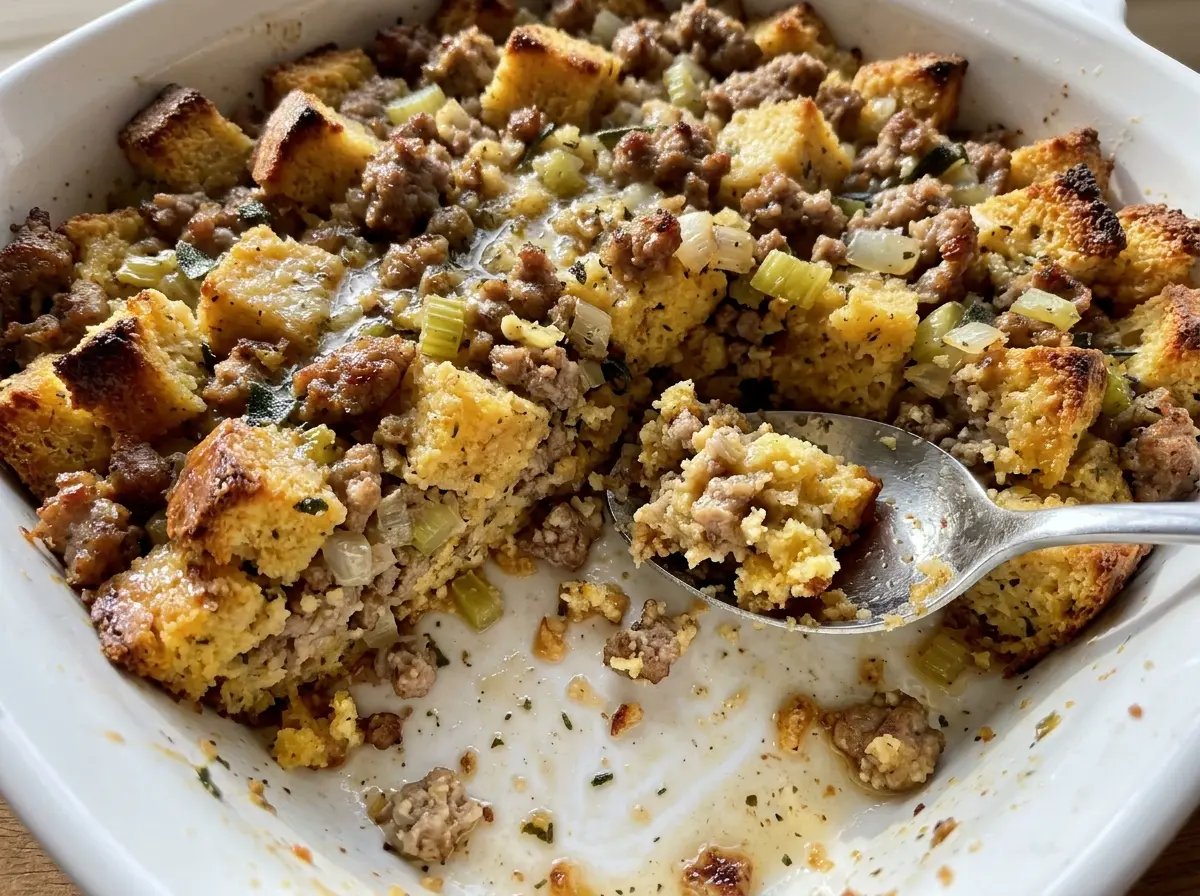
The bread needs to be dry before it meets the broth. Fresh, soft bread drinks liquid unevenly and can turn heavy; dried bread has room to take in the broth-and-egg mixture while still holding its shape. Fold gently, rather than stirring hard, and stop once the pieces look evenly moistened. The top bakes golden while the center stays tender, with sausage and sage tucked into every serving.
Kitchen Note
I don’t wash the skillet between the sausage and the vegetables. The browned bits left behind melt into the butter and give the onion and celery a deeper, savory base.
Save this Classic Southern Sausage Stuffing for a savory, golden-topped casserole with cornbread, pork sausage, and a soft center.
Why Two Breads Keep Cornbread Stuffing from Turning to Crumbs
All-cornbread stuffing can be wonderfully corn-forward, but the soft, crumbly texture of cornbread makes it harder to keep distinct pieces once broth is added. White bread cubes bring a sturdier structure to the pan. Together, the two breads give you the character of cornbread stuffing with pieces that hold their shape through folding and baking.
The balance also gives the sausage and herbs somewhere to settle without overwhelming the corn flavor. The goal isn’t to make the mixture wet or pasty. Once the broth and eggs are folded in, the bread should look evenly moistened, not submerged in liquid. That distinction matters: extra liquid can leave the center heavy, while dry patches make the finished stuffing uneven. Using both dried breads helps the mixture absorb the broth while retaining a soft, spoonable texture.
What the Cornbread, Sausage, and Eggs Each Bring to the Pan
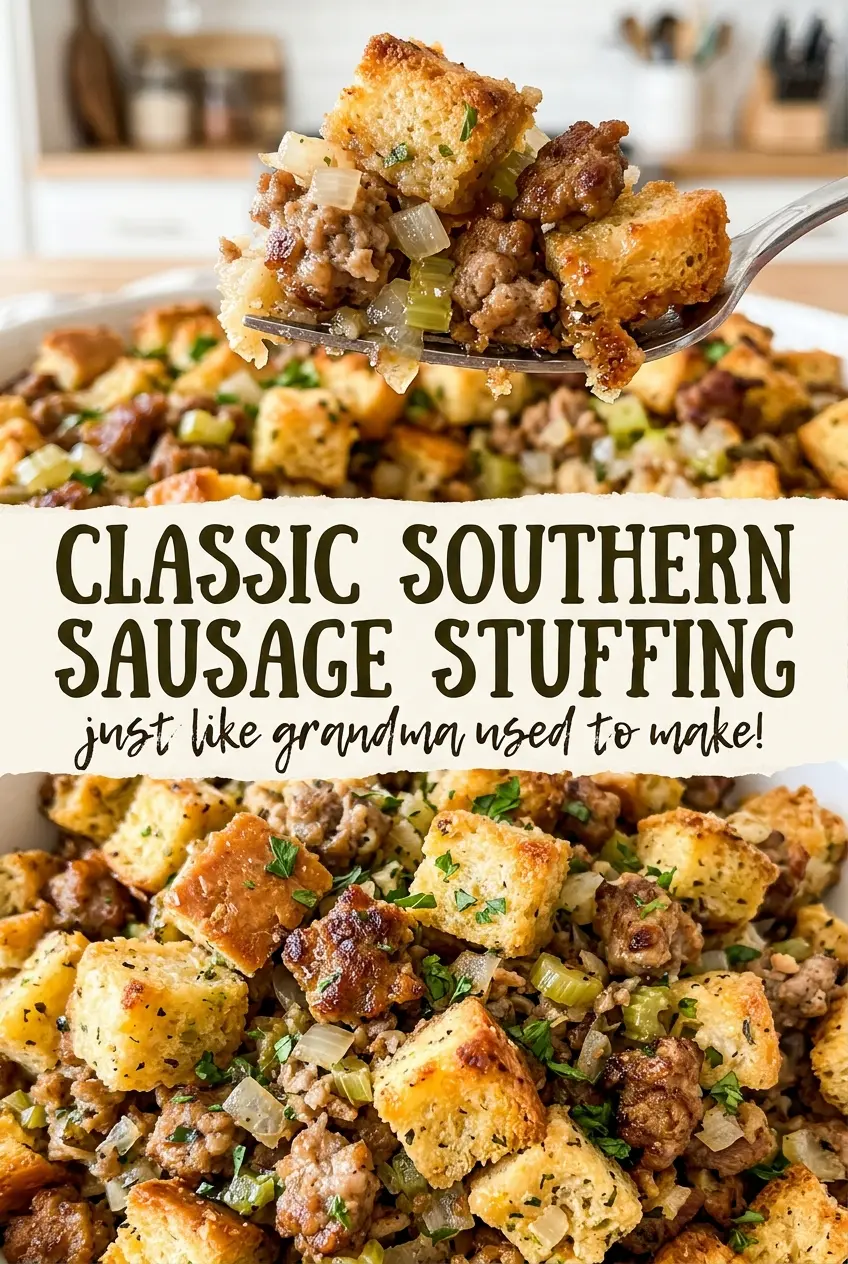
- Dried cornbread — It gives the stuffing its unmistakable corn flavor and a tender, slightly crumbly bite. Day-old cornbread that has dried out is easier to crumble and holds up better when moistened than fresh, soft pieces.
- Dried white bread cubes — These provide a more resilient base alongside the cornbread. Use bread that is thoroughly dried so it can take in the broth without collapsing; fresh cubes won’t give you the same texture.
- Bulk pork sausage — The small browned pieces season the whole casserole as well as adding savory bites. Bulk sausage is convenient here because it breaks into pieces in the skillet; a strongly seasoned sausage will make the sage and thyme less prominent.
- Yellow onion and celery — These soften into the buttery sausage drippings and build a savory, aromatic base. Dice them evenly so they soften at the same pace rather than leaving large, firm pieces among the bread.
- Rubbed sage and dried thyme — Sage gives the stuffing its classic savory aroma, while thyme adds a quieter herbal note. Dried herbs are well suited to this baked mixture; rub the sage between your fingers as you add it to loosen its aroma.
- Chicken broth and eggs — Broth moistens the bread, and whisked eggs help bind the mixture as it bakes. Low-sodium broth lets the sausage and measured salt season the dish without making the finished casserole taste overly salty.
- Unsalted butter — It greases the baking dish and carries the flavor of the softened vegetables. Unsalted butter makes the salt level easier to control alongside the sausage and broth.
Building the Stuffing Without Crushing the Bread
Start with the dried bread and browned sausage
Heat the oven to 350°F and grease a 9×13-inch baking dish with 1 tablespoon of butter. Combine the crumbled dried cornbread and dried white bread cubes in a large mixing bowl. Brown the bulk pork sausage in a 12-inch skillet over medium heat for 8–10 minutes, breaking it into small pieces as it cooks. When it reaches 160°F, transfer it to the bowl with the bread.
Soften the vegetables in the same skillet
Melt the remaining butter in the skillet, then add the diced onion and celery. Cook for 6–8 minutes, stirring now and then, until the vegetables have softened. If the onion is still crisp, give it a little more time before adding the herbs. Stir in the rubbed sage, thyme, salt, and black pepper so the seasonings mingle with the butter and vegetables.
Moisten the bread evenly
Scrape the vegetable mixture into the bowl with the bread and sausage. Whisk the chicken broth and eggs together in a separate bowl, then pour the liquid over the bread mixture. Fold gently until the bread is evenly moistened; vigorous stirring breaks up the cornbread and can leave you with a dense, uneven mixture. Spread it in the prepared baking dish.
Bake covered, then uncover for a golden top
Cover the dish with foil and bake for 25 minutes. Remove the foil and continue baking for 20–25 minutes, until the top is golden brown and the center reaches 160°F. If the surface is browning but the center hasn’t reached temperature, keep baking until it does. Let the stuffing rest for 10 minutes before serving so it settles after coming out of the oven.
Three Small Changes for a Different Southern Stuffing
Make the cornbread flavor more pronounced
Use more dried cornbread and less dried white bread while keeping the combined bread volume the same. The corn flavor will stand out more, and the texture will be a little more delicate than the balanced blend.
Shift the herb balance toward sage
Use a little more rubbed sage and a little less thyme, keeping the overall amount of dried herbs similar. The finished stuffing will taste more distinctly sage-forward without changing its texture.
Make it dairy-free
Replace the butter with the same amount of dairy-free butter sticks. The casserole will still bake up moist, though the buttery flavor may be a little different depending on the brand you use.
Storage and Reheating
- Refrigerator: Refrigerate leftovers within 2 hours and keep them for 3–4 days. The bread softens more as it sits.
- Freezer: Freeze cooled portions in an airtight container for up to 1 month for the best texture. Thaw in the refrigerator before reheating.
- Reheating: Cover and warm in a 350°F oven until the center reaches 165°F. Keep it covered while reheating so the top doesn’t dry out before the middle is hot.
Questions That Come Up When Baking Sausage Stuffing
Classic Southern Sausage Stuffing
Ingredients
Equipment
Method
- Heat the oven to 350°F.
- Grease a 9x13-inch baking dish with 1 tablespoon of the butter.
- Combine the crumbled, dried day-old cornbread and dried white bread cubes in a large mixing bowl.
- Cook the bulk pork sausage in a 12-inch skillet over medium heat for 8–10 minutes, breaking it into small pieces, until browned and cooked to 160°F.
- Transfer the cooked sausage to the bowl of bread.
- Melt the remaining 4 tablespoons butter in the skillet.
- Add the onion and celery, and cook for 6–8 minutes until softened.
- Stir in the sage, thyme, salt, and pepper.
- Scrape the vegetables into the bread mixture.
- Whisk the broth and eggs together.
- Pour the broth and egg mixture over the bread.
- Fold gently until evenly moistened.
- Spread the mixture in the prepared dish.
- Cover the dish with foil and bake for 25 minutes.
- Uncover and bake for 20–25 minutes until the center reaches 160°F and the top is golden brown.
- Rest the stuffing for 10 minutes before serving.