The butter and sugar turn pale and fluffy, and the orange zest starts to perfume the whole bowl. That’s the moment I know this cranberry orange pound cake is off to a good start: the citrus is worked right into the butter, so its aroma carries through every slice.
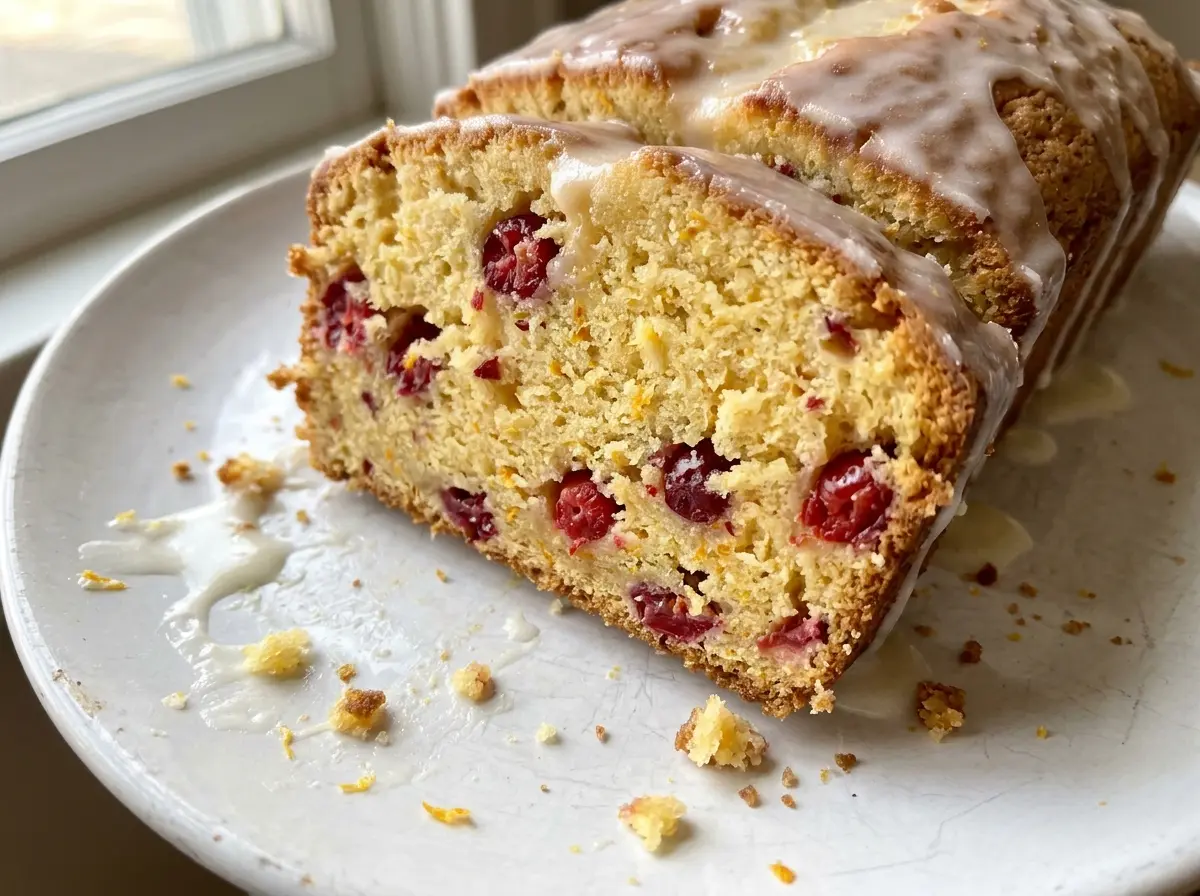
Fresh or frozen cranberries give the cake tart little pockets that break up the buttery crumb, while sour cream keeps it tender. I like the vanilla glaze thin enough to fall in ribbons over the Bundt’s curves, not thick enough to hide them. Once the cake is completely cool, the glaze sets into a delicate finish against the golden edges.
Kitchen Note
Let the cake rest in the Bundt pan for the full 15 minutes before turning it out. It needs that short pause to release cleanly, but leaving it much longer can make the warm cake harder to unmold.
Save this cranberry orange pound cake for a bake with tart berry pockets, bright citrus, and a smooth vanilla glaze.
Why the Toothpick Should Come Out With a Few Crumbs, Not Clean
A pound cake can look ready around the edges before its center has finished baking. The best cue here isn’t a completely clean toothpick; it’s a few moist crumbs clinging to the pick, with no streak of raw batter. Waiting for the toothpick to come out bone-dry risks taking the cake past its best point and leaving the crumb dry once it cools.
The cake bakes at a moderate temperature, so the center has time to set while the outside turns golden. Start checking near the beginning of the stated baking window, since Bundt pans and ovens can vary. Look at the top as well as the toothpick: it should be golden, and the center should no longer look wet. If the pick has batter on it, give the cake more time and check again; a few crumbs are the cue to pull it.
What Keeps the Orange Bright and the Cranberries Evenly Spaced

- Orange zest and juice — Finely grated zest brings fragrant citrus oils, while the juice adds a fresh orange note to the batter. Use a fine grater and take only the colored outer peel; the white pith underneath tastes bitter. Fresh juice gives the brightest flavor, but bottled orange juice works when that’s what you have.
- Cranberries — Fresh berries give juicy, tart bites; frozen berries work too, and they go straight into the batter without thawing. Tossing them with a little of the measured flour helps keep them from clustering at the bottom. Choose firm berries when buying fresh; there’s no need to seek out a particular brand.
- Butter and eggs — Softened butter is what lets the sugar beat into a light base, so don’t use melted butter here. Room-temperature eggs blend more smoothly into that mixture than cold ones. If you forgot to set the eggs out, place them in a bowl of warm water until they’re no longer cold to the touch, then dry them before using.
- All-purpose flour — Spoon it into the measuring cup and level the top rather than packing the cup; too much flour can make the cake heavy. For a gluten-free version, a cup-for-cup gluten-free baking blend formulated for cakes is the most practical swap. It may give the crumb a slightly different texture, so use a blend intended to replace wheat flour measure for measure.
- Sour cream — It adds moisture and a gentle tang alongside the orange juice. Plain full-fat Greek yogurt is the closest substitute; the cake may have a slightly less rich crumb, but the texture stays tender.
- Confectioners’ sugar and milk — These form the smooth, pourable glaze, and vanilla rounds out its sweetness. Confectioners’ sugar is the right choice because it dissolves quickly; granulated sugar would leave the glaze gritty.
Building the Batter for a Tender Bundt Cake
Prepare the pan and berries
Heat the oven to 325°F and coat a 10-inch Bundt pan thoroughly with baking spray with flour, getting into the grooves. Whisk the flour, baking powder, and salt together, then move a tablespoon of that mixture to a small bowl. Toss the cranberries in it until lightly coated; keep frozen cranberries frozen while you do this.
Cream the butter, sugar, and zest
Beat the softened butter, sugar, and finely grated orange zest with an electric mixer on medium speed for 3 to 4 minutes. The mixture should look light and fluffy rather than dense or greasy. Scrape the bowl if butter is clinging to the sides, then add the room-temperature eggs one at a time, beating well after each addition. Adding them gradually helps the mixture stay smooth.
Alternate the dry and sour cream mixtures
Stir the sour cream and orange juice together in a small bowl until smooth. With the mixer on low, add the remaining flour mixture in three additions, alternating with the sour cream mixture in two additions; start and finish with flour. Stop as soon as there are no dry streaks. A few seconds too much mixing after the flour disappears can make the crumb less tender.
Bake, cool, and glaze
Fold the cranberries into the batter, transfer it to the prepared pan, and smooth the top. Bake for 70 to 80 minutes, until golden and a toothpick inserted in the center comes out with a few moist crumbs. Cool in the pan on a rack for 15 minutes, then invert onto the rack and let the cake cool completely. Whisk the confectioners’ sugar, milk, and vanilla until smooth, drizzle the glaze over the cooled cake, and give it 15 minutes to set before serving.
Three Ways to Adapt This Cranberry Orange Bundt
Make it gluten-free
Replace the all-purpose flour with a cup-for-cup gluten-free baking blend formulated for cakes, using the same measure. The crumb may be a little less springy than the wheat-flour version, but the orange and cranberry flavors stay in balance.
Bake it as an orange-only cake
Leave out the cranberries for a simpler orange pound cake. The slices will have a more even, buttery crumb without the sharp fruit pockets, and you can keep the vanilla glaze for contrast.
Skip the glaze for a less-sweet finish
Serve the cake without the vanilla glaze if you prefer the fruit and citrus to lead. The top won’t have the sweet finish or glossy look, but the cake is still easy to slice and serve plain.
Storage and Reheating
- Refrigerator: Keep the cake covered in an airtight container for up to 5 days. The crumb firms when chilled, so let slices sit at room temperature before serving.
- Freezer: Freeze the unglazed cake, tightly wrapped, for up to 2 months. Thaw it while still wrapped at room temperature, then add the glaze.
- Reheating: For a warm slice, microwave it for about 10 seconds. Avoid warming the whole glazed cake; heat can melt the glaze and make it run.
Questions I Get Asked About This Cranberry Orange Cake
Cranberry Orange Pound Cake with Vanilla Glaze
Ingredients
Equipment
Method
- Preheat the oven to 325°F.
- Thoroughly coat a 10-inch Bundt pan with baking spray with flour.
- Whisk the flour, baking powder, and salt in a medium bowl.
- Transfer 1 tablespoon of the flour mixture to a small bowl and toss it with the cranberries.
- Beat the butter, sugar, and orange zest in a large bowl with an electric mixer on medium speed for 3 to 4 minutes, until light and fluffy.
- Add the eggs one at a time, beating well after each addition.
- Stir the sour cream and orange juice together in a small bowl until smooth.
- With the mixer on low, add the remaining flour mixture in 3 additions, alternating with the sour cream mixture in 2 additions and beginning and ending with the flour.
- Mix just until no dry streaks remain.
- Fold in the cranberries.
- Transfer the batter to the prepared pan and smooth the top.
- Bake for 70 to 80 minutes, until golden and a toothpick inserted in the center comes out with a few moist crumbs.
- Cool the cake in the pan on a rack for 15 minutes.
- Invert the cake onto the rack and cool completely.
- Whisk the confectioners' sugar, milk, and vanilla in a small bowl until smooth.
- Drizzle the glaze over the cooled cake.
- Let the glaze set for 15 minutes before serving.