The butter should still look like little pebbles when it’s worked into the flour. When those cold pieces hit the hot oven, they help keep the crumb tender instead of turning the scones into dense, sweet bread. That’s the small detail I pay attention to when I make these cranberry orange scones with vanilla glaze.
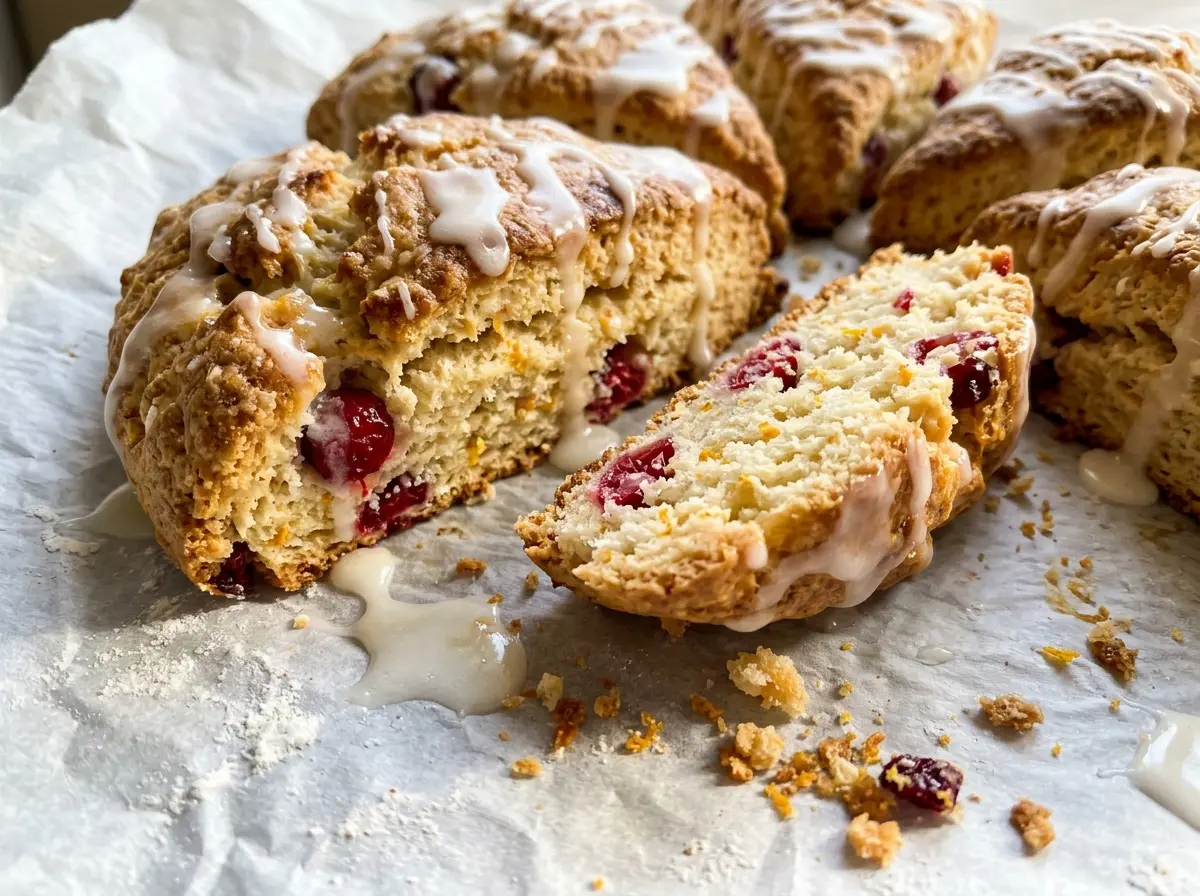
The dough isn’t meant to look smooth in the bowl. I stir only until it comes together in a shaggy mass, then pat it into a round without pressing hard. Dried cranberries bring a tart chew, while orange zest runs through the dough and vanilla glaze adds a soft, sweet finish. The wedges bake up golden at the edges, tender inside, and easy to pull apart while the glaze sets.
Kitchen Note
Pat the dough gently into its round and stop when it’s about 1 inch thick. Pressing harder doesn’t help it hold together; it can pack the crumb and leave the baked wedges dense.
Save these cranberry orange scones with vanilla glaze for a weekend bake: golden wedges, tart cranberries, and a smooth vanilla drizzle.
Why Pea-Size Butter Crumbs Matter More Than a Smooth Dough
It’s easy to keep cutting the butter in until the flour looks uniform, but that’s not what I want for these scones. The pea-size pieces leave small pockets of butter through the dough. In the oven, those pockets help create a tender, flaky crumb rather than a close, bready texture.
Start with cold butter, and work it into the dry ingredients only until the mixture has coarse crumbs about the size of peas. A few smaller crumbs are fine; a paste-like mixture isn’t. If the butter gets warm and smears into the flour, the dough loses some of that separation, so work steadily with a pastry cutter or your fingertips. This texture cue matters more than making every crumb exactly the same size.
The cream and egg bring the flour together after the butter is cut in. They aren’t there to make a silky, kneadable dough. Once the mixture holds in a shaggy mass, it’s ready for the counter, where a gentle pat brings it into shape.
What the Cranberries, Orange Zest, and Cream Bring to Each Scone

- Dried cranberries — They keep their shape in the dough and add a concentrated tart-sweet bite without bringing extra moisture. Dried cherries work as a swap and make the scones a little sweeter, with less cranberry tang.
- Orange zest — Finely grated zest gives the dough a clear citrus aroma without adding juice that could change its moisture. Use a fresh orange and grate only the colored outer peel; the white pith underneath tastes bitter.
- Heavy cream and egg — Together, they enrich the crumb and bind the flour into a dough you can pat and cut. Half-and-half can replace the cream, but the scones will be less rich. Keep the egg; leaving it out changes both the structure and the dough’s moisture balance.
- Cold unsalted butter — Unsalted butter lets the measured salt stay in control, and its cold texture is what makes the pea-size crumbs useful. A cup-for-cup gluten-free baking blend can replace the all-purpose flour; choose one formulated for baking and containing xanthan gum for a more cohesive dough, though the finished scones will be more delicate.
- Powdered sugar, milk, and vanilla — Powdered sugar makes a smooth drizzle, milk loosens it, and vanilla rounds out the citrus. Use fresh powdered sugar if yours has hard lumps, and whisk until they disappear so the glaze doesn’t land in clumps.
Shaping the Dough into Tender, Golden Wedges
Cutting the butter into the dry ingredients
Heat the oven to 400°F and line a baking sheet with parchment paper. Whisk the flour, granulated sugar, baking powder, and salt in a large bowl, then cut in the cold butter with a pastry cutter or your fingertips. Stop when you see coarse, pea-size crumbs; don’t wait for the mixture to look like fine sand.
Bringing the shaggy dough together
Stir the dried cranberries and orange zest into the flour mixture. In a small bowl, whisk the egg and heavy cream together, then pour them into the larger bowl. Stir just until a shaggy dough forms, then turn it onto a lightly floured counter. Pat it gently into an 8-inch round about 1 inch thick rather than kneading it smooth.
Cutting and baking the wedges
Cut the round into 8 wedges and transfer them to the prepared baking sheet. Bake for 18 to 22 minutes, until the tops are golden and a toothpick inserted in the center comes out clean. The tops should look set, not pale or damp in the middle. If they’re still pale at the lower end of the time range, keep baking and check again.
Cooling before the vanilla drizzle
Let the scones cool on the baking sheet for 10 minutes, then transfer them to a wire rack. Whisk the powdered sugar, milk, and vanilla extract in a small bowl until smooth. Drizzle the glaze over the cooled scones; warm scones can make it run thin instead of settling on top. Give the glaze time to set before serving.
Three Changes That Give These Scones a Different Finish
Skip the glaze for a less-sweet scone
Leave off the powdered sugar, milk, and vanilla mixture and serve the scones plain. The cranberry and orange come through more clearly, and the tops stay dry rather than wearing a sweet finish.
Move some orange zest into the glaze
Divide the tablespoon of orange zest between the dough and the glaze, whisking some into the powdered sugar mixture. The orange aroma will be more noticeable on top, while the scone itself has a gentler citrus note.
Make them gluten-free
Replace the all-purpose flour with the same amount of a cup-for-cup gluten-free baking blend that contains xanthan gum. The dough can feel a little more delicate, so handle it gently when transferring the cut wedges.
Storage and Reheating
- Refrigerator: Store in an airtight container for up to 4 days; the scones may feel firmer and drier when chilled.
- Freezer: Freeze cooled, unglazed scones in an airtight container for up to 2 months. Thaw at room temperature, then glaze once they’re no longer cold.
- Reheating: Warm unglazed scones in a 300°F oven for 5 to 8 minutes. Don’t reheat glazed scones; the glaze will melt and run.
Questions That Come Up While Mixing and Glazing These Scones
Cranberry Orange Scones with Vanilla Glaze
Ingredients
Equipment
Method
- Heat the oven to 400°F.
- Line a baking sheet with parchment paper.
- Whisk the all-purpose flour, granulated sugar, baking powder, and salt in a large bowl.
- Cut in the cold unsalted butter with a pastry cutter or your fingertips until the mixture has coarse, pea-size crumbs.
- Stir in the dried cranberries and orange zest.
- Whisk the egg and heavy cream together in a small bowl.
- Pour the egg and heavy cream into the flour mixture.
- Stir just until a shaggy dough forms.
- Turn the dough onto a lightly floured counter.
- Gently pat the dough into an 8-inch round about 1 inch thick.
- Cut the round into 8 wedges.
- Transfer the wedges to the prepared baking sheet.
- Bake for 18 to 22 minutes, until the tops are golden and a toothpick inserted in the center comes out clean.
- Cool the scones on the baking sheet for 10 minutes.
- Transfer the scones to a wire rack.
- Whisk the powdered sugar, milk, and vanilla extract in a small bowl until smooth.
- Drizzle the glaze over the cooled scones.
- Let the glaze set before serving.