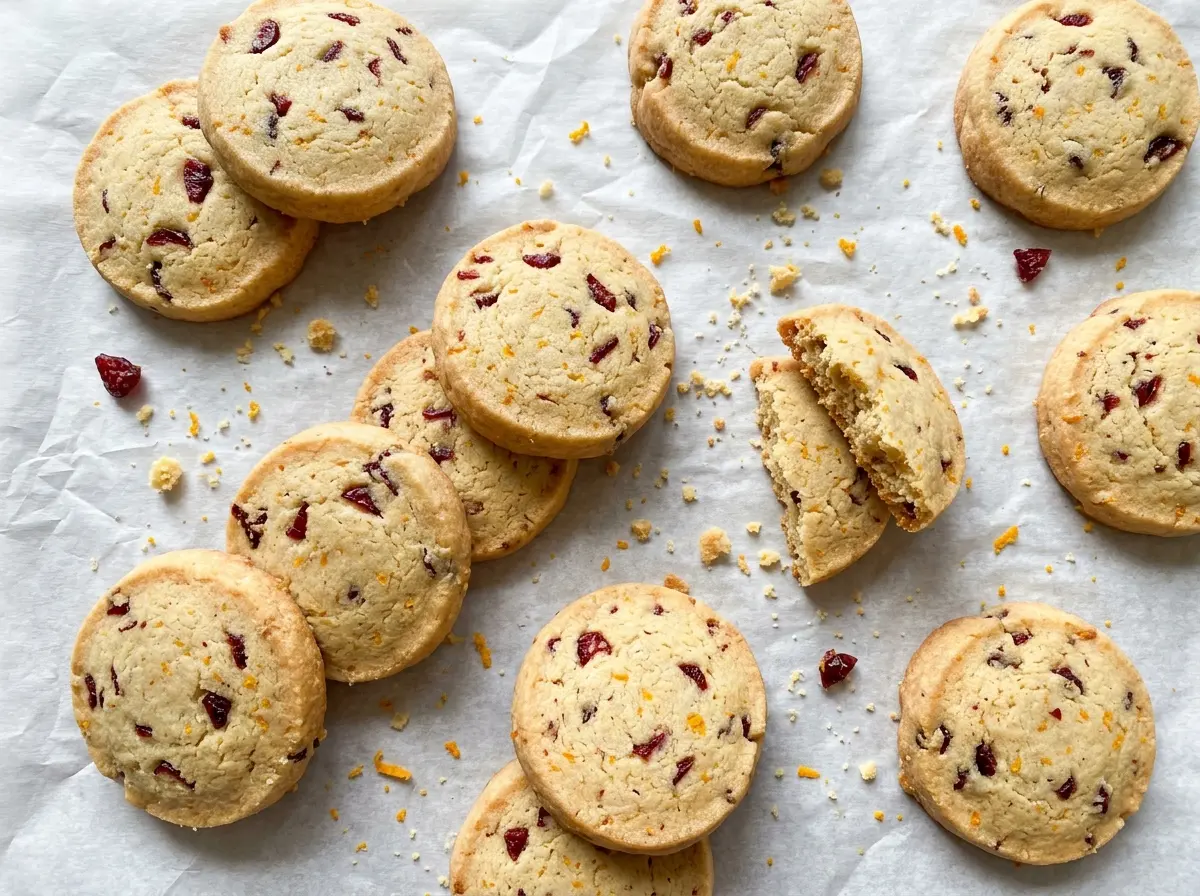
The butter and powdered sugar turn pale and creamy before the flour ever goes in; that smooth start is what gives these cookies their delicate, short texture instead of a sandy bite. I like how the orange zest perfumes the dough right away, while the finely chopped cranberries leave little tart pockets throughout each round. These cranberry orange shortbread cookies are the kind you can slice from a chilled log, so every cookie has a neat edge and the dough doesn’t need to be rolled out.
Shortbread dough is easy to overwork once flour is added. I mix it on low only until it begins to come together, then fold in the cranberries and stop. The logs need a proper chill before slicing, too; firm dough cuts cleanly and helps the rounds keep their shape in the oven. When the edges are just beginning to turn golden, they’re ready to come out: buttery, lightly crisp around the outside, and tender through the middle.
Kitchen Note
Once the flour goes in, stop mixing as soon as the dough starts to come together. A few dry-looking crumbs are fine; folding in the cranberries will bring the dough together without making the cookies tough.
Save these cranberry orange shortbread cookies for a bake-ahead treat with buttery edges, bright orange zest, and tart cranberry in every round.
Why the Chill Matters More Than a Longer Bake
Shortbread logs can look ready to slice before the butter has firmed back up. If the dough is soft, the knife can press the log out of its round shape, leaving cookies that bake unevenly. A full chill gives the butter time to firm and the dough time to hold together, so the slices stay close to the same thickness from edge to edge.
That even thickness matters because these cookies bake gently at 325°F. They aren’t meant to take on deep color all over; the cue is just a touch of gold beginning at the edges. A thicker slice may still look pale in the center when the edges are ready, and waiting for the whole top to brown can dry out the shortbread. The 1 1/2 to 2 hour chill is useful time, not dead time: the logs become easier to handle and you get tidy rounds without pressing or reshaping each piece.
Keep the two logs wrapped tightly while they chill. If one log feels softer than the other when you unwrap it, give it more time in the refrigerator rather than forcing the knife through it. Clean slices protect the crumbly texture this cookie is meant to have.
What Butter, Sugar, and Zest Each Bring to These Cookies

- Unsalted butter — Butter supplies the rich flavor and tender, sandy crumb that define shortbread. Use butter that’s softened enough to cream smoothly, but not melted or greasy. A good-quality grocery-store butter works well; melted butter won’t give you the same creamed base.
- Powdered sugar — Its fine texture blends into the butter without the grit that granulated sugar can leave in this style of cookie. Sift it if it’s clumpy so the creamed mixture stays smooth.
- Orange zest — Finely grated zest gives the dough its fragrant citrus character without adding liquid. Use a fresh orange and grate only the colored outer peel; the white pith underneath tastes bitter. Orange juice isn’t a direct replacement because it adds moisture and won’t provide the same concentrated aroma.
- Vanilla extract — Vanilla rounds out the buttery dough behind the sharper orange and cranberry notes. If you’re out, leave it out rather than adding another liquid; the cookies will still have the orange zest for flavor.
- All-purpose flour — Flour gives the shortbread its structure, so spoon it into the measuring cup and level it rather than scooping and packing. Too much flour can make the dough dry and difficult to shape. A cup-for-cup gluten-free baking blend is the practical swap for a gluten-free batch; choose one intended to replace wheat flour in baking, not almond or coconut flour.
- Dried cranberries — Chop them finely so they distribute through the dough and don’t make the rounds break apart when sliced. Any standard dried cranberries work here; there’s no need for a specialty variety.
- Kosher salt — Salt keeps the buttery sweetness from tasting flat. Keep it in the dough; leaving it out makes the orange and cranberry stand out less clearly.
From Creamed Butter to Cleanly Sliced Cranberry Rounds
Cream the Butter Before Adding the Flavor
Beat the softened butter and powdered sugar in a large bowl with an electric mixer on medium speed until smooth and creamy, about 2 minutes. The mixture should look cohesive, with no obvious pockets of dry sugar. Beat in the finely grated orange zest and vanilla until they’re evenly dispersed. If the butter is cold and stiff, it won’t cream smoothly, so let it soften before you begin rather than trying to speed things up with melted butter.
Bring the Dough Together Without Working It Hard
Add the flour and kosher salt, then mix on low just until the dough starts to come together. It may look crumbly at first; stop when it begins clumping rather than waiting for a perfectly smooth ball in the mixer. Fold in the finely chopped cranberries by hand so they’re spread throughout without prolonged mixing. Divide the dough in half before shaping so the logs are manageable and bake consistently.
Shape Even Logs and Chill Until Firm
Shape each half into a log about 2 inches in diameter and 7 inches long, then wrap each one tightly. Refrigerate until firm, 1 1/2 to 2 hours. The logs should feel solid enough to slice without flattening under the knife; if they still feel soft, leave them in longer. Keeping the logs close to the same diameter helps the rounds bake at a similar pace.
Slice, Bake, and Let the Edges Set
Heat the oven to 325°F and line two baking sheets with parchment paper. Slice the chilled logs into 1/4-inch rounds and arrange them about 1 inch apart. Bake for 14 to 17 minutes, switching the sheets between racks and rotating them front to back halfway through; look for edges just beginning to turn golden, not browned tops. Cool the cookies on the baking sheets for 5 minutes before moving them to a wire rack to cool completely, since they’re fragile while hot.
Two Simple Changes for Different Shortbread Needs
Make the cookies gluten-free
Replace the all-purpose flour with a cup-for-cup gluten-free baking blend made for cookies, using the same volume. Avoid almond or coconut flour, which don’t behave like a direct flour swap in this dough. The rounds may be a little more delicate, so keep the logs well chilled and transfer the baked cookies gently.
Make orange-only shortbread
Leave out the dried cranberries for a simpler orange cookie. The dough will be easier to slice because it has no fruit pieces interrupting the rounds, and the orange zest will come through more directly. Keep the rest of the method the same.
Storage and Reheating
- Refrigerator: Store cooled cookies in an airtight container for up to 1 week. They’ll feel firmer when cold; let them come to room temperature before serving.
- Freezer: Freeze fully cooled cookies in an airtight container for up to 2 months, separating layers with parchment. Thaw them in the closed container at room temperature.
- Reheating: These cookies don’t need reheating. Let chilled or thawed cookies come to room temperature; microwaving can soften the shortbread unevenly.
Questions That Come Up While Slicing and Baking These Cookies
Cranberry Orange Shortbread Cookies
Ingredients
Equipment
Method
- Beat the butter and powdered sugar in a large bowl with an electric mixer on medium speed until smooth and creamy, about 2 minutes.
- Beat in the orange zest and vanilla.
- Add the flour and salt and mix on low just until the dough starts to come together.
- Fold in the cranberries.
- Divide the dough in half, shape each half into a 2-inch-diameter log about 7 inches long, and wrap tightly.
- Refrigerate until firm, 1 1/2 to 2 hours.
- Heat the oven to 325°F.
- Line two baking sheets with parchment paper.
- Slice the chilled logs into 1/4-inch-thick rounds and arrange them about 1 inch apart on the sheets.
- Bake for 14 to 17 minutes, switching the sheets between racks and rotating them front to back halfway through, until the cookie edges are just beginning to turn golden.
- Cool on the baking sheets for 5 minutes.
- Transfer to a wire rack to cool completely.