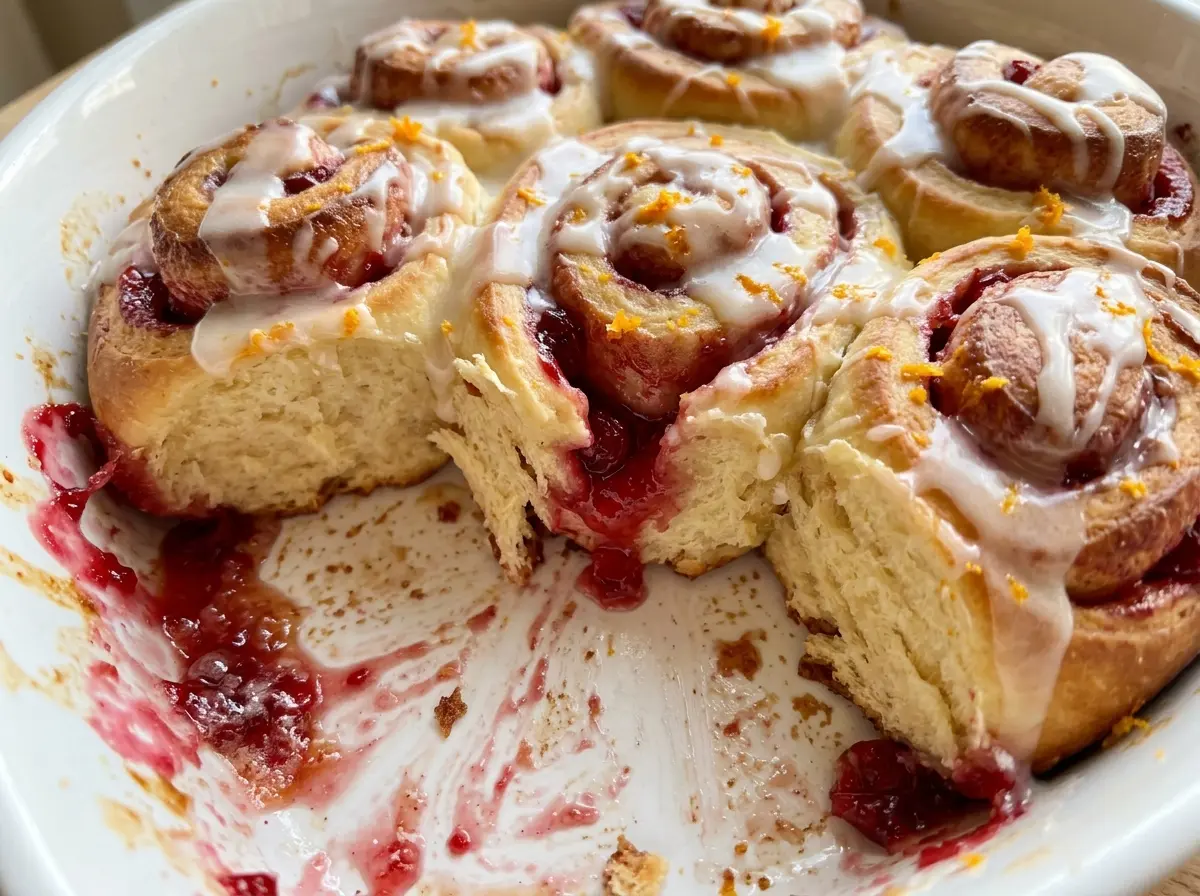
When the cranberries start popping in the saucepan, the juice turns ruby red and the whole kitchen smells like orange peel. I cook the mixture until it’s thick enough to cling to a spoon; a loose filling can slide out of the spirals before the rolls reach the oven. That jammy center is what makes these cranberry orange sweet rolls taste bright instead of just sweet.
The dough is soft and enriched with butter, egg, and egg yolk, so it bakes up tender around the tart fruit. I spread the filling only after it has cooled completely, then leave a narrow border along one long edge so the log can seal. A little patience with those two parts gives you neat swirls and warm rolls finished with a simple orange glaze.
Kitchen Note
Set aside the orange juice for the glaze before the cranberries go into the pan. I’ve found it’s much easier to keep that small portion separate at the start than to try to rescue the glaze later.
Save these cranberry orange sweet rolls for a brunch bake: tart cranberry spirals tucked into soft dough, finished with orange glaze.
Why the Cranberry Filling Needs to Be Thick Before It Meets the Dough
Cranberries give this filling plenty of tartness, but they also release juice as they simmer. If that liquid hasn’t cooked down, it can soak into the dough and run toward the bottom of the baking dish as the rolls bake. You want the fruit mixture to look glossy and jammy, not like whole berries floating in syrup.
Cooking the berries with sugar and orange juice until they burst concentrates the fruit without needing another thickener. Stir often so the sugary mixture doesn’t catch on the bottom of the pan, especially as it reduces. Then spread it on a plate and let it cool completely. A plate gives the filling room to cool evenly; a deep saucepan holds heat longer, and warm filling can soften the butter spread over the dough.
The finished rolls still have a tender, soft spiral, but the cranberry layer stays where you spread it. That contrast matters: the fruit should taste bright and concentrated against the rich dough, not watery or diluted.
What the Cranberries, Orange, and Enriched Dough Each Bring

- Cranberries — Fresh or frozen berries both work here; frozen cranberries are a useful choice when fresh ones aren’t available. Choose berries without soft or shriveled spots if you’re buying fresh. The fruit’s sharp flavor keeps the sweet filling from tasting flat, and simmering it down gives the rolls their distinctive ruby swirl.
- Orange juice and zest — The juice brings citrus acidity to the cranberry filling, while the zest contributes a more fragrant orange note. Use a fresh orange when you can, since its zest carries a lively aroma. Zest the orange before juicing it, and keep the glaze portion separate from the juice going into the pan.
- Whole milk, egg, and egg yolk — These enrich the dough and help make the rolls soft rather than bread-like and chewy. Room-temperature eggs blend more smoothly into the mixture. I wouldn’t replace the milk or eggs with a different product in this formula; each changes the dough’s moisture and richness.
- Active dry yeast — This yeast is proofed in warm milk with a little sugar before the other dough ingredients go in. Check that the packet is fresh if you’re unsure how it has been stored. Instant yeast follows a different mixing approach, so active dry yeast is the dependable choice for these instructions.
- All-purpose flour and unsalted butter — All-purpose flour gives the dough enough structure to hold its spiral while staying tender. The butter is divided between the dough and the filling layer, so keep it soft enough to incorporate and spread without melting it. Unsalted butter lets the dough’s salt level stay consistent.
- Powdered sugar — Its fine texture makes a smooth glaze without a gritty finish. Store-brand powdered sugar works well; whisk it with the reserved orange juice until no dry pockets remain.
From Jammy Filling to Soft, Golden Spirals
Simmer the Cranberries Until They Look Like Jam
Combine the cranberries, sugar, and the portion of orange juice for the filling in a medium saucepan. Bring the mixture to a simmer over medium heat, stirring often, and cook for 10–14 minutes. The berries should burst and the mixture should thicken until it looks glossy and jammy. Stirring keeps the fruit from sticking as the liquid cooks down; spread the finished filling on a plate and cool it completely for about 30–45 minutes.
Wake Up the Yeast and Bring the Dough Together
Warm the milk to 105–110°F, then whisk it with the active dry yeast and a spoonful of the sugar in the stand mixer bowl. Let it stand for 5–10 minutes, until foamy; if you see no foam, pause before adding the remaining ingredients because the yeast may not be active. Mix in the remaining sugar, egg, egg yolk, flour, and salt on low with the dough hook until a shaggy dough forms. Add the butter a tablespoon at a time so it works into the dough instead of coating the bowl in one lump.
Knead Until Smooth, Then Let the Dough Double
Knead on medium-low for 6–8 minutes, until the dough is smooth and elastic but still slightly tacky. Don’t keep adding flour just because it clings a little; a dry dough makes less tender rolls. Coat the mixer bowl with cooking spray, return the dough to it, and cover. Let it rise at room temperature for 1–1 1/2 hours, until doubled in size.
Roll, Slice, and Bake the Spirals
Dust the work surface with the reserved flour and roll the dough into a 12×18-inch rectangle. Spread it with the remaining softened butter and the cooled cranberry filling, leaving a 1/2-inch border along one long edge. Roll from the opposite long edge, pinch the seam closed, then cut the log into 12 even rolls. Arrange them cut-side up in a cooking-sprayed 9×13-inch baking dish, cover, and let rise for 30–45 minutes until puffy and nearly touching; preheat the oven to 350°F during the last 20 minutes, then bake for 25–30 minutes until golden brown. Cool in the pan for 10 minutes, whisk the powdered sugar with the reserved orange juice until smooth, and drizzle the glaze over the warm rolls.
Two Simple Ways to Adapt These Cranberry Orange Rolls
Use Frozen Cranberries
Frozen cranberries make these rolls possible outside fresh-cranberry season, and they keep the same tart, bright filling. Use them in place of fresh cranberries and cook the mixture until the berries have burst and it’s thick and jammy; let the finished filling cool fully before spreading it.
Leave the Rolls Unglazed
For a less-sweet finish, skip the orange glaze and serve the rolls plain. The cranberry filling stays tart and the dough’s buttery softness comes through more clearly, though you’ll miss the extra citrus sweetness on top.
Storage and Reheating
- Refrigerator: Store covered for up to 4 days; the enriched dough will firm up as it chills.
- Freezer: Freeze the baked rolls without glaze in an airtight container for up to 2 months. Thaw at room temperature, then glaze before serving.
- Reheating: Warm an individual roll briefly in the microwave, stopping as soon as it feels soft. Long heating can dry out the dough, and the glaze will soften as it warms.
Questions That Come Up When Baking These Sweet Rolls
Cranberry Orange Sweet Rolls
Ingredients
Equipment
Method
- Reserve 2 tablespoons of the orange juice for the glaze.
- Combine the cranberries, sugar, and remaining 1/4 cup orange juice in a medium saucepan.
- Bring the mixture to a simmer over medium heat, stirring often, and cook for 10–14 minutes, until the cranberries have burst and the mixture is thick and jammy.
- Stir in the orange zest.
- Spread the filling on a plate and cool completely, about 30–45 minutes.
- Whisk the warm milk, yeast, and 1 tablespoon of the sugar in the bowl of a stand mixer.
- Let stand for 5–10 minutes, until foamy.
- Add the remaining sugar, egg, egg yolk, 4 cups of the flour, and salt, and mix with the dough hook on low until a shaggy dough forms.
- Add 6 tablespoons of the softened butter, 1 tablespoon at a time.
- Knead on medium-low for 6–8 minutes, until the dough is smooth and elastic and still slightly tacky.
- Coat the mixer bowl with cooking spray and return the dough to the bowl.
- Cover and let rise at room temperature for 1–1 1/2 hours, until doubled in size.
- Dust the work surface with the reserved 2 tablespoons flour and roll the dough into a 12x18-inch rectangle.
- Spread the remaining 2 tablespoons softened butter and the cooled cranberry filling over the dough, leaving a 1/2-inch border along one long edge.
- Roll the dough up from the opposite long edge into a log and pinch the seam closed.
- Cut the log into 12 even rolls.
- Coat a 9x13-inch baking dish with cooking spray and arrange the rolls cut-side up in the dish.
- Cover and let rise for 30–45 minutes, until puffy and nearly touching.
- Preheat the oven to 350°F during the last 20 minutes of rising.
- Bake the rolls for 25–30 minutes, until golden brown.
- Let cool in the pan for 10 minutes.
- Whisk the powdered sugar with the reserved 2 tablespoons orange juice until smooth.
- Drizzle the glaze over the warm rolls.