The pecans go from quiet to fragrant quickly in a dry saucepan, and the first time I made this pilaf I learned not to step away during those few minutes. Once they smell toasty, they’re ready to come out; a minute too long can make their flavor bitter. That little head start gives Cranberry Pecan Wild Rice Pilaf its warm, nutty finish.
I cook the onion and celery in the same pan, so the butter picks up the toasted pecan aroma and the vegetables soften before the rice goes in. Wild rice takes longer than the fluffy white rice many of us are used to, and it doesn’t always absorb every bit of broth. The payoff is a pilaf with distinct, tender grains, tart cranberries, and pecans that stay pleasantly crisp.
Kitchen Note
The cranberries go in after any extra cooking liquid has been drained, not while the pot is still simmering. Give them the full 10 minutes covered off the heat; they soften gently without breaking down.
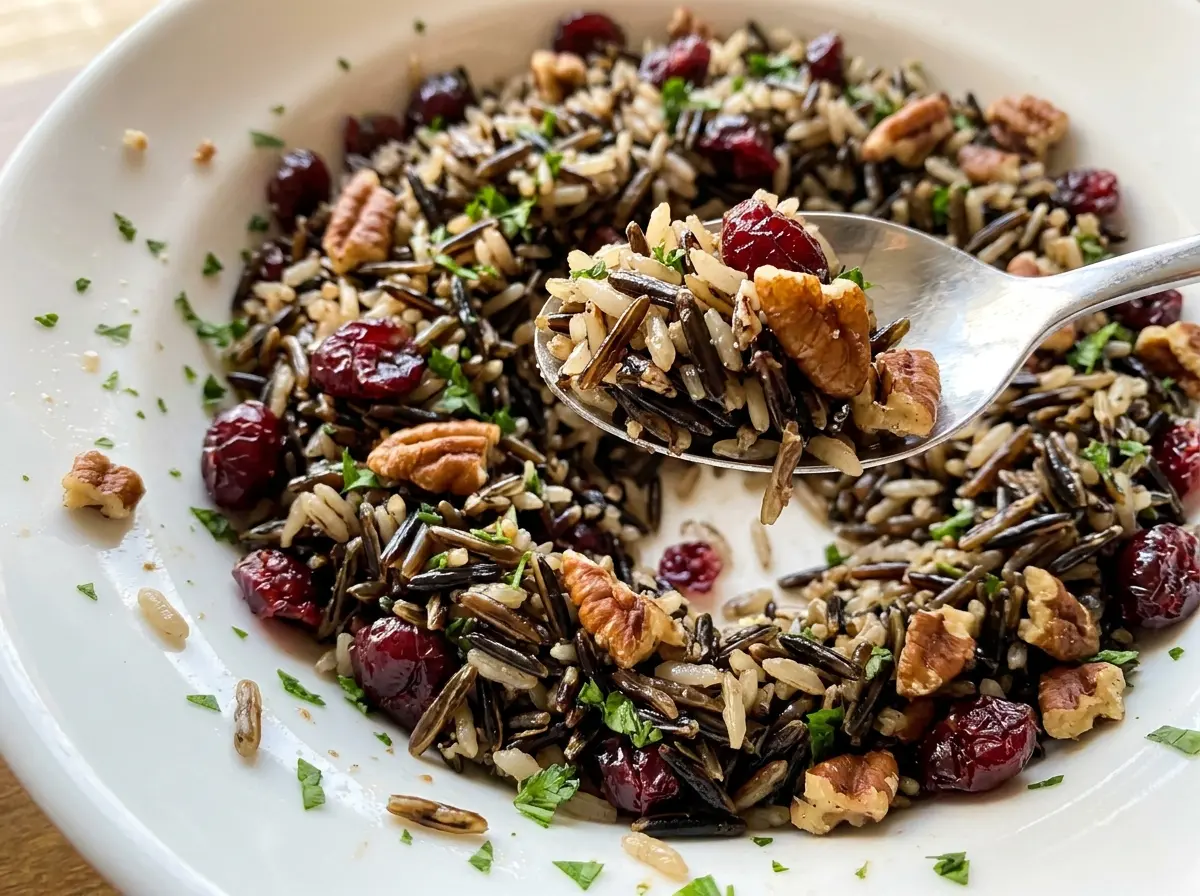
Save this cranberry pecan wild rice pilaf for a side with tender grains, tart cranberries, and a final fold of toasted pecans.
Wild Rice Doesn’t Need to Absorb Every Drop to Be Done
Wild rice behaves differently from white rice: as it cooks, the outer layer splits and the tender inside becomes visible. That split is a useful cue, but it doesn’t mean every grain will open at the same moment. Check the texture as well. You’re looking for grains that are tender to bite, not hard or chalky in the center.
The other surprise is the liquid. A covered pot doesn’t always finish with a dry bottom, even when the grains are ready; the amount left can vary with the rice and the way it simmers. Don’t keep cooking tender rice just to force every drop to disappear. Drain off what remains, then return the rice to the saucepan for the covered rest. This gives you a pilaf with separate grains rather than rice that has absorbed too much liquid and turned soft. Let tenderness and the split grains guide you, not the hope that the pot will be completely dry.
What Each Ingredient Adds to This Cranberry Pecan Pilaf

- Wild rice — Its firm, pleasantly chewy grains give the pilaf its structure and earthy flavor. Rinse and drain it before cooking. A wild rice blend isn’t a straight swap because its other grains can cook at a different pace.
- Pecans — Toasting brings out their rich, nutty aroma, and adding them at the end preserves their crunch. Fresh pecans matter more than a premium label; stale nuts can taste flat or rancid. Chopped walnuts work in the same amount, with a slightly earthier taste.
- Dried cranberries — Their tart-sweet chew cuts through the earthy rice and buttery base. Choose soft, pliable fruit rather than pieces that feel hard and dry. Dried cherries are a useful equal-for-equal swap, though they bring a deeper fruit flavor.
- Unsalted butter — It carries the onion and celery flavor into the rice without adding salt you can’t control. For a dairy-free version, olive oil can replace it in the same amount; the flavor will be a little less buttery.
- Yellow onion and celery — Finely chopping both helps them soften evenly and keeps the finished pilaf from having large crunchy pieces. Yellow onion is a good fit for its mild sweetness, and ordinary fresh celery works well here.
- Low-sodium chicken broth — It seasons the rice as it simmers while leaving room for the measured salt. For a vegetarian version, use the same amount of low-sodium vegetable broth; it gives the pilaf a lighter, less savory base.
Building the Pilaf in One Saucepan, Stage by Stage
Toast the Pecans Until Fragrant
Set a dry 3-quart saucepan over medium heat and add the chopped pecans. Stir often for 3 to 5 minutes, watching for a toasted smell rather than waiting for deep color. They can go from fragrant to scorched quickly, so stay nearby. Transfer them to a plate as soon as they’re ready; leaving them in the hot pan lets them keep cooking.
Soften the Onion and Celery in Butter
Melt the butter in that same saucepan over medium heat, then stir in the finely chopped onion and celery. Cook for 5 to 7 minutes, stirring occasionally. The vegetables should soften and turn glossy, not brown or crisp at the edges. If they start coloring quickly, lower the heat so they have time to soften before the rice and broth go in.
Simmer Until the Grains Split and Turn Tender
Stir in the rinsed, drained wild rice, broth, salt, and pepper, then bring everything to a boil. Cover the saucepan, reduce the heat to low, and simmer for 45 to 55 minutes. Keep the lid on during the simmer so the rice cooks in the broth rather than losing moisture too quickly. Near the end, check that grains have split and are tender; the exact finish can vary slightly with the rice.
Rest the Rice, Then Fold in the Pecans
If liquid remains once the rice is tender, drain it before returning the rice to the saucepan. Stir in the dried cranberries, cover, and let the pot stand off the heat for 10 minutes. Fold in the toasted pecans just before serving so they don’t sit in the covered rice and lose their texture. The finished pilaf should have distinct grains, softened fruit, and nuts you can still bite into.
Simple Swaps for a Different Take on Wild Rice Pilaf
Make It Dairy-Free and Vegetarian
Use olive oil instead of butter and low-sodium vegetable broth instead of chicken broth, keeping each swap one-for-one. The rice will still simmer and finish the same way, with a lighter, less buttery flavor.
Use Walnuts for a More Earthy Crunch
Swap chopped walnuts for the pecans in the same amount, and toast them in the dry saucepan just as you would the pecans. Walnuts have a slightly more assertive, earthy taste, but still give the soft rice a crisp finish.
Trade Cranberries for Dried Cherries
Use dried cherries in the same amount as the cranberries and stir them in during the covered rest. They make the fruit taste deeper and less tart, while keeping the same chewy contrast with the wild rice.
Storage and Reheating
- Refrigerator: Refrigerate leftovers within 2 hours and keep them covered for up to 4 days. The rice will firm up as it chills.
- Freezer: Freeze cooled pilaf in an airtight container for up to 1 month for best texture. Thaw it in the refrigerator; the grains may be a little softer after freezing.
- Reheating: Reheat covered in the microwave, stirring once, until the rice reaches 165°F. Leaving it uncovered can dry the grains before the center is hot.
Questions That Come Up With Wild Rice Pilaf
Cranberry Pecan Wild Rice Pilaf
Ingredients
Equipment
Method
- Toast the pecans in a dry 3-quart saucepan over medium heat for 3 to 5 minutes, stirring often, until fragrant.
- Transfer the pecans to a plate.
- Melt the butter in the same saucepan over medium heat.
- Add the onion and celery, and cook for 5 to 7 minutes, stirring occasionally, until softened.
- Stir in the wild rice, broth, salt, and pepper.
- Bring the mixture to a boil.
- Cover and reduce the heat to low.
- Simmer for 45 to 55 minutes, until the grains have split and are tender.
- If liquid remains, drain the rice.
- Return the rice to the saucepan and stir in the cranberries.
- Cover and let stand off the heat for 10 minutes.
- Fold in the toasted pecans.
- Serve.