As the onion, carrots, and celery soften in the Dutch oven, the kitchen starts to smell like the beginning of something substantial. That slow start matters here: the vegetables turn tender before the tomato paste and garlic go in, so their flavor has time to build without the garlic getting scorched. I make this Hearty Vegetable Barley Soup with White Beans when I want a one-pot meal that feels filling without relying on cream or a long list of extras.
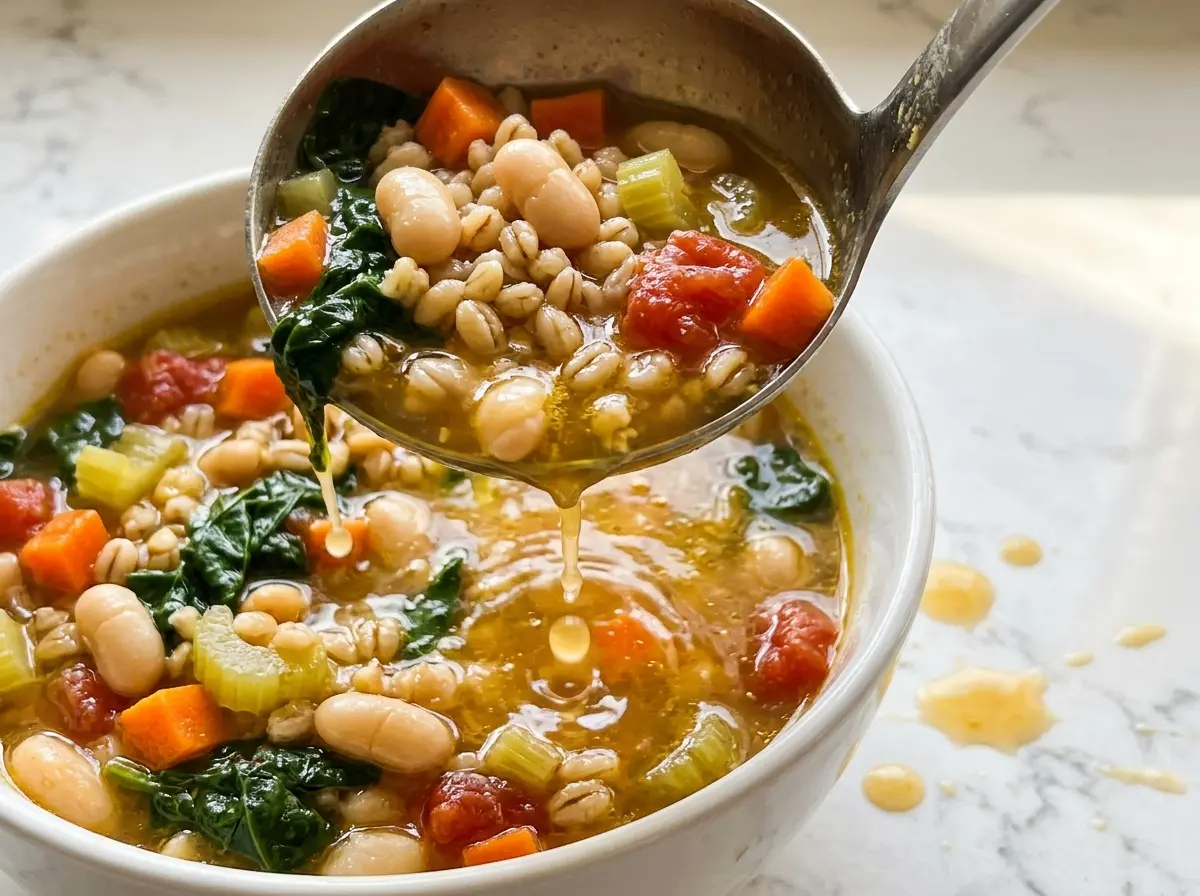
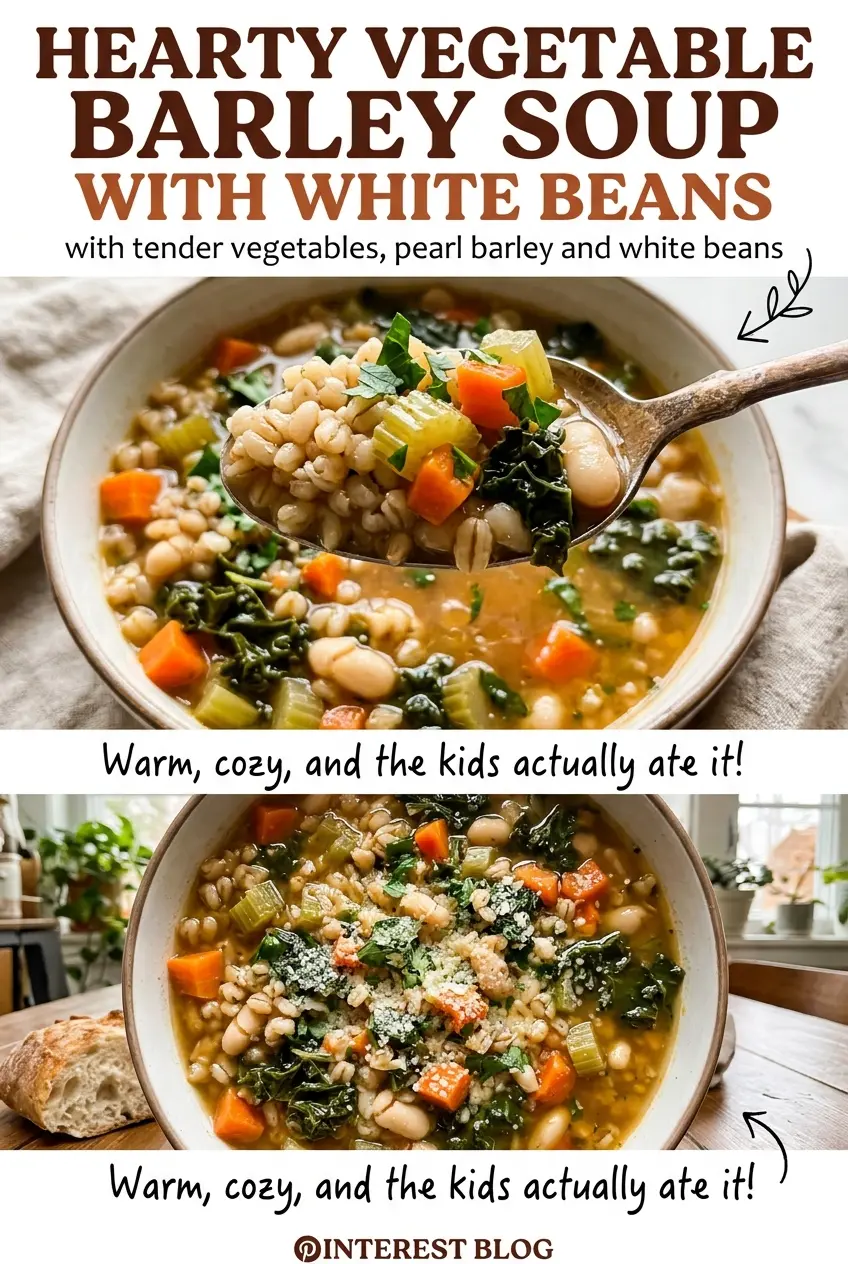
Pearl barley simmers right in the vegetable broth, where it takes on the savory flavor and gives the soup a satisfying, pleasantly chewy texture. Cannellini beans make each bowl more filling, and kale brings a fresh, green finish. A little lemon juice stirred in at the end brightens the whole pot. The result is a cozy vegetable soup with a broth that has some body and enough texture to make it feel like dinner.
Kitchen Note
I remove the bay leaf before stirring in the lemon juice, then let the soup rest for the full five minutes. That pause gives the fresh lemon a chance to brighten the broth without cooking away its lively edge.
Save this hearty vegetable barley soup for a chilly night when you want tender greens, creamy white beans, and a broth with real staying power.
Pearl Barley Gives the Broth Its Hearty Body
This soup gets its satisfying texture from the grain, not from cream or a flour-thickened base. As pearl barley cooks in the broth, it softens and releases some starch into the liquid. The broth becomes fuller while still staying light enough to taste the vegetables, thyme, and lemon. It’s a small shift, but it’s what makes a bowl feel like a meal rather than a cup of vegetable broth with a few grains floating in it.
The barley also gives every spoonful a gentle chew, which plays well against the tender cannellini beans and kale. Because it cooks in the pot with the broth, it absorbs those savory flavors along the way instead of tasting separate or plain. I keep the simmer gentle so the grains cook steadily and the soup stays cohesive. That balance—substantial broth, distinct grains, and soft vegetables—is what makes this version feel hearty without needing a richer base.
Choose Pearl Barley and Let the Vegetables Do Their Work
- Pearl barley — This is the right type for the simmering time and texture here. Rinsing it before it goes in removes loose surface starch and any dust from storage. Quick-cooking barley softens much faster, while hulled barley takes longer and stays chewier; either one changes the timing and texture.
- Onion, carrots, celery, and garlic — These make the savory base, so evenly diced vegetables are more useful than expensive produce. A white onion works in place of yellow, but keep the carrots and celery for the sweet, earthy balance they bring. Mince the garlic so it disperses through the soup instead of leaving large, sharp bites.
- Tomato paste — It adds a deep, savory note that helps the vegetable broth taste rounded. A standard can or tube is fine; what matters more is cooking it briefly with the aromatics before adding liquid, rather than stirring it into the finished soup.
- Vegetable broth — Choose a broth you like the taste of on its own, since it makes up most of the soup. A homemade broth works, and a store-bought one is convenient; low-sodium broth gives you more room to adjust the seasoning at the end.
- Cannellini beans — Their mild flavor and creamy texture sit nicely beside the barley. Great Northern beans are the closest easy swap; drain and rinse them the same way. Canned beans are a good choice here because they’re already tender and only need a short time in the pot.
- Kale and lemon juice — Remove the kale’s tough stems and chop the leaves so they’re easy to eat from a spoon. Fresh lemon juice has a brighter, cleaner finish, though bottled juice works if that’s what you have. The lemon keeps the beans and barley from making the broth taste heavy.
Build the Soup in Stages for Tender Barley and Greens
Soften the Onion, Carrots, and Celery
Heat the olive oil in a 6-quart Dutch oven over medium heat, then add the diced onion, carrots, and celery. Cook them for 6 to 8 minutes, stirring occasionally, until the vegetables have softened. The onion should look less crisp, and the carrots should begin to give slightly when pressed with a spoon. If the pan seems dry, keep stirring rather than letting the vegetables sit against the bottom.
Cook the Garlic and Tomato Paste Until Fragrant
Stir in the minced garlic and tomato paste once the vegetables are soft. Cook for about 1 minute, stirring so the paste coats the vegetables and the garlic doesn’t catch on the hot surface. You’ll smell the garlic and notice the tomato paste darken slightly. Don’t leave this step unattended; garlic can go from fragrant to bitter quickly.
Simmer the Barley in the Broth
Add the vegetable broth, rinsed pearl barley, dried thyme, kosher salt, black pepper, and bay leaf. Bring the pot to a boil, then lower the heat to maintain a gentle simmer and cover the pot partially. Cook for 30 to 40 minutes, stirring occasionally, until the barley is tender. A rolling boil isn’t needed; keep the bubbles calm so the barley cooks evenly without the bottom of the pot catching.
Finish with Beans, Kale, and Lemon
Stir in the drained, rinsed cannellini beans and chopped kale. Simmer for 5 to 8 minutes, until the kale has softened to your liking. Remove the bay leaf, stir in the lemon juice, and let the soup rest for 5 minutes before serving. The kale should be tender enough to eat comfortably but still hold its shape.
Easy Changes for a Different Pot of Barley Soup
Make It Gluten-Free with Quinoa
Replace the pearl barley with an equal amount of rinsed quinoa and use a gluten-free vegetable broth. Add the quinoa with the broth and simmer until tender according to its package timing, then add the beans and kale. The soup will be lighter, with a finer texture and less of the barley’s chewy body.
Give the Tomato Base a Little Heat
Stir a pinch of red pepper flakes into the garlic and tomato paste. They’ll infuse the broth with gentle heat as the soup simmers, without changing the barley’s cooking method. Add more only if you want the spice to be a noticeable part of each spoonful.
Swap in Great Northern Beans
Use drained and rinsed Great Northern beans instead of cannellini beans. They have a similar mild flavor and tender texture, so the change is subtle and doesn’t call for a different simmer time.
Storage and Reheating
- Refrigerator: Cool the soup in shallow containers and refrigerate within 2 hours. Keep it for 3 to 4 days; the barley will continue to absorb broth and soften.
- Freezer: Freeze in airtight containers, leaving a little room for expansion. It keeps its best quality for about 2 to 3 months, though the barley will be softer after thawing.
- Reheating: Warm it on the stovetop over medium-low heat, stirring in a splash of broth or water if it has thickened. Reheat leftovers to 165°F; avoid letting the pot boil hard, which can make the barley softer than you want.
Questions That Come Up While the Soup Simmer
Hearty Vegetable Barley Soup with White Beans
Ingredients
Equipment
Method
- Heat the olive oil in a 6-quart Dutch oven over medium heat, then add the onion, carrots, and celery and cook, stirring occasionally, until softened, about 6 to 8 minutes.
- Stir in the garlic and tomato paste and cook until fragrant, about 1 minute.
- Add the vegetable broth, barley, thyme, salt, pepper, and bay leaf, and bring to a boil.
- Reduce the heat to maintain a gentle simmer and cover partially.
- Cook until the barley is tender, about 30 to 40 minutes, stirring occasionally.
- Stir in the cannellini beans and kale and simmer until the kale is tender, about 5 to 8 minutes.
- Remove the bay leaf.
- Stir in the lemon juice.
- Let the soup rest for 5 minutes before serving.