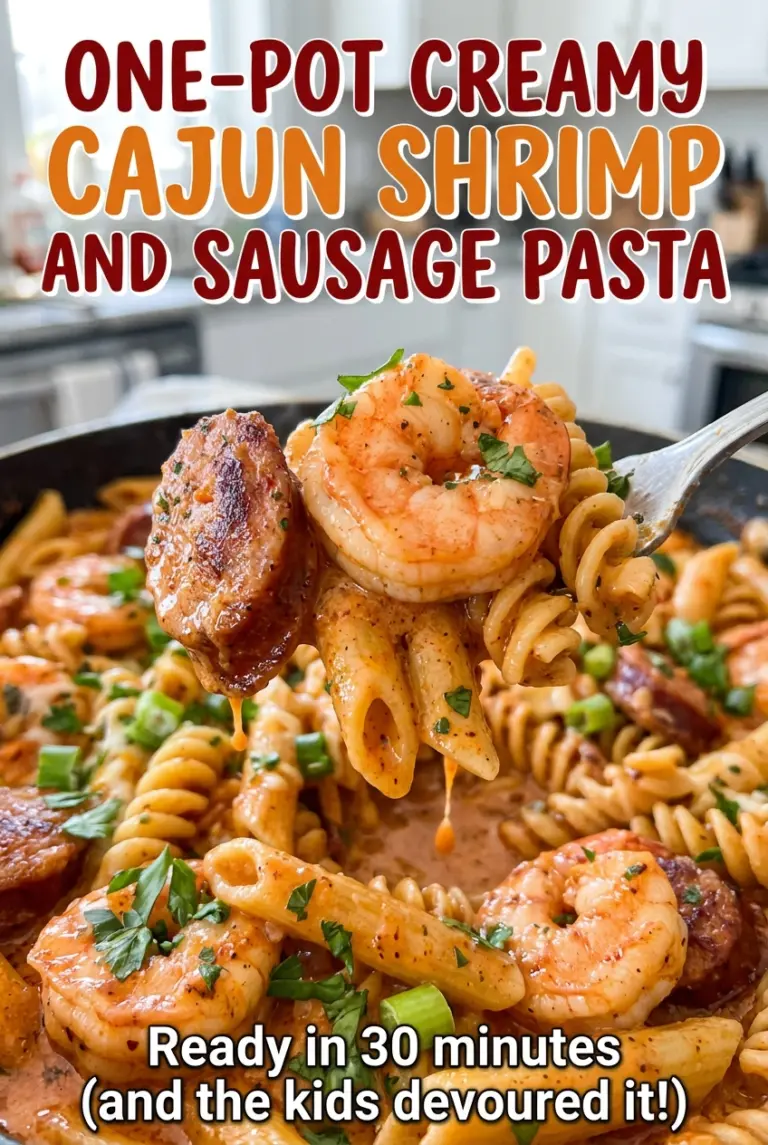
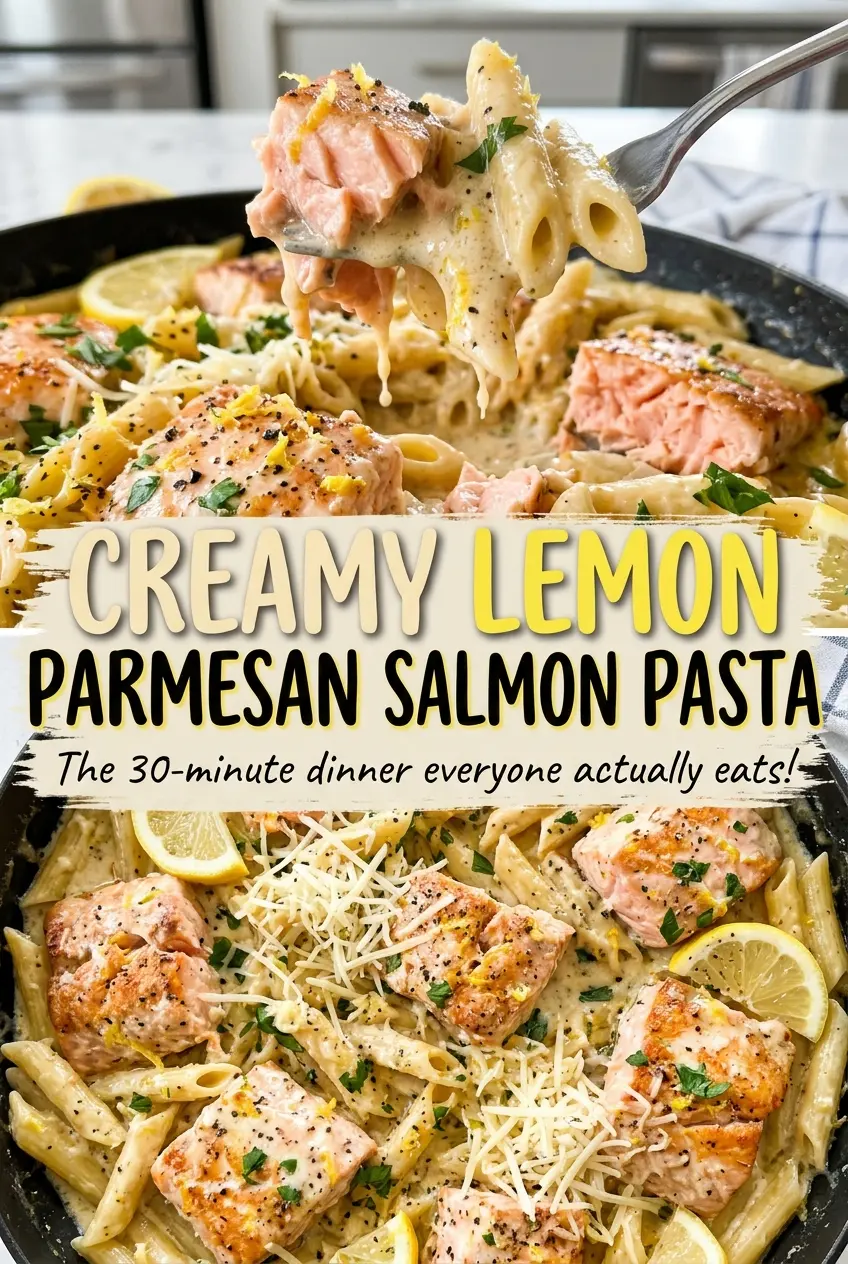
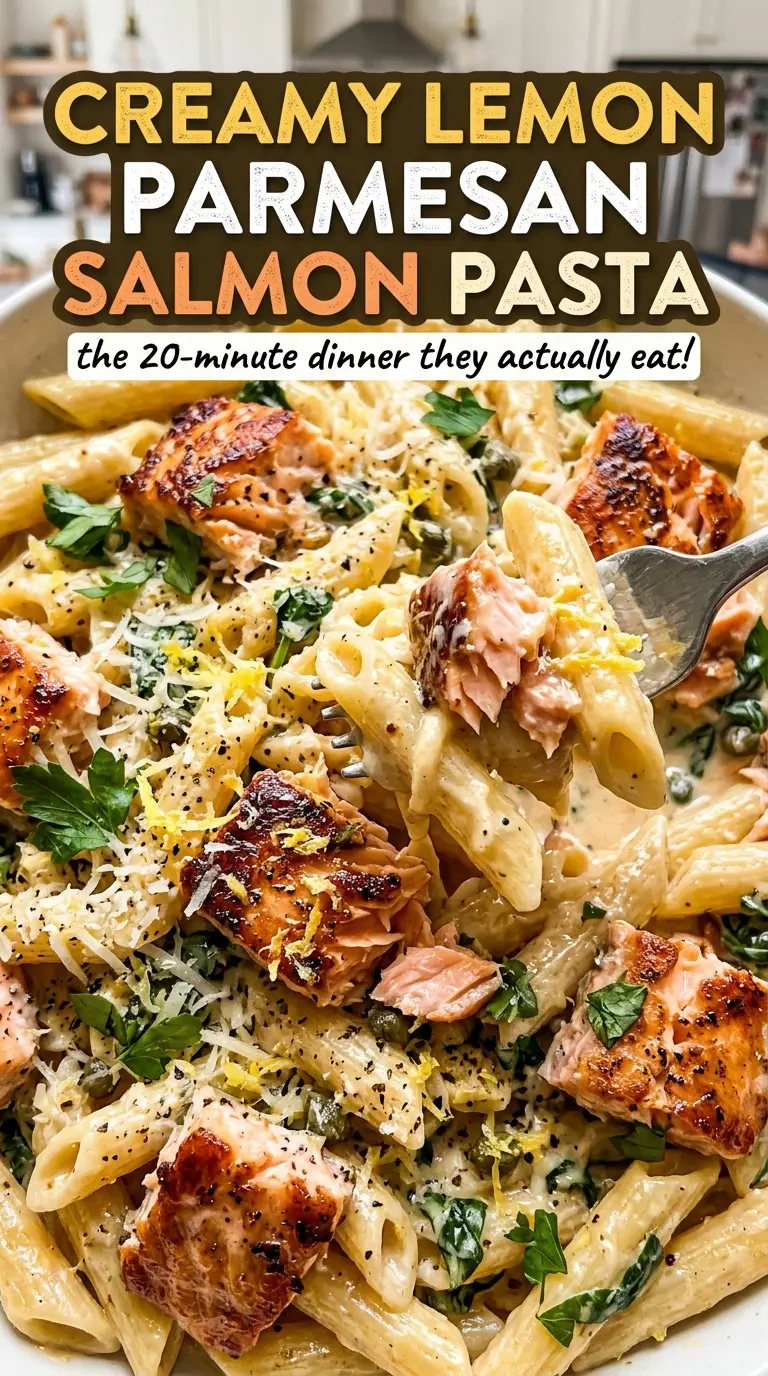
The salmon should sizzle as soon as it hits the skillet, then lift out in thick, tender flakes while the pasta finishes cooking. I like having both going at once: the fish gets a proper sear, and the fettuccine is ready to meet the cream sauce without sitting around. That timing is what makes this Creamy Lemon Parmesan Salmon Pasta feel like a complete dinner instead of a bowl of noodles with fish on top.
The sauce comes together in the same skillet, so the butter and garlic pick up the savory bits left behind by the salmon. Parmesan melts into the cream, while lemon zest and juice keep it from tasting heavy. A little reserved pasta water helps the sauce cling to the fettuccine, and folding in the salmon at the end keeps those big pieces intact. You get silky noodles, bright lemon, and tender salmon in every forkful.
Kitchen Note
Set a measuring cup beside the colander before you drain the fettuccine. I reserve the full half cup, then start with a quarter cup in the skillet; that leaves enough to loosen the sauce without guessing.
Save this creamy lemon Parmesan salmon pasta for a dinner with tender salmon, silky fettuccine, and a bright lemon finish.
Why the Salmon Gets Its Own Sear Before the Cream Goes In
Salmon needs a brief stretch of direct heat to develop a lightly browned surface. If it goes into the cream while still raw, the sauce has to simmer long enough to cook the fish, and the fettuccine can turn soft before everything is ready. Searing the portions first gives the fish its own cooking time and leaves the skillet available for the sauce.
There’s a second benefit: the salmon stays in large pieces instead of disappearing into the noodles. Once it’s cooked, it only needs a gentle fold into the finished pasta to warm through. That keeps its tender texture distinct from the silky sauce, so each bite has both fish and fettuccine rather than a pan of broken-up salmon.
The skillet also carries flavor from one stage into the next. The browned bits left after searing mingle with the butter and garlic, making a fuller-tasting sauce without adding extra ingredients. It’s a small change in order, but it gives the dish a more savory base and keeps the salmon from being overhandled.
What Makes the Cream, Parmesan, and Lemon Work Together
- Salmon — A skinless fillet cut into portions sears evenly and flakes neatly into the pasta. Patting it dry matters more than buying the priciest cut; moisture on the surface can prevent browning.
- Fettuccine — The broad ribbons catch the cream sauce and hold onto Parmesan. Linguine works as a close swap, while a gluten-free fettuccine keeps the same shape for a gluten-free version; cook either by its package directions.
- Heavy cream and Parmesan — Cream gives the sauce body, and finely grated Parmesan melts into it more smoothly than coarse shreds. Choose a wedge and grate it finely if you can; pre-grated cheese is convenient, but it may leave the sauce less silky.
- Whole lemon — The zest brings fragrant lemon oils, while the juice gives the cream a bright, tart edge. A fresh lemon matters here because juice alone can’t replace the aroma of the zest.
- Garlic and fresh parsley — Minced garlic perfumes the butter quickly, and chopped parsley adds a fresh finish. Mince the garlic before it goes into the skillet so it cooks evenly during its short time in the butter.
How to Time the Pasta, Salmon, and Sauce in One Skillet
Cook the Fettuccine Until Just Al Dente
Bring 4 quarts of water to a boil in a 6-quart pot over high heat, then stir in 1 tablespoon kosher salt. Add 12 ounces of fettuccine and cook according to the package directions, usually 8–10 minutes, until just al dente. Start the salmon while the pasta cooks so the noodles aren’t left waiting. Before draining, reserve 1/2 cup of the pasta water.
Sear the Salmon Without Crowding the Pan
Pat 1 pound of skinless salmon dry, then season the four portions with 1/2 teaspoon kosher salt and 1/4 teaspoon black pepper. Heat 1 tablespoon olive oil in a 12-inch skillet over medium-high heat. Cook the salmon for 3–4 minutes per side, until the thickest part reaches 145°F, then transfer it to a plate. If the pieces don’t fit comfortably, avoid pressing them together; contact with the hot skillet helps them brown.
Build the Lemon Parmesan Sauce
Melt 2 tablespoons unsalted butter in the same skillet over medium heat. Add 3 minced garlic cloves and cook for about 30 seconds, just until fragrant; garlic can turn bitter if it browns. Stir in 1 cup heavy cream and bring it to a gentle simmer for 2–3 minutes. Reduce the heat to low before stirring in 3/4 cup finely grated Parmesan, the zest and juice of 1 lemon, until the cheese melts.
Coat the Noodles and Fold in the Salmon
Add the drained fettuccine and 1/4 cup reserved pasta water to the skillet, then toss until the sauce coats the ribbons. Add more of the reserved water a little at a time if the sauce looks too thick to move easily around the pan. Flake the salmon into large pieces and gently fold it in with 2 tablespoons chopped fresh parsley. Stop once the salmon is warmed through so the pieces stay tender.
Three Useful Ways to Adapt This Salmon Pasta
Make It Gluten-Free with Fettuccine
Use gluten-free fettuccine in place of the regular pasta and cook it according to its package directions. The sauce and salmon stay the same, though gluten-free noodles can soften quickly, so check them as they cook and drain them when just al dente.
Use Linguine for a Narrower Noodle
Swap the fettuccine for the same amount of linguine and follow the package timing. Its narrower strands make the finished dish feel a little lighter, but they still take well to the cream sauce and flakes of salmon.
Distribute the Salmon Through Every Serving
For smaller bites of fish throughout the bowl, break the cooked salmon into medium flakes instead of large pieces before folding it in. The flavor stays the same, but the salmon is spread more evenly through the fettuccine.
Storage and Reheating
- Refrigerator: Store leftovers in an airtight container for 3–4 days. The fettuccine will absorb some sauce as it sits, so it won’t be quite as silky as it is freshly made.
- Freezer: This dish doesn’t freeze well; the cream sauce can separate when thawed, and the pasta can turn soft.
- Reheating: Warm leftovers gently in a skillet over low heat with a small splash of water, stirring carefully. Heat to 165°F, and avoid high heat, which can make the sauce oily and the salmon dry.
Questions I Get Asked About This Lemon Salmon Pasta
Creamy Lemon Parmesan Salmon Pasta
Ingredients
Equipment
Method
- Bring the water to a boil in a 6-quart pot over high heat.
- Stir in the kosher salt.
- Add the fettuccine and cook according to package directions until just al dente, usually 8-10 minutes.
- While the pasta cooks, pat the salmon dry.
- Season the salmon with the salt and pepper.
- Heat the olive oil in a 12-inch skillet over medium-high heat.
- Cook the salmon for 3-4 minutes per side, until it reaches 145°F in the thickest part.
- Transfer the salmon to a plate.
- Reserve 1/2 cup pasta water.
- Drain the pasta.
- Melt the butter in the skillet over medium heat.
- Add the garlic and cook for about 30 seconds, until fragrant.
- Stir in the heavy cream and bring it to a gentle simmer for 2-3 minutes.
- Reduce the heat to low.
- Stir in the Parmesan, lemon zest, and lemon juice until the cheese melts.
- Add the pasta and 1/4 cup reserved pasta water, tossing to coat.
- Add more pasta water as needed to loosen the sauce.
- Flake the salmon into large pieces.
- Gently fold the salmon and parsley into the pasta until warmed through.