When the foil comes off, the potatoes should be nearly tender, but they still need a little time in the oven. That’s intentional: chicken breasts cook faster than potato cubes, and adding them later keeps the meat from spending the whole bake drying out. In this creamy ranch chicken and potato bake, each part gets the time it needs without making a separate pan dirty.
I whisk the creamy base until it’s smooth before the potatoes go in, so the ranch seasoning coats them instead of clumping in one spot. Yukon Golds turn soft and buttery under the foil, then the chicken and cheddar make the finished dish hearty enough to serve straight from the baking dish. After a short rest, the sauce settles around the tender potatoes and chicken.
Kitchen Note
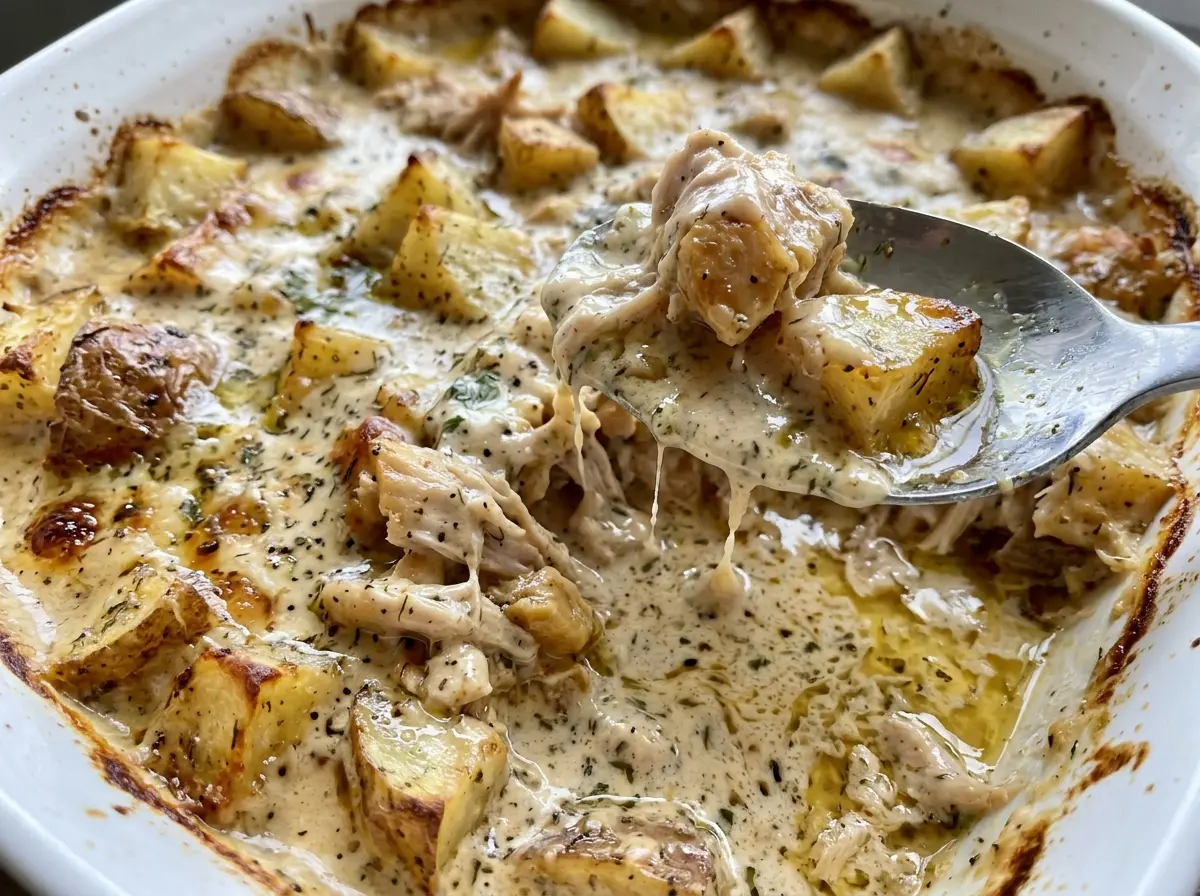
Give the bake the full 10-minute rest before serving. The sauce is loose and bubbling when it first comes out, but it settles around the potatoes as it rests.
Save this creamy ranch chicken and potato bake for a cozy one-dish dinner with tender potatoes and a cheddar top.
Why the Potatoes Get a Head Start Before the Chicken Goes In
Potatoes and chicken don’t reach tenderness on the same schedule. The potato cubes need time in the covered dish to soften, while bite-size chicken breast cooks comparatively quickly. Starting them together would leave the chicken in the oven longer than it needs, just to give the potatoes a chance to catch up.
That short first bake also gives the potatoes time to warm through in the seasoned cream mixture. When the chicken goes in, it gets stirred through the partially softened potatoes and sauce, so the meat cooks in the same dish without having to wait through the entire potato-cooking stage. Keep the cubes close to the specified size; larger pieces take longer to soften, and uneven pieces finish at different times. The two-stage timing is what lets the potatoes turn tender while the chicken stays moist.
What the Creamy Base and Yukon Golds Bring to This Bake

- Condensed cream of chicken soup — It gives the sauce a savory, spoon-coating base. The concentrated texture matters here because the potatoes release moisture as they bake; a thin soup would make a looser casserole. I stick with the condensed kind rather than trying to replace it with prepared soup.
- Sour cream and milk — Sour cream brings a gentle tang and body, while milk loosens the condensed soup enough to coat the potatoes. They work together rather than as interchangeable ingredients, so I don’t recommend swapping one for the other. Whisk them with the soup before adding the potatoes for an even mixture.
- Ranch seasoning mix — The packet distributes the ranch herbs and seasoning through the creamy base in one go. Since packet blends vary, use the full packet listed for this bake rather than adding extra seasoning by guesswork. Whisk until no dry pockets remain.
- Yukon Gold potatoes — Their creamy, buttery texture suits a saucy casserole, and they hold their shape while becoming tender. Cut them into even cubes so they cook at a similar pace. I wouldn’t swap in a potato with a very different texture and assume the same timing will hold.
- Boneless, skinless chicken breasts — They cook into neat, lean pieces that are easy to stir through the potatoes. Cut the pieces evenly so they finish together. Keeping them separate until the potatoes have had their first bake is more useful than choosing an especially large or small breast.
- Shredded cheddar — Cheddar melts over the top and gives the creamy casserole a savory finish. A sharper cheddar will make that topping taste more pronounced; use it in place of the regular shredded cheddar without changing the amount. Freshly shredded or packaged shredded cheddar both work here.
- Black pepper — It gives the creamy sauce a mild warmth without taking over the ranch seasoning. The amount is modest, so it adds background seasoning rather than a peppery bite.
Building the Bake in the Right Order
Whisk a Smooth Ranch Cream Base
Heat the oven to 375°F and lightly coat a 9×13-inch baking dish with cooking spray. In a large bowl, whisk the condensed soup, sour cream, milk, and ranch seasoning until the mixture looks smooth. Break up any visible streaks of sour cream or dry seasoning before moving on. Stir in the potato cubes until they’re coated all over.
Give the Potatoes Their Covered Bake
Spread the coated potatoes evenly in the prepared dish, then cover it tightly with foil. Bake for 30–35 minutes, until the potatoes are almost fork-tender. The foil should sit snugly over the dish so the potatoes cook in the trapped heat and moisture. At this point, they should be close but not fully tender.
Stir in the Chicken and Pepper
Add the chicken pieces and black pepper to the dish, then stir to distribute them through the potatoes and sauce. Cover the dish again and bake for 20–25 minutes. Check a few chicken pieces in the center with an instant-read thermometer; they need to reach 165°F, and the potatoes should be tender. If a piece is still below temperature, return the covered dish to the oven and check again shortly.
Melt the Cheddar on Top
Uncover the dish and sprinkle the cheddar evenly over the surface. Bake for 5–8 minutes, just until the cheese has melted across the top. Watch the edges as it finishes; the goal is a melted layer, not a browned or dried-out topping. Let the bake rest for 10 minutes before serving.
Three Useful Ways to Adapt the Ranch Chicken Bake
Use Gluten-Free Soup and Ranch Seasoning
For a gluten-free version, replace the condensed cream of chicken soup and ranch seasoning mix with versions specifically labeled gluten-free, keeping the same quantities. Their thickness and seasoning can differ by brand, so the sauce may have a slightly different taste or consistency. The remaining listed ingredients are naturally gluten-free, but check packaging for cross-contact information if that matters for your needs.
Make the Cheddar More Pronounced
Swap in shredded sharp cheddar for the unspecified cheddar. The bake keeps the same creamy center, but the cheese gives the top a more assertive, tangy finish. This is a flavor change, not a dairy-free option; the soup, sour cream, and milk still contain dairy.
Leave Off the Cheddar
For a less rich finish, omit the cheddar topping and serve the bake after the chicken and potatoes are tender. The casserole will still have its creamy ranch sauce, but you’ll miss the melted cheese layer. This change does not make the dish dairy-free.
Storage and Reheating
- Refrigerator: Store leftovers in a covered container for 3–4 days. The sauce thickens as it chills, and the potatoes soften a little more.
- Freezer: Freeze portions in airtight containers for up to 2–3 months. The potatoes may turn softer after thawing, and the creamy sauce may lose some of its smooth texture.
- Reheating: Warm covered in a 350°F oven until hot throughout, or heat a portion in the microwave, stirring partway through. Keep it covered while reheating; leaving it exposed can dry the chicken and edges before the center warms.
Questions That Come Up When Making This Casserole
Creamy Ranch Chicken and Potato Bake
Ingredients
Equipment
Method
- Heat the oven to 375°F.
- Lightly coat a 9x13-inch baking dish with cooking spray.
- In a large bowl, whisk together the cream of chicken soup, sour cream, milk, and ranch seasoning until smooth.
- Stir in the potatoes to coat them evenly.
- Spread the potato mixture in the baking dish and cover tightly with foil.
- Bake for 30–35 minutes, until the potatoes are almost fork-tender.
- Add the chicken and black pepper to the dish and stir to combine.
- Cover and bake for 20–25 minutes, until the chicken reaches 165°F and the potatoes are tender.
- Uncover and sprinkle the cheddar evenly over the top.
- Bake for 5–8 minutes, until the cheese is melted.
- Let the bake rest for 10 minutes before serving.