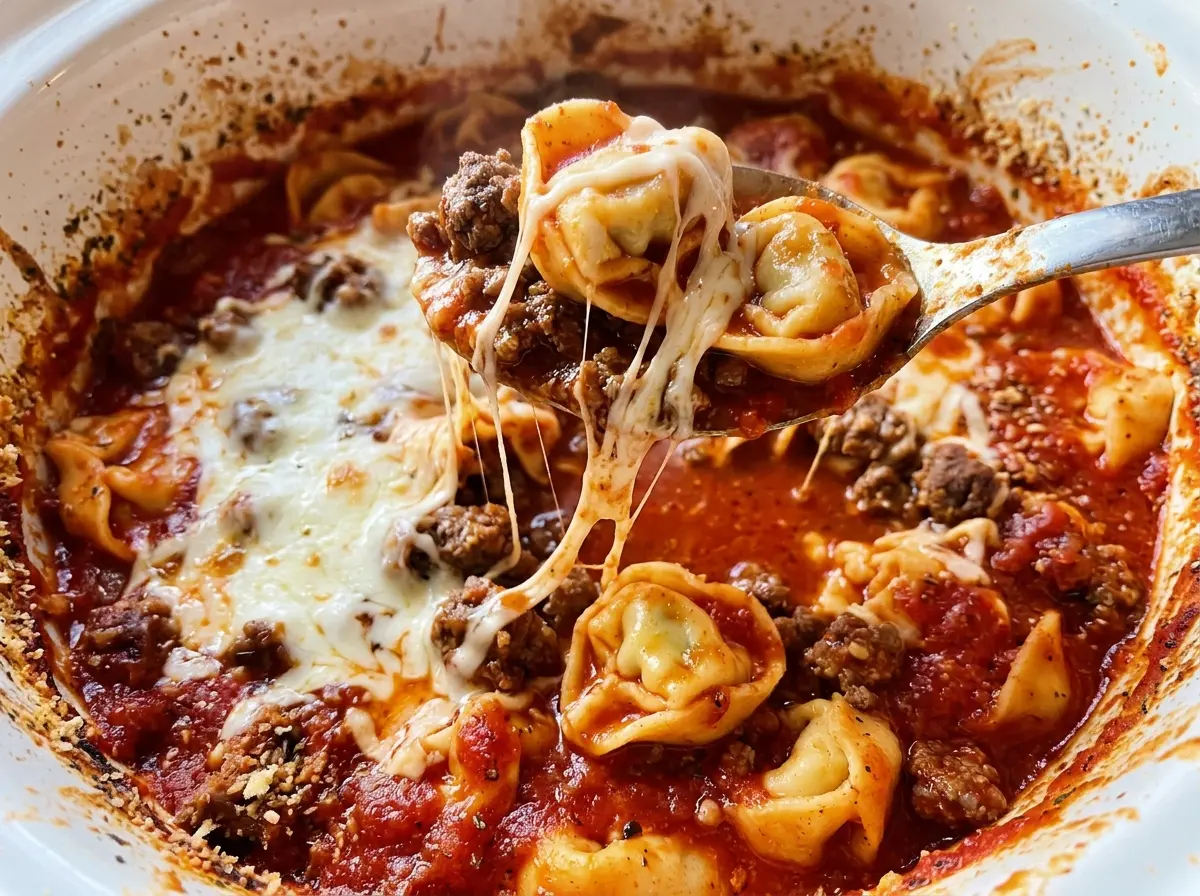
When I lift the slow-cooker lid, the mozzarella has melted into a soft, stretchy layer, and the tortellini underneath is tender without losing its shape. That last stretch of cooking is what makes Crockpot Cheesy Beef Tortellini feel like a proper pasta dinner instead of a pot of sauce with noodles stirred in.
I make this when I want a hearty meal that serves six without standing at the stove once the slow cooker is going. Ground beef and onion make a savory base, while marinara and beef broth give the sauce enough body to coat the cheese tortellini. A little time under the lid brings everything together, then the mozzarella melts over the top. It’s saucy, cheesy, and ready to spoon straight from the crock.
Kitchen Note
Let the finished pot stand for 5 minutes after the mozzarella melts. The sauce settles around the tortellini, and the first servings come out less loose.
Save Crockpot Cheesy Beef Tortellini for a cozy dinner night: tender cheese tortellini, savory beef, and a blanket of melted mozzarella.
Why the Beef Gets a Skillet Before It Goes Into the Crockpot
The slow cooker softens and simmers; it doesn’t brown ground beef. Cooking the beef and onion in a skillet first gives the meat a more developed, savory taste and keeps the finished sauce from carrying a pool of rendered fat. That’s especially helpful in a dish where the sauce and cheese tortellini share every bite.
Use a 12-inch skillet so the beef has room to spread out while you break it into small pieces. Crowding it into a smaller pan can make the meat steam in its own moisture instead of browning. The onion cooks alongside it, so it has time to turn tender before the longer slow-cooker simmer. Once the beef reaches 160°F, drain the excess fat rather than tipping it into the cooker with the meat.
This is a small extra step, but it gives the sauce a cleaner texture. After that, the slow cooker handles the longer cooking without needing you to stir or monitor it. The ground beef is already cooked when it goes into the crock, and the marinara and broth can simmer with it until it’s time to add the refrigerated tortellini.
Why Refrigerated Tortellini Matters More Than a Fancy Jar of Sauce

- Refrigerated cheese tortellini — Its cooking time is suited to the short, final stretch in the slow cooker. Frozen or dried tortellini won’t necessarily turn tender in the same window, so use the refrigerated kind for this timing. Keep it chilled until you’re ready to stir it in.
- Marinara sauce — A familiar jarred marinara does the heavy lifting, so an everyday brand is fine. Choose one you like by the spoonful; its tomato and herb flavor carries through the whole pot. A different jarred marinara is an easy swap without changing the method.
- Low-sodium beef broth — Broth loosens the marinara so the sauce can simmer around the meat and tortellini. Low-sodium gives you more control over how salty the finished dish tastes, since the marinara, seasoning, and cheese contribute their own saltiness.
- 85% lean ground beef — This lean-to-fat balance brings beefy flavor while still leaving excess fat to drain after browning. The quality of the package matters less than keeping the beef fresh and breaking it into small pieces as it cooks.
- Low-moisture mozzarella — Shredded low-moisture mozzarella melts into an even layer without adding the extra water that fresh mozzarella can release. A store-brand bag works well here; keep it refrigerated and sprinkle it evenly across the surface.
- Yellow onion, garlic, and Italian seasoning — These build a savory base beneath the tomato sauce. Dice the onion evenly so it softens along with the beef, and mince the garlic so it can cook briefly with the seasoning without leaving large raw-tasting pieces.
How to Layer the Beef, Sauce, Tortellini, and Cheese
Brown the Beef and Soften the Onion
Cook the ground beef and diced onion in a 12-inch skillet over medium-high heat for 8–10 minutes, breaking the beef into small crumbles as it cooks. The onion should be tender, and the beef should reach 160°F. If the pan is crowded, take a moment to break up clumps so there aren’t large pieces left in the mixture. Drain the excess fat before moving on.
Season Before the Slow Simmer
Stir the minced garlic, Italian seasoning, kosher salt, and black pepper into the skillet and cook for 30 seconds. That short time is enough to take the raw edge off the garlic; it shouldn’t sit in the pan long enough to brown. Transfer the beef mixture to a 6-quart slow cooker, then stir in the marinara and beef broth until the meat is coated. Cover and cook on LOW for 4–5 hours or HIGH for 2–3 hours.
Add the Tortellini Near the End
Stir the refrigerated cheese tortellini into the sauce, cover the slow cooker, and cook on HIGH for 25–35 minutes. Check a piece near the end of that window: the pasta should be tender through the middle, not firm or chewy. Slow cookers vary, so use tenderness as your cue rather than leaving the tortellini in longer than it needs. Stir gently so the pasta stays intact.
Melt the Mozzarella and Let the Pot Settle
Sprinkle the shredded mozzarella evenly over the tortellini, cover, and cook on HIGH for 5–10 minutes, until the cheese has melted. Keep the lid on during this short finish so the cheese warms evenly. Once it’s melted, let the dish stand for 5 minutes before serving. The sauce will settle around the pasta, making it easier to scoop neatly.
Three Swaps for a Different Take on Beef Tortellini
Turn Up the Heat with Spicy Marinara
Use a 24-ounce jar of spicy marinara in place of regular marinara. It adds a gentle chile kick throughout the sauce without changing the slow-cooker method; choose a milder spicy sauce if you want the beef and cheese to stay at the front.
Use Provolone for a More Savory Cheese Finish
Replace the mozzarella with the same amount of shredded provolone and melt it over the top in the same final cooking window. Provolone brings a sharper, more savory taste, while mozzarella keeps the finish milder and stretchier.
Make a Gluten-Free Version with Refrigerated GF Tortellini
When you can find refrigerated gluten-free cheese tortellini, use it in place of the regular tortellini. Gluten-free brands can cook at different rates, so check the package timing and begin checking for tenderness then rather than assuming it will take the same 25–35 minutes. The pasta texture may be a little different, but the beef and marinara base stays the same.
Storage and Reheating
- Refrigerator: Refrigerate leftovers within 2 hours and keep them covered for 3–4 days. The tortellini softens as it sits in the sauce.
- Freezer: Freeze portions in airtight containers for up to 2 months for the best texture. Thaw overnight in the refrigerator; the pasta may be softer after freezing.
- Reheating: Warm individual portions in the microwave, stirring partway through, or heat gently in a saucepan until the center reaches 165°F. Avoid high heat for a long stretch, which can make the tortellini mushy.
Questions That Come Up With Slow-Cooker Tortellini
Crockpot Cheesy Beef Tortellini
Ingredients
Equipment
Method
- In a 12-inch skillet over medium-high heat, cook the ground beef and onion for 8-10 minutes, breaking up the beef, until the beef reaches 160°F and the onion is tender.
- Drain excess fat.
- Stir in the garlic, Italian seasoning, kosher salt, and black pepper and cook for 30 seconds.
- Transfer the mixture to a 6-quart slow cooker and stir in the marinara sauce and beef broth.
- Cover and cook on LOW for 4-5 hours or HIGH for 2-3 hours.
- Stir in the refrigerated tortellini.
- Cover and cook on HIGH for 25-35 minutes, until the tortellini is tender.
- Sprinkle the mozzarella evenly over the top.
- Cover and cook on HIGH for 5-10 minutes, until the cheese is melted.
- Let stand for 5 minutes before serving.