The salmon skin can go from pale to beautifully browned in the time it takes to wonder whether the pan is hot enough. I wait for the canola oil to shimmer, then set each fillet skin-side down and press gently for the first few seconds. That steady contact helps the skin brown instead of curling away from the skillet, which is the difference between a crisp-edged surface and a patchy one.
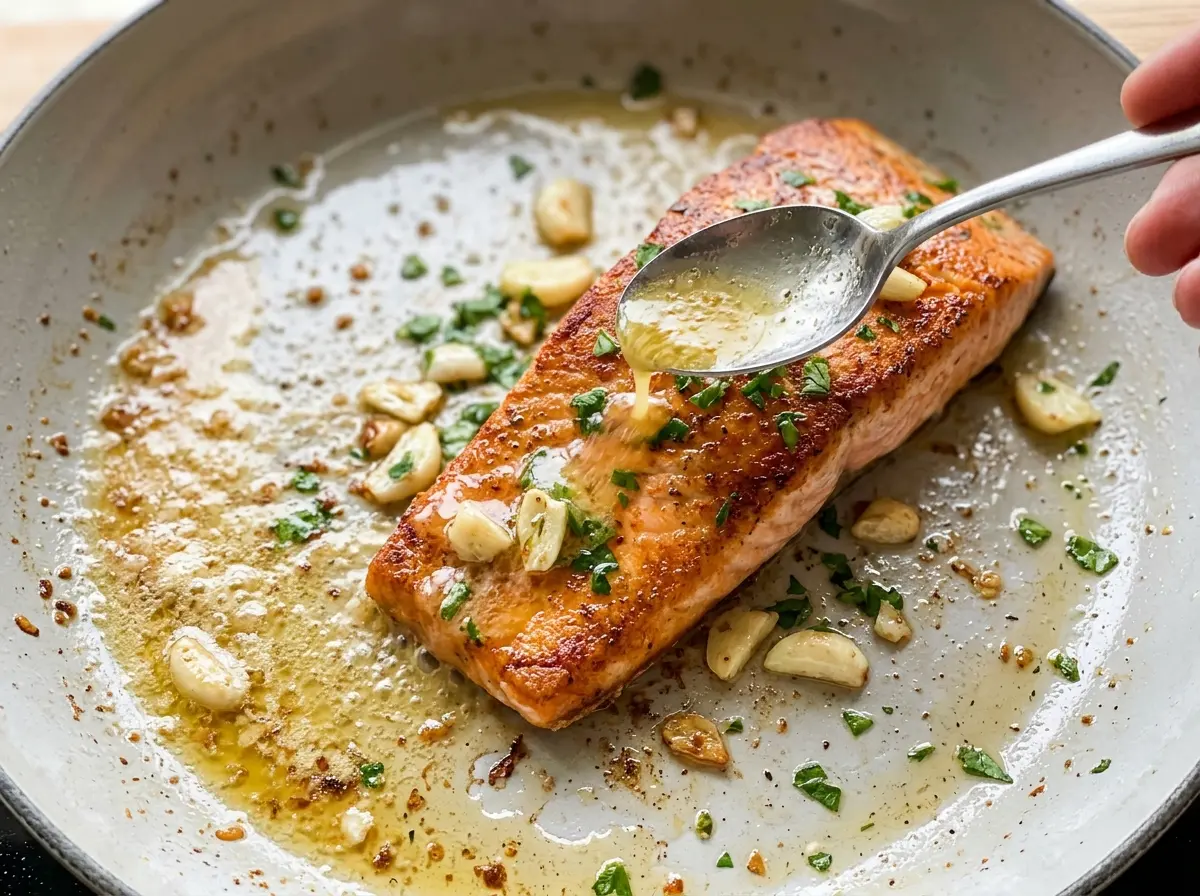
For this pan seared salmon in garlic butter, the fish finishes in the skillet before the butter sauce goes in. That keeps the garlic from spending too long over high heat, and gives it just enough time to turn fragrant without browning. A little lemon juice cuts through the buttery sauce, while fresh parsley brings a clean finish. The salmon stays tender beneath its browned skin, with warm garlic butter spooned over every fillet.
Kitchen Note
Garlic keeps cooking in the hot skillet, even after it looks ready. I pull the heat back before adding it and stay close, stirring until it smells fragrant but hasn’t taken on color.
Save Pan Seared Salmon in Garlic Butter for browned skin, tender fish, and a quick garlic-lemon finish.
Why the Salmon Turns Before the Sides Look Fully Cooked
Waiting for the entire side of a salmon fillet to turn opaque can leave the outside overcooked by the time the center is ready. I use the sides as a visual guide: when the opaque band has moved about halfway up the fillet, it’s time to turn. The center still has time to finish gently after the flip.
That halfway mark matters because these fillets are about an inch thick. They need a solid stretch skin-side down to brown, but they don’t need to sit there until every bit of flesh changes color. The skillet does two jobs in sequence: first it develops color on the skin, then it finishes cooking the thicker center after you turn the fish.
A 12-inch skillet gives four fillets room to sit in one layer. If the fish is crowded or the skillet hasn’t reached a shimmer, the skin is more likely to steam than brown. Start with a dry surface and let the pan do its work; repeated shifting interrupts contact and makes an even sear harder to get.
What the Salmon, Butter, and Lemon Each Bring to the Skillet

- Skin-on salmon — Similar thickness across the fillets makes the cooking window easier to manage. The skin protects the flesh against the hot skillet and is where the first browned texture develops. A specialty label matters less here than fillets that are close to the same thickness.
- Canola oil — Its neutral taste lets the salmon and butter stay in front. An ordinary bottle works well; the useful prep detail is patting the fillets dry before they hit the skillet, so excess moisture doesn’t get between the skin and the hot pan.
- Unsalted butter — It forms the rich base for the garlic sauce and keeps the seasoning under your control. Standard unsalted butter is all you need; there’s no need to seek out a specialty butter for a skillet sauce this quick.
- Garlic — Minced cloves release their aroma quickly, which is why they go into the skillet after the salmon has been transferred out. Mince them evenly so small pieces don’t brown long before larger pieces have turned fragrant.
- Lemon juice — The acidity keeps the butter from tasting heavy. Pure bottled lemon juice can stand in if that’s what you have; add it after the garlic has cooked, so it becomes part of the sauce rather than scorching in the pan.
- Fresh parsley — Chopped parsley brings a fresh, leafy note and a little color to the finished butter. It’s worth using fresh here because the chopped leaves are stirred in at the end, where their texture and brightness remain noticeable.
The Skillet Sequence for Browned Skin and Garlic Butter
Dry and Season the Fillets
Pat the salmon dry, then season it all over with the kosher salt and black pepper. Take a moment to get the skin dry as well as the flesh; moisture on the outside works against browning. Keep the fillets ready beside the stove before heating the skillet, since the skin goes down as soon as the oil shimmers.
Brown the Skin Without Letting It Curl
Heat the canola oil in a 12-inch skillet over medium-high heat until shimmering. Add the fillets skin-side down and press gently for the first 10 seconds to encourage the skin to lie flat. Cook for 4 to 5 minutes, watching the sides until they’re opaque about halfway up and the skin is browned. Don’t keep lifting a fillet to check; give it time to make contact with the pan.
Turn and Finish the Centers
Turn each fillet and cook for 2 to 4 minutes. Check the thickest part of each one rather than judging only by color at the edge; it should reach 145°F. If the fillets vary slightly, one may finish before another, so check each individually and transfer finished pieces to a plate.
Stir Together the Garlic Butter
Reduce the heat to medium-low, then add the butter and minced garlic to the same skillet. Stir for 30 to 60 seconds, until the garlic smells fragrant but hasn’t browned. Stir in the lemon juice and chopped parsley, then spoon the warm butter over the salmon on the plate. The sauce comes together quickly, so have the finishing ingredients ready before the butter goes in.
Three Small Changes That Give the Butter a Different Finish
Make It Parsley-Free
Leave out the chopped parsley and keep the garlic and lemon juice in the butter. The sauce will have a simpler, more direct garlic-and-lemon taste, without the fresh herbal finish.
Skip the Lemon for a Richer Sauce
Omit the lemon juice and stir the parsley into the garlic butter instead. The finish will taste fuller and less bright, so this is the choice when you want the butter to be the main note.
Leave Out the Garlic
For a milder finish, cook the butter without garlic, then stir in the lemon juice and parsley. You’ll lose the savory garlic aroma, but the lemon and parsley still give the butter a fresh, clear finish.
Storage and Reheating
- Refrigerator: Store leftover salmon in an airtight container and eat it within 3 to 4 days. The skin softens in storage, and the fish won’t have the same freshly browned texture.
- Freezer: Freeze cooked salmon in an airtight freezer-safe container for up to 2 to 3 months. Thaw it in the refrigerator before reheating; the texture will be softer than freshly cooked salmon.
- Reheating: Warm portions in the microwave at 50% power in short bursts, stopping when heated through to 165°F. High power can dry out the fish before the middle warms.
Questions That Come Up When Pan-Searing Salmon
Pan Seared Salmon in Garlic Butter
Ingredients
Equipment
Method
- Pat the salmon dry and season all over with the salt and pepper.
- Heat the oil in a 12-inch skillet over medium-high heat until shimmering, then add the salmon skin-side down. Cook for 4 to 5 minutes, pressing gently for the first 10 seconds, until the skin is browned and the sides are opaque about halfway up.
- Turn the fillets and cook for 2 to 4 minutes, until the thickest part of each reaches 145°F; transfer to a plate.
- Reduce the heat to medium-low and add the butter and garlic to the skillet. Cook for 30 to 60 seconds, stirring, until the garlic is fragrant but not browned, then stir in the lemon juice and parsley.
- Spoon the garlic butter over the salmon and serve.