
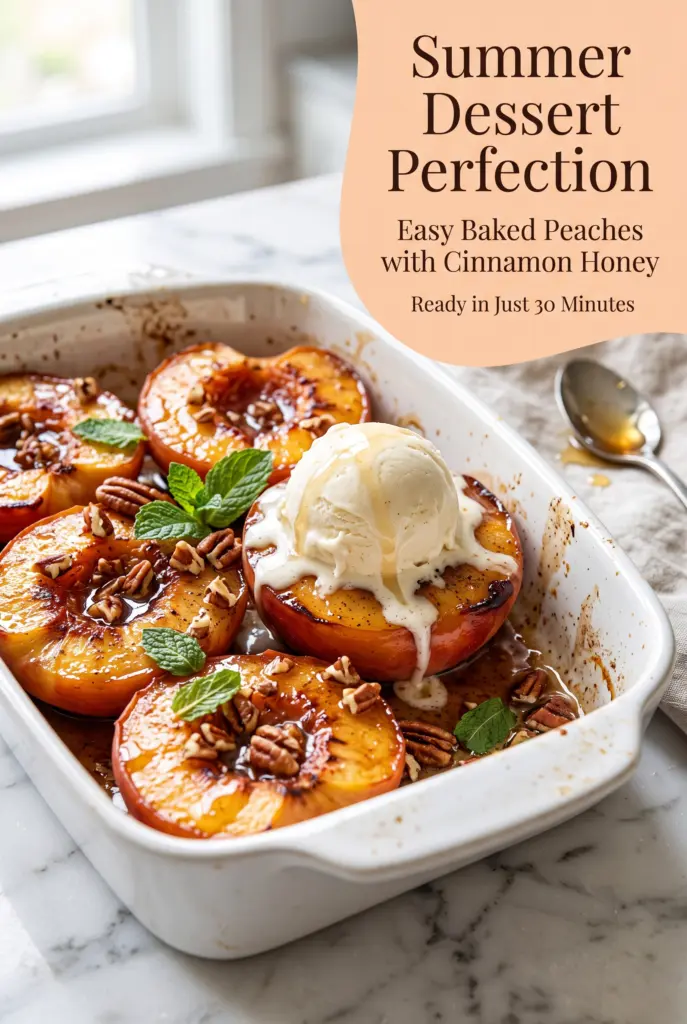
Easy Baked Peaches with Cinnamon Honey
Soft baked peaches turn into something special when the heat pulls out their juices and the edges start to caramelize in the pan. The fruit stays tender instead of collapsing…
Tip: save now, cook later.Soft baked peaches turn into something special when the heat pulls out their juices and the edges start to caramelize in the pan. The fruit stays tender instead of collapsing into mush, and the cinnamon-honey butter settles into every little crevice so each bite tastes glossy, warm, and just sweet enough. It’s the kind of dessert that looks almost effortless but lands like you spent a lot more time on it.
What makes this version work is the balance. The honey adds shine and a floral sweetness, while the brown sugar deepens the caramel notes as the peaches bake. Butter carries the spices and helps the topping coat the fruit instead of sliding off, and a small pinch of salt keeps the whole thing from tasting flat. If your peaches are ripe but still hold their shape, they’ll bake up beautifully without turning watery.
Below, I’ve included the small details that matter most, from choosing peaches that bake well to the best way to serve them warm so the juices stay in the dish instead of running everywhere.
The peaches came out tender but still held their shape, and the cinnamon honey sauce bubbled up into the pan just like I hoped. I spooned it over vanilla ice cream and my husband asked if I could make it again the next night.
Save these cinnamon honey baked peaches for the nights when you want a warm dessert with almost no effort and a spoonful of ice cream on top.
The Secret to Baked Peaches That Caramelize Instead of Turn Watery
The biggest mistake with baked peaches is using fruit that’s too soft. Once peaches pass that ripe-but-firm stage, they release too much juice in the oven and the topping thins out before it ever has a chance to caramelize. You want peaches that yield slightly when pressed but still feel intact. That way they soften in the oven without collapsing.
Cut-side up is the right move here because it holds the cinnamon honey mixture in the fruit instead of letting it spill into the pan immediately. Basting halfway through gives the peaches a glossy finish and helps the juices reduce around them. If the pan looks dry near the end, that usually means the peaches were a little underripe, not that the recipe failed.

The peaches do the heavy lifting, so start with fruit that smells fragrant at the stem and gives slightly when pressed. Freestone peaches are the easiest to pit cleanly, but any ripe peach works if you can remove the pit without tearing the fruit apart. Honey matters for the finish because it brings a smoother sweetness than granulated sugar alone. Brown sugar deepens the glaze, while the butter helps everything cling to the fruit instead of puddling at the bottom of the dish.
- Peaches — Use ripe but firm peaches. If they’re too hard, they’ll stay bland and chalky. If they’re too soft, they’ll slump. Nectarines work the same way if that’s what you have.
- Honey — This gives the peaches their glossy finish and a rounded sweetness. Maple syrup can stand in, but it tastes a little deeper and less floral.
- Brown sugar — This is what helps the sauce bubble and caramelize in the oven. White sugar works in a pinch, but you lose some of the molasses note that makes the topping taste richer.
- Butter — Melted butter helps the spice mixture coat the peaches evenly and gives the pan juices body. You can use plant-based butter if needed, but choose one that melts cleanly.
- Cinnamon and nutmeg — These spices should support the fruit, not bury it. Fresh cinnamon matters more than expensive nutmeg here, but both give the sauce warmth that plain sugar can’t.
- Vanilla extract — Vanilla ties the honey and fruit together. If you skip it, the peaches still work, but the sauce tastes flatter.
How to Build the Glaze So It Stays on the Fruit
Mix the topping first
Stir the melted butter, honey, brown sugar, vanilla, cinnamon, nutmeg, and salt together until the sugar starts to look damp and slushy. That keeps the spices from landing in one clump on a single peach half. If the butter is piping hot, let it cool for a minute before mixing so the honey doesn’t seize up.
Spoon, don’t pour
Arrange the peaches cut-side up in a lightly greased baking dish, then spoon the topping over each half. A spoon gives you control and keeps the glaze where it belongs. If you dump it all in one spot, the peaches at the edge of the dish won’t get enough coating.
Bake until the edges wrinkle and the juices thicken
The peaches need 20 to 25 minutes at 375°F, but the real cue is visual. The flesh should look soft and glossy, the cut edges should start to wrinkle, and the pan juices should bubble in a thin syrup. If the peaches are still firm at 25 minutes, they needed a little more time because they were on the underripe side.
Baste halfway through
Spoon the pan juices back over the peaches once during baking. That step deepens the color and keeps the tops from drying out. It also helps the cinnamon honey mixture reduce into a proper glaze instead of sitting like a loose sauce.
Three Ways to Make These Baked Peaches Work for What You’ve Got
Dairy-Free Version
Swap the butter for a dairy-free butter that melts smoothly. The peaches still caramelize well, but the sauce will taste a touch less rich, so keep the vanilla in place to add back some roundness.
Lower-Sugar Option
Reduce the brown sugar to 1 tablespoon and lean on the peaches and honey for sweetness. The topping won’t thicken quite as much, but the fruit flavor will come forward more clearly.
With Pecans or Walnuts
Sprinkle chopped pecans or walnuts over the peaches during the last 5 minutes of baking. They toast just enough to get fragrant without burning, and they add a crisp contrast to the soft fruit.
Serving It for Breakfast
Skip the ice cream and serve the warm peaches with Greek yogurt. The tang of the yogurt cuts the sweetness and turns the dish into something that works just as well on a breakfast table as it does after dinner.
Storage and Reheating
- Refrigerator: Store leftovers in an airtight container for up to 3 days. The peaches will soften more as they sit, and the sauce will thicken in the fridge.
- Freezer: Freezing isn’t ideal because the peaches lose their texture after thawing. If you do freeze them, expect a softer, more jammy result.
- Reheating: Warm gently in a 300°F oven until hot, or use short bursts in the microwave. High heat makes the fruit collapse and the glaze separate, so keep the reheating low and slow.
Answers to the Questions Worth Asking
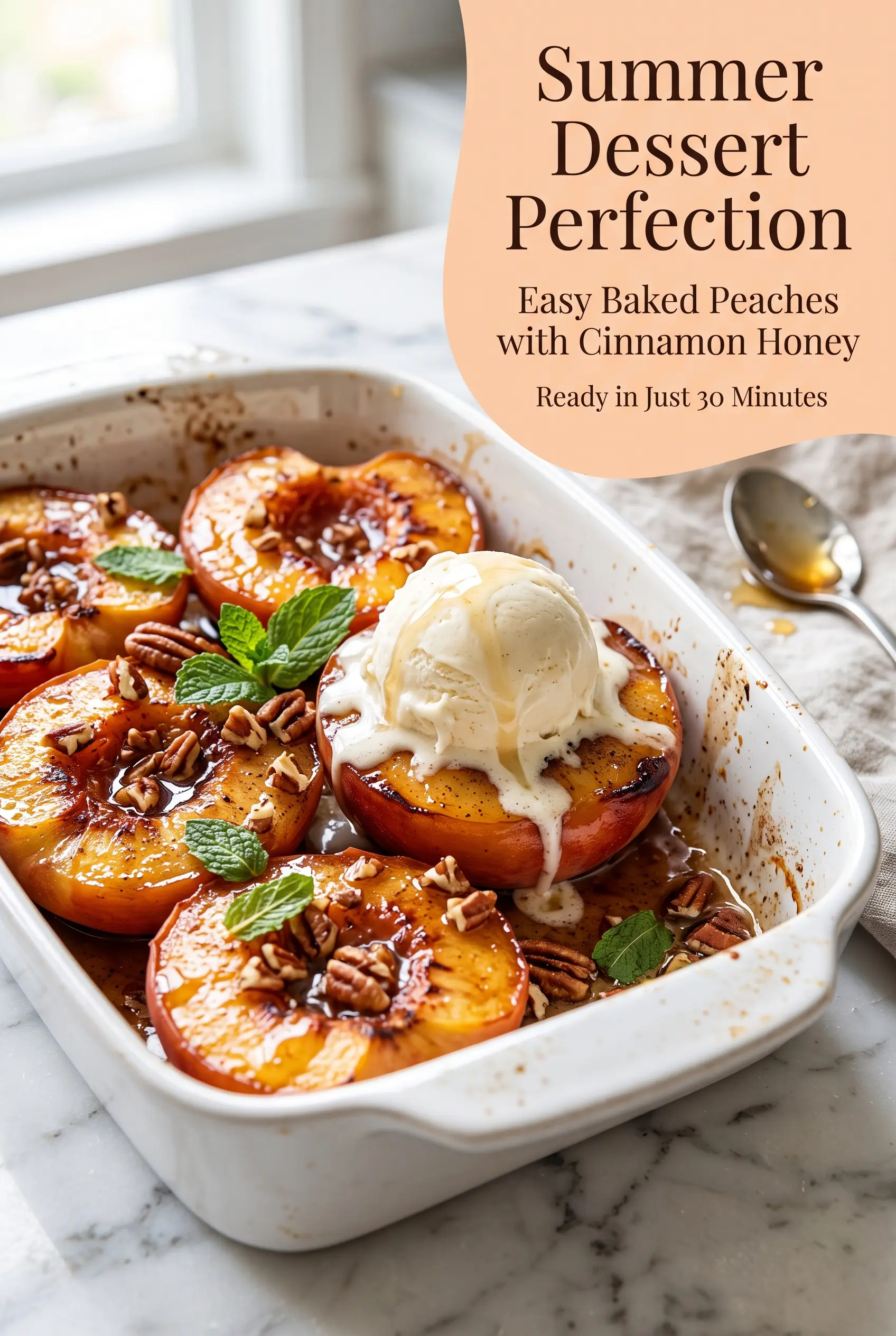
Easy Baked Peaches with Cinnamon Honey
Ingredients
Equipment
Method
- Preheat the oven to 375°F (190°C) and lightly grease a baking dish.
- Arrange the peach halves cut-side up in the baking dish.
- Stir together the melted butter, honey, vanilla extract, ground cinnamon, nutmeg, brown sugar, and salt until smooth.
- Spoon the cinnamon honey mixture evenly over each peach half so the tops are coated.
- Bake for 20–25 minutes, until the peaches are tender and lightly caramelized.
- At the halfway point, baste the peaches with the pan juices to help the caramelize evenly.
- Remove from the oven and let cool for 5 minutes.
- Serve warm, spooning over any extra pan juices.
- Top with vanilla ice cream, whipped cream, or Greek yogurt, if desired.
- Finish with chopped pecans or chopped walnuts and fresh mint leaves, if using.