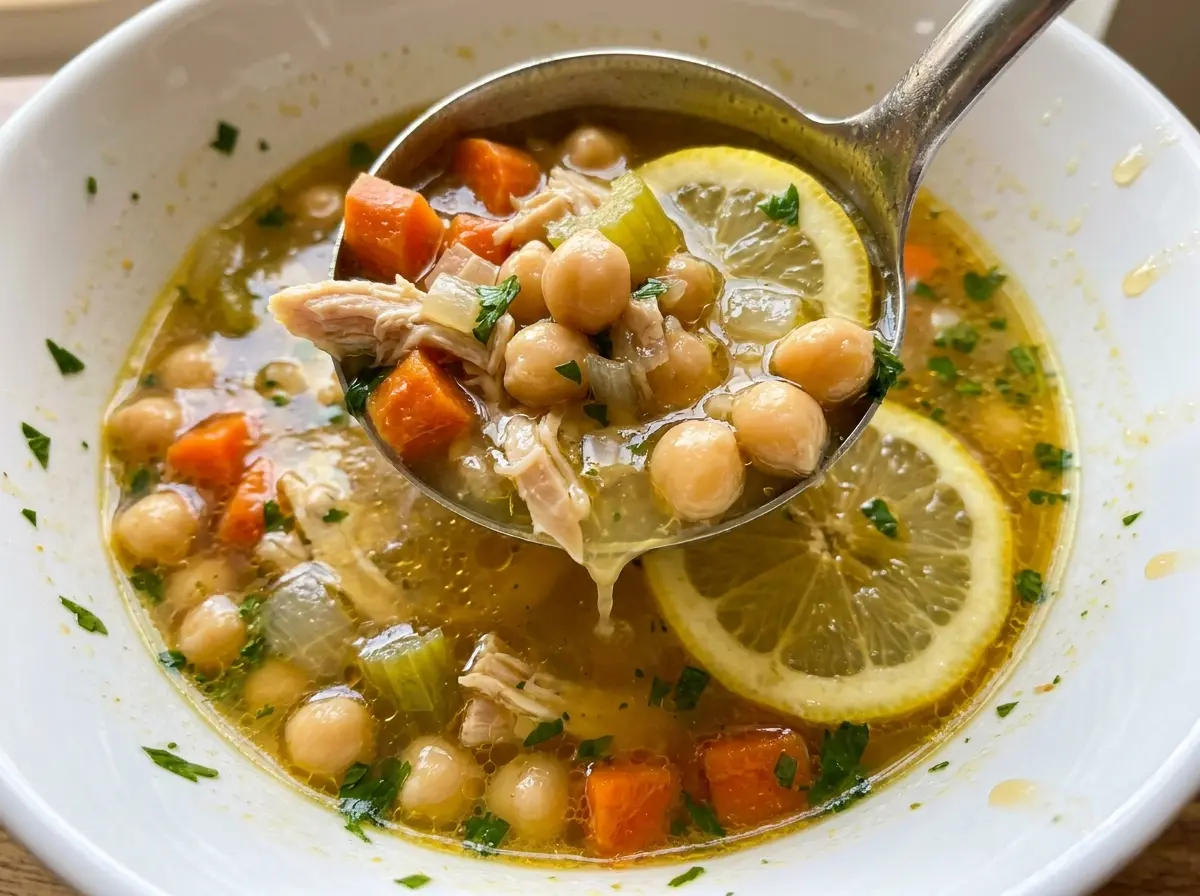
The carrots should be tender by the time the chicken is ready, but thick slices can still have a stubborn bite in the middle. I keep them close to a quarter-inch thick, so they soften with the onion and celery and fit easily on a spoon. That little bit of attention helps this easy chicken and chickpea soup with lemon come together as a balanced, hearty bowl.
I cook the chicken breasts whole right in the broth, then shred them once they’ve had a few minutes to rest. Chickpeas make the soup filling without extra fuss, and fresh lemon juice stirred in at the end gives the broth a lift that doesn’t get lost during the simmer. It’s a straightforward pot of soup with tender chicken, soft vegetables, and a bright finish.
Kitchen Note
Slice the carrots evenly, about 1/4 inch thick. They soften with the onion and celery, then finish cooking in the broth; oversized pieces can stay firmer than the rest of the vegetables.
Save this easy chicken and chickpea soup with lemon for tender chicken, hearty chickpeas, and a bright finish stirred in just before serving.
Why the Lemon Goes In After the Chicken Is Shredded
Lemon juice behaves differently when it spends the whole cooking time in a hot pot. Its fresh, lively edge fades, leaving the broth tasting less bright than you expect. Stirring it in near the end keeps that citrus note clear, so each spoonful tastes balanced against the savory chicken broth and earthy chickpeas.
That timing also gives you a chance to taste the broth before you add the lemon. The chicken and vegetables have already had time to flavor it, and the lemon can then sharpen the finish rather than cover up an underdeveloped base. Add the parsley at the same point; it brings a fresh herbal note that doesn’t need a long simmer.
This is a gentle finish, not a separate sauce or garnish to prepare. Once the chicken is shredded and back in the pot, stir in the lemon juice and parsley and let them cook together for one minute. The result is a soup that still tastes comforting and savory, but doesn’t feel heavy or flat.
What the Chickpeas and Broth Bring to the Pot

- Chicken breasts — Boneless, skinless breasts give the broth a mild chicken flavor while staying easy to shred. Fresh or frozen-from-the-store meat is fine, but thaw it before cooking so the pieces heat evenly. Boneless, skinless thighs can replace the breasts for a richer result; they may need longer to cook, so use the thermometer check in the method rather than relying only on the clock.
- Chickpeas — Canned chickpeas are convenient and hold their shape through a gentle simmer. The inexpensive cans work well here; drain and rinse them to remove the packing liquid before they go into the pot. They make the soup more substantial without competing with the lemon.
- Low-sodium chicken broth — A basic carton is a good choice because it lets the chicken, vegetables, and lemon stay distinct instead of starting with an overly salty base. Chicken stock works in its place and gives the soup a fuller, slightly richer body.
- Onion, carrots, and celery — These vegetables build the soup’s savory foundation before the broth goes in. A white onion can stand in for yellow onion with a slightly sharper flavor, while the carrots and celery are best sliced so they soften evenly.
- Garlic and olive oil — Freshly minced garlic gives the broth a more vivid aroma than dried garlic. A neutral cooking oil can replace the olive oil without changing the method, though you’ll lose its gentle fruity note.
- Lemon juice and parsley — Fresh lemon juice tastes brighter than bottled, and fresh parsley gives the finished broth a clean herbal lift. Bottled lemon juice works in a pinch; fresh dill can replace the parsley for a different, more pronounced herbal finish.
Build the Broth Without Overcooking the Chicken
Soften the Vegetables First
Heat the olive oil in a 6-quart pot over medium heat, then add the diced onion, sliced carrots, and celery. Cook for 5 to 7 minutes, stirring occasionally, until the vegetables have softened. They should look glossy and begin to lose their raw, firm edges, but they don’t need to brown. This short sauté gives the broth a more rounded base than adding the vegetables straight to the liquid.
Let the Garlic Turn Fragrant
Stir in the minced garlic and cook for 30 seconds, just until fragrant. Keep it moving so it doesn’t sit against the hot pot and turn brown. Garlic that browns can taste bitter in a mild broth, so add the liquid as soon as its aroma comes up. You’ll smell the change before you see much color.
Poach the Chicken at a Gentle Simmer
Add the chicken broth, chicken breasts, drained and rinsed chickpeas, bay leaf, kosher salt, and black pepper. Bring the pot to a boil, then lower the heat to maintain a gentle simmer and cook uncovered for 20 to 25 minutes. Look for small, steady bubbles rather than a rolling boil; vigorous bubbling can make the chicken tougher. Check the thickest part of a breast with an instant-read thermometer, and take the chicken out when it reaches 165°F.
Rest and Shred the Chicken
Move the cooked chicken to a cutting board and let it rest for 5 minutes while the soup keeps simmering gently. Resting gives the meat a moment to settle, which helps it shred cleanly instead of breaking into dry, ragged pieces. Use two forks to pull it into bite-size shreds, then return it to the pot. If a few larger pieces remain, pull them apart before stirring so each serving gets chicken throughout.
Finish With Lemon and Parsley
Remove and discard the bay leaf before adding the finishing ingredients. Stir in the fresh lemon juice and chopped parsley, then cook for 1 minute. The broth should smell bright and herbal, with the lemon lifting the savory base rather than overpowering it. Serve while the soup is hot.
Simple Swaps for a Different Pot of Soup
Use Cannellini Beans Instead of Chickpeas
Swap the chickpeas for drained and rinsed canned cannellini beans. They’re creamier and a little more delicate, so stir gently once they’re in the pot to keep them from breaking apart.
Make It Vegetarian With Vegetable Broth
Replace the chicken broth with vegetable broth and leave out the chicken breasts. The chickpeas still make the soup filling, though the broth will be lighter and less savory than the chicken version.
Trade Parsley for Fresh Dill
Use chopped fresh dill in place of the parsley for a more assertive, slightly grassy herb flavor that pairs naturally with lemon. Add it at the same late stage so its aroma stays fresh.
Storage and Reheating
- Refrigerator: Store in a covered container for 3 to 4 days. The broth may thicken slightly as it chills.
- Freezer: Freeze cooled soup in airtight containers for up to 3 months. The chickpeas may soften a little after thawing, but the soup holds up well.
- Reheating: Warm gently on the stovetop, stirring occasionally, until hot throughout. Avoid a hard boil, which can make the chicken less tender.
Questions That Come Up While Making This Soup
Easy Chicken and Chickpea Soup with Lemon
Ingredients
Method
- Heat the olive oil in a 6-quart pot over medium heat.
- Add the onion, carrots, and celery and cook for 5 to 7 minutes, stirring occasionally, until softened.
- Stir in the garlic and cook for 30 seconds, just until fragrant.
- Add the chicken broth, chicken breasts, chickpeas, bay leaf, salt, and pepper.
- Bring the soup to a boil.
- Reduce the heat to maintain a gentle simmer and cook uncovered for 20 to 25 minutes, until the chicken reaches 165°F in the thickest part.
- Transfer the chicken to a cutting board.
- Let the chicken rest for 5 minutes while keeping the soup at a gentle simmer.
- Shred the chicken with two forks.
- Return the shredded chicken to the pot.
- Remove the bay leaf.
- Stir in the lemon juice and parsley.
- Cook for 1 minute before serving.