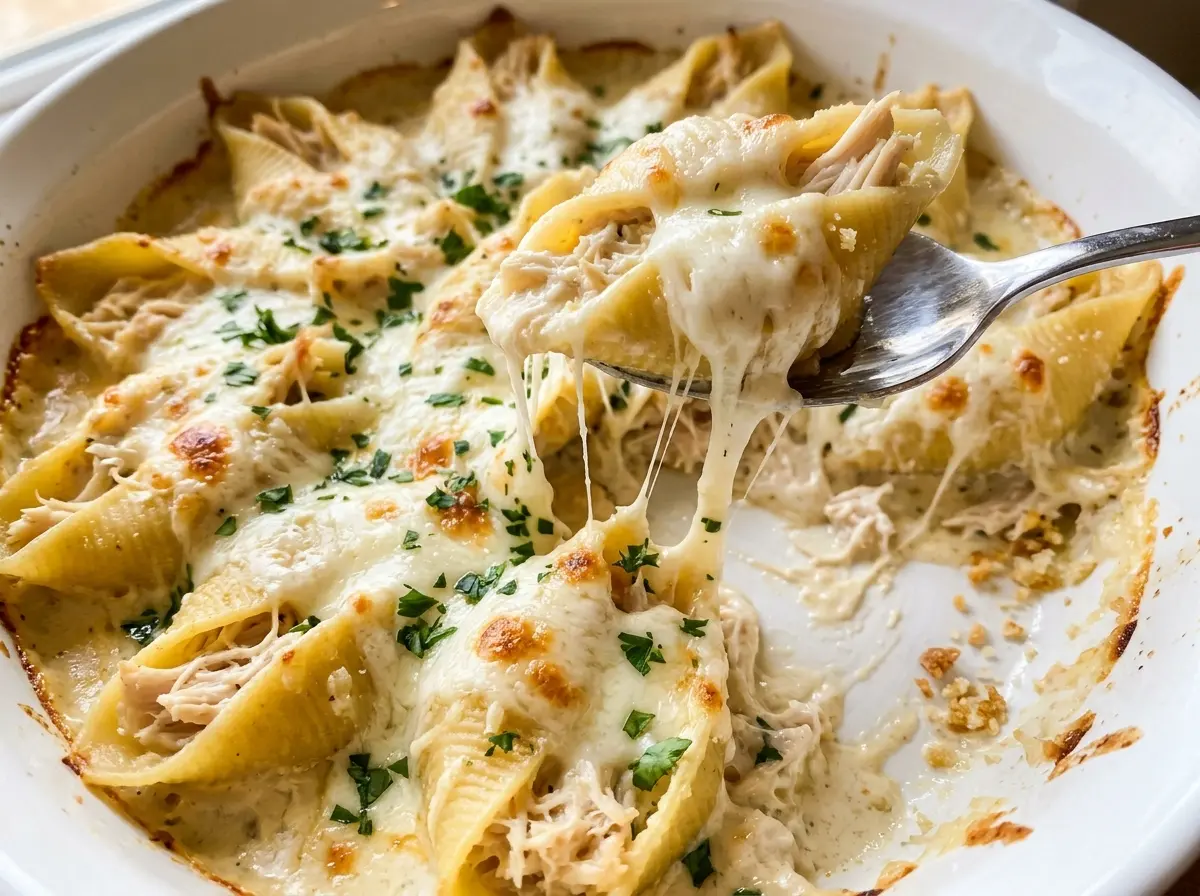
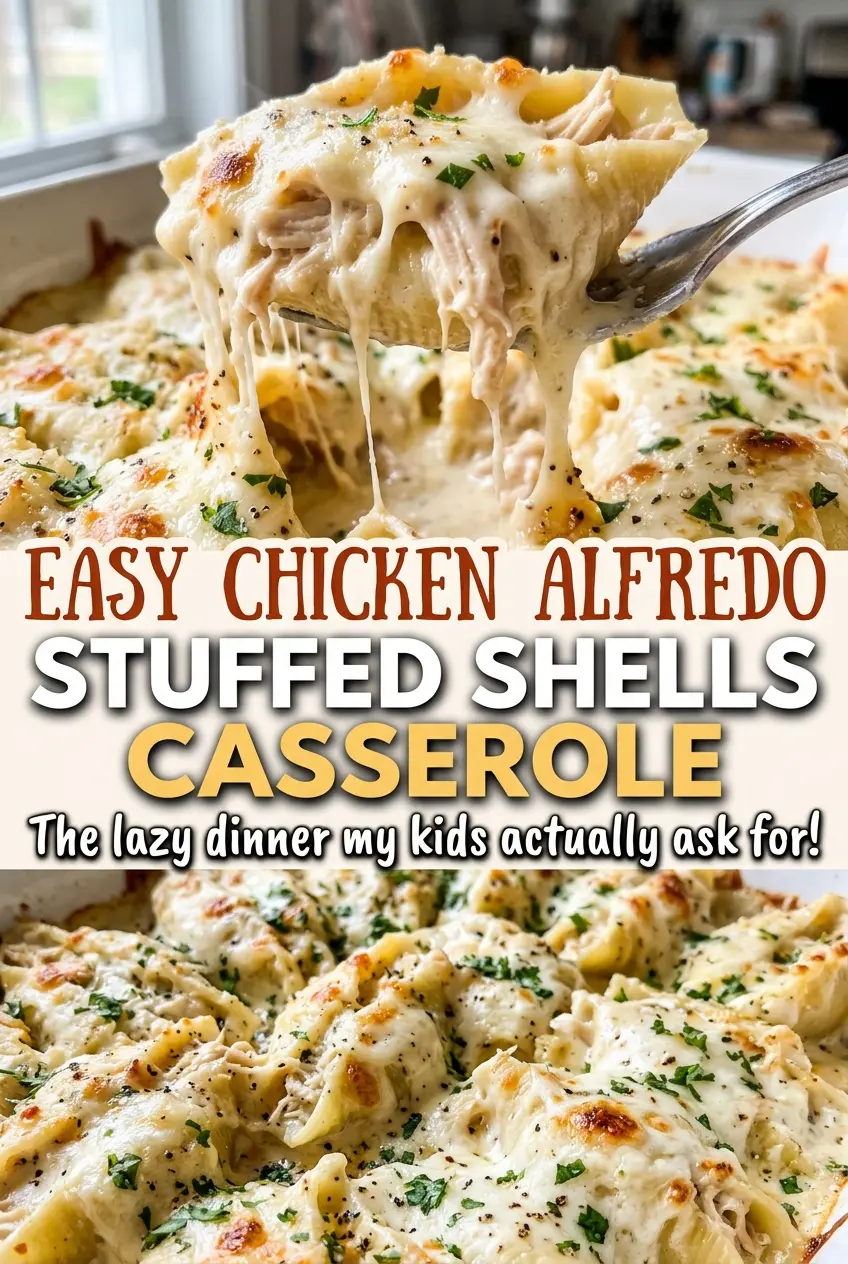
A jumbo shell can go from easy to fill to split and floppy while you’re still getting the filling ready. That’s why I cook the pasta only until it’s al dente: the shells have another stretch in the oven, and they need enough structure to hold the chicken mixture. These easy chicken Alfredo stuffed shells casserole-style are a cozy way to turn cooked shredded chicken into a full pan of dinner without making a separate sauce from scratch.
The filling combines chicken with whole-milk ricotta, egg, and seasonings, so it stays together inside the pasta instead of scattering through the dish. I spread Alfredo sauce under the shells and over them, then add mozzarella and Parmesan near the end of baking. The covered bake keeps the pasta nestled in sauce; the final uncovered minutes melt the cheese and let the sauce bubble around the edges. Each shell comes to the table creamy and full, with a soft, stretchy cheese top.
Kitchen Note
Give the casserole its full 10-minute rest before serving. The filling settles as it sits, so the shells are easier to lift without leaving all the ricotta behind in the dish.
Save these chicken Alfredo stuffed shells for a night when you want tender pasta, a creamy chicken filling, and bubbling cheese in one casserole.
Why Jumbo Shells Need to Be Firm Before They Go Into the Dish
Stuffed shells bake longer than the few minutes they spend being filled. After boiling, they go into the oven covered, then bake again uncovered while the sauce bubbles and the cheeses melt. That second cook is why the pasta should be al dente when you drain it, not soft enough to eat straight from the pot.
Overcooked shells are hard to fill neatly. They sag when you pick them up, and their edges split more easily as you spoon in the chicken and ricotta. On the other hand, pasta that is still too firm can feel tough after baking. Follow the package directions and check the texture near the end: the shell should bend without collapsing, with a slight firmness at its center.
Drain carefully, then give the shells a moment to cool enough to handle. You don’t need to force filling into a shell that’s fighting you; a gentle spoonful is easier to manage and leaves the pasta intact. That small bit of structure is what lets the shells stay distinct beneath the Alfredo instead of turning into a soft layer in the pan.
What the Ricotta, Alfredo, and Two Cheeses Each Bring
- Jumbo pasta shells — Their broad shape gives you room for a spoonful of filling and keeps each serving easy to portion. Choose an intact box with shells that aren’t badly cracked; a different pasta shape won’t give quite the same stuffed-shell presentation. If a gluten-free version is available, it works as an alternate, though the shells may be more delicate.
- Whole-milk ricotta — This makes the chicken filling creamy without needing a separate binder beyond the egg. Whole-milk ricotta has a fuller texture than low-fat versions. If you’re out, drain small-curd cottage cheese and pulse it smooth before mixing; it makes a tangier, slightly less silky filling.
- Cooked shredded chicken — Shreds tuck into the shells more evenly than large chunks, so pull or chop any long pieces before mixing. Leftover cooked chicken or rotisserie chicken is a convenient fit. The chicken doesn’t need to be an expensive cut; what matters is that it’s already cooked and tender enough to shred.
- Jarred Alfredo sauce — It coats the bottom and top of the casserole and keeps the pasta from baking dry. A smooth sauce you enjoy straight from the jar matters more here than a premium label, since its flavor carries through the whole dish. Prepared refrigerated Alfredo can replace jarred sauce, but its thickness and seasoning may vary by brand.
- Mozzarella and Parmesan — Mozzarella supplies the stretchy melted layer, while Parmesan adds a saltier, sharper finish. Freshly shredded mozzarella tends to melt more evenly, though pre-shredded cheese is convenient and works. A wedge of Parmesan gives a more pronounced flavor; packaged grated Parmesan is fine when that’s what you have.
From Al Dente Shells to a Bubbling Alfredo Casserole
Boil the shells without softening them too far
Heat the oven to 375°F and grease a 9×13-inch baking dish. Bring the water to a boil in a large pot, add the kosher salt and jumbo shells, and cook according to the package directions until al dente. Check a shell before draining rather than relying only on the timer, since package cook times vary. Drain the pasta gently so the shells stay whole for filling.
Mix a filling that holds together
In a large bowl, combine the cooked shredded chicken with the ricotta, egg, garlic powder, Italian seasoning, and black pepper. Stir until the chicken is spread through the ricotta instead of sitting in a few clumps. The mixture should look creamy and cohesive, not like separate piles of chicken and cheese. Break up long chicken strands as you mix so they’ll fit inside the shells.
Nestle the filled shells into sauce
Spread 1 cup of Alfredo sauce across the bottom of the prepared dish. Fill about 24 shells with the chicken mixture and arrange them in the sauce, keeping the openings facing up where possible. Pour the remaining Alfredo sauce over the shells so they’re well covered. If a shell tears, don’t force it closed; set it in the dish and keep the filling inside as best you can.
Cover first, then finish with cheese
Cover the dish tightly with foil and bake for 25 minutes. Take off the foil, sprinkle the mozzarella and Parmesan over the shells, and return the casserole to the oven for 10–15 minutes. Look for bubbling sauce and check that the center reaches 165°F; the middle can take longer to heat than the edges. If the cheese is melted but the center isn’t ready, continue baking until it reaches that temperature.
Three Ways to Adapt the Shells Without Losing Their Creamy Center
Use gluten-free jumbo shells
Replace the regular pasta shells with gluten-free jumbo shells, if you can find them, and cook them according to their package directions until al dente. Gluten-free pasta can be more fragile, so drain and fill the shells gently. The chicken filling and Alfredo sauce stay the same.
Give the cheese topping a sharper edge
Replace some of the mozzarella with provolone before scattering the cheese over the casserole. Provolone melts well but brings a more pronounced, savory flavor, so the top tastes less mild. Keep the Parmesan in place to preserve its salty finish.
Add a little heat to the filling
Stir a pinch of red pepper flakes into the chicken and ricotta mixture. The warmth spreads through the filling without changing the creamy texture, and you can keep the amount modest so it doesn’t overpower the Alfredo.
Storage and Reheating
- Refrigerator: Store covered or in an airtight container for 3 to 4 days. The pasta will soften a little and the Alfredo will thicken as it chills.
- Freezer: Freeze baked portions in airtight containers for up to 2 months for the best quality. Thaw overnight in the refrigerator before reheating.
- Reheating: Cover a portion and warm it in the oven until hot throughout, or microwave it in short intervals. Leaving it uncovered in the oven is the easiest way to dry the top and edges.
Questions About Making Chicken Alfredo Stuffed Shells
Easy Chicken Alfredo Stuffed Shells Casserole
Ingredients
Equipment
Method
- Preheat the oven to 375°F and grease a 9x13-inch baking dish.
- Bring the water to a boil in a large pot, add the kosher salt and jumbo pasta shells, and cook according to the package directions until al dente. Drain the shells.
- In a large bowl, mix the cooked shredded chicken, whole-milk ricotta cheese, egg, garlic powder, Italian seasoning, and black pepper.
- Spread 1 cup Alfredo sauce in the baking dish.
- Fill about 24 shells with the chicken mixture and arrange them in the dish.
- Pour the remaining Alfredo sauce over the shells.
- Cover the dish tightly with foil and bake for 25 minutes.
- Uncover the dish and sprinkle with the mozzarella and Parmesan.
- Bake for 10-15 minutes, until the sauce is bubbling and the center reaches 165°F.
- Rest the casserole for 10 minutes before serving.