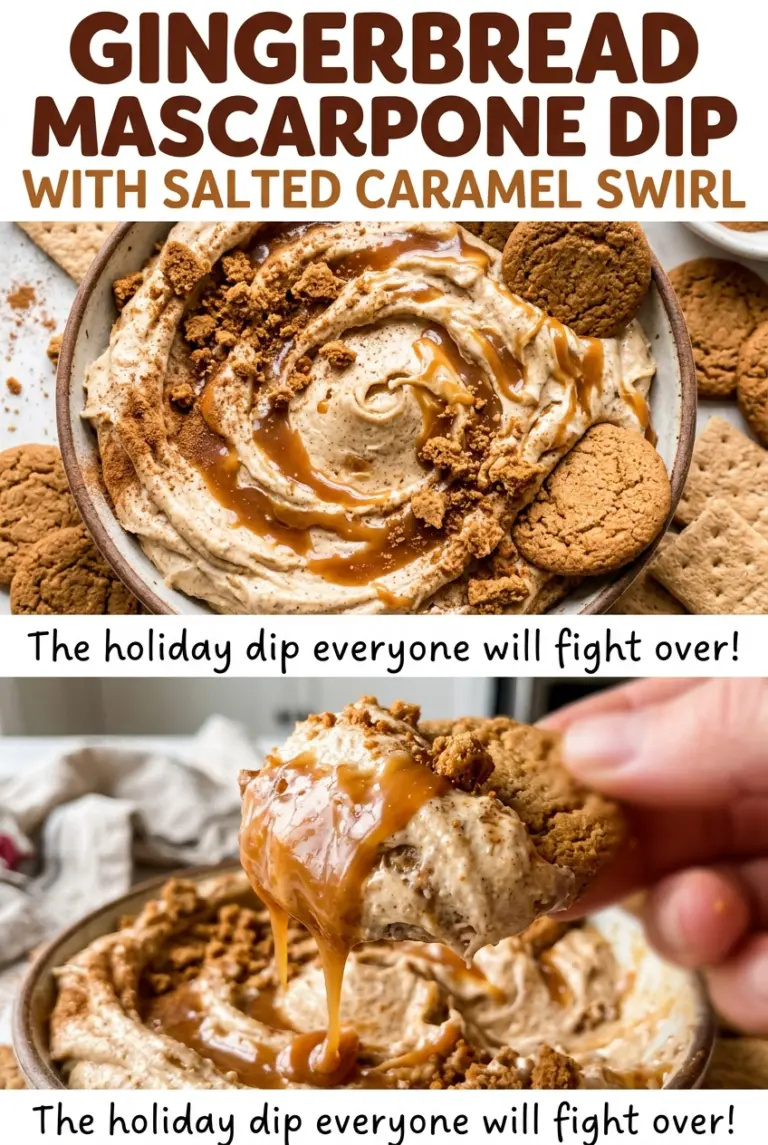
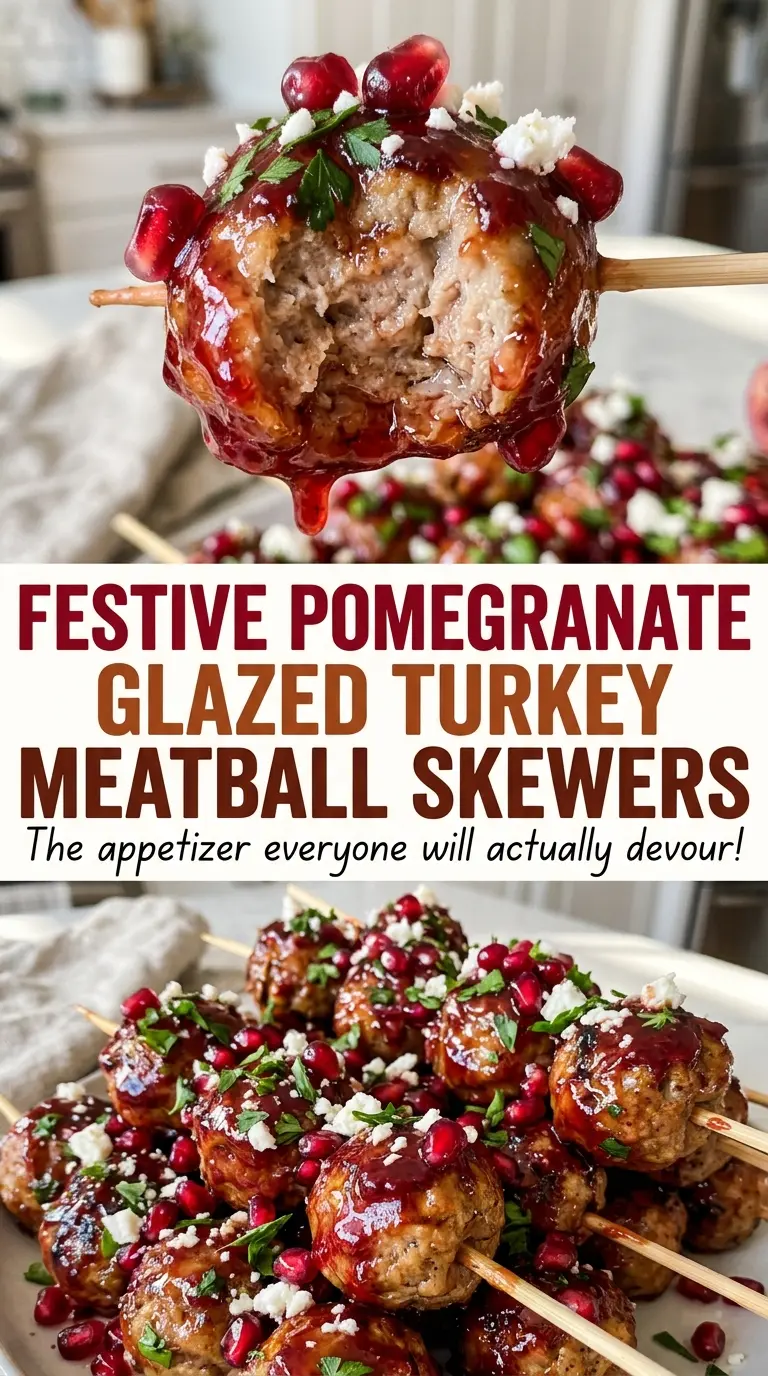
The pomegranate juice starts out thin and sharp in the saucepan, then turns deep ruby as it simmers. Once the cornstarch slurry goes in, it becomes glossy enough to cling to a spoon. That contrast is what makes these Festive Pomegranate Glazed Turkey Meatball Skewers feel special without requiring a complicated sauce.
I like using small turkey meatballs here because each one gets a good coat of glaze, with a little left over for dipping. The meatball mixture stays tender when it’s mixed gently, and finely grated Parmesan gives it a savory edge without making it heavy. Scatter the pomegranate arils and parsley over the finished skewers just before serving, and you get a bright, jewel-like platter of glazed turkey meatballs.

Kitchen Note
Whisk the cornstarch into cold water before it goes near the simmering glaze. That quick slurry blends in smoothly, while dry cornstarch can leave little lumps that are hard to whisk out.
Save these pomegranate-glazed turkey meatball skewers for a party platter with a glossy, tart-sweet finish and bright pomegranate arils.
Why the pomegranate glaze goes on after the meatballs leave the oven
The glaze has honey in it, so it’s better brushed onto the cooked meatballs than baked on from the start. At 400°F, a sweet coating can darken and turn sticky before the centers of the turkey meatballs are cooked through. Glazing after baking gives you a shiny finish without asking the sauce to withstand the full oven time.
There’s also a texture advantage. The reduced pomegranate juice and balsamic make a tangy, concentrated sauce, and the cornstarch gives it enough body to cling to the meatballs. Brush it on while the meatballs are warm, then serve the extra glaze on the side. That way each bite has a clear layer of tart-sweet sauce instead of a coating that disappears into the baking pan.
What keeps the turkey meatballs tender and the glaze balanced
- Plain breadcrumbs — They absorb moisture and help the turkey hold together without packing the mixture too tightly. Use plain rather than seasoned crumbs so the garlic, parsley, and Parmesan stay in balance.
- Finely grated Parmesan — A fine grate disperses through the meat mixture instead of leaving large, salty pockets. A standard grocery-store Parmesan works; the fine texture matters more here than buying an expensive wedge.
- Ground turkey — Choose plain, unseasoned turkey so you can control the salt and pepper. The small meatball size helps each piece cook through evenly and leaves plenty of surface for the glaze.
- Pomegranate juice, honey, and balsamic vinegar — The juice brings the fruit’s tartness, honey rounds it out, and balsamic keeps the glaze from tasting one-note sweet. Use pomegranate juice rather than a sweetened juice drink, which can throw off the balance.
- Pomegranate arils and fresh parsley — Add these at the end, not to the meat mixture. The arils give the finished skewers juicy pops of tartness, while fresh parsley keeps the garnish bright.
From a gentle turkey mix to glossy skewers
Mixing a tender turkey base
Heat the oven to 400°F and line a rimmed baking sheet with parchment paper. In a large bowl, combine the breadcrumbs, Parmesan, onion, garlic, parsley, egg, salt, and pepper before adding the turkey. Mix gently, stopping as soon as everything is combined; a heavy-handed mix can make turkey meatballs dense.
Shaping evenly sized meatballs
Shape the mixture into 24 meatballs, about 1 inch each, and arrange them on the prepared sheet. Keeping them close in size helps them cook at the same pace. If the mixture sticks to your hands, work with a light touch rather than pressing it into firm balls.
Baking until the centers are cooked through
Bake for 16–20 minutes, until the meatballs are cooked through and reach 165°F in the center. Check the center of a meatball with an instant-read thermometer rather than judging doneness from browning alone. Turkey can look browned on the outside while the middle still needs more time.
Reducing and thickening the pomegranate glaze
While the meatballs bake, combine the pomegranate juice, honey, and balsamic vinegar in a small saucepan. Bring it to a simmer over medium heat and cook for 8–10 minutes, until slightly reduced. Whisk the cornstarch into the cold water, then whisk that mixture into the simmering sauce. Cook for about 1 minute, until the glaze looks glossy and coats a spoon.
Threading and finishing the skewers
Set aside 2 tablespoons of glaze before brushing the rest over the meatballs. Thread 3 meatballs onto each 8-inch metal skewer, then brush them with the remaining glaze. Arrange the skewers on a serving platter and finish with the pomegranate arils and parsley. Serve with the reserved glaze for dipping.
Two practical ways to adapt these pomegranate turkey skewers
Make them gluten-free
Replace the plain breadcrumbs with plain gluten-free breadcrumbs in the same volume. The crumbs still bind the turkey mixture, though the finished texture may be a little different depending on the brand.
Serve them as glazed bites instead of skewers
Skip threading the meatballs and arrange them on a platter with the pomegranate arils and parsley scattered over the top. This format is easier to serve from a buffet, and the glaze can be offered alongside for dipping.
Storage and Reheating
- Refrigerator: Store cooked meatballs and glaze in separate airtight containers within 2 hours; use within 3–4 days. The glaze may thicken as it chills.
- Freezer: Freeze cooked meatballs and cooled glaze separately in airtight containers for up to 3 months. Thaw them in the refrigerator, and add the arils and parsley after reheating.
- Reheating: Reheat the meatballs covered in the microwave in short bursts until hot throughout. Warm the glaze separately and brush it on at the end; prolonged uncovered reheating can dry out lean turkey.
Questions that come up before you thread the skewers
Festive Pomegranate Glazed Turkey Meatball Skewers
Ingredients
Equipment
Method
- Heat the oven to 400°F and line a rimmed baking sheet with parchment paper.
- Combine the breadcrumbs, Parmesan, onion, garlic, parsley, egg, salt, and pepper in a large bowl.
- Add the turkey and mix gently until just combined.
- Shape the mixture into 24 meatballs, about 1 inch each, and arrange them on the prepared baking sheet.
- Bake for 16–20 minutes, until the meatballs are cooked through and reach 165°F in the center.
- While the meatballs bake, combine the pomegranate juice, honey, and balsamic vinegar in a small saucepan.
- Bring the mixture to a simmer over medium heat and simmer for 8–10 minutes, until slightly reduced.
- Stir the cornstarch into the cold water.
- Whisk the cornstarch mixture into the simmering sauce and cook for about 1 minute, until glossy and thick enough to coat a spoon.
- Set aside 2 tablespoons of glaze.
- Thread 3 meatballs onto each skewer.
- Brush the remaining glaze over the meatballs.
- Arrange the skewers on a serving platter.
- Sprinkle with the pomegranate arils and parsley.
- Serve with the reserved glaze.