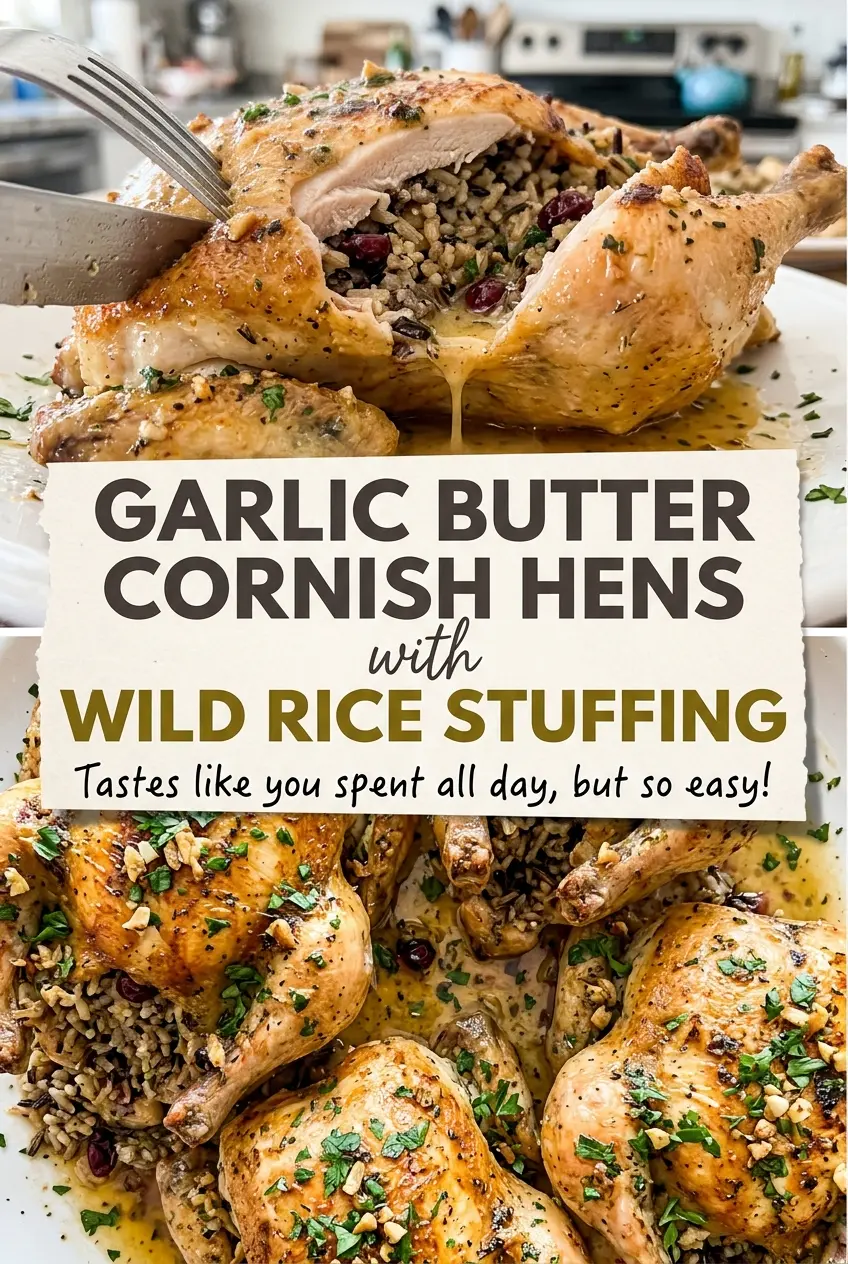
The rice gives off a little steam as you stir in the cranberries, and the whole skillet smells savory with a hint of sweetness. That’s when I know the stuffing is ready for the hens. Garlic Butter Cornish Hens with Wild Rice Stuffing makes a complete dinner for four, with tender roasted poultry and a hearty filling tucked right inside.
Wild rice takes longer than the quick-cooking rice many of us keep on hand, but its chewy grains hold their shape beside the soft onion and celery. I cook it until the grains open, then drain any broth that’s left before mixing in the aromatics. Once the hens are filled, garlic butter goes over the skin and under the breast skin, where it seasons the meat as it roasts. The result is a crisp, garlicky exterior and a savory stuffing dotted with dried cranberries.
Kitchen Note
The butter should feel soft enough to spread without tugging at the skin. If it’s still firm, give it a little more time at room temperature; forcing it across the breast can tear the skin.
Save these garlic butter Cornish hens with wild rice stuffing for crisp garlic-buttered skin and tender rice with sweet cranberry bites.
Why Loose Wild Rice Stuffing Matters in a Small Hen
A Cornish hen has less room in its cavity than a large roasting bird, so the filling needs to sit loosely rather than be pressed into a firm plug. A tightly packed center heats more slowly than a light, spoonable filling. That can leave you waiting on the middle while the meat around it continues to roast.
Cooking the rice before it goes into the hens solves a second problem: the grains have time to turn tender without depending on the bird’s roasting time to cook them from scratch. The broth is drained if any remains, so the skillet mixture isn’t swimming in liquid when you fill the cavities. Onion, celery, thyme, and cranberries then stay distinct in the finished stuffing instead of disappearing into a soft, wet mass.
Think of the filling as a loose layer inside each hen, not a packed casserole portion. Divide it between the two cavities without compressing it, and let the thermometer—not the color of the skin alone—tell you when both the poultry and the center of the stuffing are ready.
What the Wild Rice, Broth, and Garlic Butter Each Bring
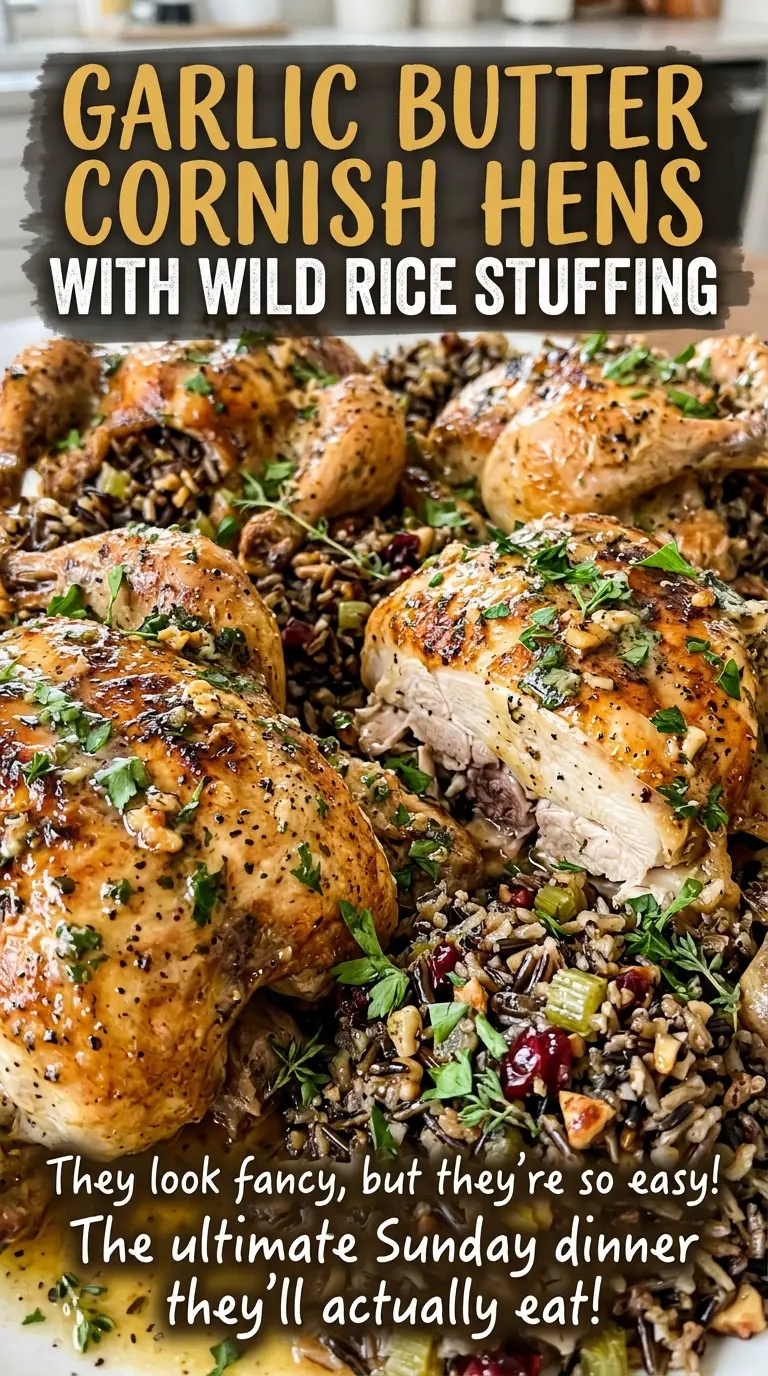
- Wild rice — Choose plain wild rice rather than assuming a rice blend will cook on the same schedule. The firm, chewy grains are what give the stuffing its texture; blends with other rice varieties may need different liquid and cooking times.
- Chicken broth — It seasons the rice as it simmers, so a broth you like drinking is a good choice. A store-brand broth works well here; there’s no need for a specialty stock.
- Onion, celery, and dried thyme — Finely chopping the onion and celery lets them soften in the short skillet cooking time. Dried thyme suits the gentle, savory filling, and its flavor distributes easily when stirred through the rice.
- Dried cranberries — Their sweet-tart chew stands out against the earthy rice. Keep them dried for this method; fresh cranberries would release moisture and have a sharper, more assertive bite.
- Softened butter and fresh garlic — Soft butter spreads over the skin and beneath the breast skin, while minced garlic seasons that coating. Freshly minced cloves give a more vivid garlic aroma than a mild, ready-made garlic butter.
- Cornish game hens — The specified size range helps the hens roast in the time window given. Buy them thawed, with the giblets removed, so they’re ready to pat dry and season.
From Tender Wild Rice to Garlic-Butter Roasted Hens
Simmer the Wild Rice Until the Grains Open
Heat the oven to 375°F while you start the rice. Combine the wild rice and chicken broth in a 2-quart saucepan, bring it to a boil over high heat, then cover and lower the heat to low. Simmer for 45 to 60 minutes, until the grains have opened and are tender. Drain any broth that remains so the filling stays loose rather than soupy.
Soften the Aromatics in the Skillet
Warm the olive oil in a 10-inch skillet over medium heat. Add the finely chopped onion and celery with the dried thyme, then cook for 4 to 5 minutes, stirring, until the vegetables have softened. Stir in the cooked wild rice and dried cranberries. The mixture should be evenly combined, with the cranberries distributed through the grains.
Season the Hens and Fill the Cavities
Pat the thawed hens dry with paper towels; damp skin won’t take the butter as evenly. Stir the softened butter, minced garlic, kosher salt, and black pepper together in a small bowl. Divide the warm stuffing loosely between the cavities, without packing it down. Set the hens breast-side up in a 9×13-inch roasting pan and tuck the wing tips underneath.
Roast, Check the Center, and Rest
Rub the garlic butter over the skin and beneath the breast skin, then roast for 75 to 95 minutes. Check the thickest part of each breast and thigh and the center of the stuffing with a thermometer; each spot needs to reach 165°F. If the skin browns too quickly before the hens are ready, loosely tent the pan with foil. Rest the hens for 10 minutes before serving.
Useful Swaps for the Hens and Their Wild Rice Filling
Make the garlic coating dairy-free
Use a plant-based butter in place of the dairy butter, keeping it softened so it spreads over and under the breast skin. The garlic and seasoning still coat the hens, though the finish won’t have quite the same buttery richness.
Trade cranberries for dried cherries
Stir dried cherries into the rice in place of the dried cranberries. They keep the same chewy, fruity contrast but make the stuffing taste rounder and less tart.
Give the stuffing a sage note
Replace the dried thyme with dried sage in the skillet with the onion and celery. Sage brings a deeper, more woodsy flavor that pairs naturally with the wild rice and roasted poultry.
Storage and Reheating
- Refrigerator: Remove the stuffing from the cavities and refrigerate it with the carved meat in covered, shallow containers within 2 hours. Keep for 3 to 4 days; the rice will firm up as it chills.
- Freezer: Freeze the cooked meat and stuffing in airtight containers for up to 2 to 3 months for best quality. Thaw overnight in the refrigerator before reheating.
- Reheating: Place the meat and stuffing in an oven-safe dish, cover with foil, and warm at 325°F until hot throughout; leftovers should reach 165°F. Avoid leaving the dish uncovered, which can dry the meat before the center is hot.
Questions That Come Up When Roasting Stuffed Cornish Hens
Garlic Butter Cornish Hens with Wild Rice Stuffing
Ingredients
Equipment
Method
- Preheat the oven to 375°F.
- Combine the wild rice and chicken broth in a 2-quart saucepan and bring to a boil over high heat.
- Cover, reduce the heat to low, and simmer for 45-60 minutes, until the grains have opened and are tender; drain any remaining broth.
- Heat the olive oil in a 10-inch skillet over medium heat.
- Add the onion, celery, and thyme and cook for 4-5 minutes, until softened.
- Stir the cooked wild rice and dried cranberries into the skillet.
- Pat the hens dry with paper towels.
- Stir the softened butter, garlic, kosher salt, and black pepper together in a small bowl.
- Divide the warm stuffing loosely between the hens’ cavities without packing it in.
- Arrange the hens breast-side up in a 9x13-inch roasting pan and tuck the wing tips underneath.
- Rub the garlic butter over the skin and under the breast skin.
- Roast for 75-95 minutes, until a thermometer reads 165°F in the thickest part of each breast and thigh and in the center of the stuffing; loosely tent with foil if the skin browns too quickly.
- Rest the hens for 10 minutes before serving.