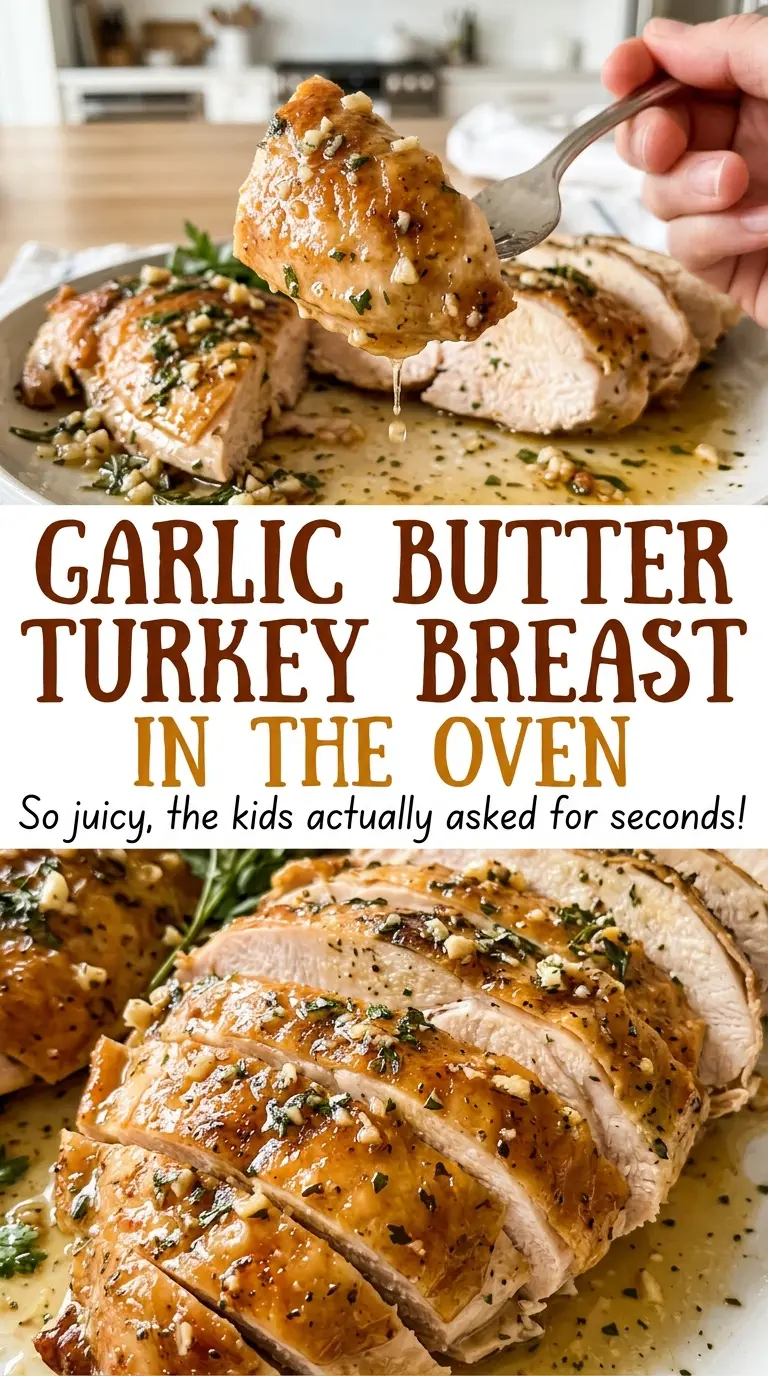
As the garlic butter melts under the turkey skin, the grated garlic and herbs spread across the breast while the outside turns golden. I like this roast for a smaller holiday table or a Sunday dinner when a whole turkey would be more than I need. This garlic butter turkey breast goes into a 325°F oven in a 12×16-inch roasting pan, and the hands-on work is mostly getting the butter where it belongs. Start with a fully thawed breast, and you’ll have a straightforward roast that serves six.
The butter goes both under the skin and over it, so each part of the breast gets seasoned without needing a complicated marinade. Fresh rosemary and thyme keep the garlic butter savory and fragrant, while the skin gives the top a chance to brown as the turkey roasts. Once it’s rested, the breast is ready to carve into tender slices with a buttery, herb-flecked surface.

Kitchen Note
The butter should press easily with the back of a spoon, but it shouldn’t be melted. If it turns oily, let it cool until it holds together again so it spreads neatly under the skin.
Save this garlic butter turkey breast for a golden-skinned roast with garlic and fresh herbs, sized to serve six.
Why a 4-Pound Breast and a 6-Pound Breast Need Different Clocks
Turkey breasts in this size range don’t all finish at the same moment. A smaller breast may be ready near the early end of the roasting window, while a larger one needs more time. The clock gives you a useful estimate, but it can’t tell you how quickly the thickest section of your particular breast is cooking.
Use the thermometer as your decision point, not the color of the skin or the time alone. Check the thickest part of the breast and keep the thermometer tip away from the bone; a reading against bone won’t give you the temperature of the meat you’re checking. This is especially helpful when the skin is already browned but the center still needs time. If that happens, loosely tent the turkey with foil and let the breast continue roasting.
The range in the instructions is wide for a reason: the breast itself determines the pace. Plan to start checking as it approaches the shorter end of the window, then let the temperature—not a fixed minute count—tell you when to take it out.
What the Skin, Butter, and Fresh Herbs Each Bring
- Bone-in, skin-on turkey breast — This is the cut the roasting time is built around. The skin gives you a place to spread the butter, and keeping it attached protects the surface as it roasts. Choose a fully thawed breast in the 4-to-6-pound range.
- Unsalted butter — It carries the garlic and herbs and lets you control the seasoning with the kosher salt. Use a good-quality unsalted butter if you like its flavor on its own; a standard grocery-store butter works well here.
- Garlic — Finely grated cloves disperse through the butter instead of leaving large pieces in one spot. Fresh garlic is worth using for its sharper, more rounded flavor; grate it finely so the butter stays easy to spread.
- Fresh rosemary and thyme — Both herbs bring a woodsy, savory note that pairs well with turkey. Fresh sprigs are easy to chop, but dried herbs work in a pinch: use one-third as much dried rosemary and thyme as the fresh amount called for.
- Ground black pepper — Regular ground black pepper is all you need; there’s no special grind or prep required. It rounds out the garlic butter without competing with the herbs.
How to Get the Garlic Butter Under the Skin and Roast the Breast Evenly
Set Up the Pan and Dry the Turkey
Heat the oven to 325°F and place a rack in the middle position. Remove any giblets from the thawed turkey breast, then pat the surface dry. Set a rack inside a 12×16-inch roasting pan and place the breast skin-side up on it. Drying the surface gives the butter a better place to cling than a damp, slippery skin.
Stir the Herb Butter Together
In a small bowl, stir the softened butter with the finely grated garlic, chopped rosemary, chopped thyme, kosher salt, and ground black pepper. Keep mixing until the herbs and garlic are distributed throughout instead of gathered in one patch. The finished butter should look evenly flecked and hold together as a spread. Scrape the sides of the bowl once so no garlic or seasoning gets left behind.
Spread Butter Beneath and Over the Skin
Gently loosen the skin over the breast with your fingers, working carefully so it stays attached. Spread about half of the garlic butter underneath the skin, then rub the remaining butter over the outside. Aim for an even coating rather than a thick mound in one area. If the skin tears, spread the butter over the opening and continue gently.
Roast, Check, and Rest Before Carving
Roast for 1 1/2 to 2 1/2 hours, checking the thickest part of the breast with a thermometer without touching bone. Take the turkey out when that reading reaches 165°F. If the skin browns too quickly before the center is ready, tent the breast loosely with foil and keep roasting. Transfer it to a cutting board, tent it loosely with foil, and let it rest for 20 minutes before carving.
Two Easy Ways to Change the Garlic Butter
Make the Garlic Milder
Use two finely grated garlic cloves instead of four and keep the rest of the butter mixture the same. The roast will still have a savory garlic note, but it won’t be as pungent under the browned skin.
Make It Dairy-Free
Replace the butter with 1/2 cup unsalted, stick-style dairy-free butter softened to the same spreadable consistency. The herb mixture will still coat the breast, though the finished flavor depends on the brand you choose.
Storage and Reheating
- Refrigerator: Refrigerate carved leftovers within two hours and use them within 3 to 4 days. The skin softens in storage, while the meat stays easy to slice.
- Freezer: Freeze carved turkey in an airtight freezer-safe container for up to 2 to 3 months for the best quality. Thaw it in the refrigerator before reheating.
- Reheating: Arrange slices in a covered oven-safe dish and warm them at 325°F until hot throughout. Keep the dish covered so the edges don’t dry out, and heat only the portion you plan to serve.
Questions That Come Up Before Roasting Turkey Breast
Garlic Butter Turkey Breast in the Oven
Ingredients
Equipment
Method
- Heat the oven to 325°F.
- Set a rack in the middle position.
- Remove any giblets from the turkey breast and pat it dry.
- Place it skin-side up on a rack in a 12x16-inch roasting pan.
- Stir the butter, garlic, rosemary, thyme, salt, and pepper together in a small bowl.
- Gently loosen the skin over the breast.
- Spread about half the garlic butter underneath the skin.
- Spread the remaining butter over the skin.
- Roast for 1 1/2 to 2 1/2 hours, tenting loosely with foil if the skin browns too quickly, until a thermometer inserted into the thickest part of the breast without touching bone reads 165°F.
- Transfer the turkey to a cutting board.
- Tent it loosely with foil.
- Rest for 20 minutes before carving.